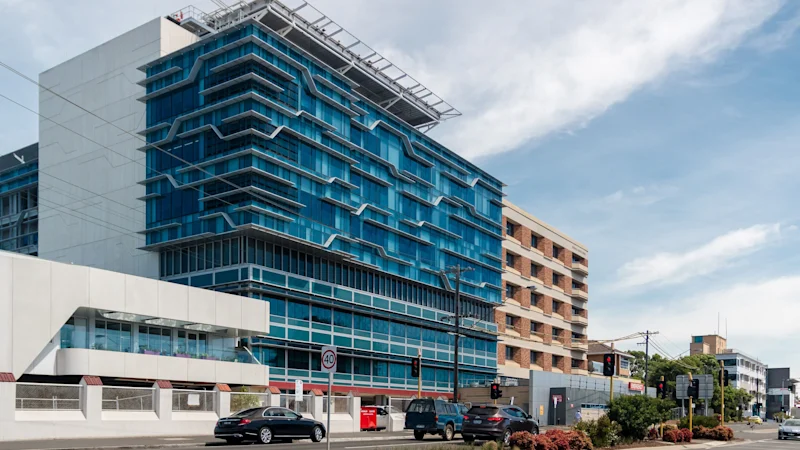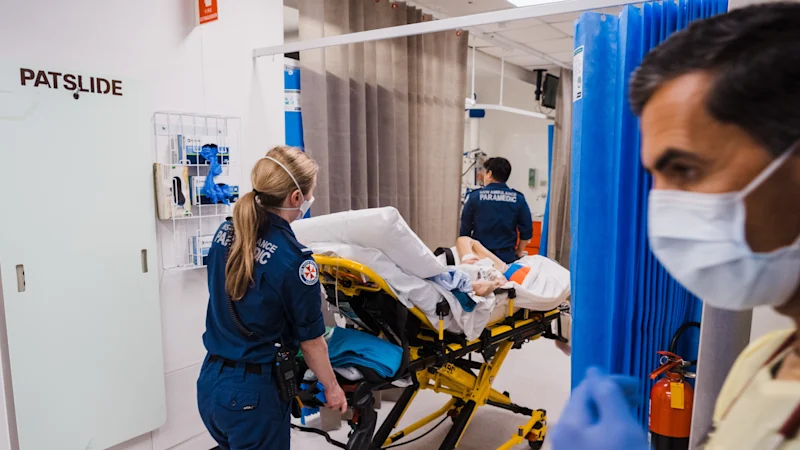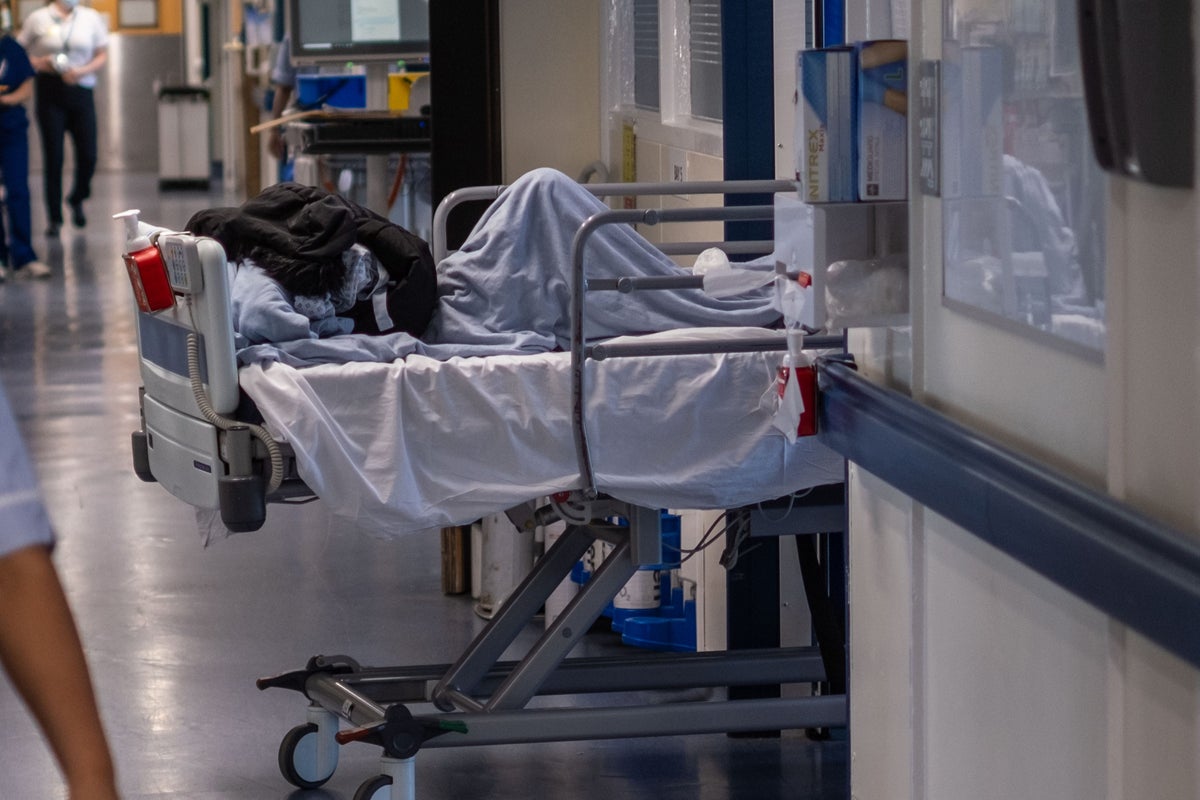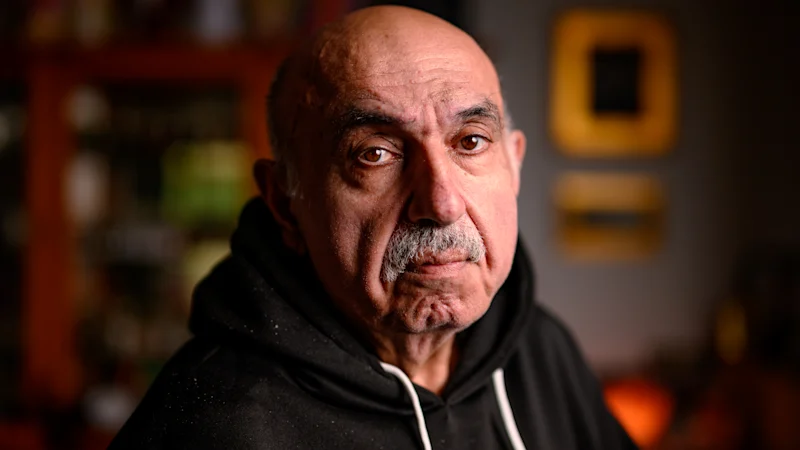
August 30, 2026 — 5:00amVictor Ishak spent three nights waiting in Bankstown’s emergency department with his left leg swelled to almost double its size, and barely able to walk.The 70-year-old was sent to the ED by his GP, who immediately saw the potential red flags. He spent last Friday night on a hard chair in the hospital’s public reception area, as other patients slept on the floor, then the next two nights on a chair that reclined – but not enough to sleep.Victor Ishak spent three nights in Bankstown’s emergency department.George Chan“It was like a halfway house,” Ishak said. “We’re not in a Third World country, we shouldn’t be in systems like this.”By Monday evening – his fourth night in the ED – Ishak was told there were simply not enough beds: “They gave us all an option to either stay where we were in those chairs, or to go home.”Ishak said although his ankle still resembled “a baby elephant” he chose to sleep in the comfort of his own bed. He returned the next day to see a specialist, with Liverpool Hospital to contact him about taking a sample from his leg. Liverpool did not contact him until Thursday, after this masthead had contacted NSW Health media.Ishak was discharged with no improvement to his swelling.George ChanAccording to his discharge summary, Ishak was still awaiting the results of 21 tests when he left the hospital.Australian Medical Association NSW president Dr Fred Betros said in an ideal world Ishak would not have been discharged before physicians had received results.“Sometimes it’s an error not to ask for a test, but I think it’s a bigger error to ask for a test and then not know the result before you decide to send someone home.”In a statement, South Western Sydney LHD apologised to Ishak, and said they were providing follow-up care and support.“During busy periods, some patients may experience longer than expected time in the emergency department while seriously unwell patients are prioritised for emergency care,” the statement read. “We acknowledge it is difficult and frustrating for people when they wait for longer than they expect … and we thank the community for their patience.”Victor Ishak called Bankstown’s ED a “circus”.George ChanPatients across the state are waiting for increasingly prolonged periods, particularly in Sydney’s outer suburbs.One in 10 patients across NSW waited more than 24 hours to be treated and admitted to a ward or transferred to another hospital in the first quarter of 2026, according to NSW Bureau of Health Information data. That wait time has jumped more than two-and-a-half hours compared to the same period last year. In south-western Sydney, one in 10 patients waited over 28 hours to be admitted, while 10 per cent of Bankstown patients waited about 27 hours.In a bid to address the escalating crisis, the NSW government announced a $130 million investment in a further 22 short-stay recliner chairs at emergency wards across NSW on Monday. These spaces are only intended to house patients for between four and 24 hours.While he acknowledged the privacy of the recliner was more comfortable than the reception area, Ishak spent over 77 hours in Bankstown’s emergency department, and was never offered a bed.Dr Rachael Gill, the NSW branch chair of the Australian College of Emergency Medicine, said it was clear no inpatient beds were available.“Short stay would not have met this person’s need,” she said, “which is why we’re advocating for an expansion of inpatient capacity [to relieve pressure on emergency]”.Betros agreed, and said while short stay units served a purpose, they were a “Band-Aid solution”.“The long-term solution is having a hospital process that is set up to deal with the patient completely, from the front door all the way to the exit,” he said.“That means getting them into the wards, getting them into their beds, getting their appropriate treatment, and then having the ability to discharge them in a timely manner.”The NSW government has long blamed clogged hospitals on the Commonwealth, due to the influx of elderly and disabled patients who are medically well enough to be discharged, but who are awaiting a federally funded NDIS or aged care bed.Just 802 new residential aged care places were added in 2024-25, compared to an average of 1800 per year in the previous four financial years. By the federal government’s own projections, Australia needs about 10,600 beds per year to keep up with current demand.NSW Health Minister Ryan Park said there were almost 1100 patients waiting in a NSW hospital for an aged care bed, a figure which has almost doubled over the past year. He said the state government was investing $35.7 million in interim services to help older people transition safely out of hospital while awaiting placement or home supports, which would free up the equivalent of about 180 beds per year.Federal Aged Care Minister Sam Rae said the Albanese government has made record investments in the residential aged care and home care system, including $2 billion in the year’s budget to support 5000 more aged care beds each year. Rae said he would continue working with states and territories to ensure older Australians aren’t stuck in hospital.Eight days waiting for test resultsPatients at the heart of the crisis say delays in testing are another part of the story.Michael Hirschhorn presented at Westmead’s emergency department with a suspected foot infection on a Wednesday evening in February, and was given a bed the next day. He said a doctor ordered an MRI of his foot on Thursday at noon, but it was not performed until Monday. “Apparently, they don’t do it over the weekend.”Michael Hirschhorn said he took up a bed unnecessarily at Westmead while awaiting MRI results.Janie BarrettHe did not receive his results until the following Thursday, a week after his MRI was initially ordered, eight days since he initially presented to hospital. Hirschhorn’s result was negative, and he was discharged that evening.“I was blocking a bed … just waiting for someone to read the MRI,” he said, with his only other treatment a daily antibiotic. “That bed could have been occupied by someone in a more serious situation.”A doctor at Westmead ED not authorised to speak publicly expressed frustration at what they called a “dysfunctional” hospital, with 20 or 30 people taking up beds at any one time while waiting for results.The doctor said despite being a major hospital, Westmead’s MRI service only operates on weekdays, with results outsourced to an external company in Melbourne, leaving already strained hospital staff to chase up delayed reports.“The other day I discharged a patient to get an MRI as an outpatient, because that would be quicker than getting an MRI at Westmead,” the doctor said.Gill said healthcare should be considered a seven day a week necessity. “Because the community doesn’t choose when they’re unwell and when they need to access healthcare.”In a statement, Western Sydney Local Health District said MRIs are prioritised according to clinical urgency, while their CT and X-ray services are available 24/7. The spokesperson said NSW Health is currently assessing opportunities to improve equitable access to imaging services across the state.Start the day with a summary of the day’s most important and interesting stories, analysis and insights. Sign up for our Morning Edition newsletter.From our partners
Victor spent three nights waiting in a Sydney ED. He left without finishing his treatment
The 70-year-old spent more than 77 hours in Bankstown’s emergency department after his left leg swelled to almost double its size. He was never offered a bed.
1,208 words~5 min read