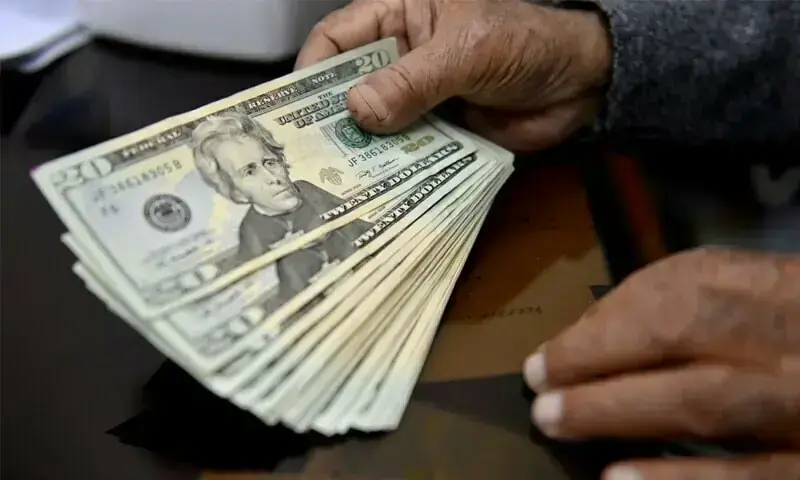
April 2026 will be a tough month for Pakistan’s balance of payments. Pakistan has been asked to repay its total debt of $3.5 billion to the United Arab Emirates (UAE), including a $450 million 30-year-old loan. This, along with a $1.3bn Eurobond maturing on April 8, 2026, has brought the debt repayment needs so far this month to $4.8bn.
The State Bank of Pakistan (SBP) currently has foreign reserves of $16.38bn, while net foreign reserves held by commercial banks are $5.41bn, and the total reserves stand at approximately $22bn. If the government pays 4.8bn in April alone, the SBP reserves will be approximately reduced to $11.5bn; a colossal withdrawal.
A significant diplomatic move in this context is that Saudi Arabia and Qatar have assured Pakistan of around $5bn in financial assistance to help stabilise reserves and maintain external payment capacity. Last week, the SBP confirmed that Pakistan has received $2bn from Saudi Arabia.
Pakistan already recorded an eight per cent decline in exports during 9MFY26, and the exports to the Gulf Cooperation Council (GCC) countries may fall by approximately by $1.5 to 2bn in case the Strait of Hormuz remains closed over a longer period.
Geopolitical uncertainty has hastened foreign capital outflows, and portfolio investor risk appetite has fallen across all emerging markets, including Pakistan