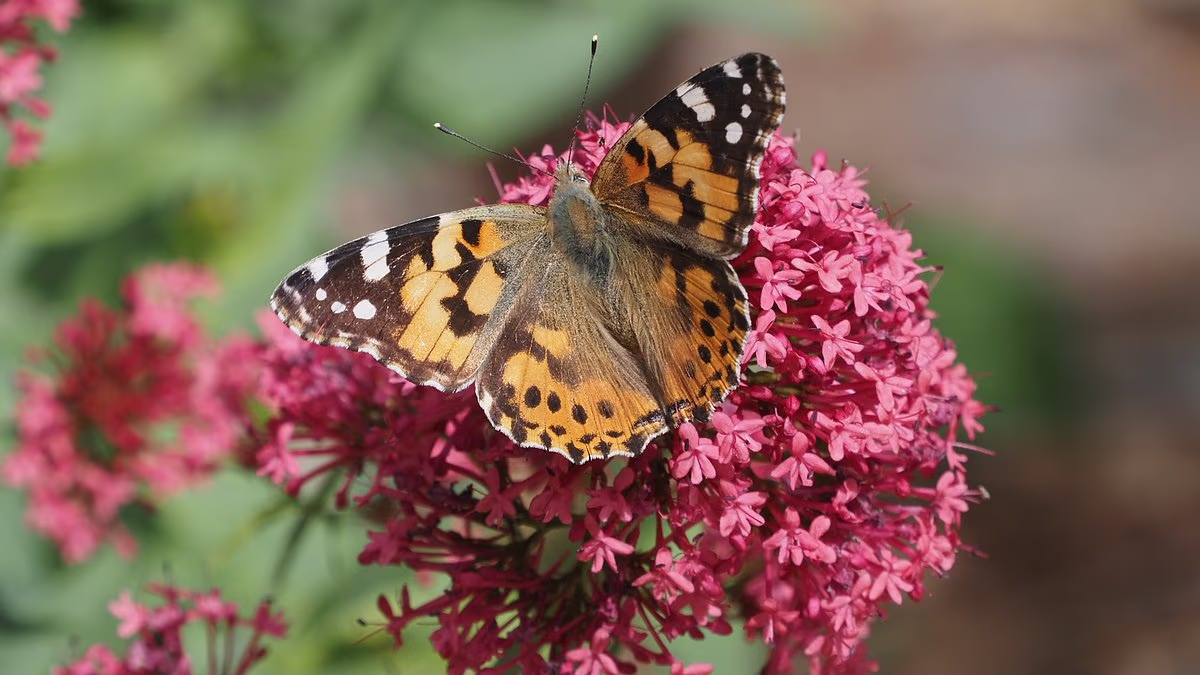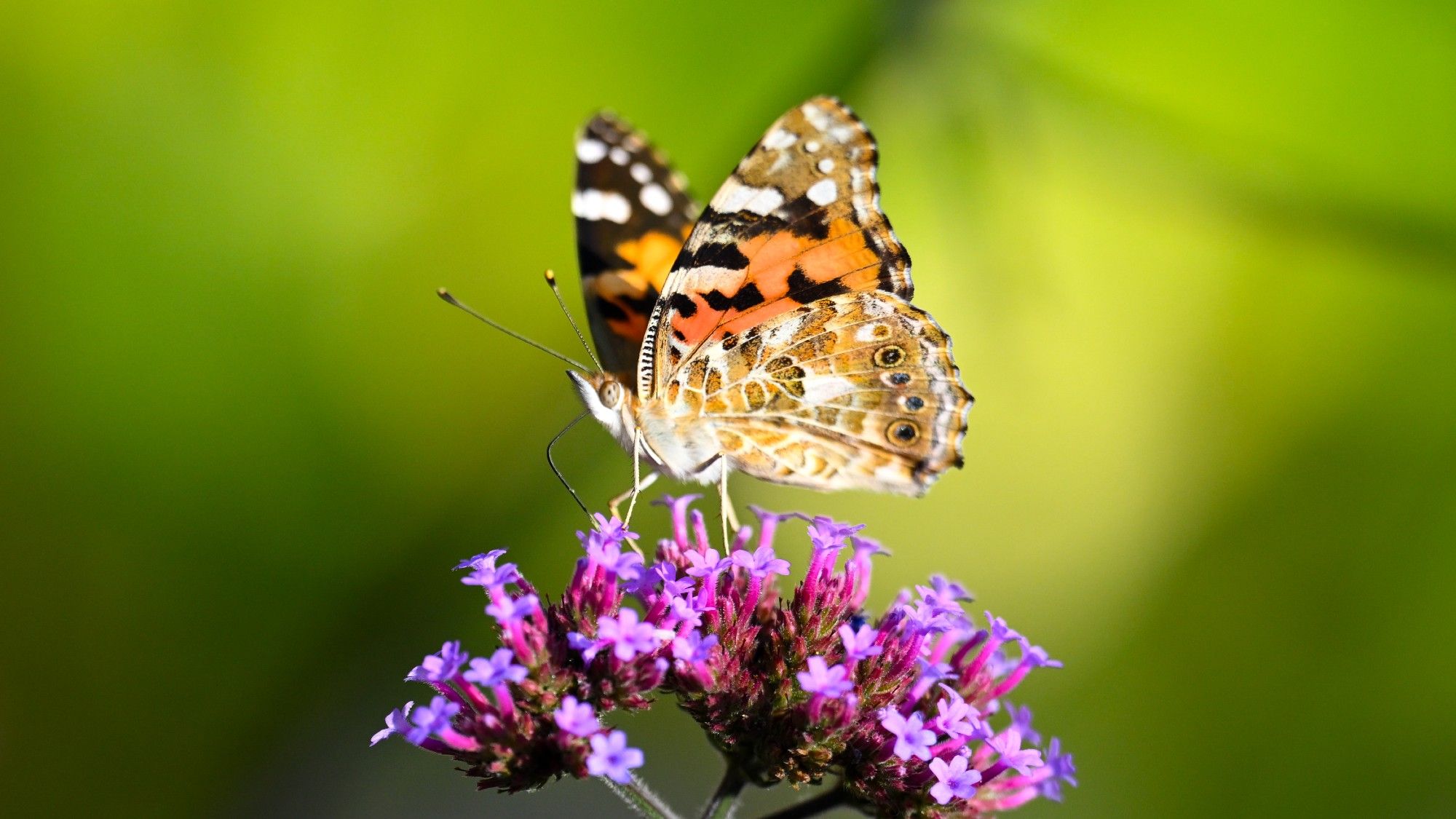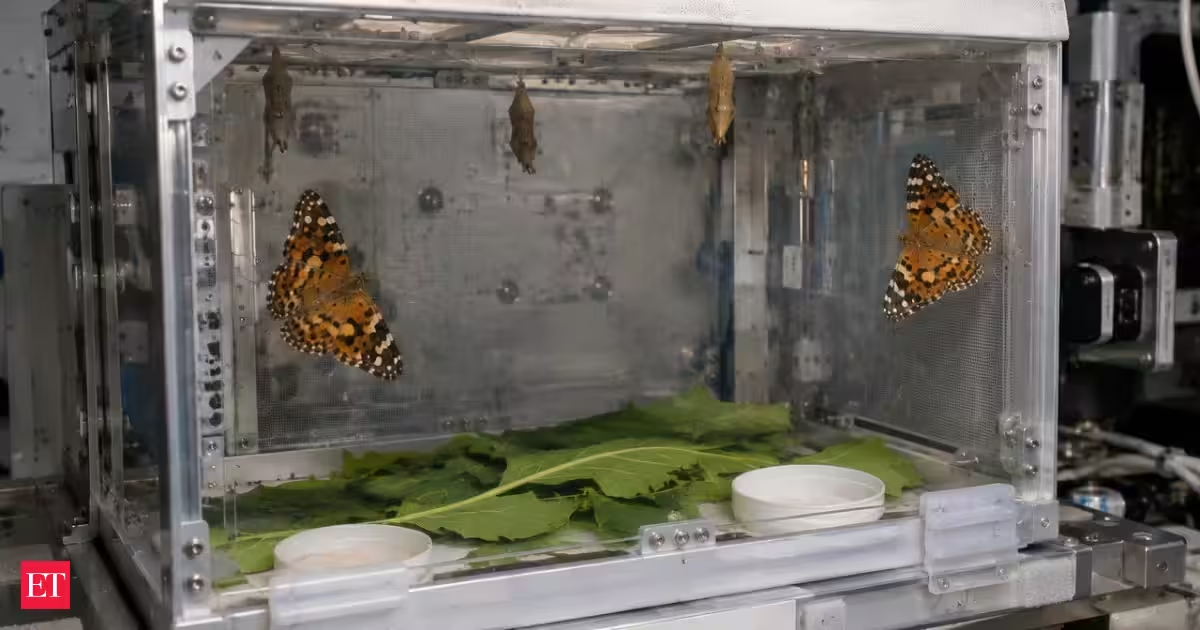
In November 2009, four painted lady caterpillars became part of a small biology experiment connected to the International Space Station. The project gave students a chance to follow a familiar life cycle in an unfamiliar environment, as the caterpillars were observed as they ate, moved, formed chrysalises, and eventually developed into butterflies.The experiment was part of NASA's education activities associated with the space station. Painted lady butterflies are commonly used for classroom studies because their development from caterpillar to adult can be observed over a relatively short period. Putting them in a microgravity environment allowed students and researchers to consider a simple question with a distinctly unusual setting: what happens to a creature whose development normally takes place with gravity providing a constant sense of direction?A tiny crew with a very big jobOn Earth, caterpillars interact with surfaces as they move and eventually look for suitable places to form their chrysalises. In orbit, the absence of normal gravity changes how objects move and removes the familiar distinction between up and down.The four caterpillars were kept in a small habitat designed for the experiment. Rather than relying on leaves or branches, they could attach themselves to the enclosure as they prepared for the next stage of their life cycle. The project allowed students to watch the animals' development and compare what they saw in orbit with the familiar stages of metamorphosis they had studied on Earth.The experiment was therefore less about sending an unusual animal into space and more about turning a basic biology lesson into an observation of how living organisms respond when one of their normal environmental cues is changed.After completing its pupa stage, a Monarch butterfly emerges on the space station on Nov. 30, 2009. The Monarch and Painted Lady butterflies arrived at the station as catepillars last month on the space shuttle Atlantis. Image Credits: NASA/BioServe, Univ. of Colo.What happened to the caterpillarsThe caterpillars formed chrysalises inside the habitat after arriving in orbit. Reports from the experiment indicated that the larvae were able to feed and move around their enclosure before beginning metamorphosis.The timing of the experiment is important, however. Atlantis launched on 16 November 2009 for the STS-129 mission and returned to Earth on 27 November. The later stages of the butterfly experiment therefore extended beyond the shuttle's flight. Reports said that two butterflies emerged on 30 November, followed by the other two shortly afterwards, after the payload had returned from the shuttle mission.That means the commonly repeated claim that all four butterflies emerged as adults is more useful when described as the reported outcome of the experiment rather than suggesting that all four completed the final stage while Atlantis was still in orbit.The experiment nevertheless provided a memorable way to demonstrate how a familiar biological process could be observed in connection with spaceflight. Students could follow the progression from larva to chrysalis to adult butterfly while learning about the environmental differences between Earth and space.Painted lady butterflies are ordinary insects that can be encountered in gardens and other familiar surroundings. Their use in a space-based education project gave students a direct connection between something they could observe at home or in a classroom and the much less familiar environment of an orbiting spacecraft.The experiment also highlighted an important feature of biological research in space: not every useful investigation has to involve sophisticated equipment or a dramatic discovery. Observing how a small organism develops when familiar environmental cues are altered can provide a straightforward way to introduce questions about gravity, orientation, and life beyond Earth.Apart from the education aspect, the painted lady experiment proved to be an eye-opener when it came to gravity biology because it provided evidence about the adaptability in insect development. The insects were able to adapt their motor mechanics to secure anchorage and build a supporting silk framework in the absence of gravity as a point of reference. This proves the robustness of developmental processes within living things since they are able to undertake complicated physiological changes amidst major environmental changes. With the ongoing plans by space organizations to venture further into space, such experiments form important building blocks.
In 2009, NASA sent four painted lady caterpillars to the ISS; reports said all four completed metamorphosis and emerged as adult butterflies in microgravity
In 2009, four painted lady caterpillars made their way to the International Space Station, embarking on a unique journey. In the absence of gravity, these resilient caterpillars adapted seamlessly to their new environment, ultimately forming chrysalises and transforming into stunning butterflies. This fascinating experiment provided crucial insights into insect development in outer space, captivating the imagination of students globally and enhancing their understanding of space science.
687 words~3 min read