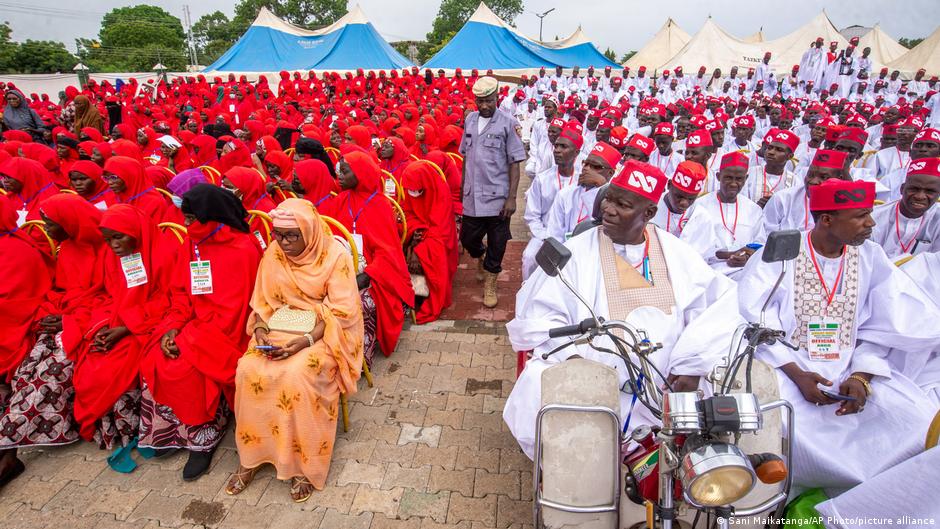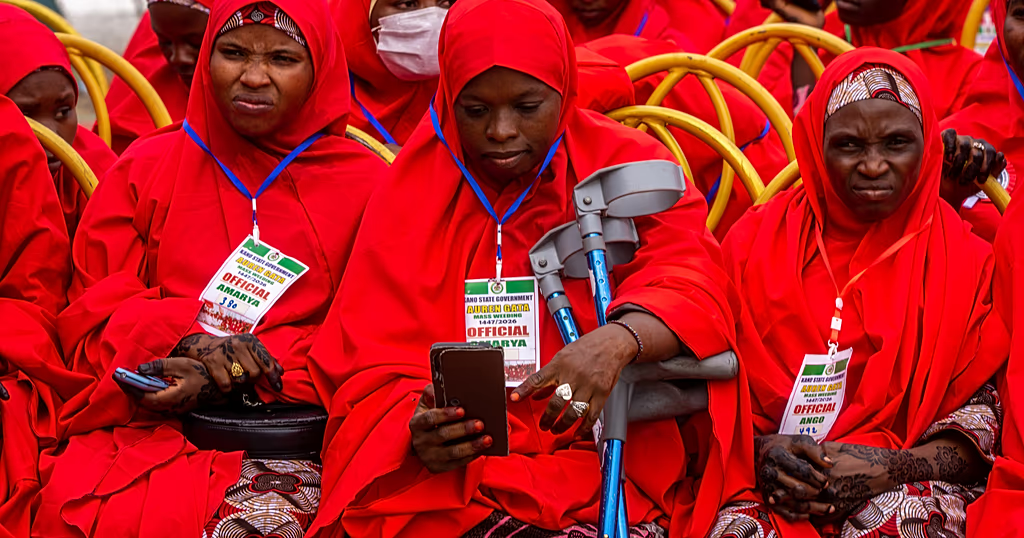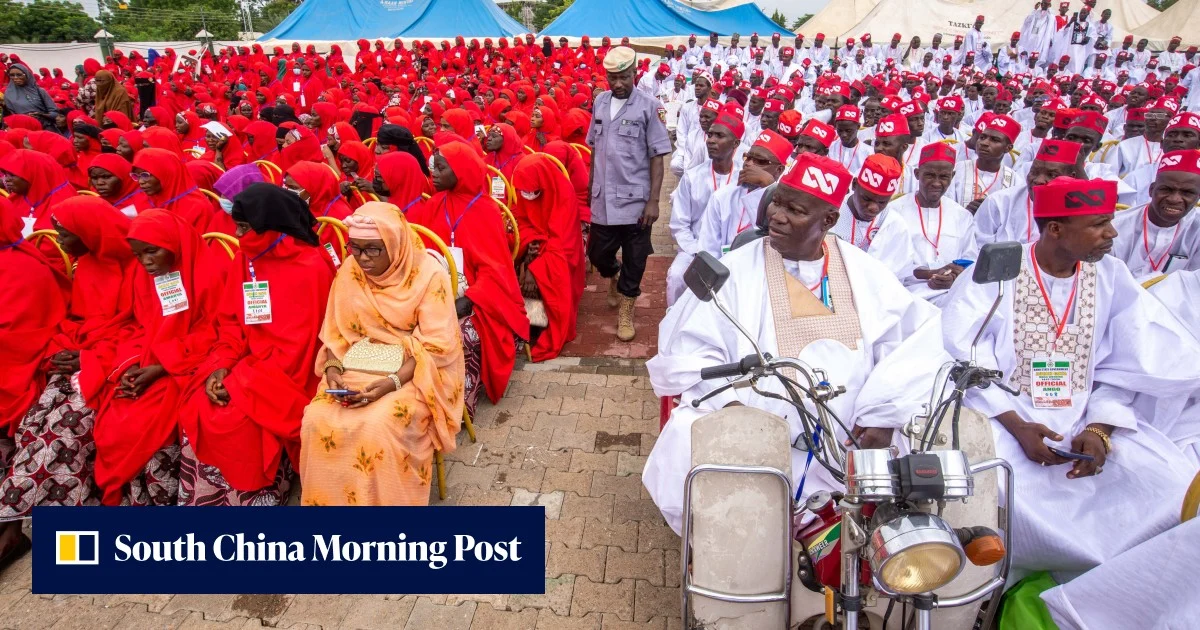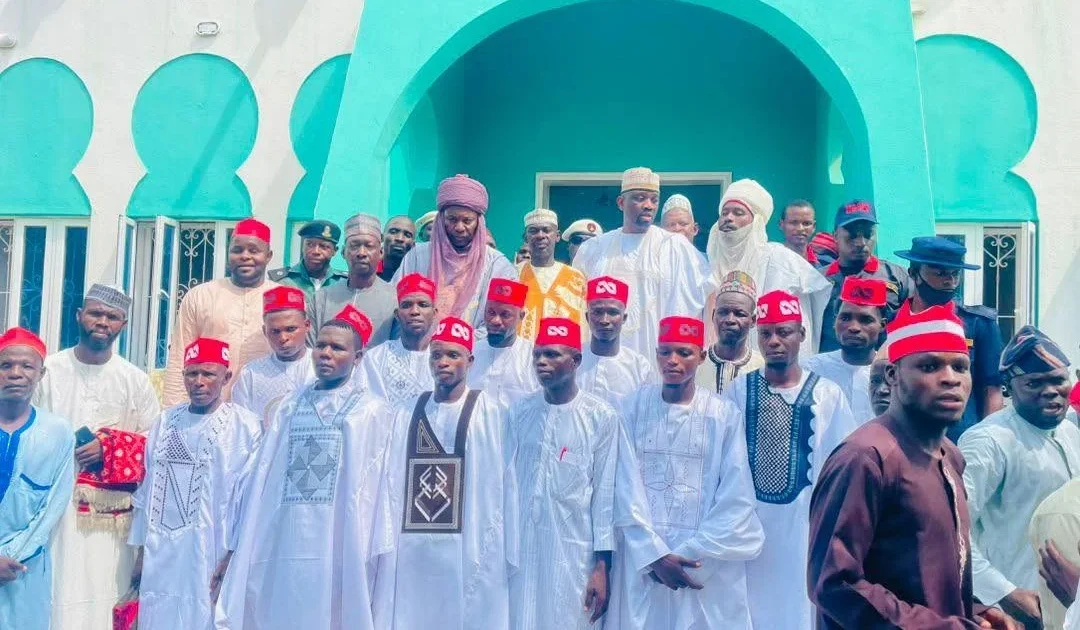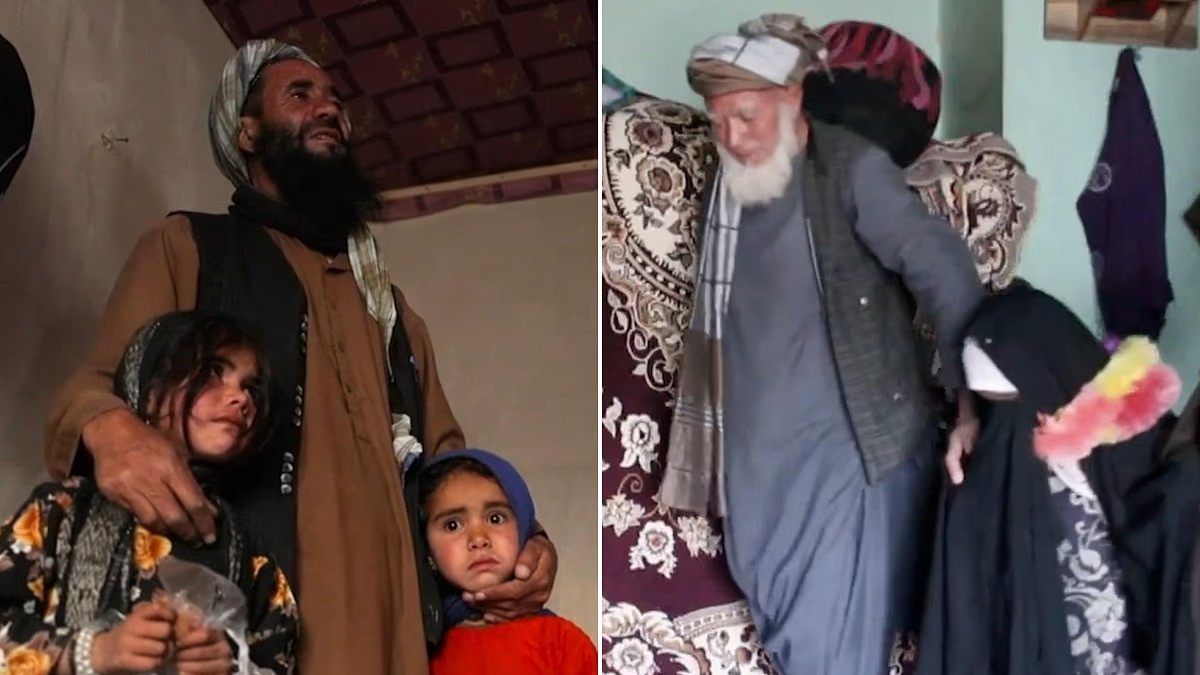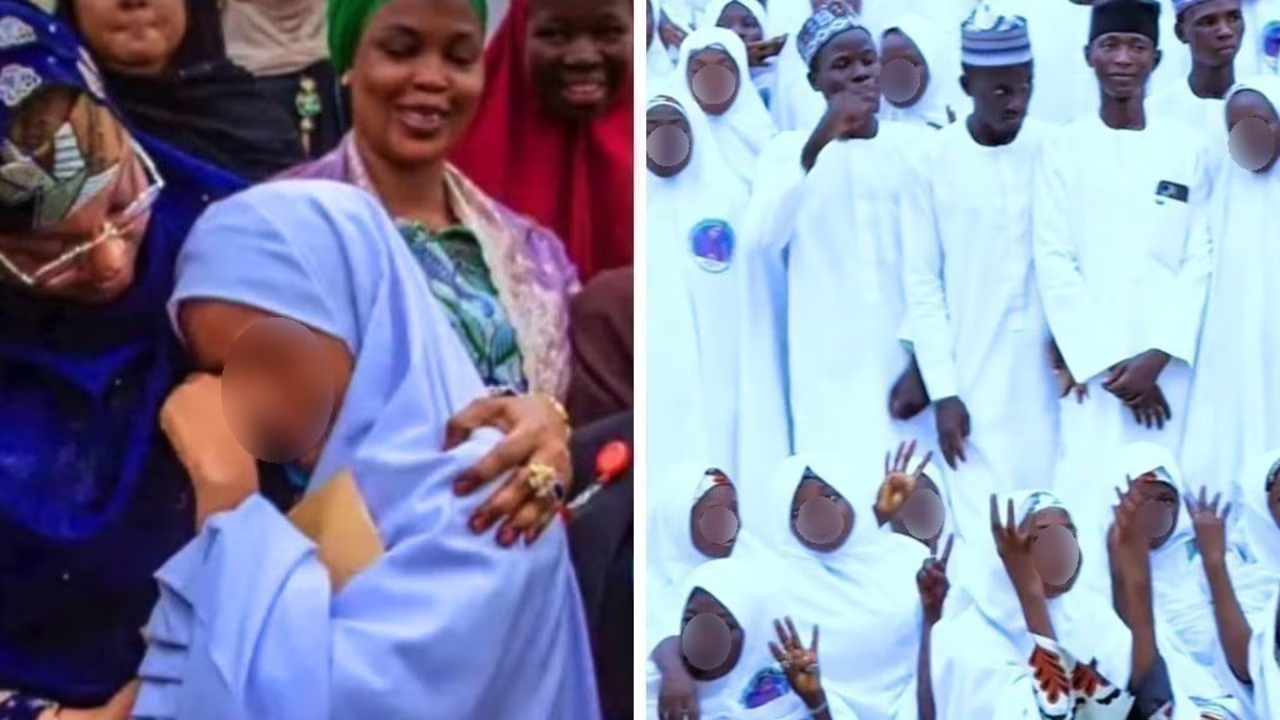
A nation is under fire after viral videos exposed a series of government-backed mass weddings involving vulnerable women – including orphans, teen girls and women from low-income families – with many married off to substantially older men.The weddings have been taking place with increasing frequency across Nigeria in west Africa in recent months, raising concerns about the circumstances these women and girls are now facing.Last week, the Kano State Government in the nation’s north hosted one of the country’s largest mass weddings on August 7 and 8, bringing together 1500 couples in a two-day ceremony. The event reportedly cost the government around 1.5 billion naira (approximately $US1.1 million) and was presented as an initiative to help vulnerable and low-income individuals reduce the financial burden of marriage.But videos of the ceremony have garnered considerable attention, revealing obviously young brides alongside men who seem to be several decades older. Some of these men already have multiple wives, raising concerns about the ages of the women involved and the circumstances surrounding these marriages.In one widely circulated clip, a groom identified as Umar Abdullah speaks openly about his new teen bride, saying: “This is my first marriage, and I’m not marrying a widow. I’m marrying a 17-year-old girl. So I’m very happy today”.The footage has fuelled further scrutiny of the government-backed program, particularly over how the brides are selected, how their ages are verified and whether women and girls entering these marriages can make a genuinely free choice. The Kano government has said the couples underwent screening before the ceremony. The grooms appeared visibly elated on the wedding day, with men ranging in age from their thirties to their eighties celebrating the occasion. One groom, Ahmed Ibrahim, who is in his seventies, said that if the government holds another mass wedding in the future, he would marry another wife.Another older groom, Dantani Aruba, also spoke enthusiastically about taking another wife. In a video recorded during the ceremony, he said: “I just married another wife, and I am happy that I have married another one. My wives are now three”.Kano is not an isolated case.Across northern Nigeria, governments and political officeholders have increasingly sponsored mass weddings as a form of social intervention, often targeting young women and girls.Back in May, the wife of the Jigawa State governor sponsored a mass wedding for 300 orphaned young people drawn from all 27 local government areas of the state. The ceremony brought together 300 brides and grooms and was presented as an initiative to support vulnerable families and give orphaned young people a fresh start.Last month, Kebbi State held its third consecutive mass wedding program, marrying 300 couples, including orphaned girls, widows and people from poor backgrounds. The state had previously held similar ceremonies involving 300 couples in both 2024 and 2025.The practice dates back more than a decade. In July 2024, a federal politician in Zamfara State sponsored the marriages of 105 orphaned girls whose parents had been killed by bandits, part of a violent crisis that has ravaged northern Nigeria for years, leaving thousands dead and displacing communities across the region.Together, these programs have channelled hundreds of vulnerable women and young girls into government-backed marriages, often presenting marriage as a solution to poverty, orphanhood and the financial pressures facing families.Meanwhile, the programs are unfolding against a much wider child marriage crisis in northern Nigeria. UNICEF estimates that one in three young women in Nigeria is married before the age of 18, with the rate rising to almost 50 per cent in the northeast and northwest. More than 3.7 million Nigerian women aged 20 to 24 were married before turning 18, with the practice particularly widespread among girls from poor and rural communities.Frances Ojo, a women’s rights activist who has worked on child marriage issues in northern Nigeria, told news.com.au that government-backed weddings risk undermining years of efforts to tackle the practice in the region.“Child marriage is an issue we have been battling with in the north for years,” she said, noting that girls in some parts of northern Nigeria are still married off as young as 12.She said she was particularly concerned that some vulnerable girls were being offered marriage as a solution to poverty and orphanhood, rather than being given the support they need to build independent lives.“These are helpless young girls,” she said. “Instead of the government offering help to these girls, they marry them off to men.”She said the situation was even more troubling where the men involved were substantially older and already had multiple wives.“Most of these men are older, they are very old men, they already have wives, and yet they are here marrying young girls because that is the only thing they see as a solution to these girls’ predicament,” she said.Under Nigeria’s Child Rights Act, 18 is the legal age of majority and child marriage is prohibited. But the law has not been adopted across all 36 states, and Kano’s own child protection law contains an exception that allows marriage where a child’s culture permits it. In the predominantly Muslim north, where sharia law operates alongside the formal legal system, puberty can be used as a determining factor for marriage, creating a contradiction where someone can still be considered a child under one part of the law while being eligible for marriage under another.The Kano government, however, has defended its mass-wedding program. Officials have also framed the initiative as a way of strengthening families, promoting Islamic values and discouraging what the Hisbah Board describes as immoral practices in the state.But what happens to these women once the ceremony is over?The government provides financial assistance of 200 thousand naira ($US150) and household items to couples taking part in the Kano program, but it is less clear what long-term support exists for women who are orphaned, widowed, divorced or otherwise vulnerable after they enter these marriages.Stella, a social worker in Kano, told news.com.au many of the women come from poor backgrounds and have little or no formal education, leaving them with few prospects beyond the marriages they have entered.“There is no long-term goal for this,” she said. “Most of these women are barely educated. They come from poor backgrounds, and when they enter these marriages, what prospects do they have?”Without education, economic opportunities or sustained support, Stella argued many could simply go on to have children in households already struggling financially, potentially reproducing the same cycle of poverty the program claims to address.“Instead of solving the poverty crisis, you are creating another generation of children who may end up on the streets.”She also questioned the logic of marrying vulnerable women to men who may themselves be struggling financially.“If the government says these marriages are meant to help people who cannot afford the cost of getting married, then why are you marrying young girls to men who cannot even afford to take care of a family?” she asked.Stella said the women deserved better choices before marriage was presented as their way out.“If these women were offered better choices such as education, proper economic opportunities or actual support, I believe many of them would choose those opportunities over marriages that may not ultimately benefit them,” she said.Another disturbing trend is also emerging in Nigeria, with men making videos explaining how to approach orphanages to marry young, potentially underage girls in their care.One of the most disturbing videos came from Nigerian law student Uchebu Joshua, who posted a now-deleted TikTok video explaining why girls from orphanages make better wives. He argued that they have no strong family support system and no brothers or siblings to defend them or intervene in their marriages, making them “the most peaceful women to marry”.He also explained how men could approach orphanages, effectively turning the practice into a tutorial.The video received backlash, though some male commenters expressed support and inquired about approaching orphanages. Joshua later posted another video reaffirming his stance despite the backlash. For child protection advocates like Stella, the concern goes beyond whether a girl is legally old enough to marry. Rather, it is about whether she has the freedom, support and means to make that choice for herself.Daniel Anthony is a freelance writer based in Nigeria
‘Very old men’: Nation’s sick trend exposed
A nation is under fire after viral videos exposed a series of government-backed mass weddings involving vulnerable women – including orphans, teen girls and women from low-income families – with many married off to substantially older men.
1,360 words~6 min read