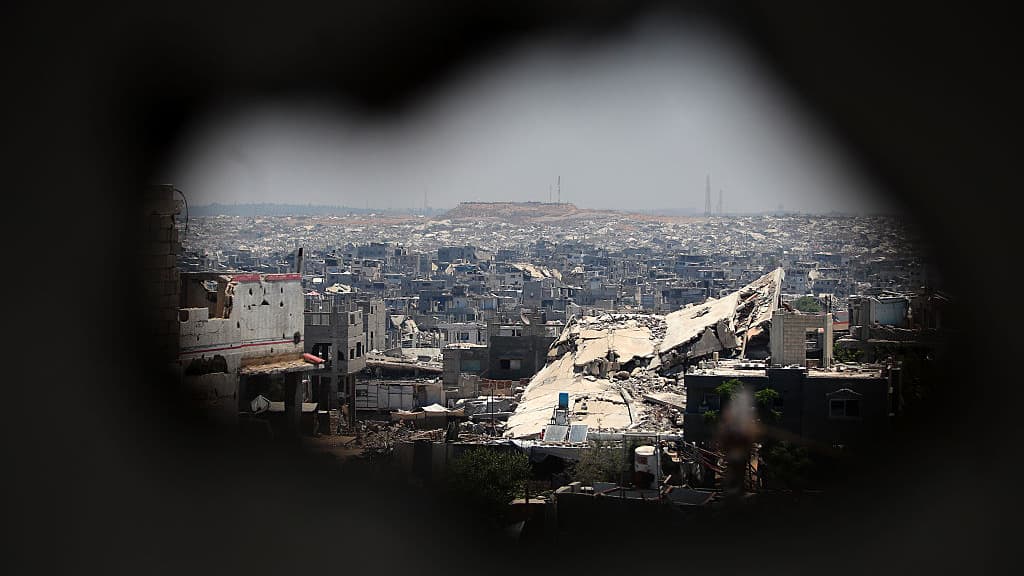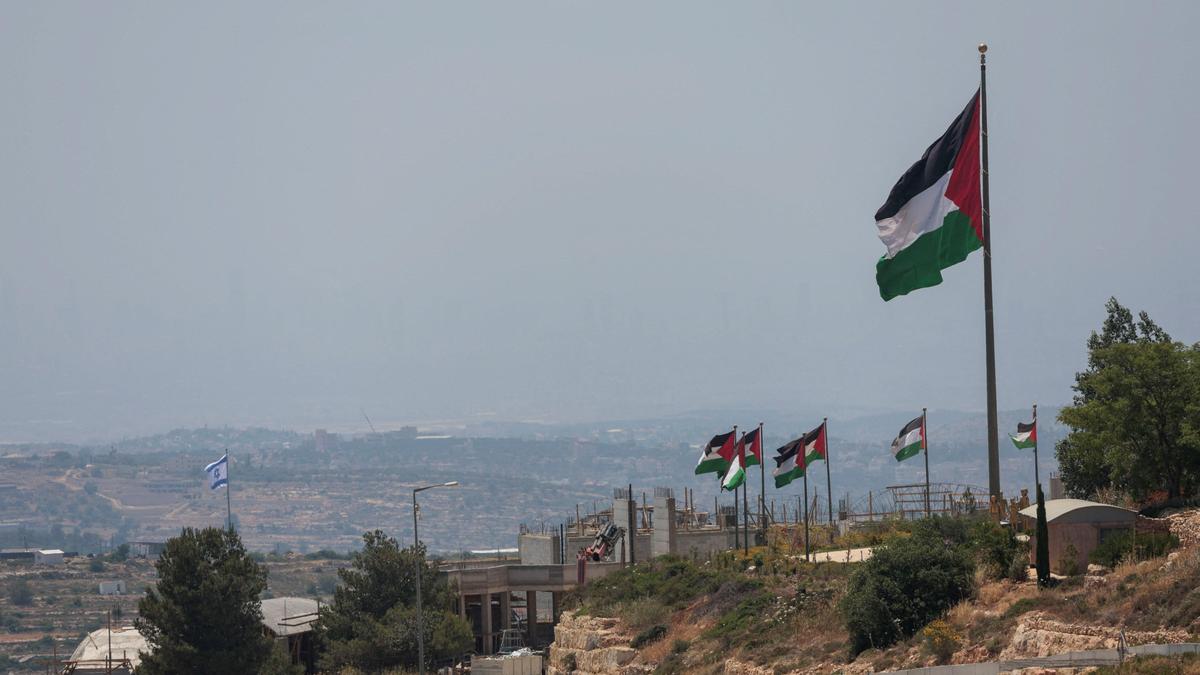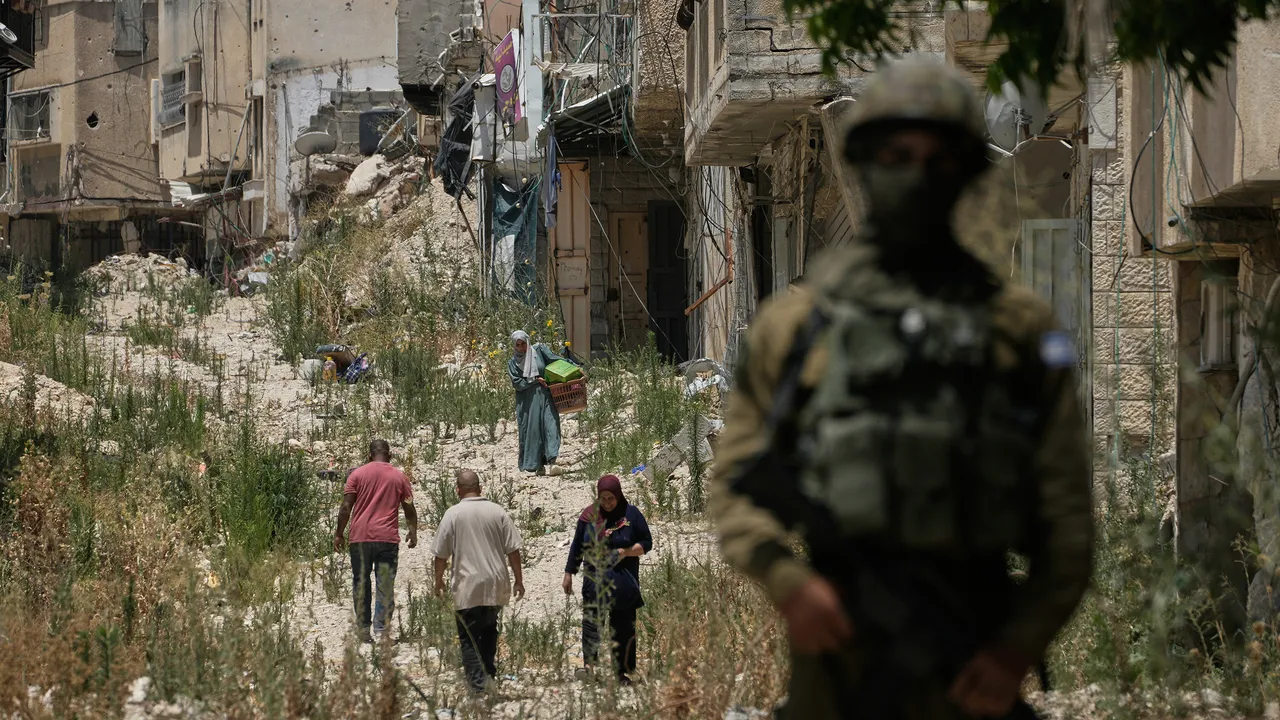
Ten years ago, Frank Lowenstein, then the United States special envoy for Israeli-Palestinian negotiations, presented President Barack Obama with maps of settlements by Israeli Jews in the occupied West Bank. The maps revealed that a chronic problem had turned critical. The expansion of settlements crisscrossing the West Bank threatened the hope of establishing a contiguous Palestinian state there. As Jews and Palestinians lived in roughly equal numbers in Israel and the territories it had occupied since 1967, those settlements also imperilled Israel’s claim to be both Jewish and democratic. By gradually accomplishing a de-facto annexation of the West Bank, the settlements would require Israeli Jews either to rule over a resentful non-Jewish population of about equal size or to surrender the Jewish identity of their state. From the perspective of the United States, either scenario would undermine the stability of the region.Obama was in the final weeks of his Presidency, and Lowenstein’s maps helped persuade him to let the United Nations Security Council pass a resolution condemning the settlements, which most of the world had long considered violations of international law. (The U.S. declined to exercise its veto and abstained from the vote.) In a speech a few days later, on December 28, 2016, Secretary of State John Kerry defended that decision with a stark warning that settlement expansion was “increasingly cementing an irreversible one-state reality.” He continued, “Is ours the generation that gives up on the dream of a Jewish democratic state of Israel living in peace and security with its neighbors? Because that is really what is at stake.”Ten years later, Lowenstein, now a policy fellow at the liberal Zionist advocacy group J Street, is still updating those maps. He told me that the breakneck expansion of officially authorized settlements and unauthorized (or not yet authorized) settler “outposts” has made Kerry’s warning seem impossibly hopeful. Last week, the government of Prime Minister Benjamin Netanyahu, in an apparent effort to shore up support ahead of the upcoming Israeli elections, issued a tender offer for the construction of another twelve hundred units of settler housing in a location explicitly meant to divide the remaining Palestinian-administered areas of the West Bank. The European Union and more than twenty governments, including the United Kingdom, France, and Germany, have urged Israel to immediately retract the tender, because the construction would “undermine the prospect of the two-state solution by driving a wedge through the West Bank.” The U.S. has not signed the statement. But the tender prompted even the Trump Administration to reiterate its opposition to the annexation of the West Bank, saying that “a stable West Bank keeps Israel secure.”Lowenstein told me that the evolving maps have drained the meaning from those Obama-era debates about the viability of a Palestinian state, forcing a revision of the vocabulary that American politicians use to talk about the conflict. More than five hundred thousand Jewish settlers already reside among more than three million Palestinians in the West Bank, which has been designated as part of a future Palestinian state since the 1947 United Nations resolution that proposed the creation of the state of Israel. And the Israeli government’s support for those settlements has grown increasingly bold. During the eight years of the Obama Administration, Israel approved just three new settlements in the West Bank; since the start of 2023, roughly when the current Israeli government came to power, it has approved one hundred and four. It has authorized construction of more than fifty-eight thousand units of housing, and the total number of settlements and outposts has more than doubled over the same period, from about three hundred to about six hundred and forty. Violence against the Palestinians, meanwhile, has increased in tandem with the settlements, often perpetrated with the apparent protection or approval of the Israeli security forces. In 2016, the United Nations counted a hundred and seven settler attacks that damaged Palestinian property, caused Palestinian casualties, or both. Since 2023, the U.N. has documented more than fifty-three hundred—a rate of more than four a day. More than eleven hundred Palestinians in the West Bank have been killed either directly by settlers or by the Israeli security forces. (In the first seven months of 2026, there were at least one thousand three hundred and eighty settler attacks, a rate of more than six a day, and seventy-six Palestinians were killed.) Over the same three years, according to the U.N., demolitions and intimidation in the West Bank fully or partially displaced one hundred and seventeen Palestinian communities, uprooting over fifty-nine hundred Palestinians.Where such assaults or evictions once occurred sporadically, Lowenstein told me, “now it is going haywire every day.” And since Hamas attacked Israel on October 7, 2023, the Israeli military has also devastated Gaza, taking over more than sixty-five per cent of its territory, damaging or destroying over ninety per cent of the homes. Almost all of Gaza’s two million residents now live crowded into tent camps in the remaining thirty-five per cent of the land. (The Israeli assault has killed more than seventy thousand Palestinians.)
New Maps Show How Israel Has Thwarted Hopes for a Palestinian State
The breakneck expansion of settlements in the West Bank has rendered American talk of a two-state solution increasingly irrelevant.
840 words~4 min read