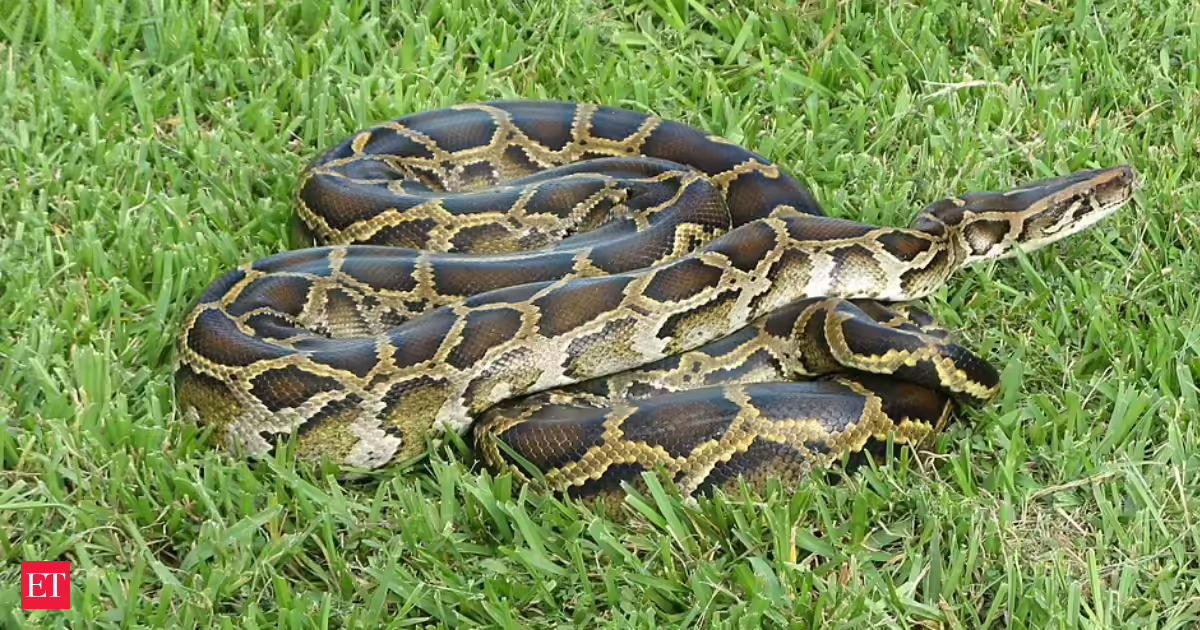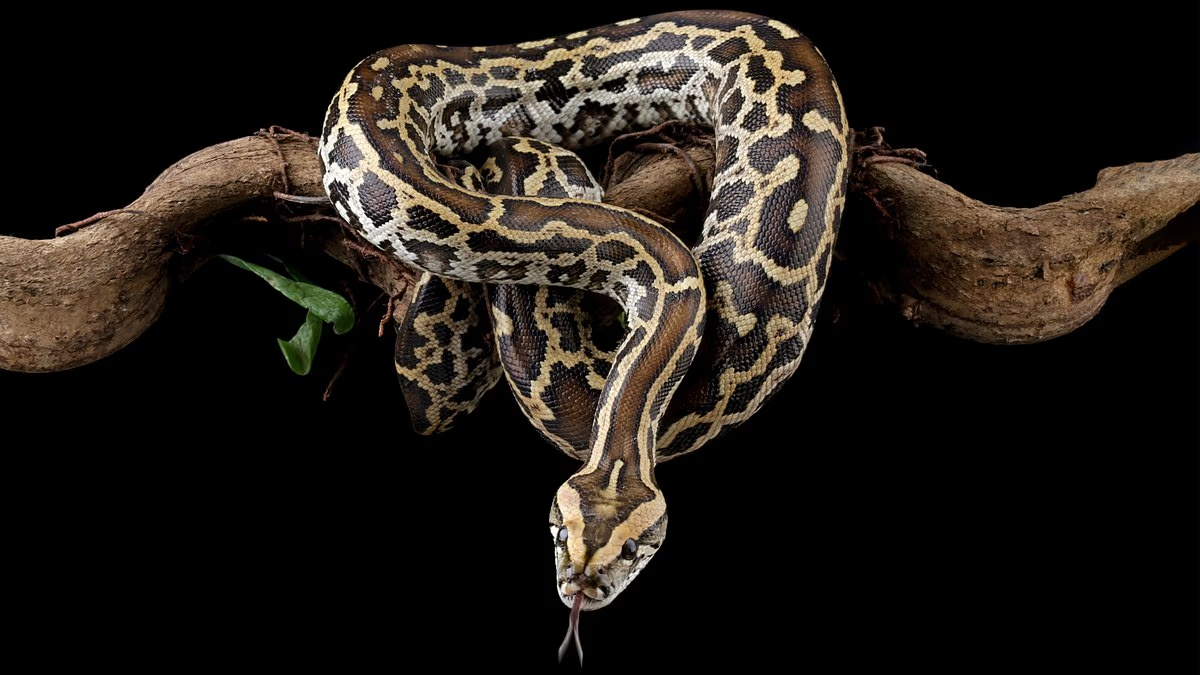
When a Burmese python swallows a rodent or bird whole, its stomach acid helps dissolve the prey’s skeleton, releasing a surge of calcium and phosphorus. Absorbing that much mineral unchecked could be fatal. Now, researchers have uncovered how these apex predators avoid poisoning themselves. A study in the Journal of Experimental Biology led by Dr. Jehan-Hervé Lignot of the University of Montpellier shows that pythons rely on specialized intestinal cells designed to capture and excrete excess bone minerals.Specialized Intestinal CellsDuring long fasts, a python’s digestive tract shrinks. But within 24 hours of feeding, the system rebounds: stomach acid drops to pH 2, pepsin enzymes dissolve prey tissue, and the small intestine doubles in mass.It is in this post-feeding window that the newly identified cells go to work. Unlike standard nutrient-absorbing enterocytes, these cells stay narrow, lack fat droplets, and feature short microvilli with a folded surface forming an apical crypt.Microscopic Mineral SpheroidsEnergy-dispersive X-ray analysis and electron microscopy revealed that these crypts act as precipitation chambers. As dissolved bone minerals pass through, the cells package excess calcium and phosphorus into concentric “spheroids” built around iron-rich cores.Diet Experiments Confirm the MechanismResearchers tested juvenile Burmese pythons on three diets:Whole rodents: Cells produced spheroids containing calcium, phosphorus, iron, oxygen, and sulfur.Boneless prey: No spheroids formed, though iron remained localized in the crypts.Calcium-supplemented prey: Crypts filled again with calcium- and phosphorus-rich particles.Rather than absorbing all skeletal minerals into the bloodstream, pythons precipitate surplus calcium and phosphorus into insoluble particles. These spheroids are shed into the intestinal lumen and eliminated safely in feces.
Feast of Bones: How Burmese pythons neutralize deadly calcium surges when eating prey whole
Burmese pythons have evolved unique intestinal cells that help maintain their mineral balance. These specialized cells are responsible for capturing and disposing of surplus minerals from digested prey. Calcium and phosphorus are transformed into spheroids for safe excretion. Recent dietary studies have validated this crucial process, ensuring these pythons avoid dangerous levels of mineral toxicity.
257 words~1 min read