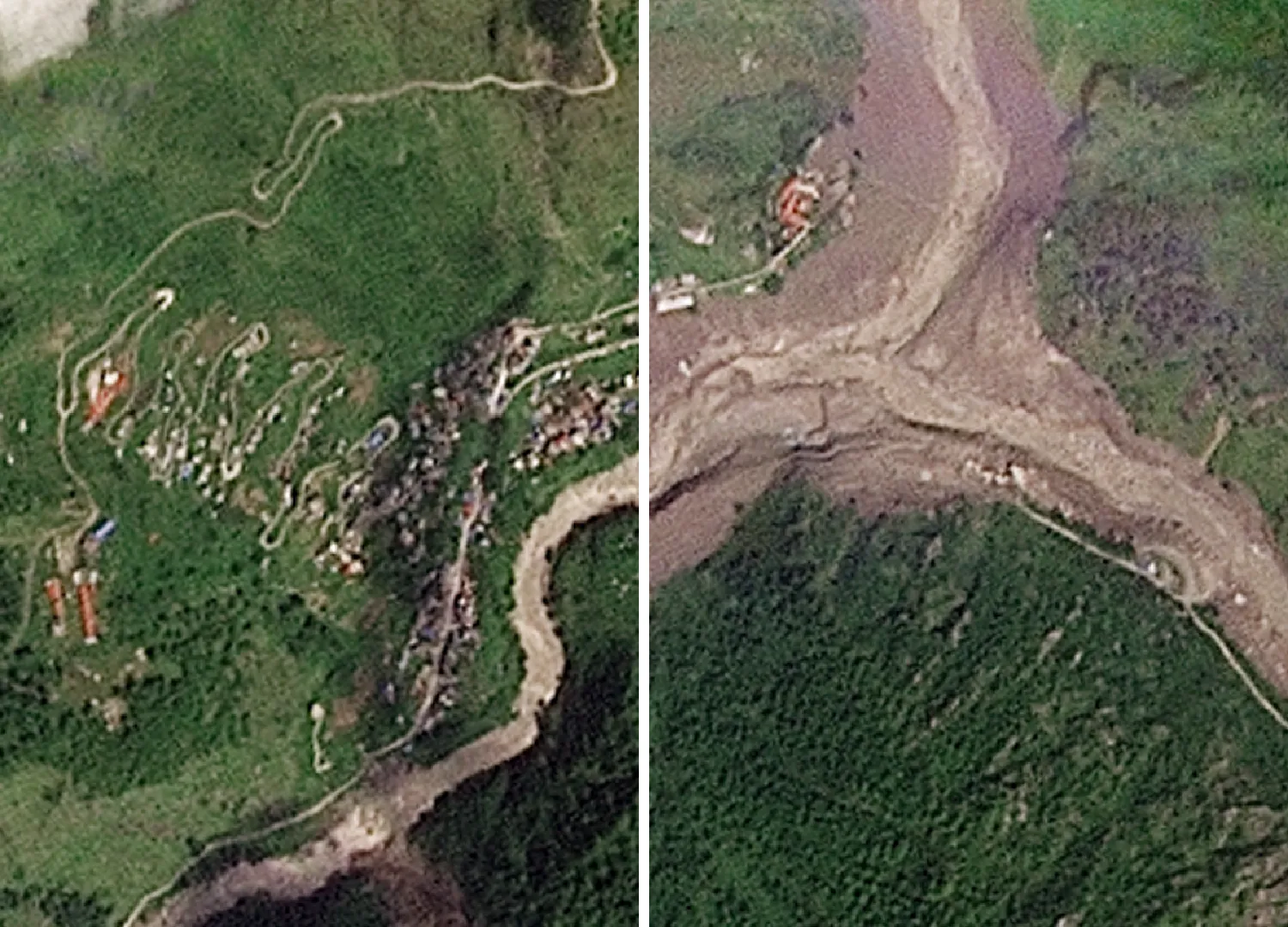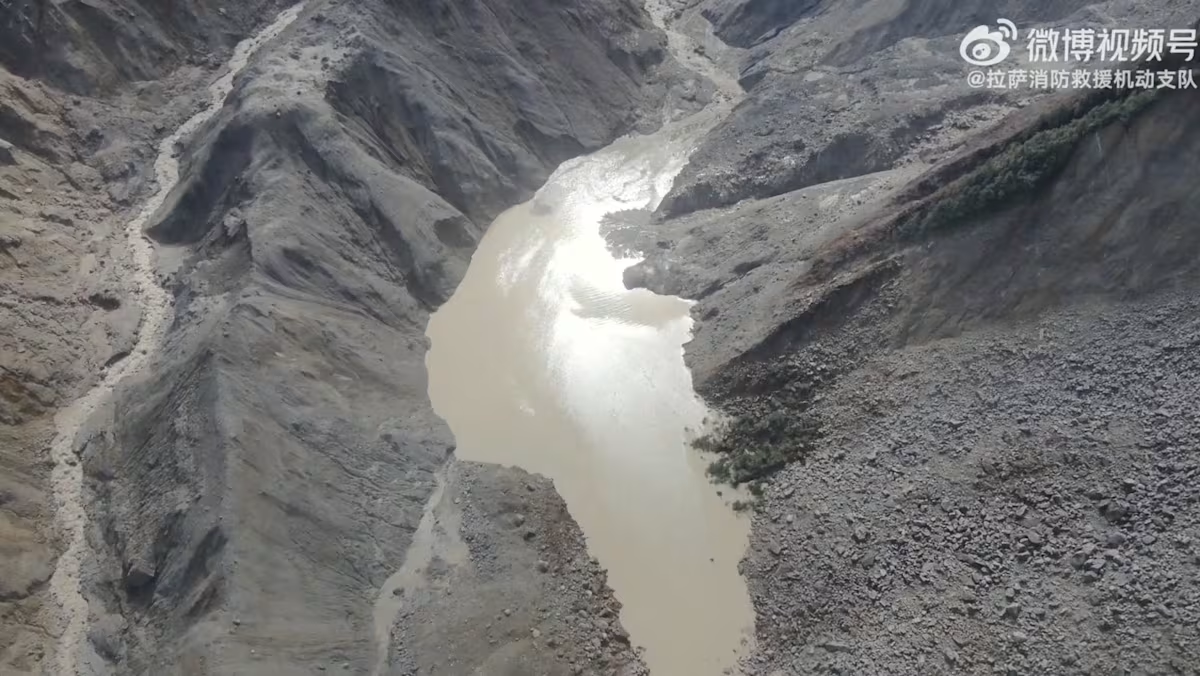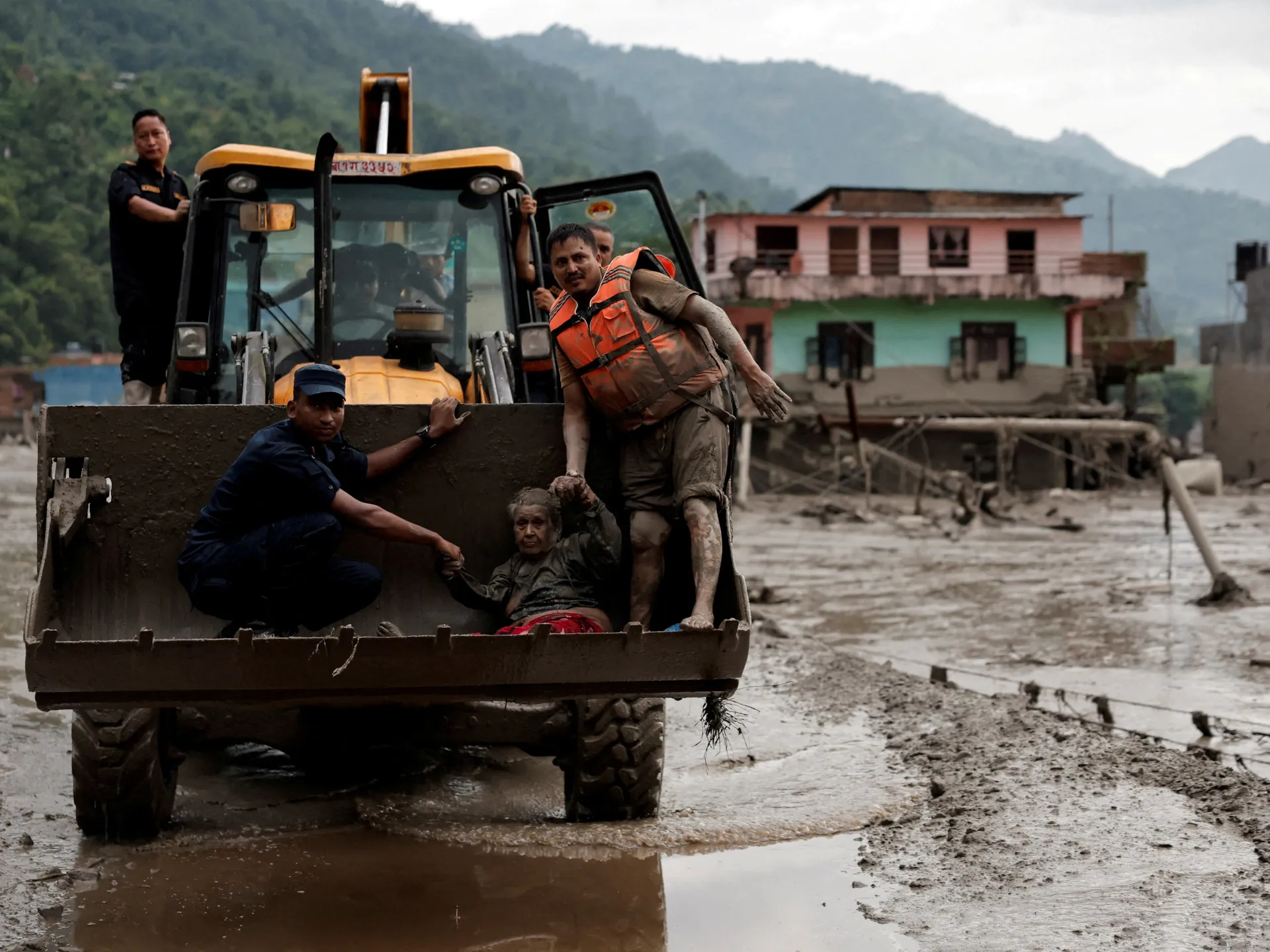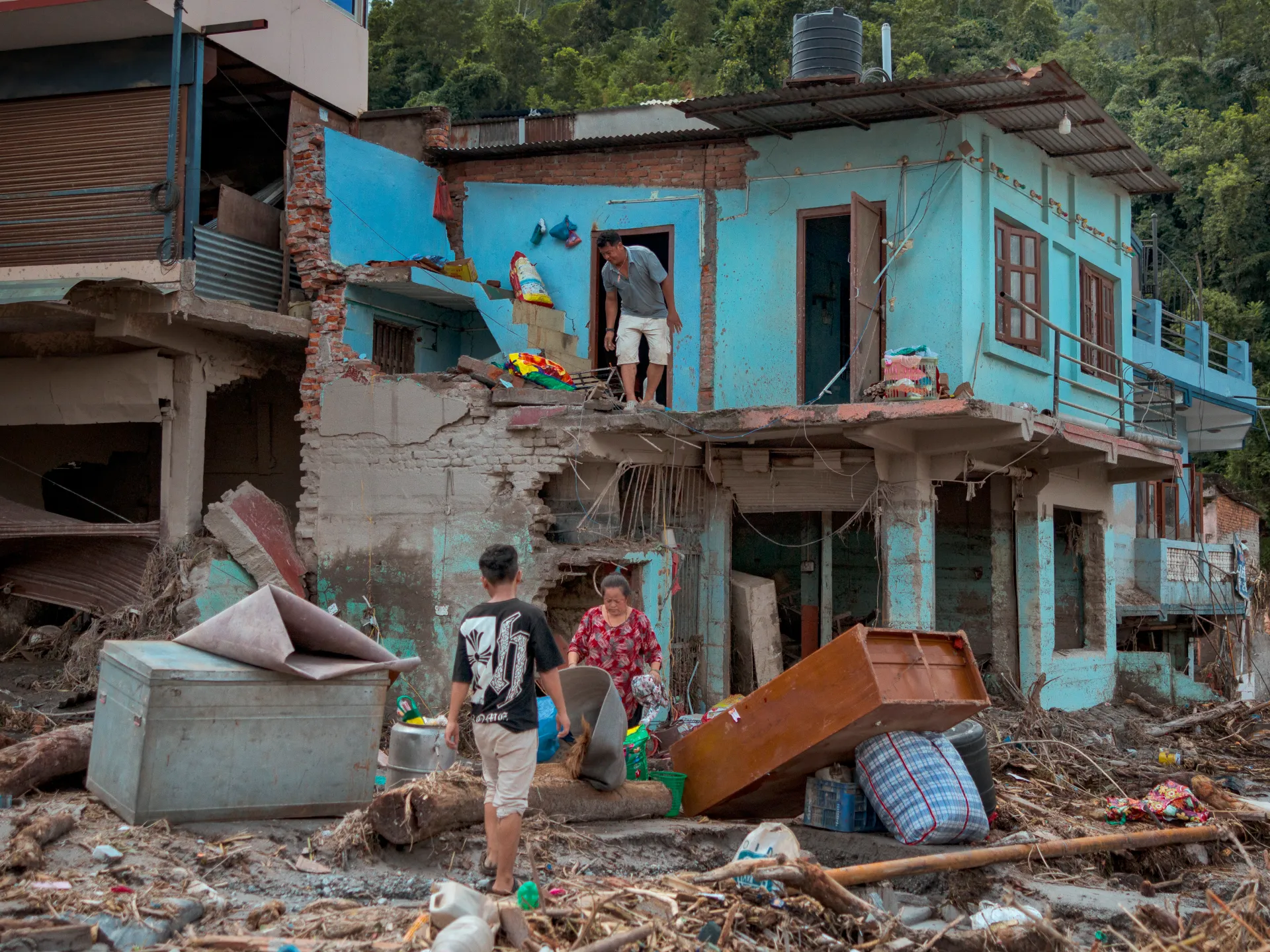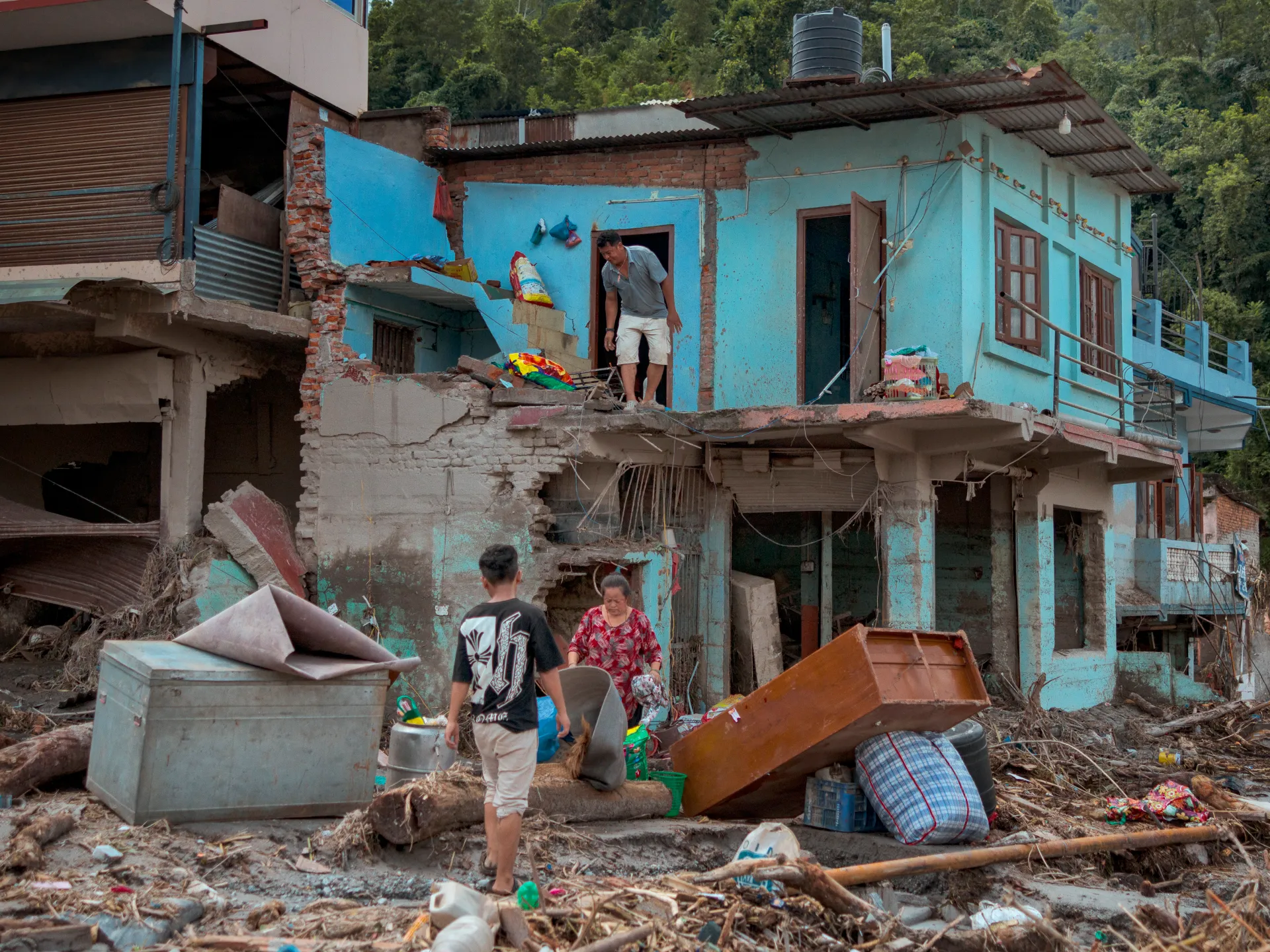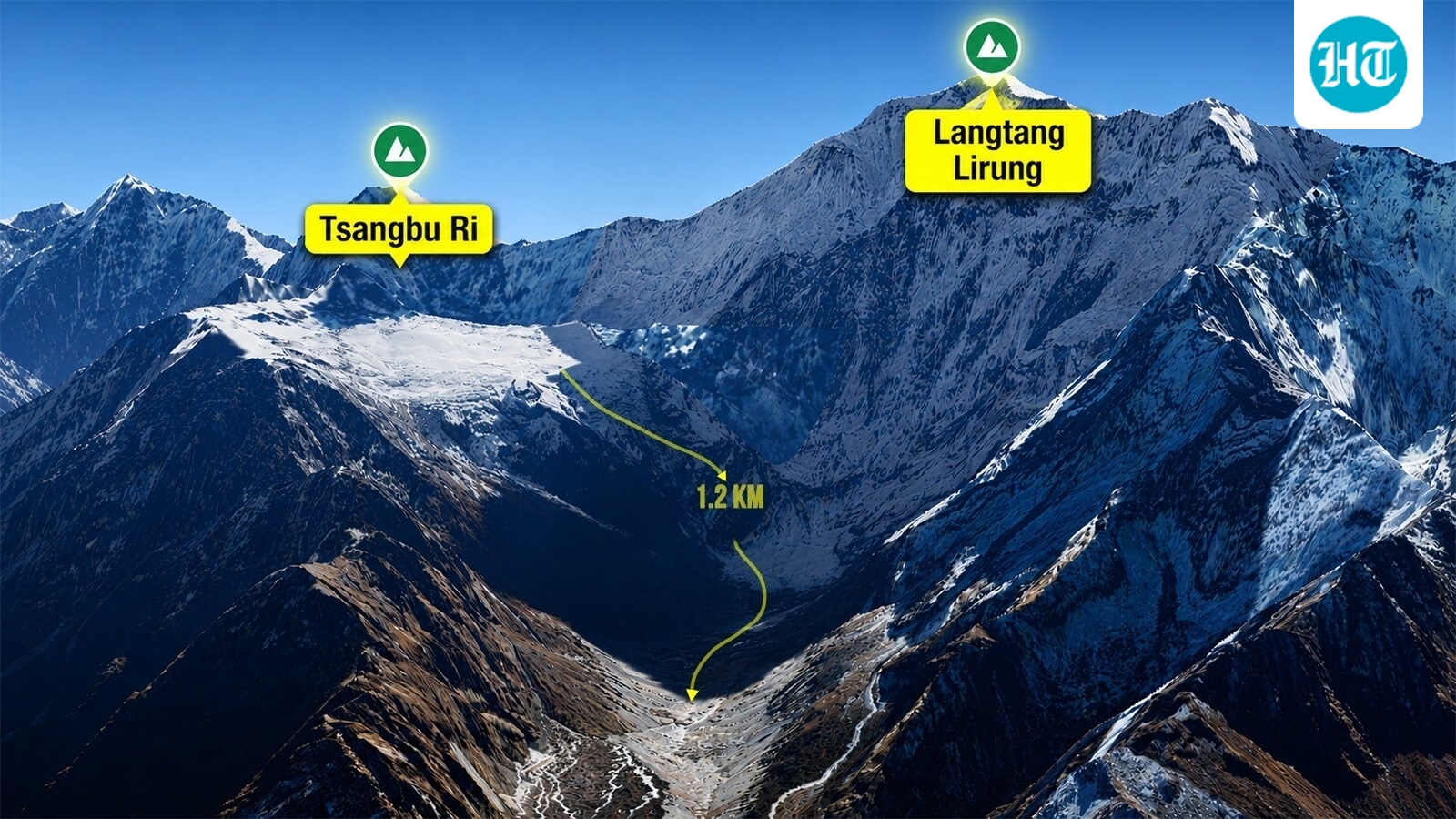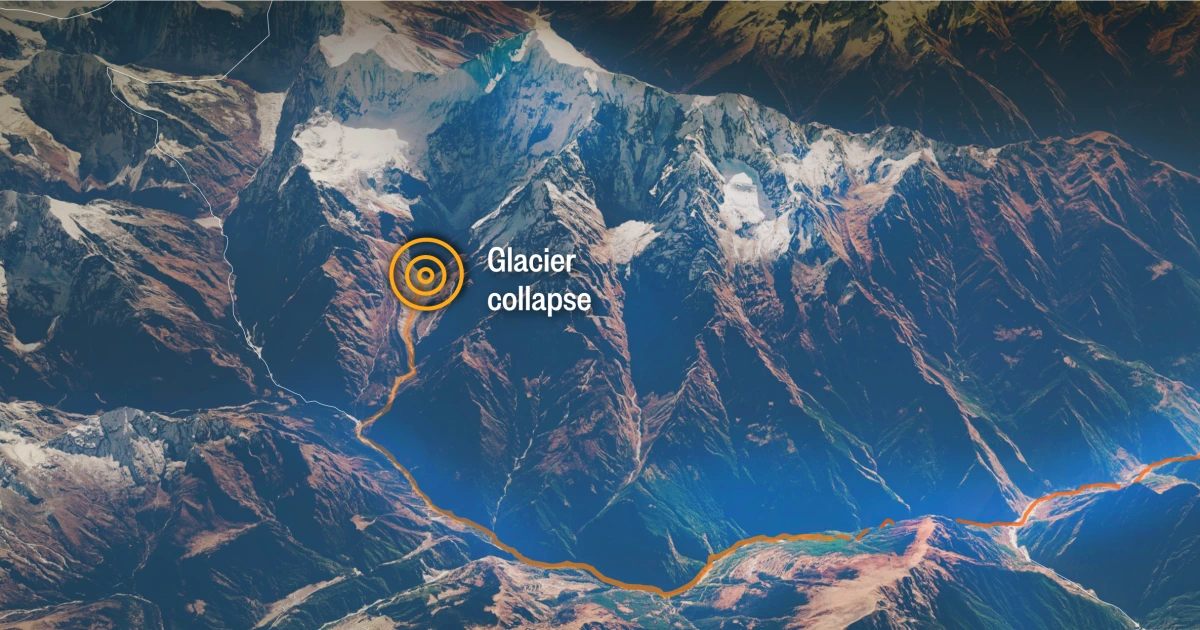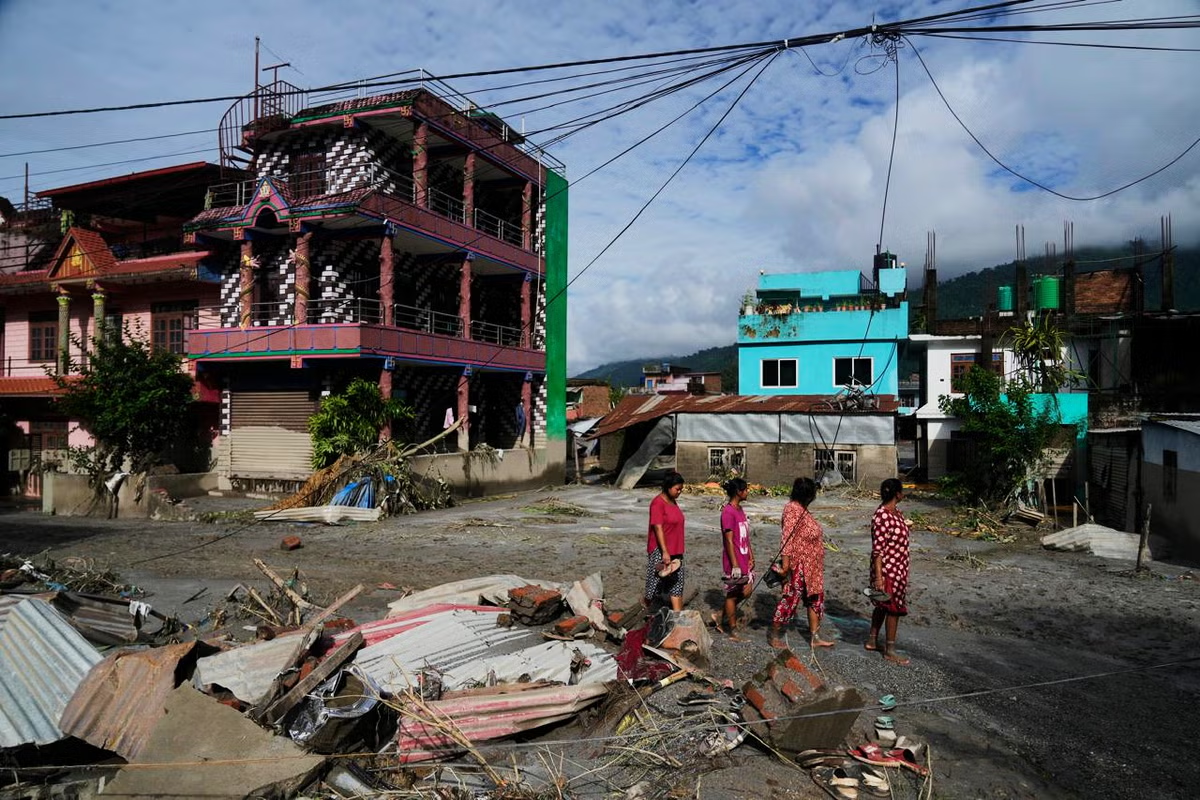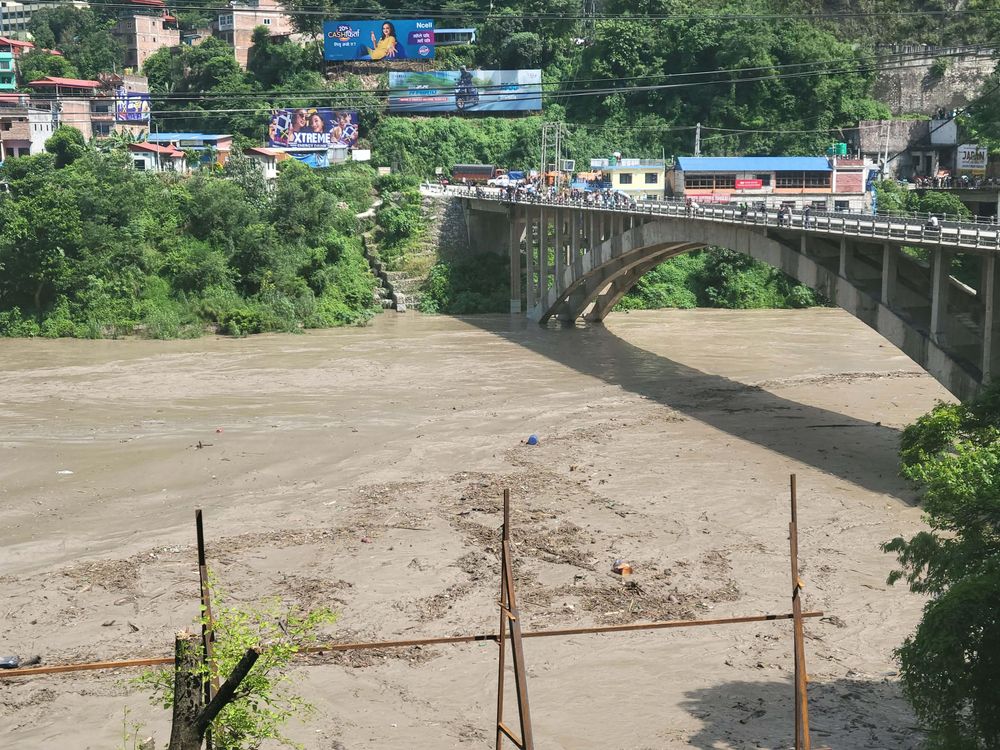
JUST before 8am Pakistan time on Wednesday, a glacier collapsed in the central Himalayas, triggering flash floods and mudslides along the Nepal-China border. The disaster killed hundreds and left many missing or displaced. According to international reports, a part of a glacier in or immediately adjacent to the Langtang Himal range near Nepal collapsed and plunged onto the valley floor, causing an avalanche of ice and rock to crash into the Lhende River about 20 kilometres northeast of a border crossing. The ice and rock initially dammed the river, but the blockage eventually collapsed under the pressure, sending a wall of ice, mud, rock and water roaring downstream. At least 19 bridges and about 40km of roads were destroyed or washed away in the deluge. Multiple hydropower projects were damaged, and power, communications, and road access were severely disrupted in the affected region. Days on, more than 400 people have been confirmed dead, and over 1,500 are said to be missing across Nepal and China, including hundreds of foreign nationals. There are lessons in the incident for Pakistan which should not be ignored.
While this disaster affected a part of the world Pakistanis may seldom think about, our country faces analogous and, in some respects, more extensive risks. Pakistan holds more glaciers than any other place on the planet outside the polar regions. They feed the Indus, on which the nation’s agriculture, power and drinking water depend. Rising temperatures have also created thousands of glacial lakes in Gilgit-Baltistan and KP, of which 33 are considered hazardous and liable to burst. The frequency of Glof events has been rising in recent years with global warming, which is why this is no longer some abstract risk. An ice avalanche, heatwave, heavy rain, or seismic activity can unleash here precisely what has unfolded in Nepal. To its credit, Pakistan has invested in monitoring and early-warning networks, as well as community training under Glof projects. The NDMA and the relevant agencies in GB and KP should be given the resources to take that programme forward with enhanced monitoring and surveillance capabilities and stronger disaster response mechanisms in high-risk areas. Nepal’s catastrophe should put an end to any lingering notion that such disasters are black swan events. In a fast-warming region, they are foreseeable, and preparedness for any eventuality is the best option we may have available.