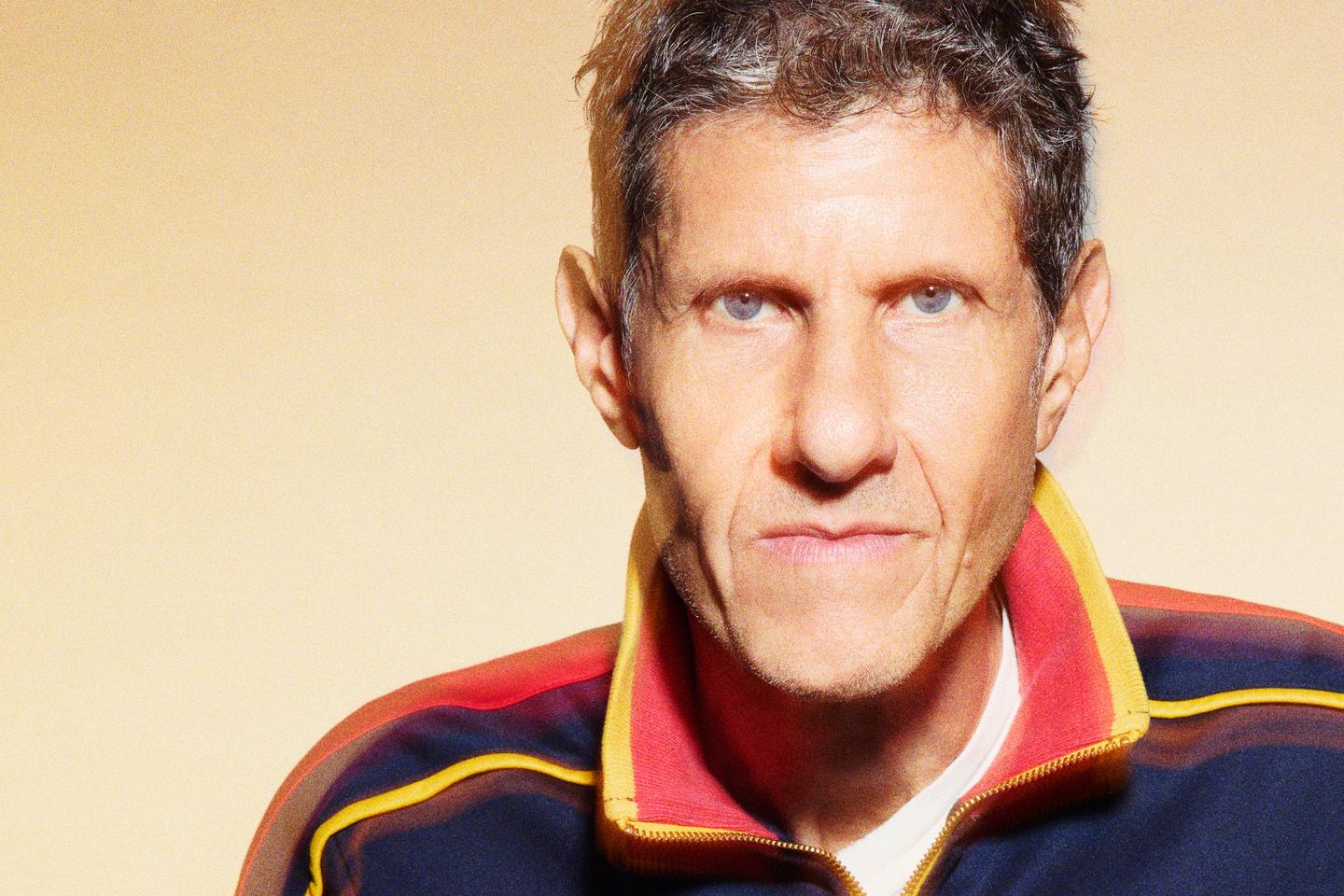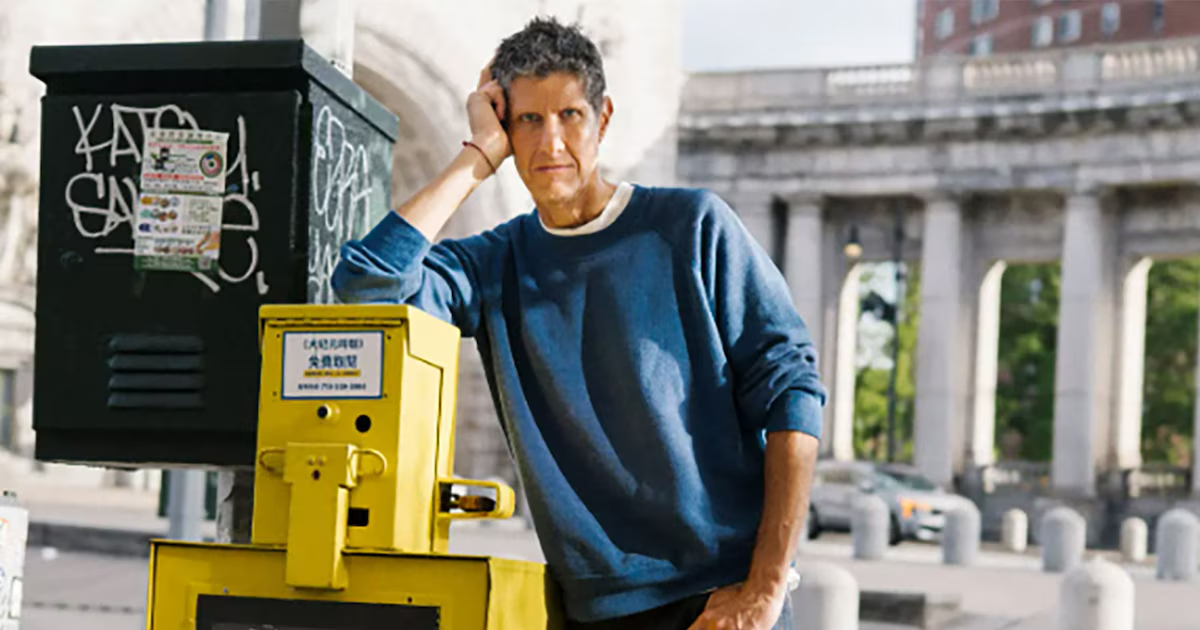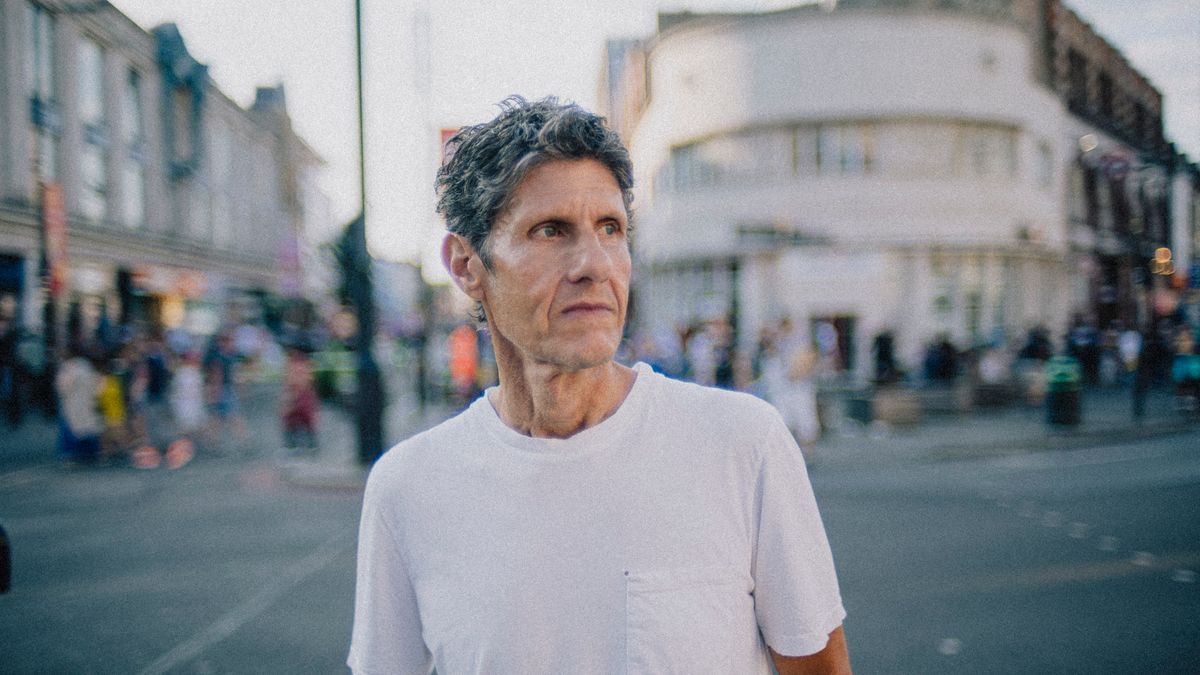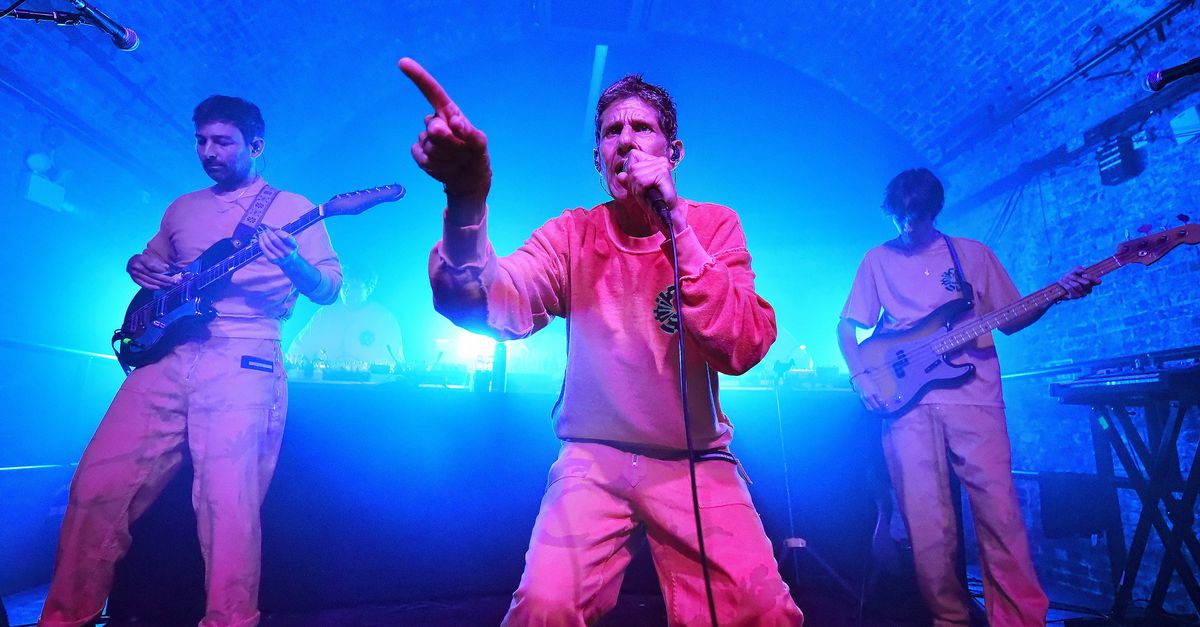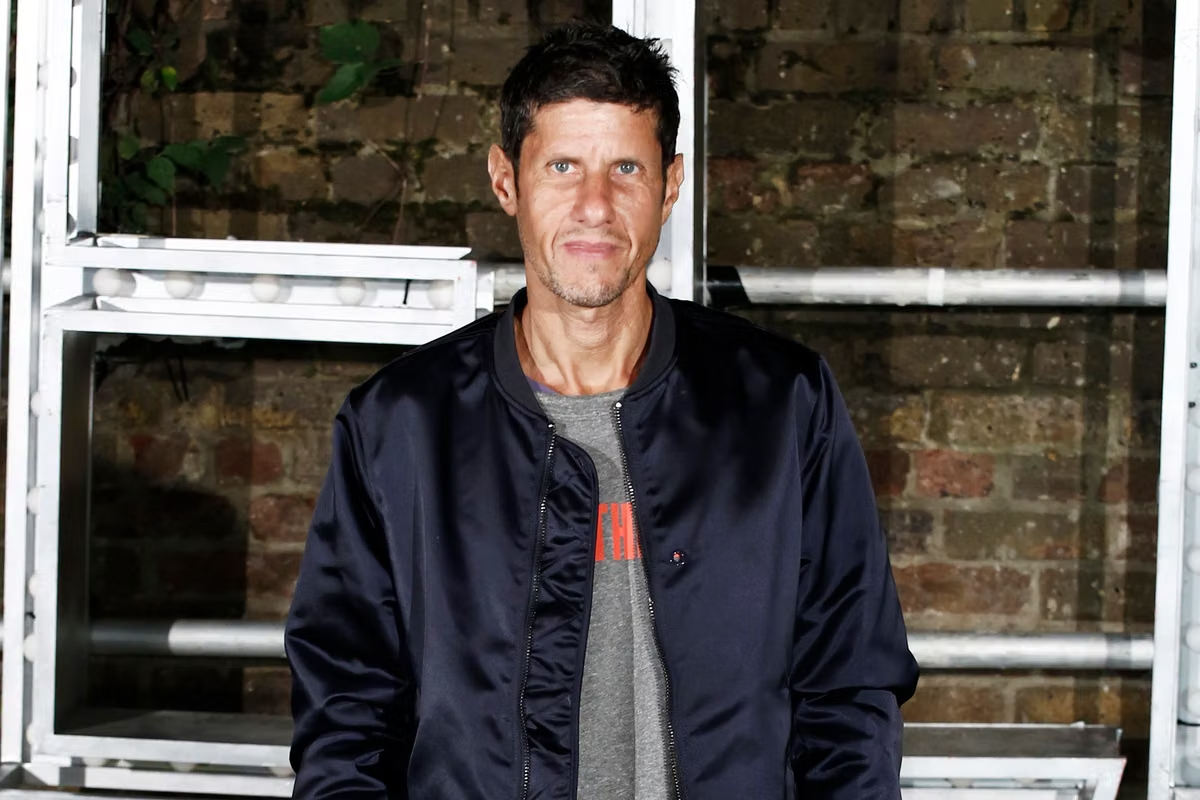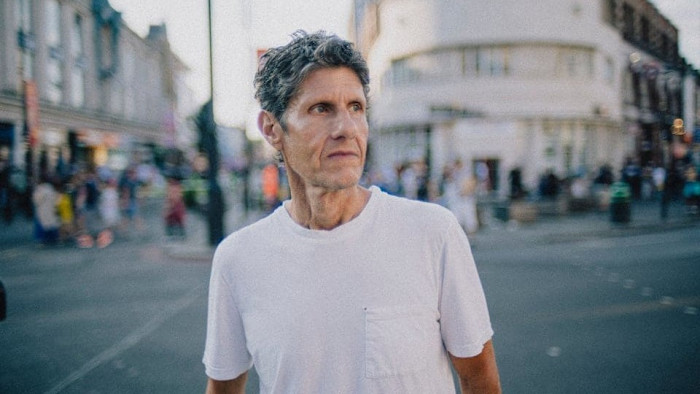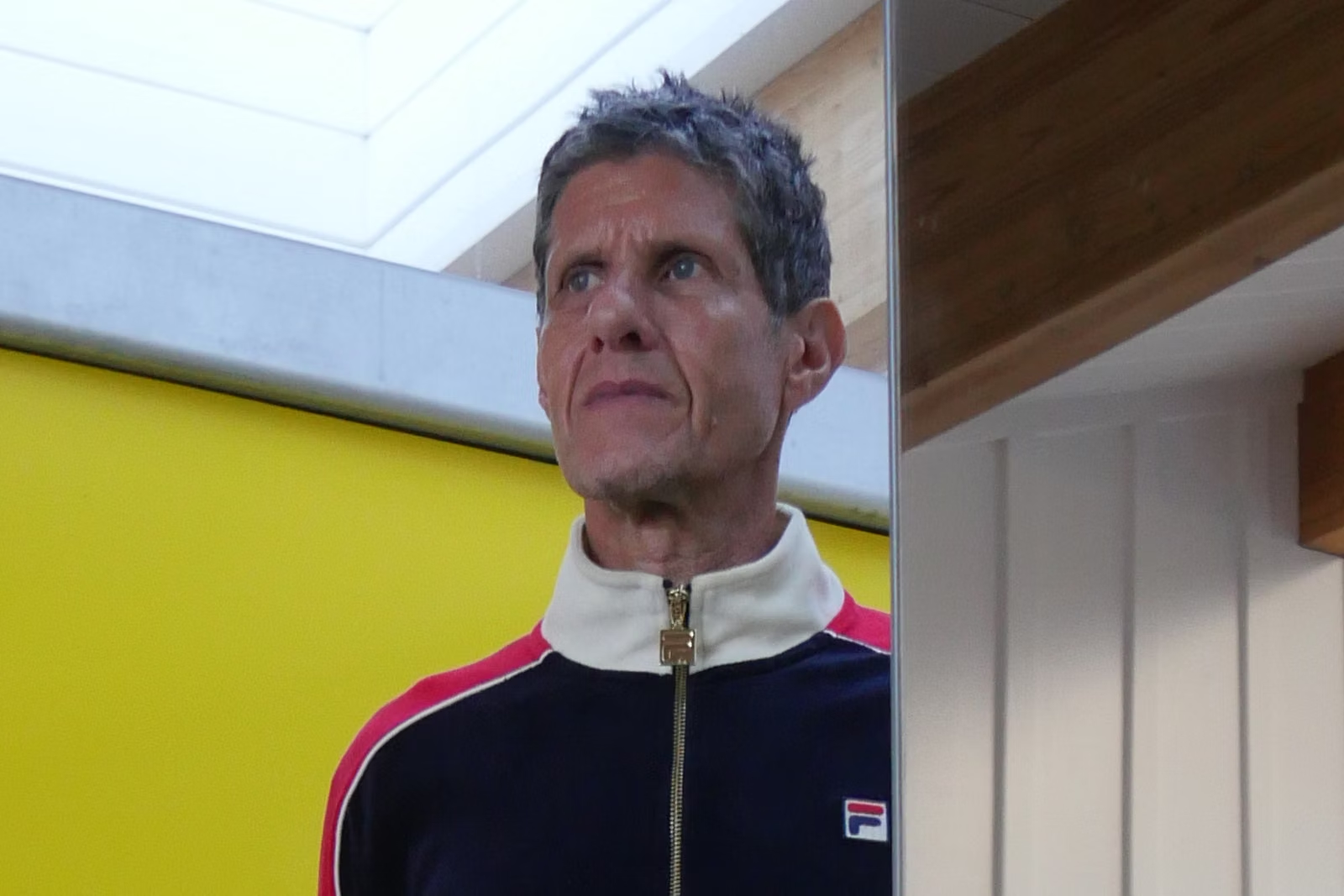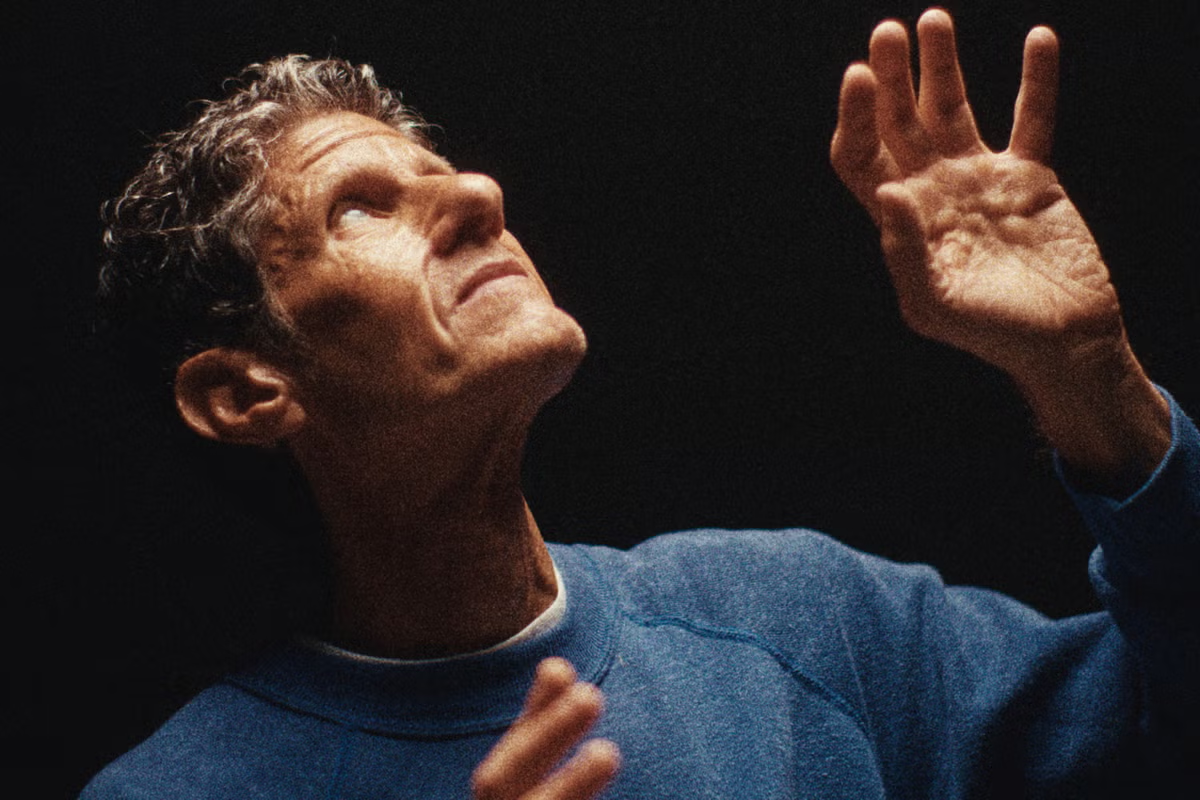
When Michael Diamond started work on his first solo album, he couldn’t help but think of his late bandmate, Adam “MCA” Yauch. It’s been 14 years since his fellow Beastie Boy died of cancer aged 47, a tragedy that brought the wildly inventive hip-hop trio they shared with Adam “Ad-Rock” Horovitz to an immediate and premature end. All this time later, Yauch still looms large in Diamond’s psyche. “He was a big brother figure to me,” says the rapper known as Mike D. “I feel like he had an influence on me making this record.”It was Yauch, he explains, who pushed the group to chase their wildest dreams. “He never allowed us to be limited to things that seemed sensible or realistic,” recalls Diamond. “However big or beyond the idea was: absolutely that’s the one you’re going to go for.”Diamond’s album, Thank You, doesn’t sound like a Beastie Boys record, but it is powered by a similar verbal dexterity and an unpredictable sonic palette that skitters from jungle breakbeats to lolloping synthesizer grooves. At 60, Diamond has returned refreshed and energized by his time away from the mic, but he is also older and wiser than the cocky MC who once declared himself the “illest motherf***er from here to Gardena”.Diamond never imagined himself as a rap elder statesman. Back when the Beastie Boys released their debut album, Licensed to Ill, in November 1986, few people would have believed it would be talked about with any kind of reverence 40 years later. The head of their label, Def Jam, rap mogul Russell Simmons, told them the genre had no chance of longevity. “He was very clear,” Diamond says. “He literally said that to us: ‘There’s no catalogue in rap.’”Posse in effect: Adam ‘Ad-Rock’ Horovitz, Michael ‘Mike D’ Diamond and Adam ‘MCA’ Yauch released the first Beastie Boys album ‘Licensed to Ill’ in 1986 (Lester Cohen/WireImage)Licensed to Ill was a phenomenon, the first rap album to top the Billboard 200 chart. Produced by Def Jam co-founder Rick Rubin, who arranged for members of the metal group Slayer to provide uncredited guitar work, it was a pioneering blend of rock and hip-hop – lyrics about drinking, debauchery and girls shouted over Led Zeppelin samples and punchy 808 drum machine beats – that made superstars of the Beasties almost overnight. Boisterous single “(You Gotta) Fight for Your Right (To Party!)” was embraced by exactly the sort of frat boy jocks it intended to satirise. Not that the band minded all that much at the time, playing up loutish personas of their own. They set off for a celebratory world tour with a stage design comprising beer kegs, a go-go dancer cage and a 25ft hydraulic penis that would rise out of a box when they played their biggest hit.“Humility was not part of Licensed to Ill,” Diamond acknowledges with a chuckle. “Being humble wasn’t part of our program at 18 or 19, as it really isn’t generally for most 18- or 19-year-olds. We were young, raging with testosterone, and running around having a lot of fun.”Today he’s speaking to me over a video call from his home in Malibu. His salt-and-pepper hair is freshly surf-tousled; this wiry New York punk kid is happily settled into life as a middle-aged Southern Californian beach bum. He’s full of stories, and fond of digressions. “Sorry,” he says sheepishly as another anecdote veers away from its intended destination. “I’m not landing the plane very well here.”I think Russell [Simmons] really misjudged us... his ambition was just to make a lot of money at all costsEnjoy unlimited access to 100 million ad-free songs and podcasts with Amazon MusicSign up now for a 30-day free trial. Terms apply.Try for freeADVERTISEMENT. If you sign up to this service we will earn commission. This revenue helps to fund journalism across The Independent.The Beastie Boys had to do their growing up in public. By the time the Licensed to Ill tour arrived in Britain in 1987, they were at the centre of a confected moral panic, with MPs calling for them to be banned from performing in the country and a tabloid story, which the band instantly denied, about them mocking sick children at a festival in Montreux. At an infamous gig in Liverpool, a riot broke out and Horovitz was arrested for assault. “One thing I’m thankful for is that we learned a lot, and at a relatively young age,” reflects Diamond now, adding that they quickly realized they would have to approach future albums very differently. Back in New York, however, Simmons disagreed. He wanted another “Fight for Your Right” and a Licensed to Ill: Part 2. When the band suggested they’d prefer to pursue something more creatively fulfilling, Simmons looked at them blankly: Didn’t they want to make money? “I think Russell really misjudged us in that sense,” says Diamond. “He came from a world where money ruled everything, and his ambition was just to make a lot of money at all costs. We weren’t raised that way.”No Sleep Till Brooklyn: The Beastie Boys with fellow Def Jam artists Run-D.M.C., in New York in 1987 (Gershoff/Mediapunch/Shutterstock)Diamond grew up on Manhattan’s Upper West Side, the son of art dealer Harold and interior decorator Hester. Their middle-class home had pieces by Rothko and Willem de Kooning hanging on the walls, and mealtimes were regularly punctuated by impassioned artistic debate with their parents’ eccentric guests. “That felt very normal to me,” remembers Diamond. “Our home was filled constantly with artists, and everybody had a strong opinion. Even as a kid, I was totally integrated into that world, which is something I tried to practice as a parent as well.”We could only have become a band, and I could only have been the person I was, by growing up in New York City at that timeOf course, the city has changed. New York was once a relatively inexpensive place to live for young creatives. “The city was bankrupt,” explains Diamond. “There was very high crime. There was a real element of danger. Most families didn’t want to have anything to do with raising their family in New York City. The families that decided to prioritize art and culture and the chaos of life that you get in New York City were families that were committed to valuing creativity. Adam [Horovitz] and I have said many times that we could only have become a band, and I could only have been the person I was, by growing up in New York City at that time.”Just as Diamond turned 17, his father died after a brief illness. His older brothers had already moved out, and Diamond found himself alone with his mother. He filled the new and unwelcome silence in their home with a cacophony of punk, from The Clash to Black Flag. In their early days, the Beastie Boys were a hardcore band (Diamond first met Yauch at a Bad Brains show). That changed when Run-D.M.C. released “Sucker MC’s” in 1983. Suddenly, making rap music seemed more punk than punk-rock.After Licensed to Ill made their name, the Beasties split with Def Jam and Simmons, who they accused of failing to pay them royalties. They moved to Los Angeles, signed with Capitol Records and released their 1989 follow-up Paul’s Boutique, a groundbreaking work of multi-layered sampling that failed to match the commercial success of their debut but established their credentials as genuinely forward-looking musicians. On 1992’s Check Your Head, they changed direction again by finally learning to play their instruments, with Diamond installed as the group’s drummer. More suits than Jacoby & Meyers: The Beastie Boys performing at Live Earth at London’s Wembley Stadium in 2007 (AFP/Getty)Years before, when they transitioned from hardcore band to rap group, they’d kicked out original drummer Kate Schellenbach at Rubin’s urging. The band later regretted the way they handled this, as they did much of their past behavior. Yauch, the group’s conscience, famously offered a “long overdue” apology for their earlier misogyny on “Sure Shot”, from 1994’s Ill Communication. Each new mutation of the Beastie Boys brought with it a different sound and ethos, from the eclectic, dub-influenced Hello Nasty in 1998 to the instrumental jazz funk of 2007’s The Mix-Up. “I think each of our records are a sort of testament,” says Diamond. “A history of where we’re at in each moment.”The same could be said of Thank You, which was recorded over two weeks in his home studio and sketches a hazy portrait of where Diamond finds himself now. At times, he casts a wary eye towards the modern world. On the rumbling “Crypto”, which was inspired by an acquaintance of his sons – Davis, 23, and Skyler, 22 – getting rich trading cryptocurrency aged 19, he calls out the same sort of greed he once clashed with Simmons about. My kids are free of any of the sort of polite respect that my other collaborators might offer meAt other moments Diamond grows contemplative and introspective. “Start with a goal, get lost in the deadline/ Don’t see the road ahead, responsibilities/ I try to please everyone, it’s killing me,” he raps on “I Don’t Care”. On the album’s wistful title track, he nods to Patti Smith’s memoir Just Kids with the refrain, “We were just kids”, conveying his gratitude for the chance to run wild in New York. Thank You is a family affair. While his sons don’t rap on the record (they have their own band, Very Nice Person), their musical input was invaluable in steering the direction of the album. “I was no longer doing vocals to top or please two other bandmates, but that’s why it was great having my kids involved,” says Diamond. “They could be very honest with me, and at times critical. They’re free of any of the sort of polite respect that my other collaborators might offer me.” As for his rhymes, Diamond says the album’s lyrics were influenced by a period of reflection at a Vipassana silent meditation retreat in northern California, a long way from the grimy New York clubs that inspired him four decades ago while working on Licensed to Ill. It’s a journey he’s happy to have made. “At that age, you haven’t had your ass beat enough to make you realize what consequences are,” says Diamond, with a rueful smile. “That’s the joy of maturity.”Mike D’s ‘Thank You’ is out now
Beastie Boys’ Mike D on his party days of yore: ‘We were full of testosterone’
Forty years on from his trailblazing group’s incendiary debut, the New York-born rapper is releasing his first solo record. He talks to Kevin E G Perry about their raucous hard-partying early years, clashing with label boss Russell Simmons, and what he learned from late bandmate Adam Yauch
1,735 words~8 min read