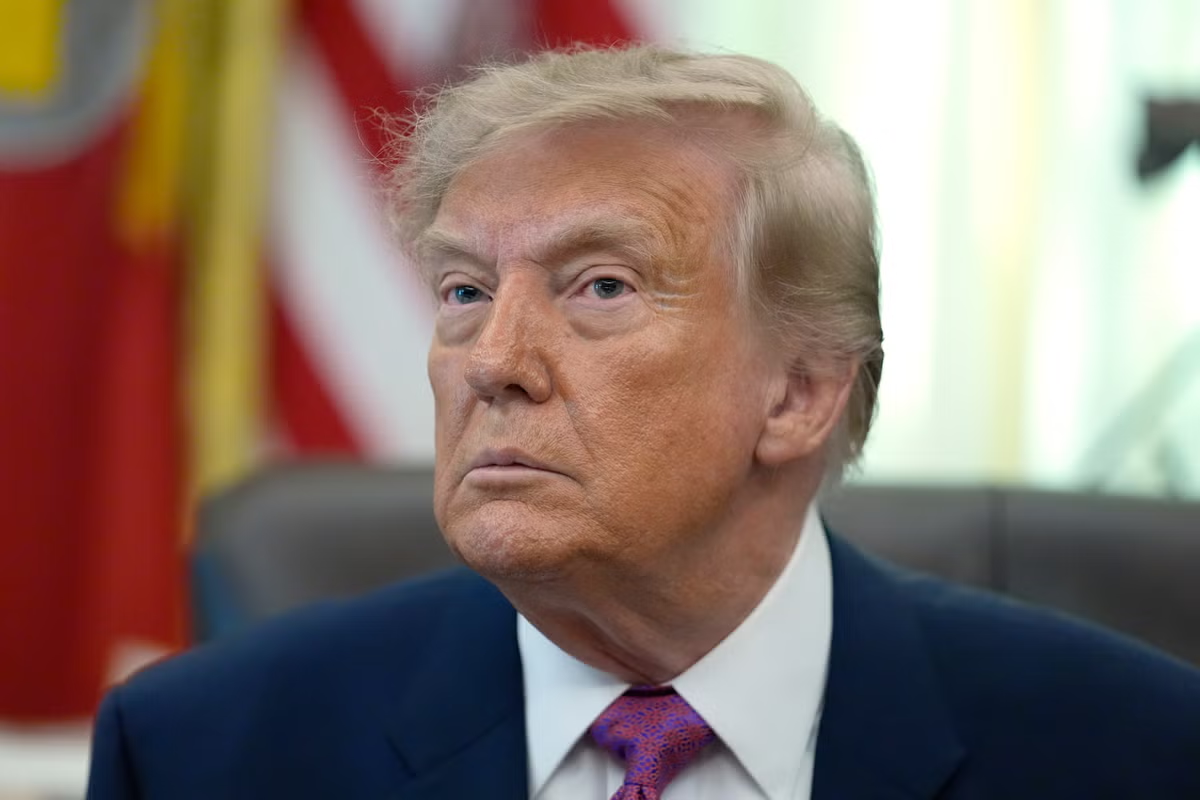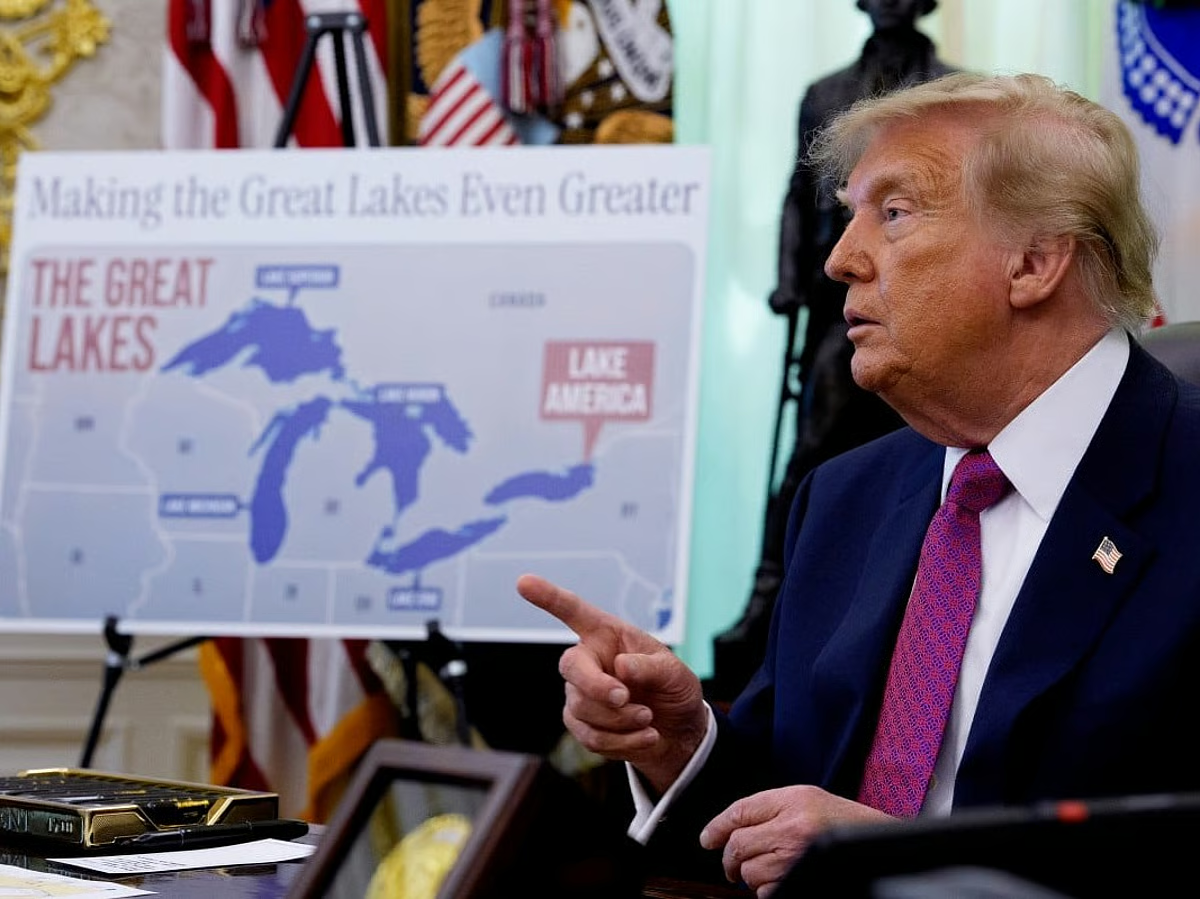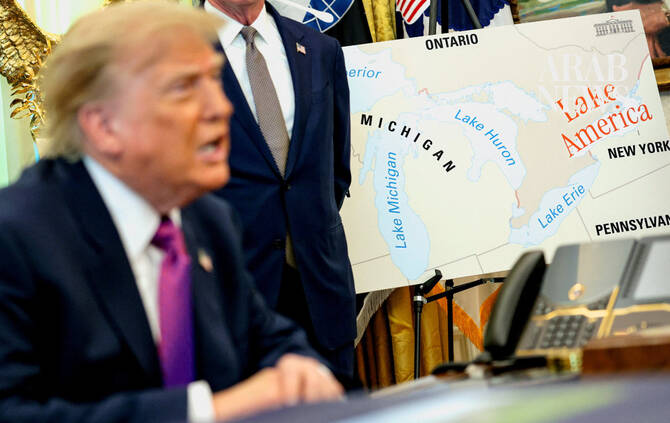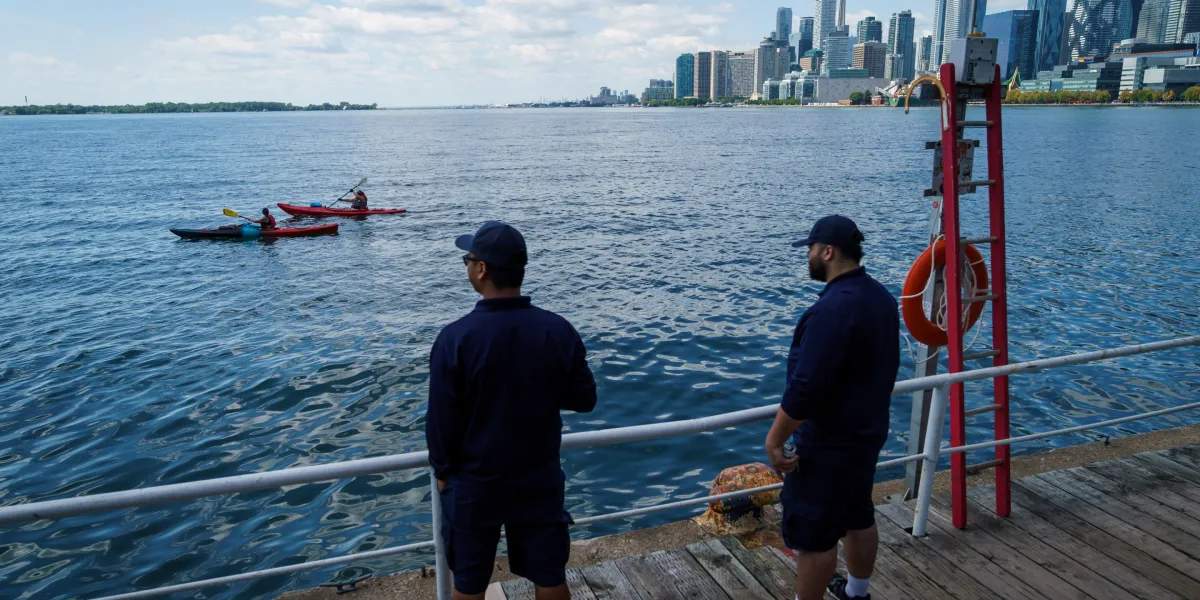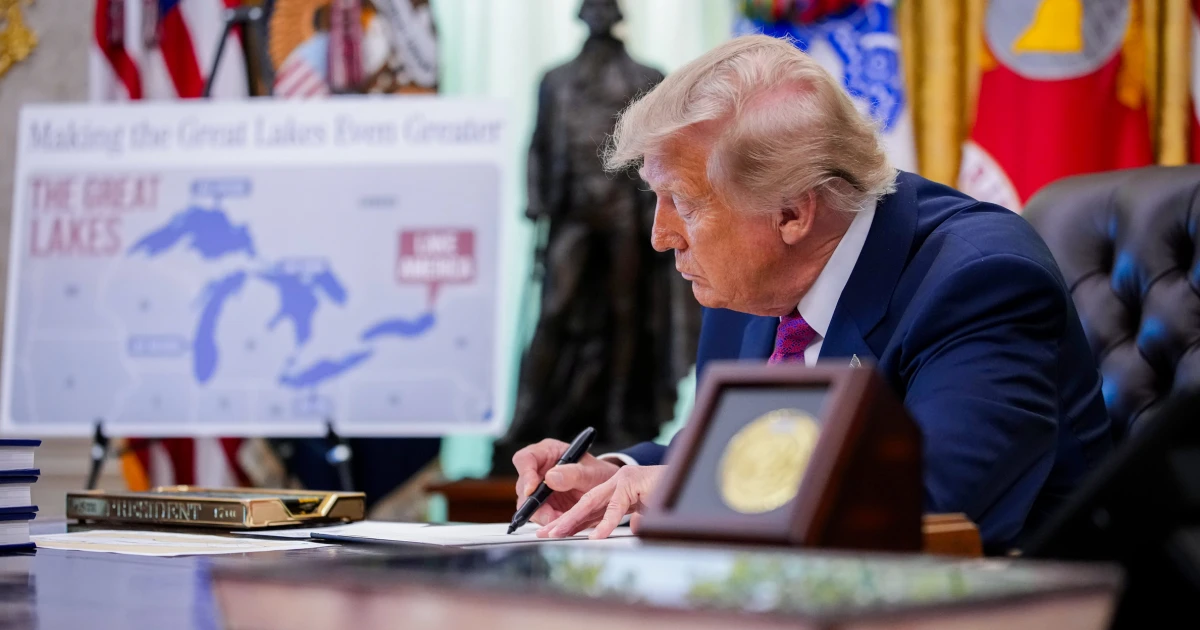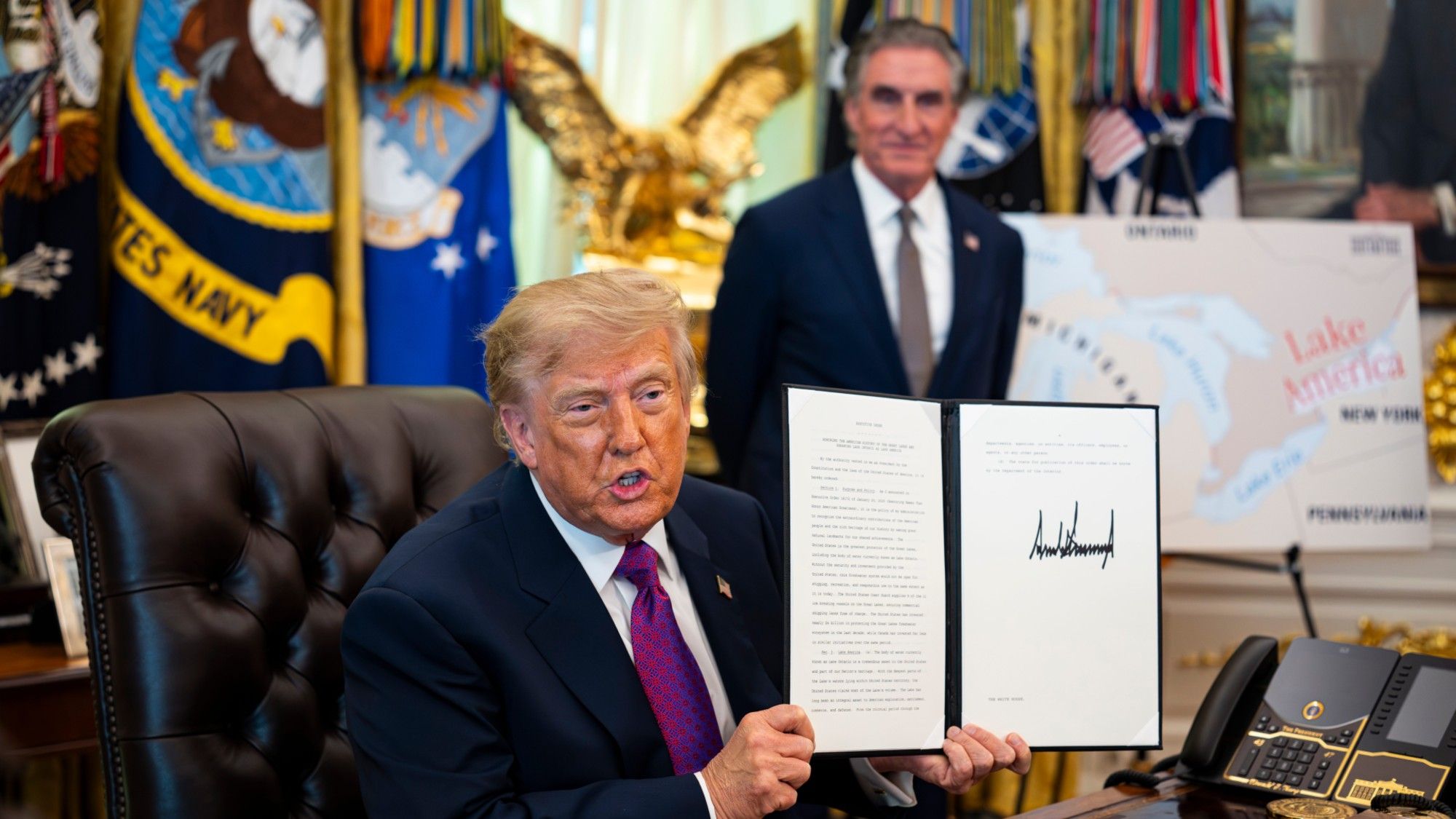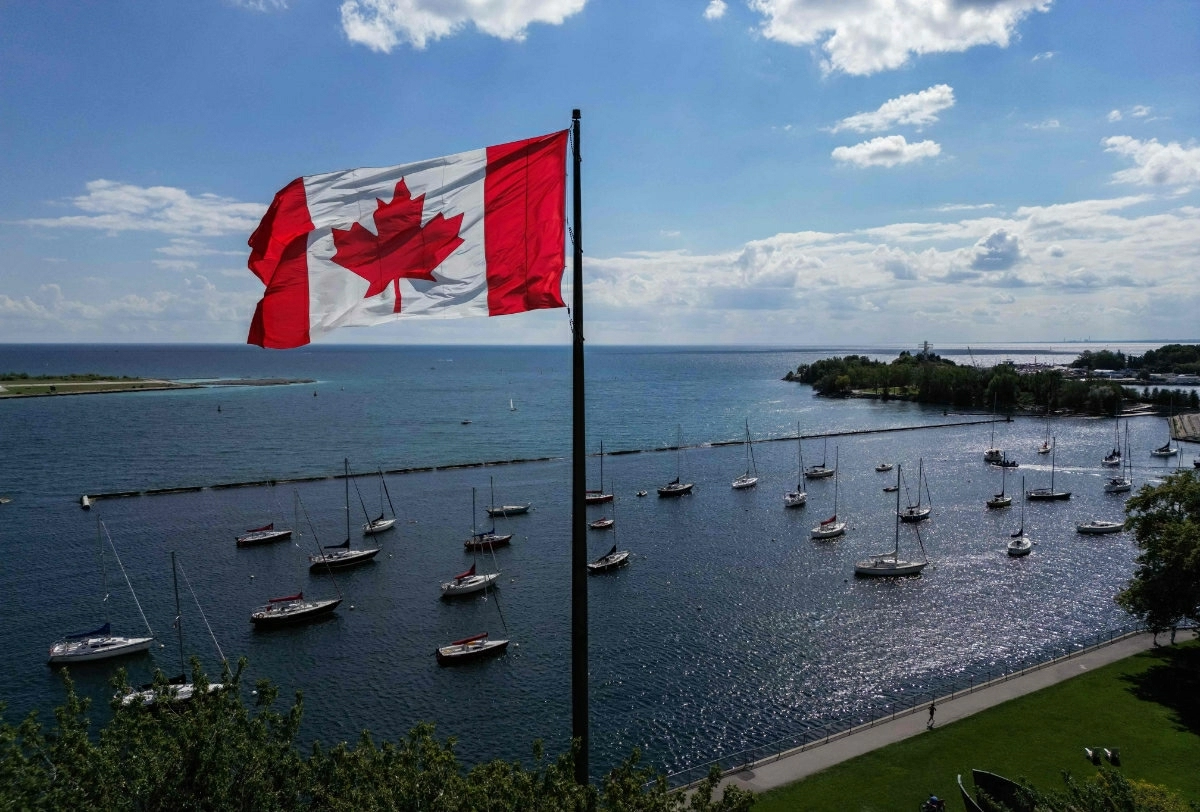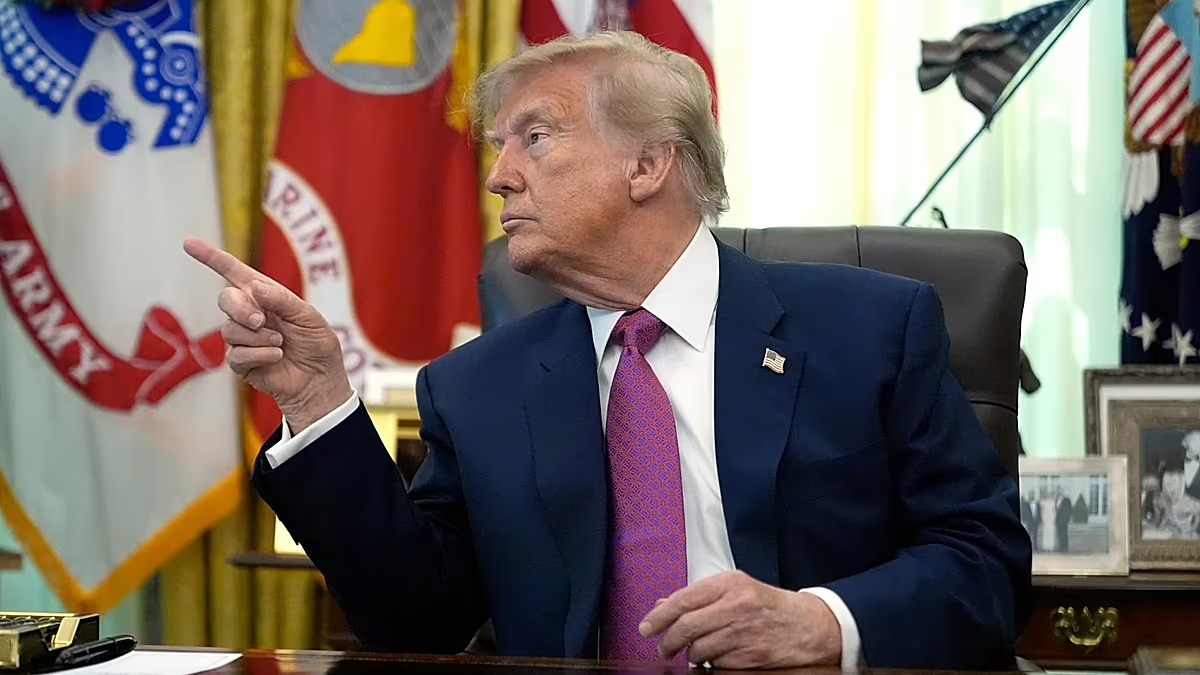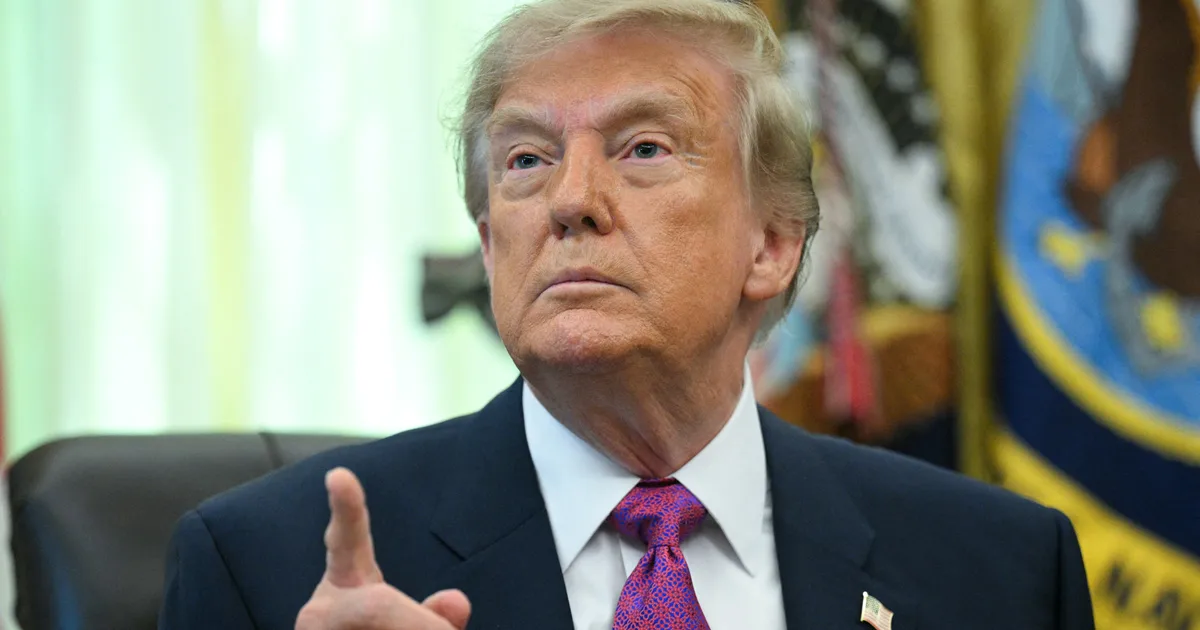
President Donald Trump, already at war against Iran, decided Thursday to go against America’s longtime ally Canada by giving Lake Ontario a name he prefers: “Lake America.”On Thursday, Trump signed an executive order to rename Lake Ontario, which borders both the U.S. and Canada. Now, federal databases have 30 days to update to the new name.This escalation is the result of failed trade negotiations. Last week, after trade talks between the United States and its northern neighbor collapsed, the Trump administration imposed 50% tariffs on about $20 billion worth of Canadian goods, and Canada responded with retaliatory tariffs. “Canada has been ripping us off for a long time on trade, very sadly,” Trump said when explaining why the sudden name change was needed. But Trump’s powers are limited. He can compel U.S. federal agencies to follow his rebrand, but foreign governments are not compelled to recognize it –– and Canadian officials aren’t amused by what Trump declared. Canadian Prime Minister Mark Carney, for one, invoked the name’s Native history and said Lake Ontario’s name “is more than 400 years old, predating both the Confederation of Canada and the Declaration of Independence of the United States of America.”So whom, exactly, is this name change for? Researchers who study foreign diplomacy and governing styles think this is a purposeful and petty provocation.Trump “has this approach where he acts erratically in order to try to increase the the perception of his power,” said Emma Briant, a researcher and expert on contemporary propaganda and information warfare. “It’s designed to create this feeling that if you do anything that Trump doesn’t want, there are consequences.” Nick Cull, a historian of propaganda and professor of communication at the University of Southern California’s Annenberg School for Communication and Journalism, said Trump’s renaming stunt is “an act of trolling: saying something deliberately provocative with the objective of eliciting cheers from one’s base and irritating the adversary.”“There’s just a desire to irritate and a desire to stick his thumb in the eye of people who don’t give him proper fealty,” said Leonard Steinhorn, who teaches communications and history at American University. But this behavior doesn’t make Trump appear strong –– it makes him appear small-minded and petty, according to political experts. Briant said Trump’s actions make it easier for Canadians to oppose Trump and to support Carney’s harder negotiations. “This adds to [Carney’s] power, not Trump’s,” she said. “So I think it was a very silly move by somebody who doesn’t really understand the international system.”Andrew Harnik via Getty ImagesTrump’s executive order has imperialistic language that ignores history, experts say.To Steinhorn, Trump’s rebrand of Lake Ontario harkens back to Trump’s habit of giving his political enemies monikers like “Crooked Hillary” and “Little Marco.”“It’s a technique to diminish the people and to repeat it enough so that this is what people say when they hear that name,” Steinhorn said. But experts don’t think Trump will be successful at this rebrand.“This re-naming is an extension of his insistence on inventing nicknames for his enemies, but by applying this to the map, he is setting himself above his predecessors and contemporaries alike and asserting his idiosyncratic will,” Cull said. “It is a bad idea, as he appears more absurd and petty.”Trump’s earlier rebrand of the “Gulf of America” has been updated on relevant federal websites, but most of the world still calls it the Gulf of Mexico. “His base will probably call it Lake America and Gulf of America, but the rest of the world, I don’t think so,” Steinhorn said. “It’s petty. It’s small, and it will ultimately be short-lived.”Trump’s Action Is Also An ‘Imperialist’ Move That Ignores Native History Trump’s rebranded “Lake America” has led to jokes on the internet, but it’s also a display of ignorance about the origin of Lake Ontario’s name, experts said. “With the deepest parts of the Lake’s waters lying within United States territory, the United States claims most of the Lake’s volume,” Trump’s executive order states. “It’s definitely imperialistic, especially with this particular executive order, because of the fact that he’s talking about ‘We own most of this,’” Briant said. This language erases Lake Ontario’s Native origins that predate the U.S. and Canada. Chief Margaret Sault of the Mississaugas of the Credit First Nation said in a statement that “Lake Ontario is shared by Canada and the United States, but it is also part of a much older Indigenous landscape. I hope this moment encourages people to look beyond the political rhetoric and learn whose lands and waters these have always been.”Scott Manning Stevens, who is Akwesasne Mohawk and an associate professor of Native American and Indigenous studies at Syracuse University, said Trump is not only acting “childish” by renaming the lake, but is also erasing Native history. “The lake is not named after a Canadian province ― rather the other way round. Ontario derives from Iroquoian languages ― likely Mohawk or Huron. In both languages, the name refers to the body of water,” he said. Erasure of this name is “a form of erasing our shared history and continued presence on this continent,” Stevens said.Despite the criticism, Trump is suggesting even more renaming stunts are yet to come. “If you think about it, we have a gulf and we have a lake. Now all we need is an ocean,” Trump said Thursday. And Trump’s unpredictability and imperialist tactics are what concern experts like Briant. “The threat is always there,” she said. “You don’t know what he’s going to do.”
Trump’s ‘Lake America’ Rename Isn’t Just Petty. It Shows Ignorance, Experts Say.
Trump’s latest renaming is part of larger, petty pattern.
916 words~4 min read