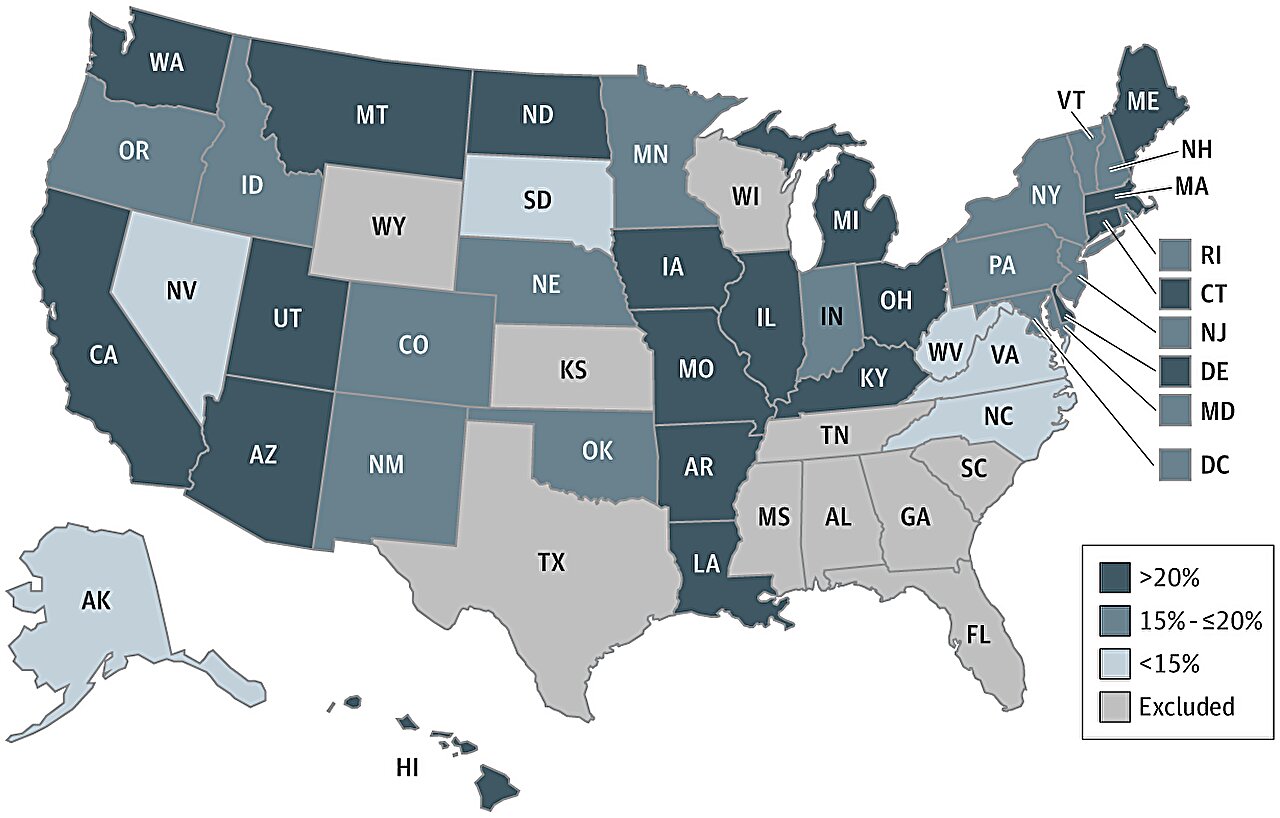
Map of the Proportion of Adults Age 18 to 64 Years at Risk of Noncompliance Who Were Plausible Medicaid Expansion Enrollees and Potentially Subject to Work-Reporting Requirements, by State. Credit: JAMA Health Forum (2026). DOI: 10.1001/jamahealthforum.2026.2938
A new study found that nearly 20% of eligible adults in Medicaid expansion states are in danger of not meeting the minimum work hours that will be required nationwide beginning Jan. 1. Women, unmarried people, white individuals and those with limited education all had a higher risk of losing their health coverage due to noncompliance with these new requirements.
Up to 10 million people may lose Medicaid coverage in the United States due in part to new work requirements and eligibility redeterminations under the One Big Beautiful Bill Act (OBBBA), which mandates a reduction of nearly $1 trillion in Medicaid spending over a decade.
While the administrative burden associated with meeting and maintaining these work requirements is expected to be the primary driver of disenrollment, a new study led by researchers at Boston University School of Public Health (BUSPH) and the Arnold School of Public Health at the University of South Carolina (Arnold School) found that millions of Medicaid enrollees may lose their health coverage because they are unable to achieve the required work hours.