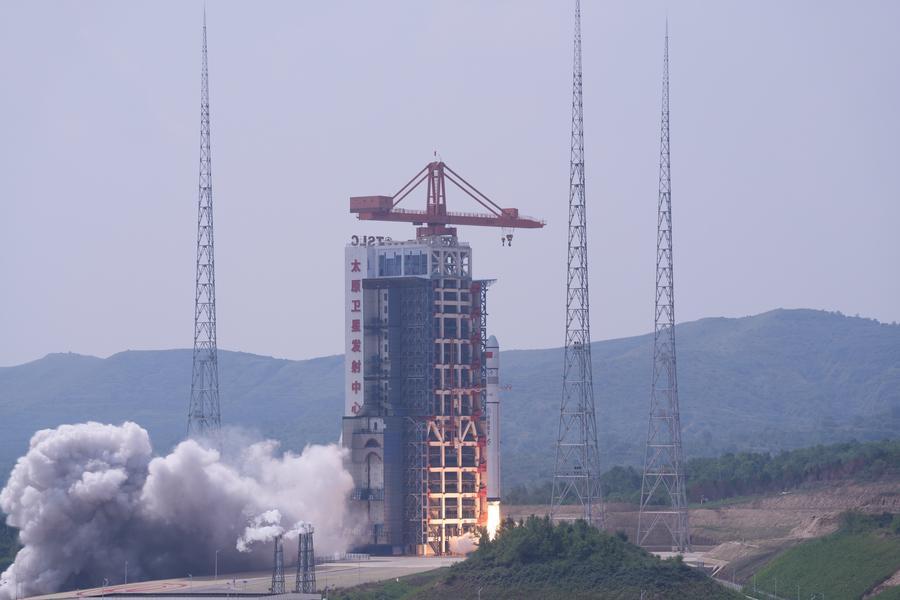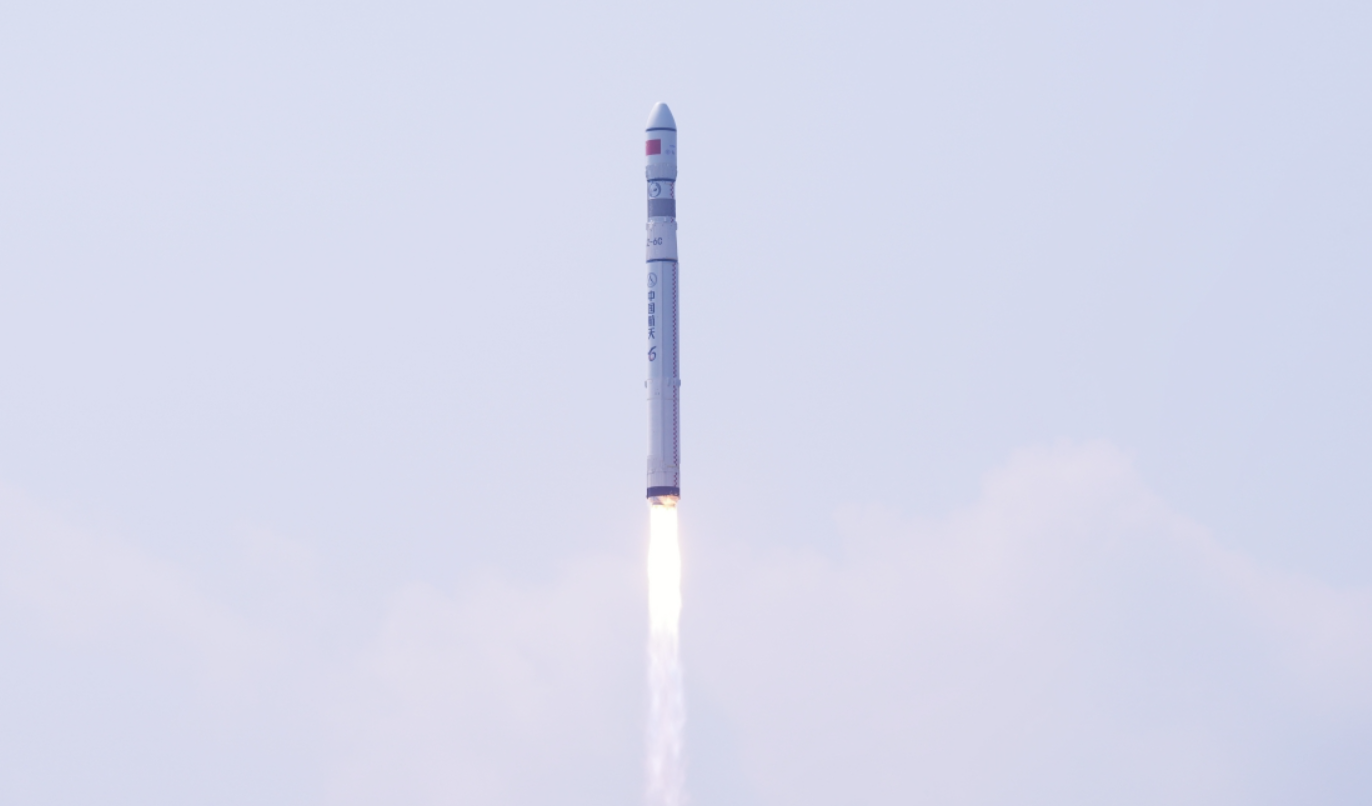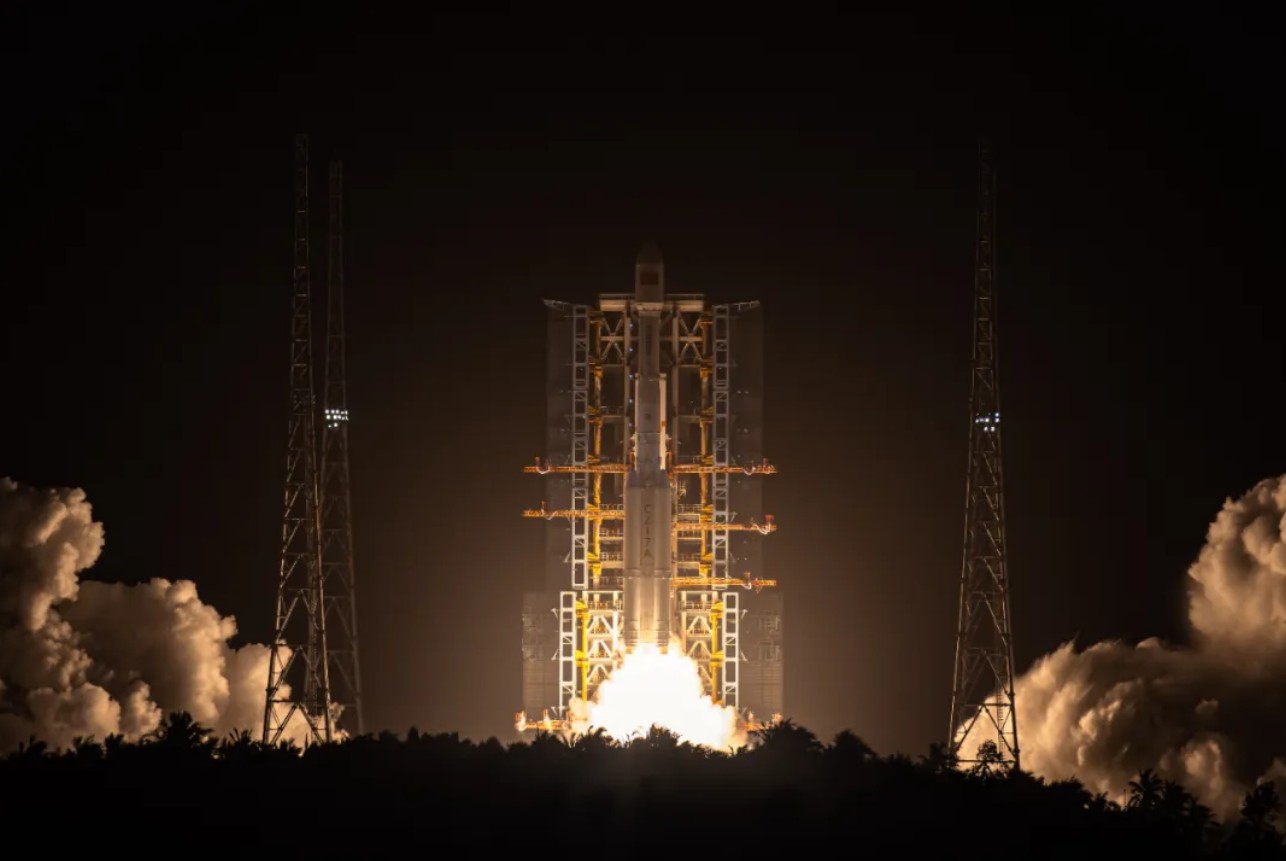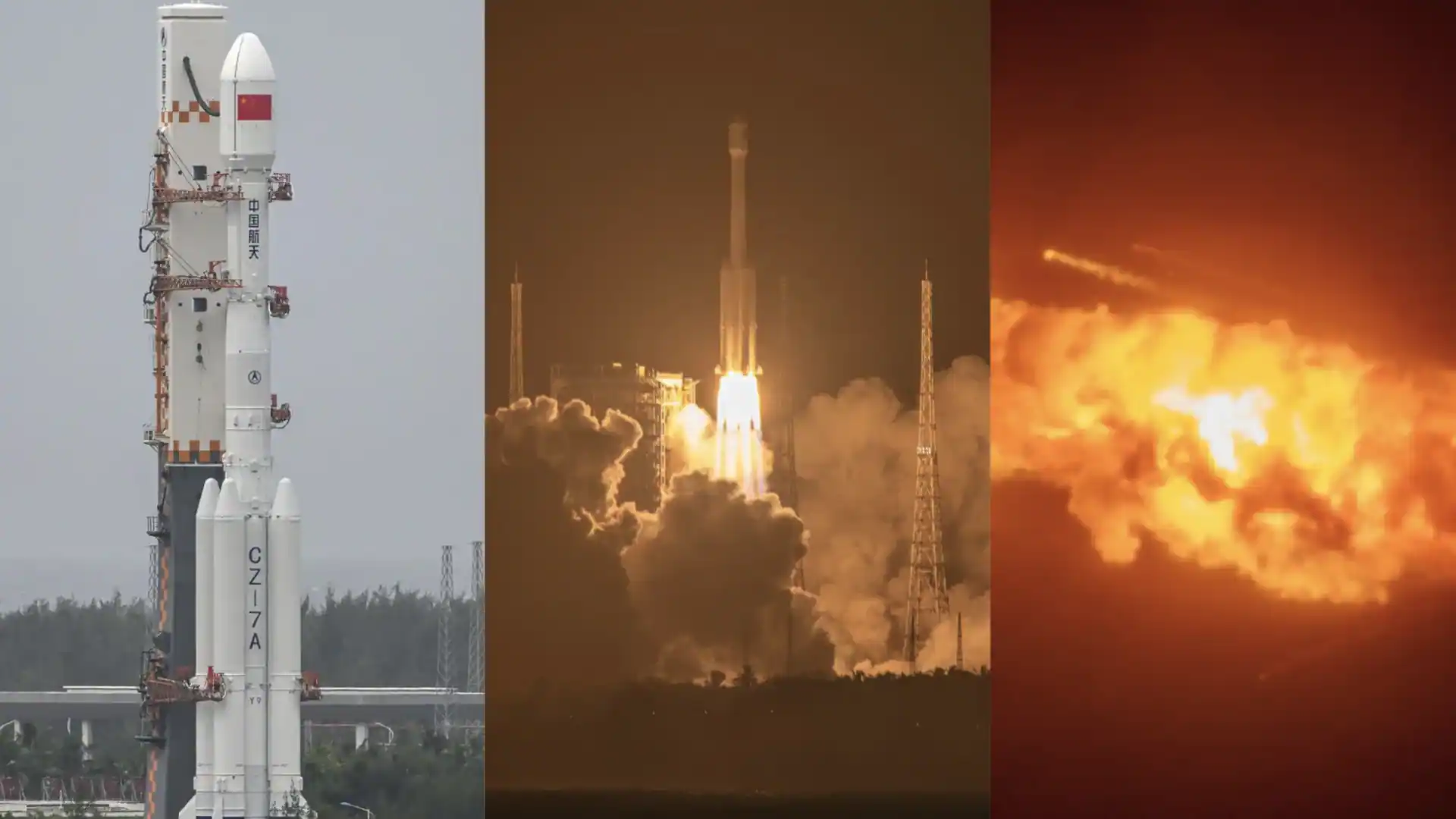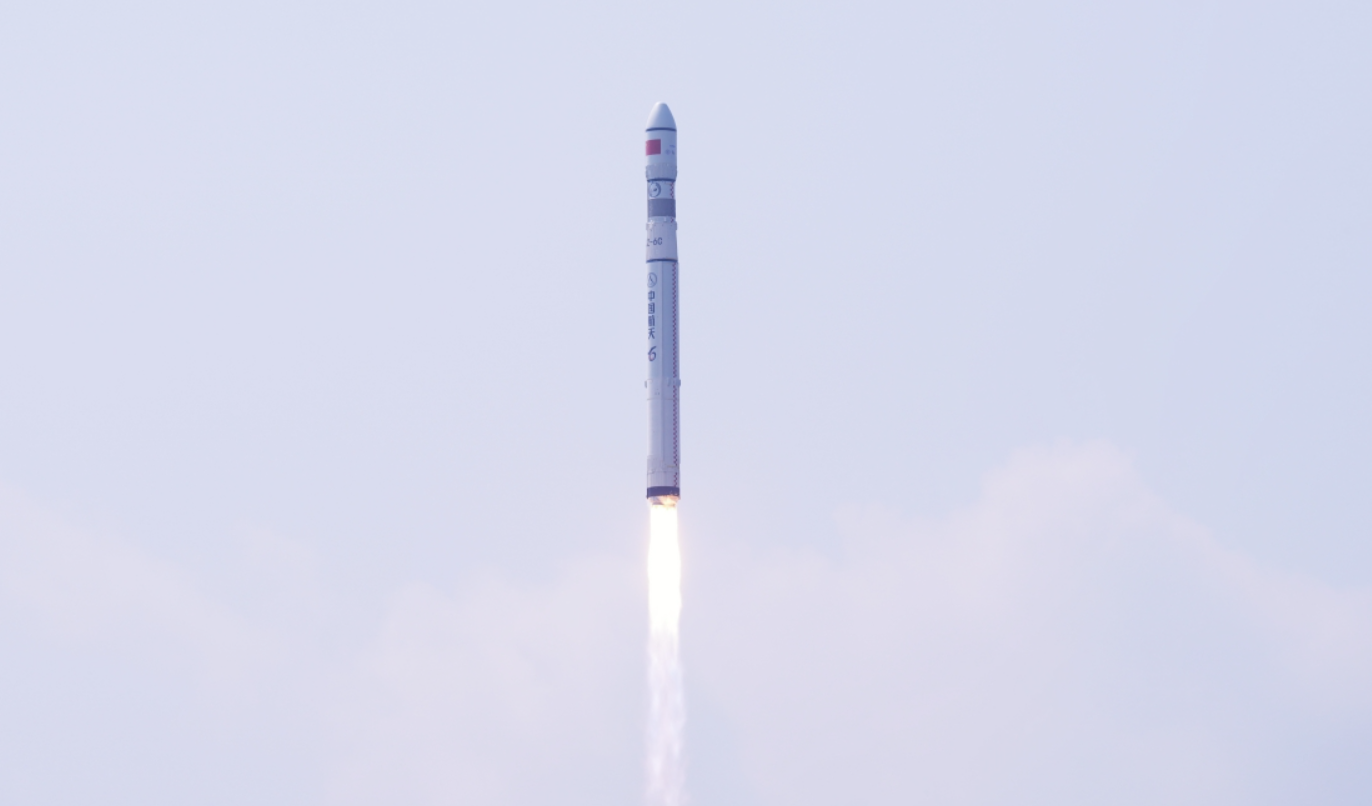
A Long March 6C climbs into the sky carrying 7 satellites in August 2026. Credit: CASC
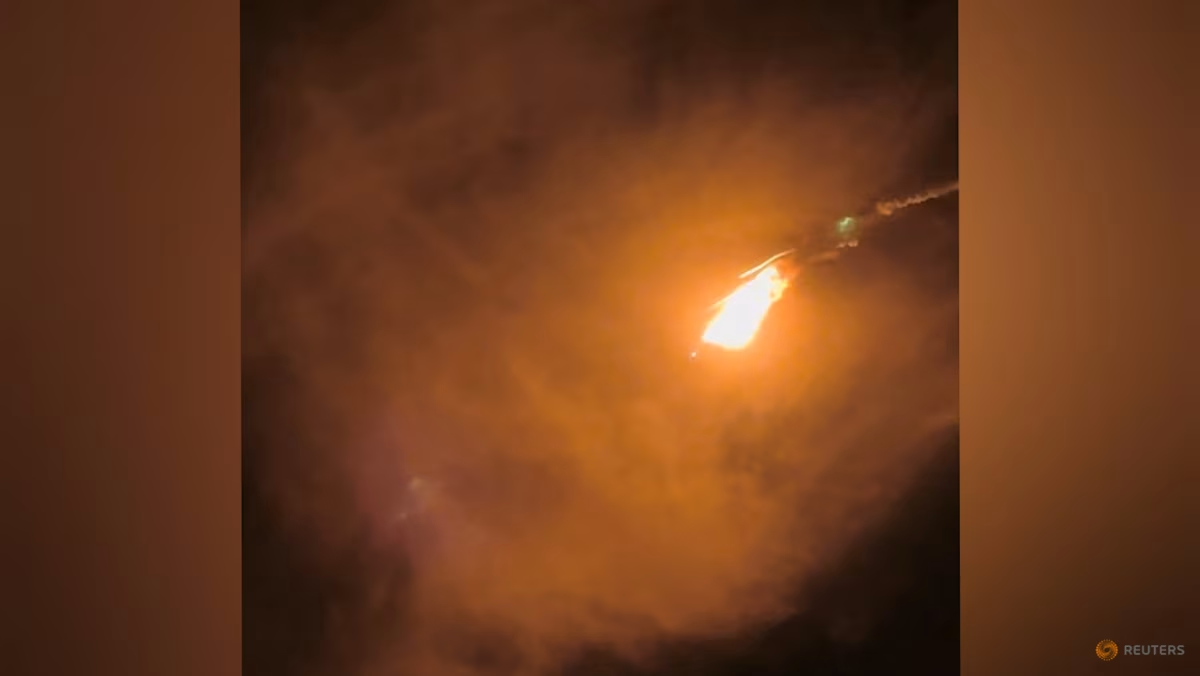
HELSINKI — A Chinese Long March 6C rocket upper stage has fragmented in orbit, just days after the stage delivered a seven-satellite rideshare mission, according to LeoLabs.
The Long March 6C launched late Aug. 24 Eastern (0321 UTC, Aug. 25) from Taiyuan Satellite Launch Center, north China, delivering seven satellites into orbit in a rideshare mission. The two-stage, kerosene-fueled rocket was provided by the Shanghai Academy of Spaceflight Technology (SAST), a major subsidiary of state-owned CASC, China’s main space contractor.
Just under two days after liftoff, the rocket’s upper stage was found to have fragmented, potentially into hundreds of pieces. LeoLabs’ Multi-Object Detection tool first flagged numerous objects near the rocket body, catalogued as NORAD ID 100472 (international designation 2026-195H), during a pass over the company’s radar site in Western Australia. A follow-up pass over its New Zealand site confirmed the event. LeoLabs monitors low Earth orbit with a global network of radars.
“We estimate tens to hundreds of fragments were generated,” LeoLabs stated in an Aug. 28 post on social media platform X.