Ask an AI coding agent to "build a booking flow" and you get something. Ask three different agents, or the same one twice, and you get three different somethings. That gap between what you meant and what the model built is where most AI coding projects quietly fall apart. Spec-driven development is the industry's answer, and by early 2026 it has gone from a niche idea to something close to a default.
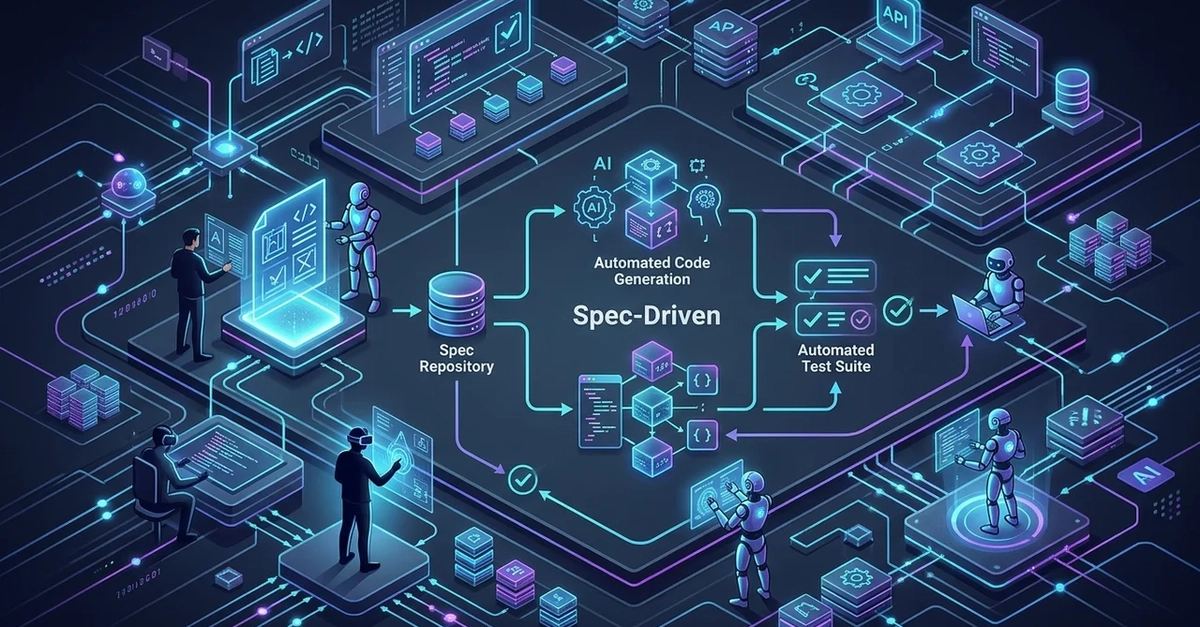
The pitch is simple. Instead of steering an agent with a running stream of prompts, you write a specification first: what the software should do, for whom, under what constraints. The spec becomes the source of truth. The agent plans against it, breaks it into tasks, and implements them while you review at fixed checkpoints. GitHub open-sourced Spec Kit to formalize this, AWS built a whole IDE (Kiro) around it, and tools like Tessl are pushing toward treating the spec as the real source and the code as a build output. If your team is shipping AI-written code, this is the workflow worth understanding now.
What spec-driven development actually is
Spec-driven development, or SDD, treats a written specification as the primary artifact of a project. Code is generated from it, not the other way around.