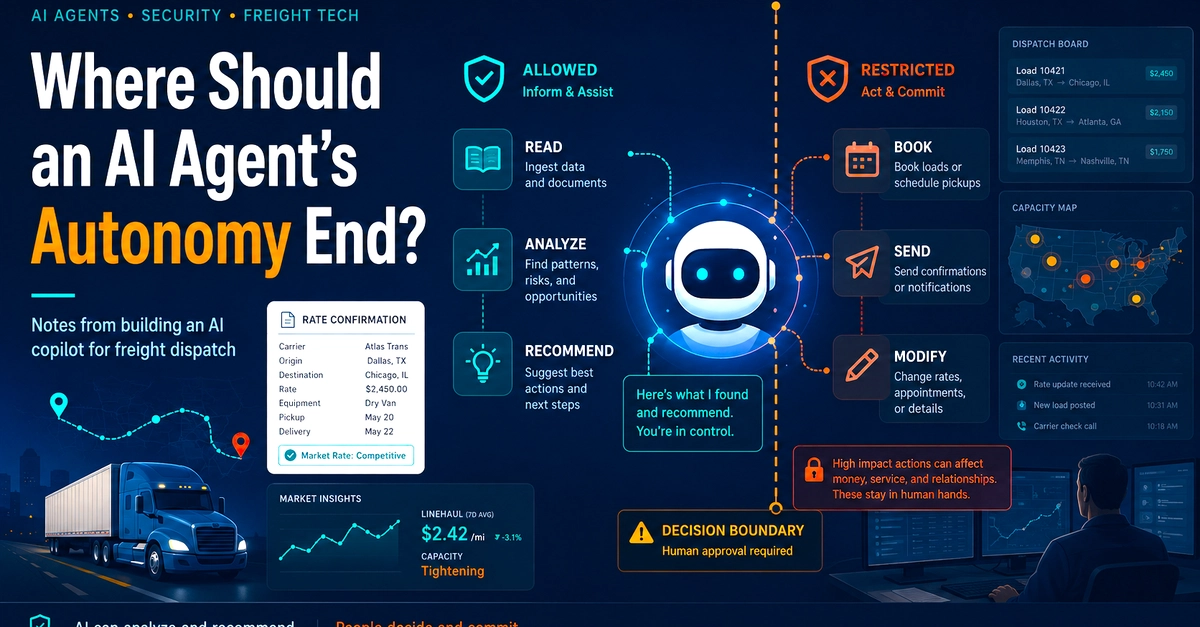
A follow-up on building an AI copilot for freight dispatch
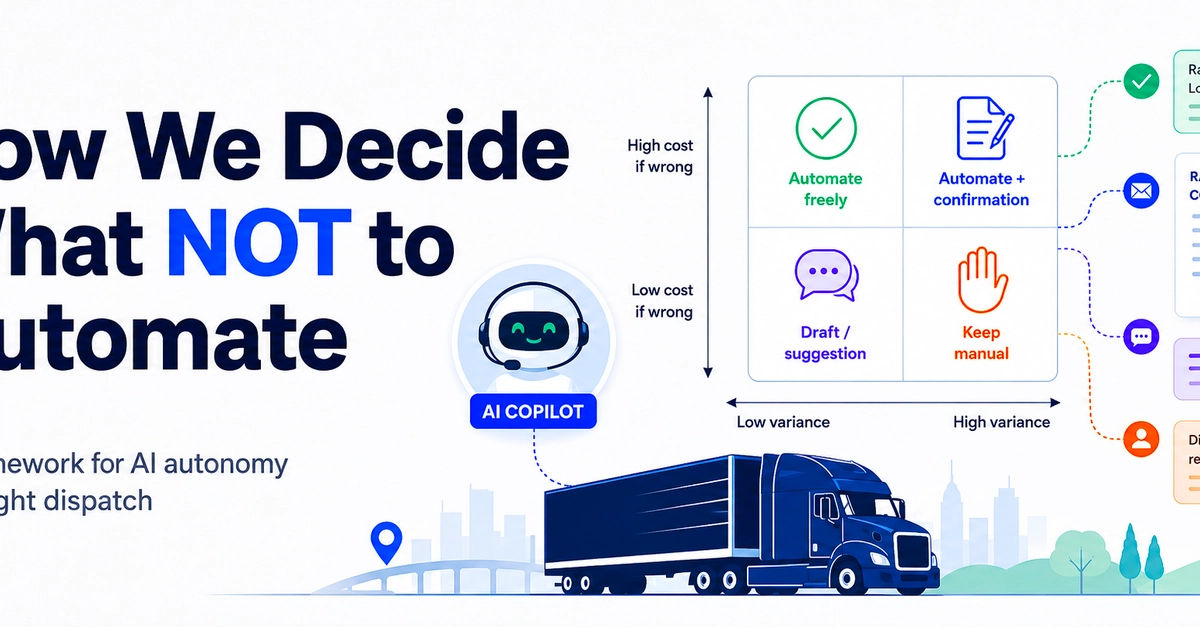
TL;DR: We don't decide whether to automate a task based on how repetitive it looks. We look at four things: how much the right decision varies between real-world cases, the cost of being wrong, whether the task’s value comes from speed or judgment, and how quickly a wrong output would be detected.
Together, those determine whether our AI dispatch copilot should suggest, ask for confirmation, act autonomously, or stay out of the way.
Automation is not the default win condition
There's an assumption baked into a lot of AI product thinking right now: if a task can be automated, it should be. Manual is friction, automation is progress, ship it.