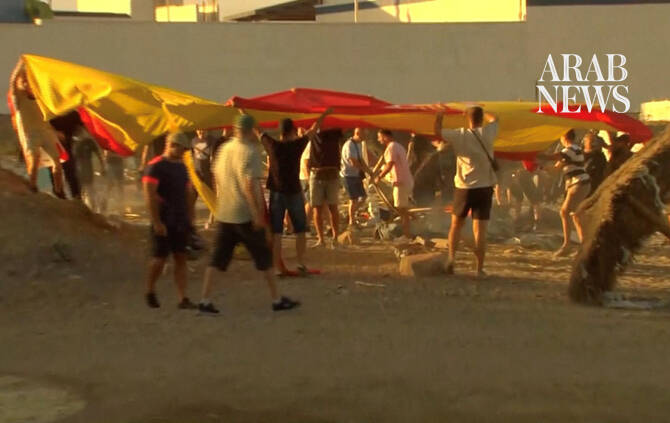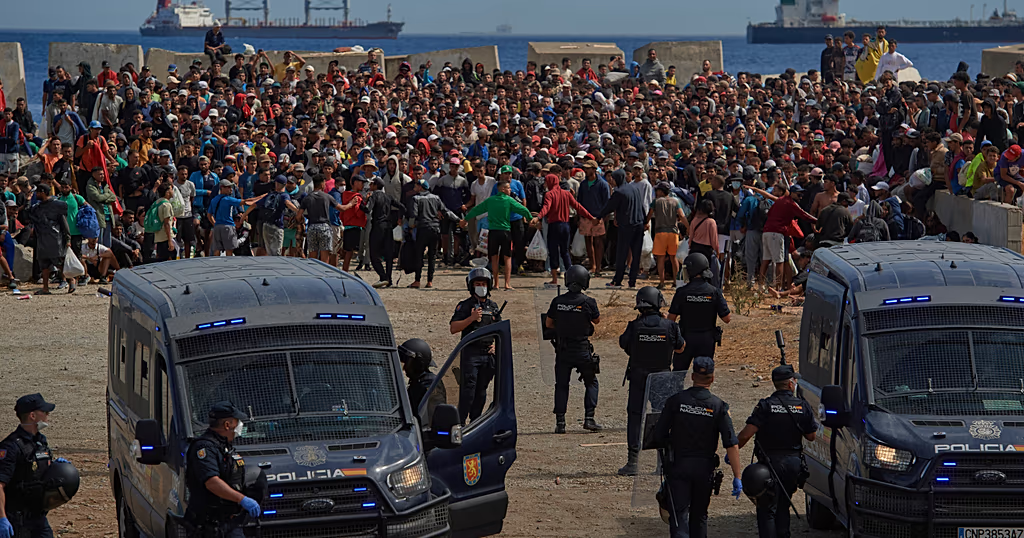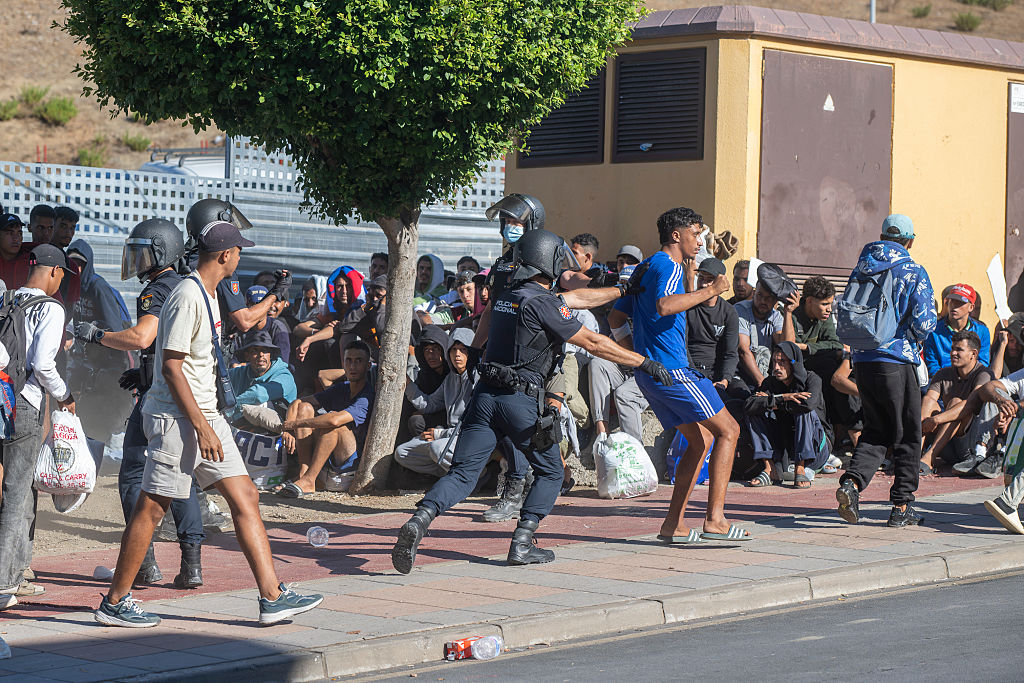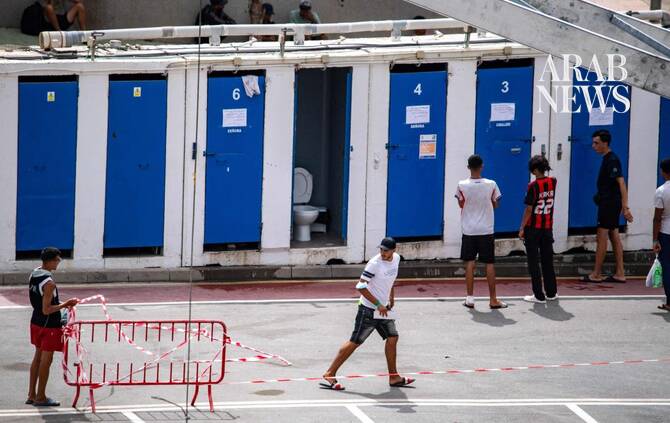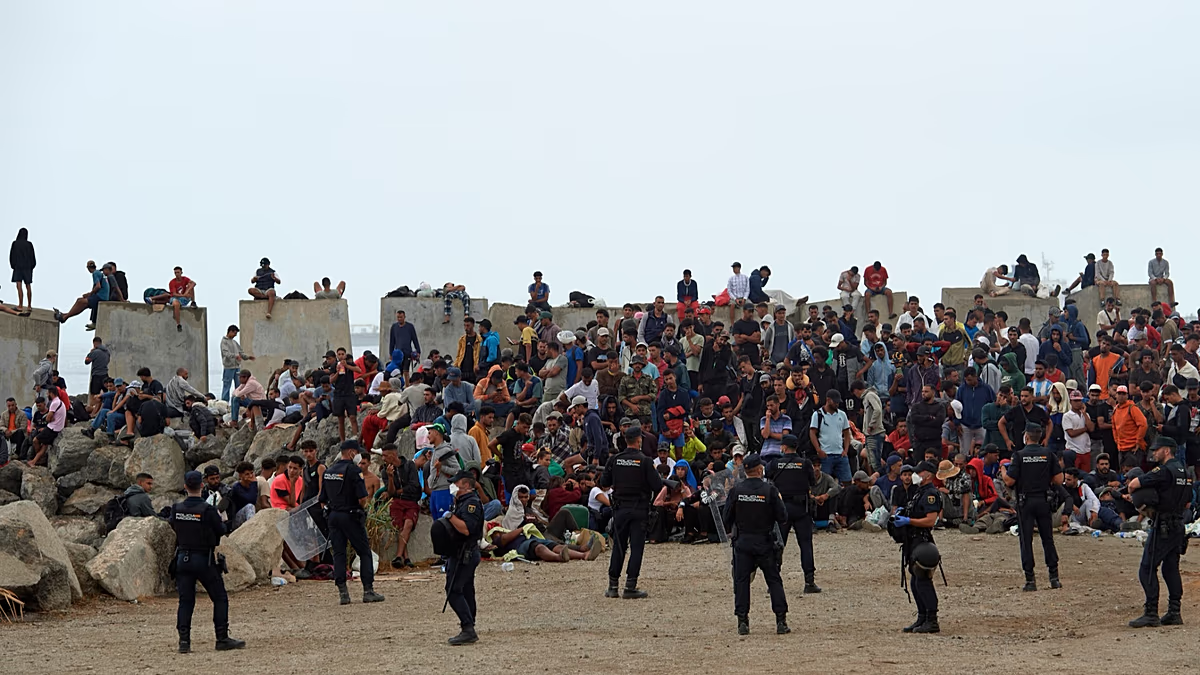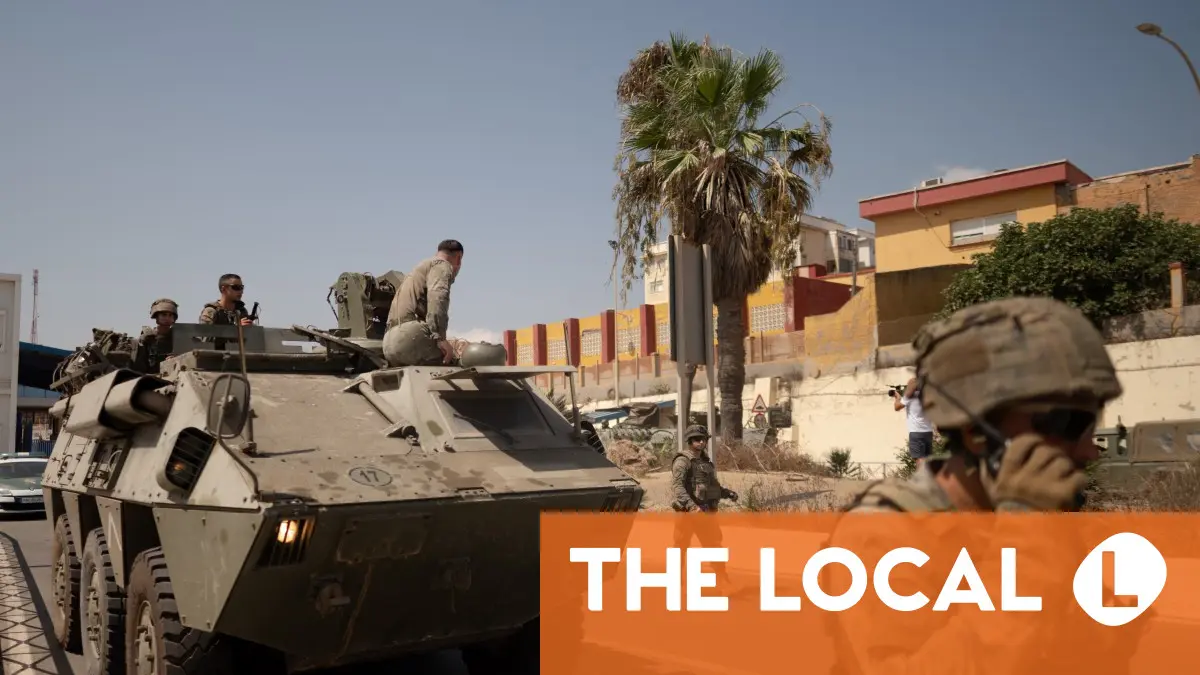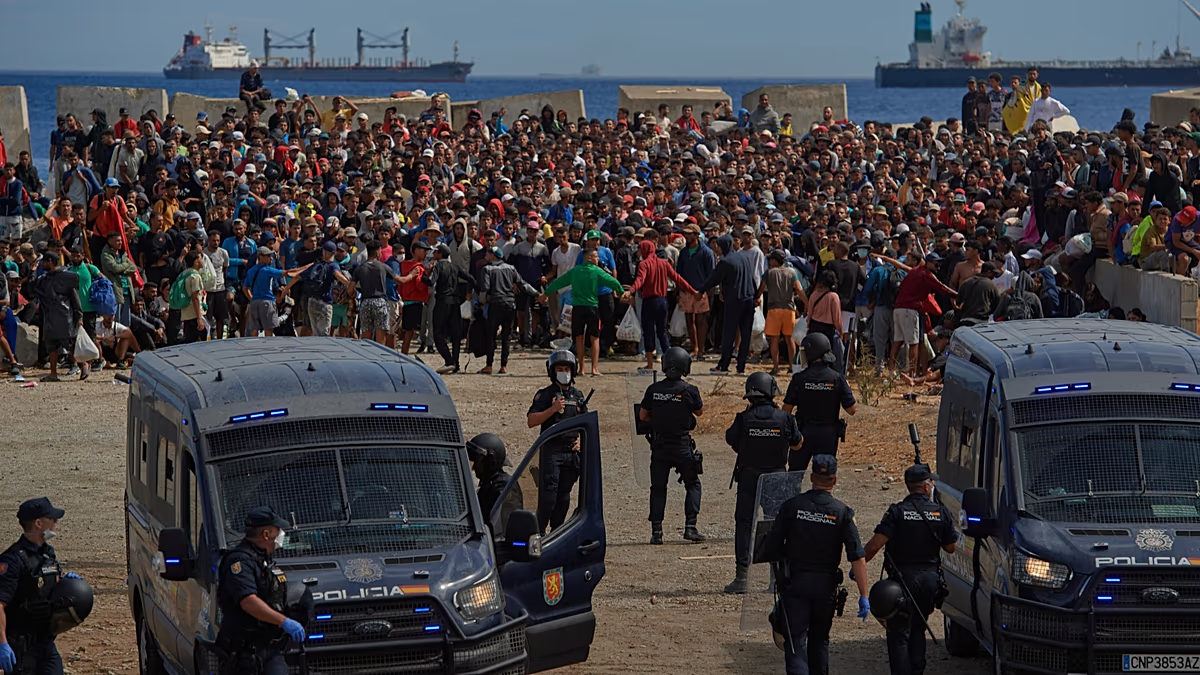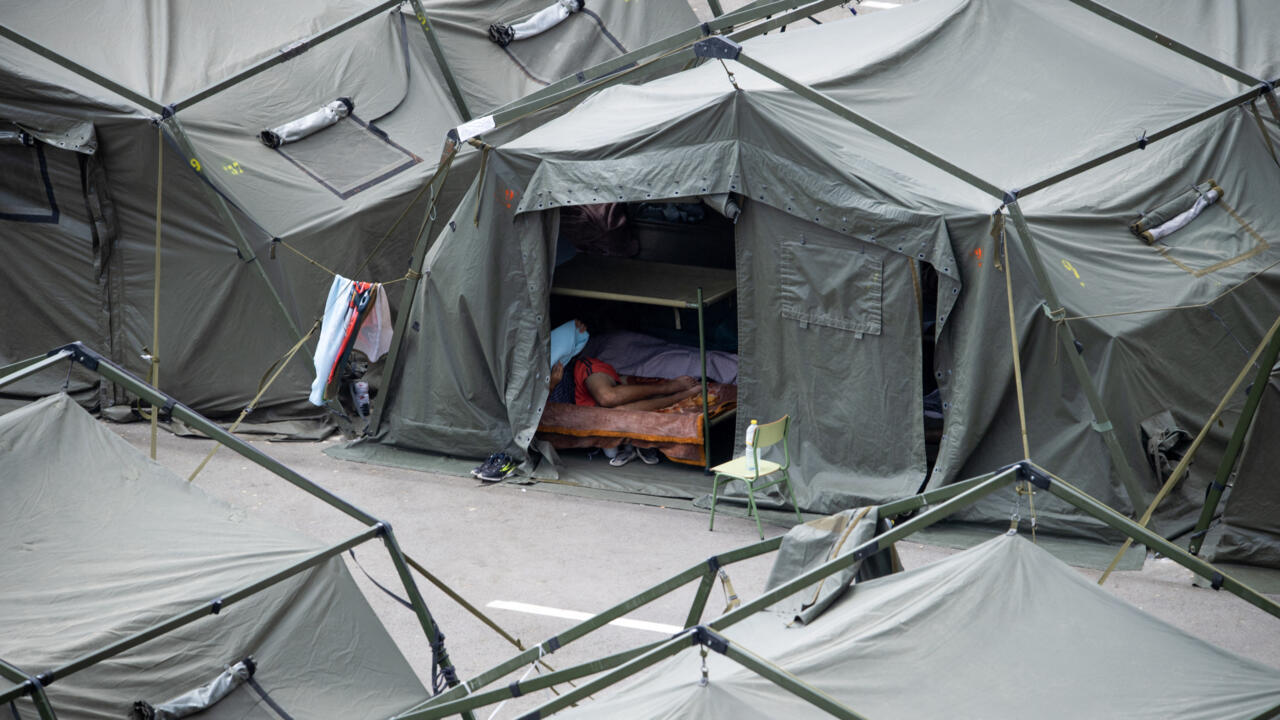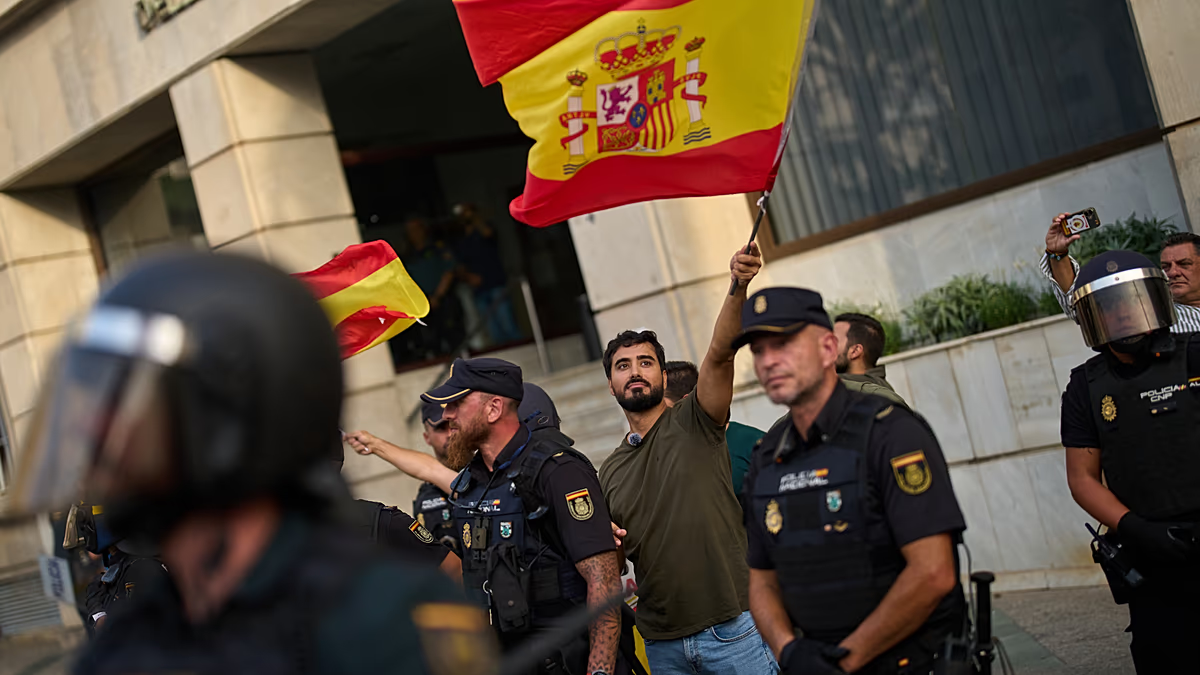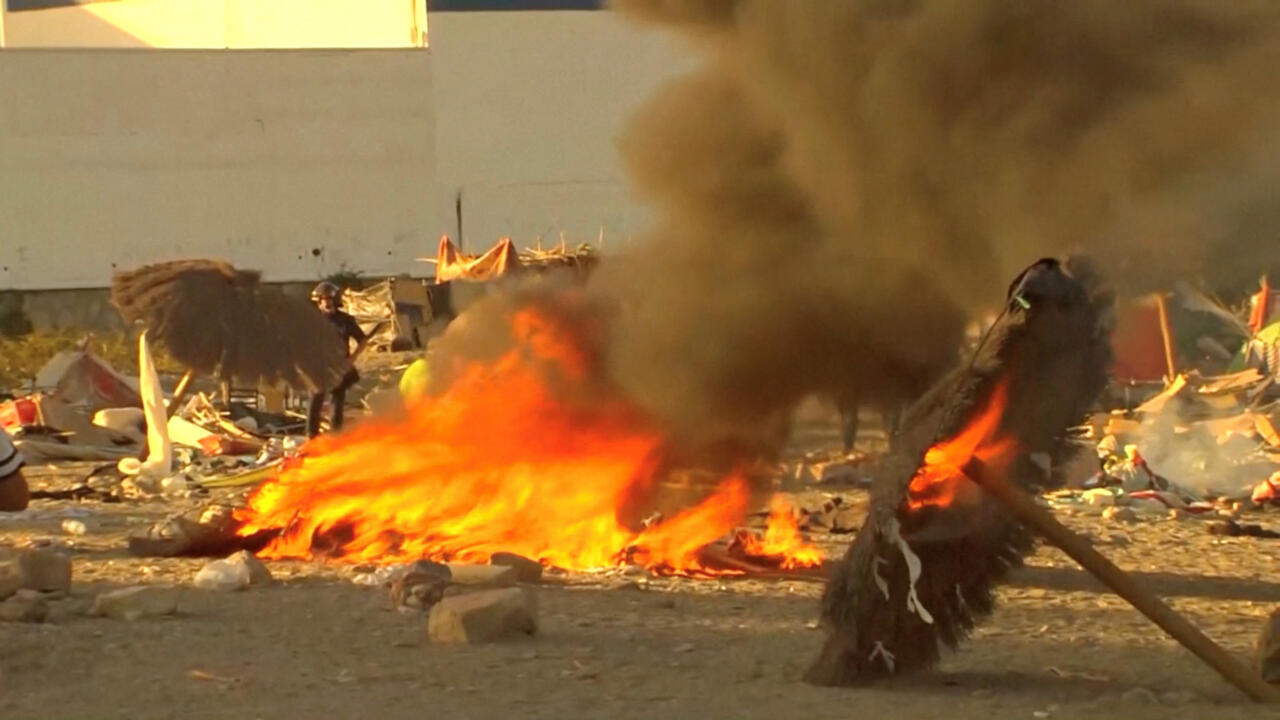
Spain's interior minister called for calm on Friday after residents of Ceuta clashed with police during protests against migrants who have remained in the North African enclave following a mass influx. Tensions have been high in the territory of 80,000 people since at least 60,000 people crossed into Ceuta over several days in July, triggering a Europe-wide migrant alert. Spain's leftist government says most have since left the enclave of 18.5 square kilometres (seven square miles) but thousands remain wandering the streets and sleeping on beaches. Read moreIn Ceuta, migrants stranded at Europe’s gates await their fate Demonstrations have intensified in recent days, with some protesters clashing with police on Thursday at a beach where migrants have been sleeping. Some of their belongings were burned. A soldier was injured in a separate incident on Thursday when migrants threw stones at troops, while 12 Moroccan migrants were arrested. Two more arrests were made after migrants attacked a police officer, sources said. "Violence is not the answer," Interior Minister Fernando Grande-Marlaska told parliament on Friday. "I call for calm and an end to any form of violence, because ... violence is not the way to resolve any problem with the complexity" of that facing Ceuta, he added. The head of Ceuta's local government, Juan Vivas, said peaceful protests "to demand the return to normality" were justified, but warned that authorities would take action against anyone who commits acts of vandalism. "We totally reject the use of any kind of violence," he said in an institutional address. "No one can or should take the law into their own hands. The defence of Ceuta and the interests of its people can only be pursued through legality." Read more‘We won’t go back’: Young Moroccan migrants in Ceuta refuse to abandon their European dream Right-wing and far-right parties have demanded that all the migrants be rounded up and sent back to their home countries. Grande-Marlaska accused them of "inciting hatred and confrontation" in Ceuta. The government has warned that each individual must be identified to determine whether they are entitled to asylum or subject to deportation, while unaccompanied migrant children require special protection. Ceuta and Melilla, another small Spanish territory in North Africa, form Europe's only land border with Africa. (FRANCE 24 with AFP)
Spanish government urges calm after Ceuta anti-migrant protesters clash with police
Spain's left-wing government called for calm in the North African enclave of Ceuta on Friday after protests over security escalated into clashes between locals and police, a month after a mass influx…
378 words~2 min read