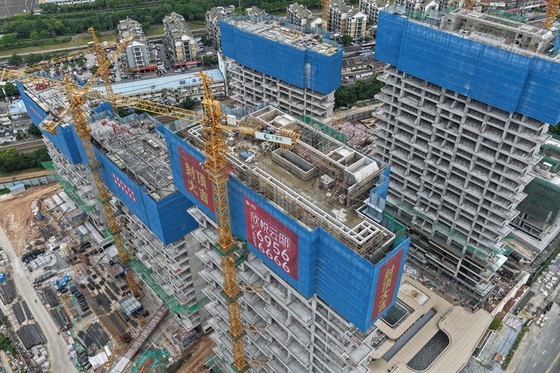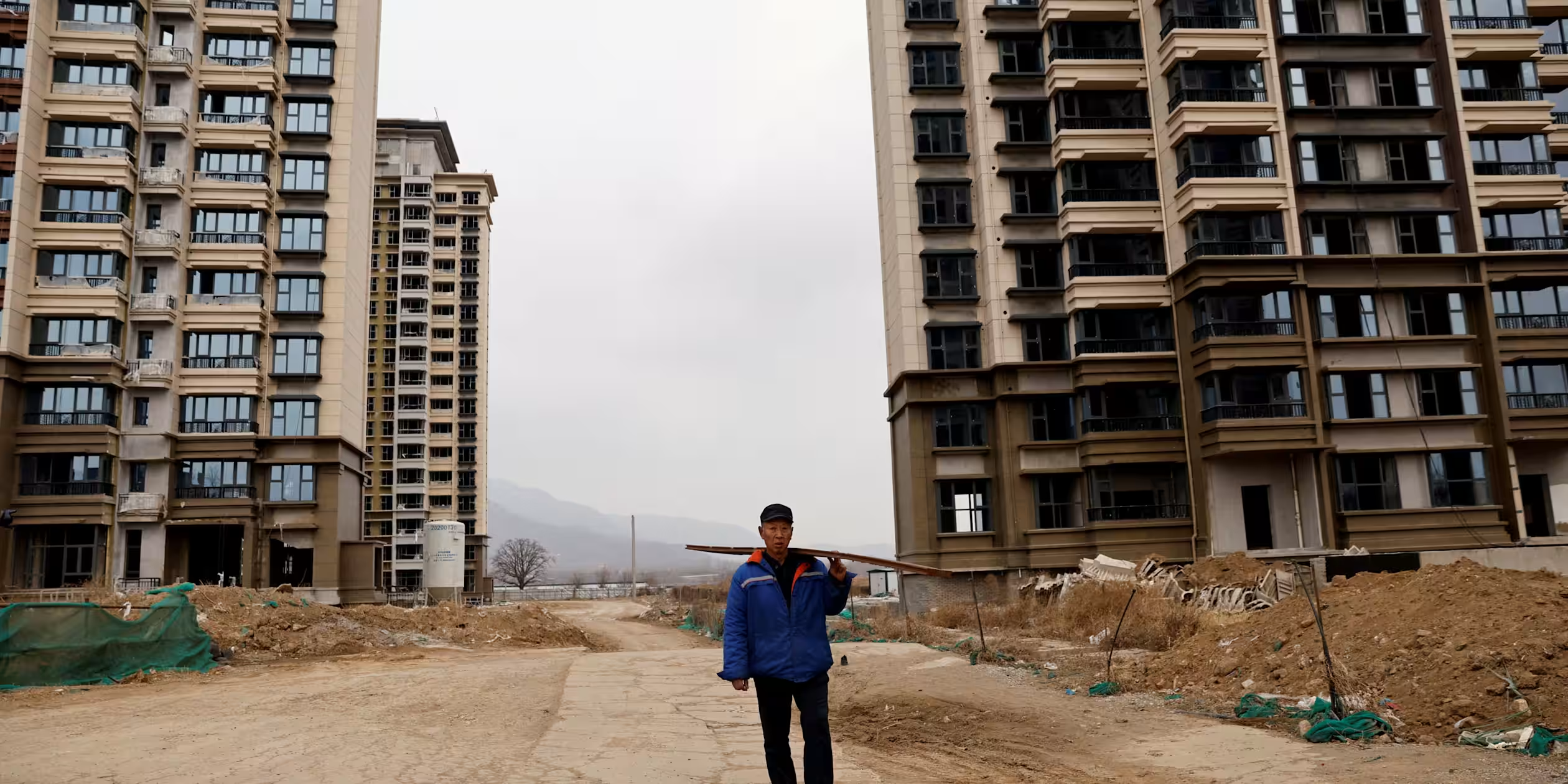
A man walks past unfinished residential buildings developed by China Evergrande Group on the outskirts of Shijiazhuang, in China's Hebei province, in February 2024. © ReutersAugust 28, 2026 22:04 JSTUpdated on August 28, 2026 23:14 JSTBEIJING (Reuters) -- China issued a slew of measures on Friday to wean property developers off their reliance on funds collected from buyers before housing projects are completed, as Beijing seeks to curb risks and restore confidence in the crisis-hit sector.Chinese property developers have for decades used a presale model, starting to sell homes before the units are ready to deliver as a way to fund their debt-fueled and high-turnover operations.But the model has faced scrutiny since construction at some presold projects stalled after a market meltdown in 2021 drained developers' cash, prompting protests by homebuyers and further dampening market sentiment.Under the new guidelines released by the central bank and the financial regulator, a homebuyer's mortgage would be issued only after the project has been completed. Another set of guidelines requires local governments to promote sales of completed units to "fundamentally prevent delivery risks."The policies will "mend the trust crisis" in the sector and boost consumer confidence as they address homebuyers' fears about stalled projects, said Centaline Property analyst Zhang Dawei.China's property sector, once a key growth driver, sank into a downturn after a government campaign to curb developers' heavy borrowing led to a liquidity crunch. More than five years into the slump, home prices are still falling, property investment keeps plunging and a sustained recovery remains elusive.The property crisis also weighed on China's overall economy as shrinking real estate values sapped households' appetite for consumption, leaving the manufacturing powerhouse relying on external demand to power growth.The policies suggest policymakers "understand the urgency to stabilize the property sector," said Zhiwei Zhang, president and chief economist of Pinpoint Asset Management.The old housing sales system, which relies primarily on presales and rapid turnover, is no longer suitable, state media Xinhua said on Friday, citing unnamed officials.Changing that model requires reforms to the sales system and strengthening the supervision of presale funds, the officials were quoted as saying.Some of the stalled housing projects remain unfinished today, as property developers, including the once No. 1 China Evergrande, defaulted on their borrowings amid tighter financing rules and falling home prices.The newly released measures seek to protect buyers by making financial institutions responsible for project financing.The guidelines for improving property credit management, issued by the People's Bank of China and the National Financial Regulatory Administration (NFRA), require that each housing project's financing be linked to a lead bank which monitors project funds and provides or organizes loans.The guidelines also seek to reduce homebuyers' debt burden by extending the maximum term for personal mortgage loans to 40 years from 30 years.Jeff Zhang, an equity analyst at Morningstar, said the policies would likely favor large developers with healthy liquidity, as they face less pressure to recover cash from projects and can handle long sales and payment cycles.Phasing out the presale model means smaller developers with limited cash reserves and weaker resilience would more likely exit the market or change their business models, Centaline Property's Zhang Dawei said.Separate draft measures issued by the NFRA reiterate the central government's policy call for financial institutions to meet property developers' "reasonable financing needs" and urge trust firms to treat projects from private and state-owned developers equally in providing financing.China's securities regulator, meanwhile, pledged support for real estate developers' financing, issuing guidelines to support listed firms in refinancing, mergers and reorganization.It also vowed to resolve risks in the property sector, enforce delisting rules and improve its tools to resolve bond default risks.
China moves to curb housing presales to shore up market confidence
Mortgages would be issued only when projects are completed under new rules
604 words~3 min read