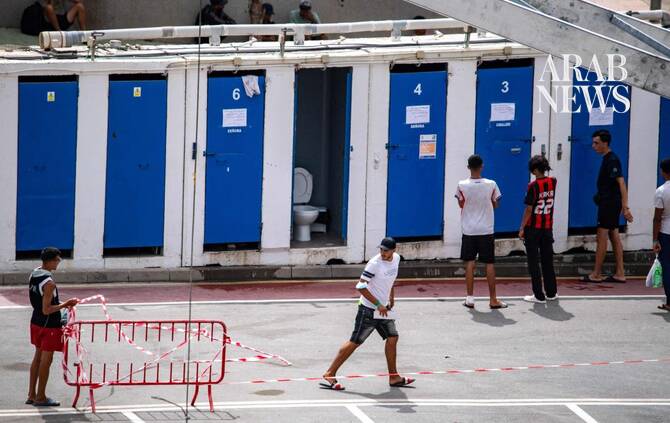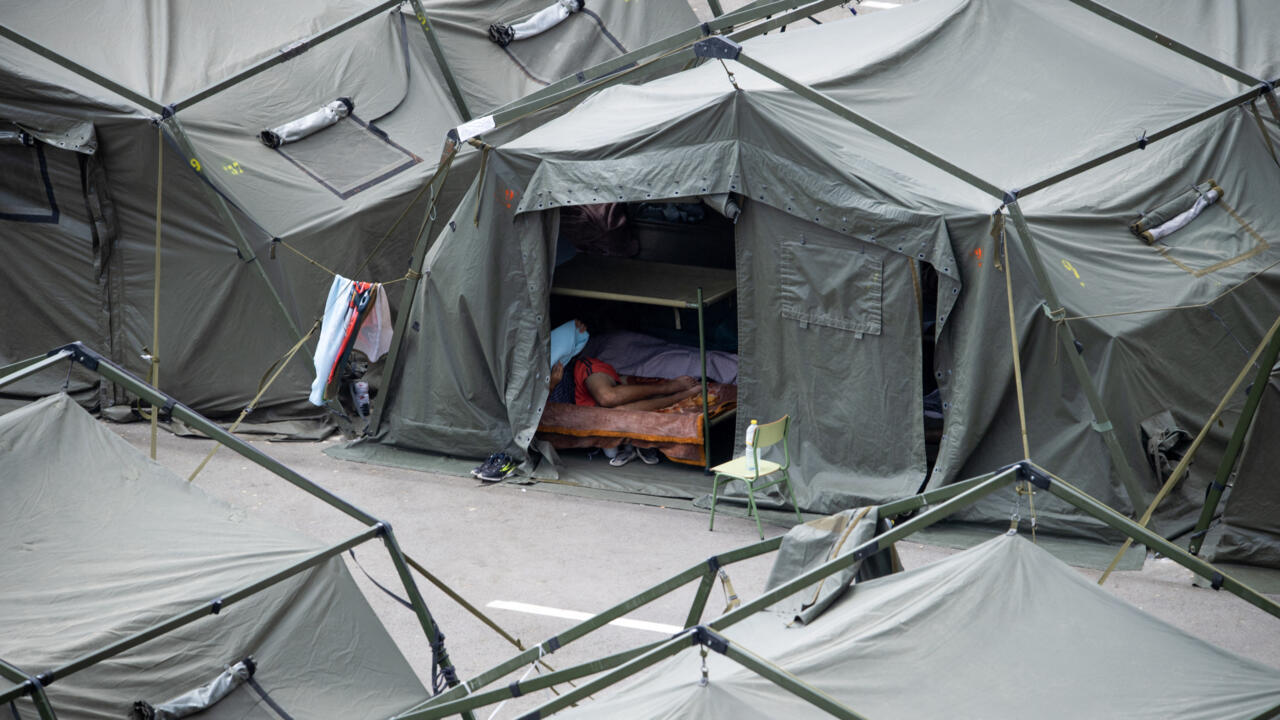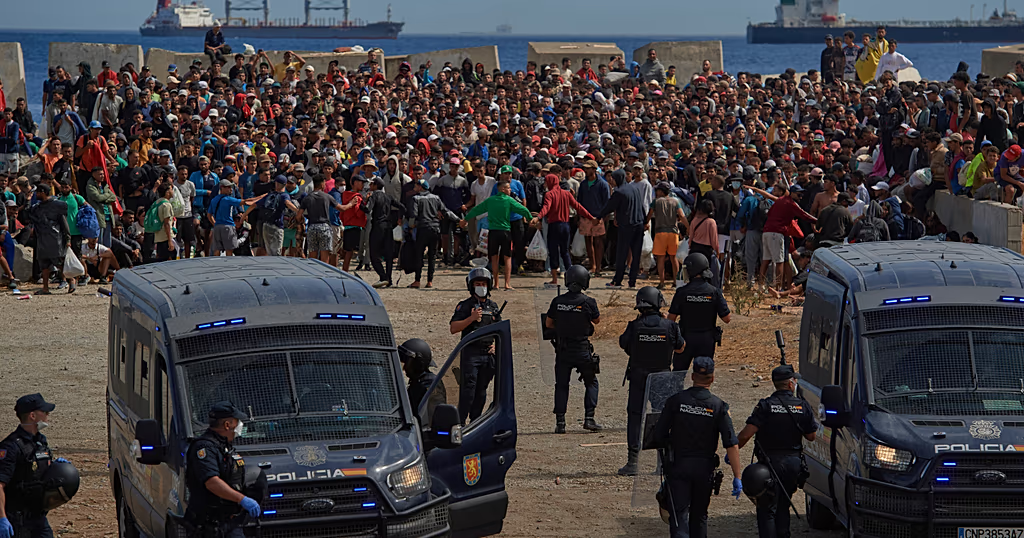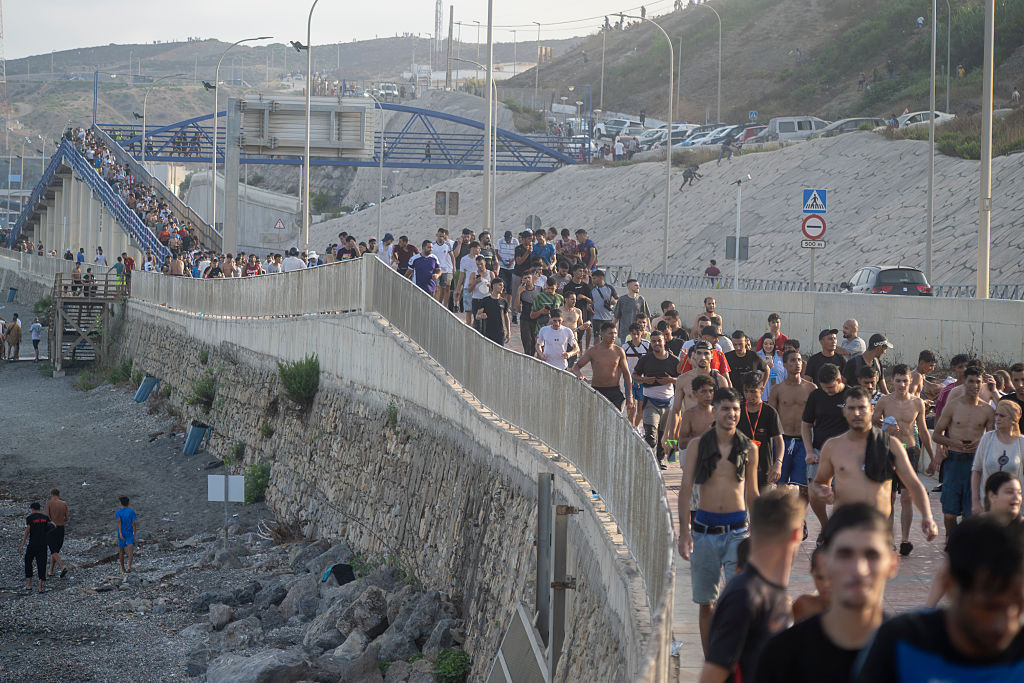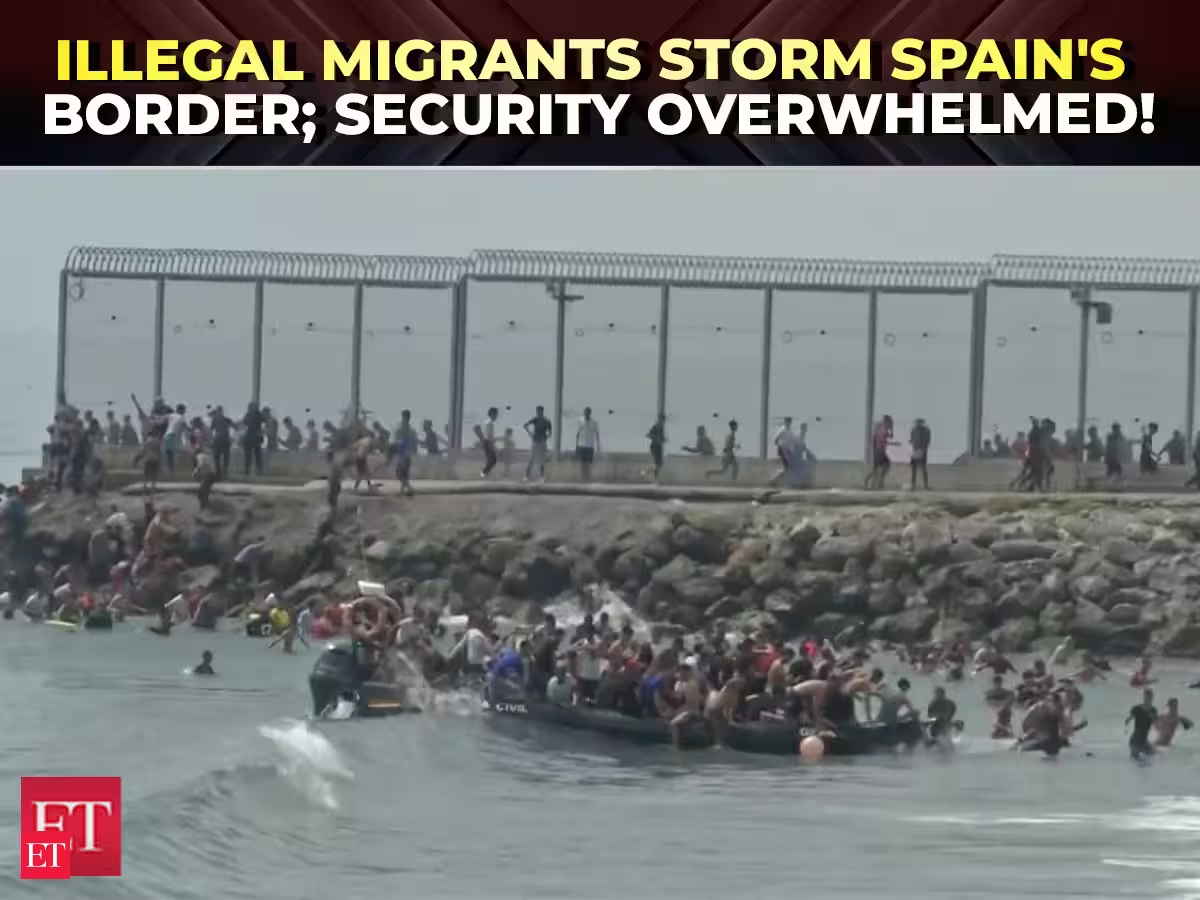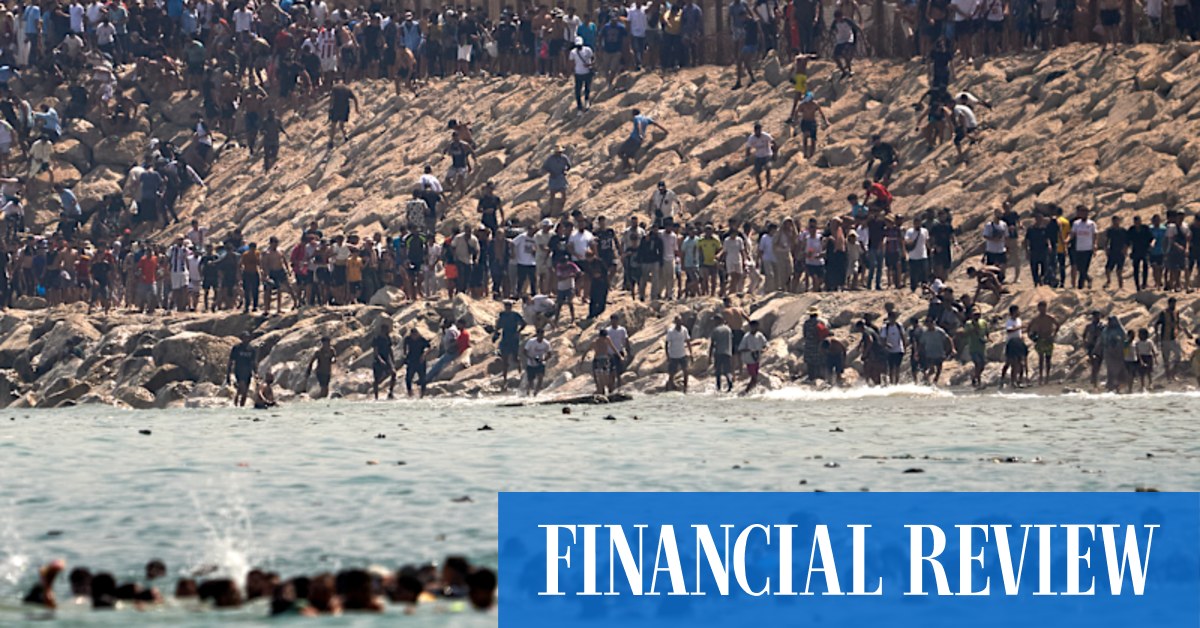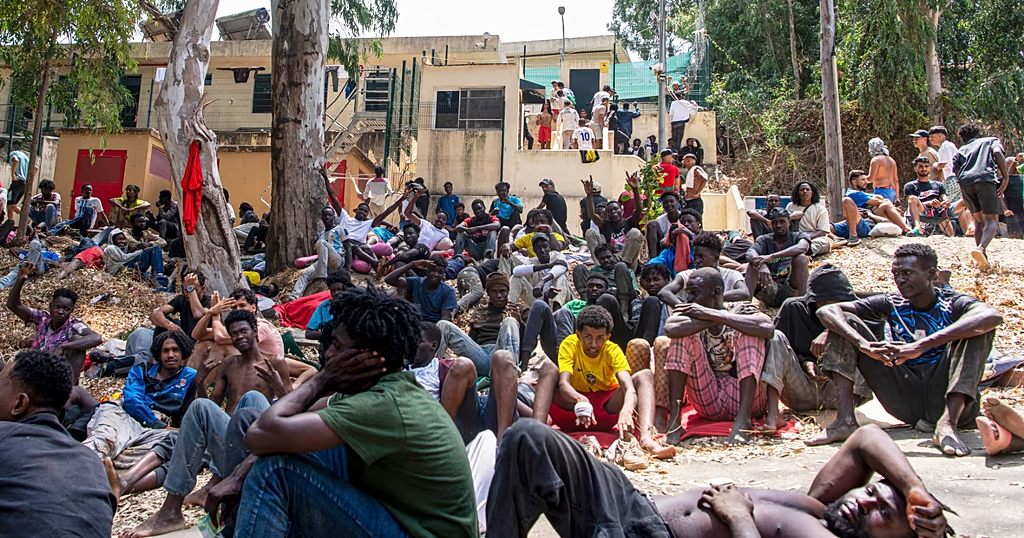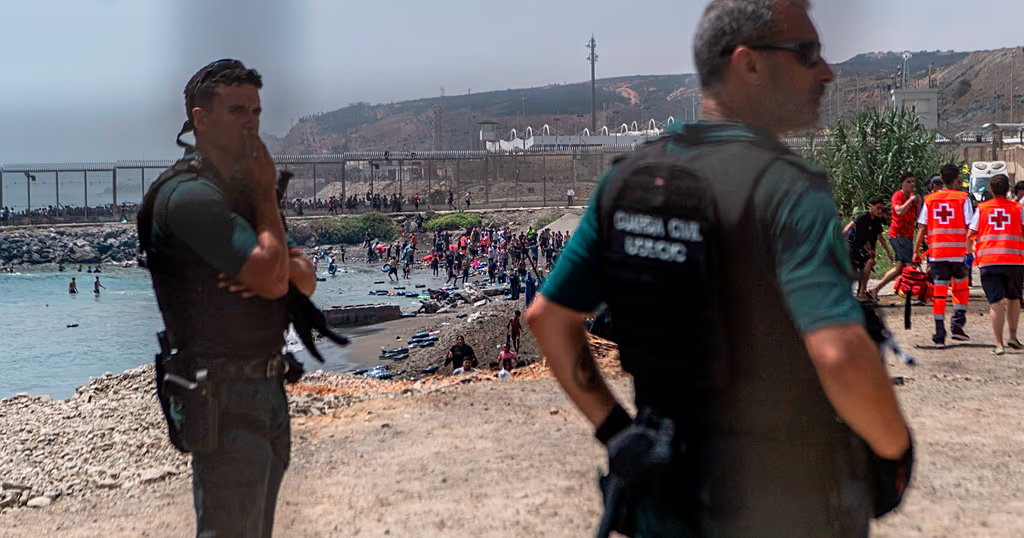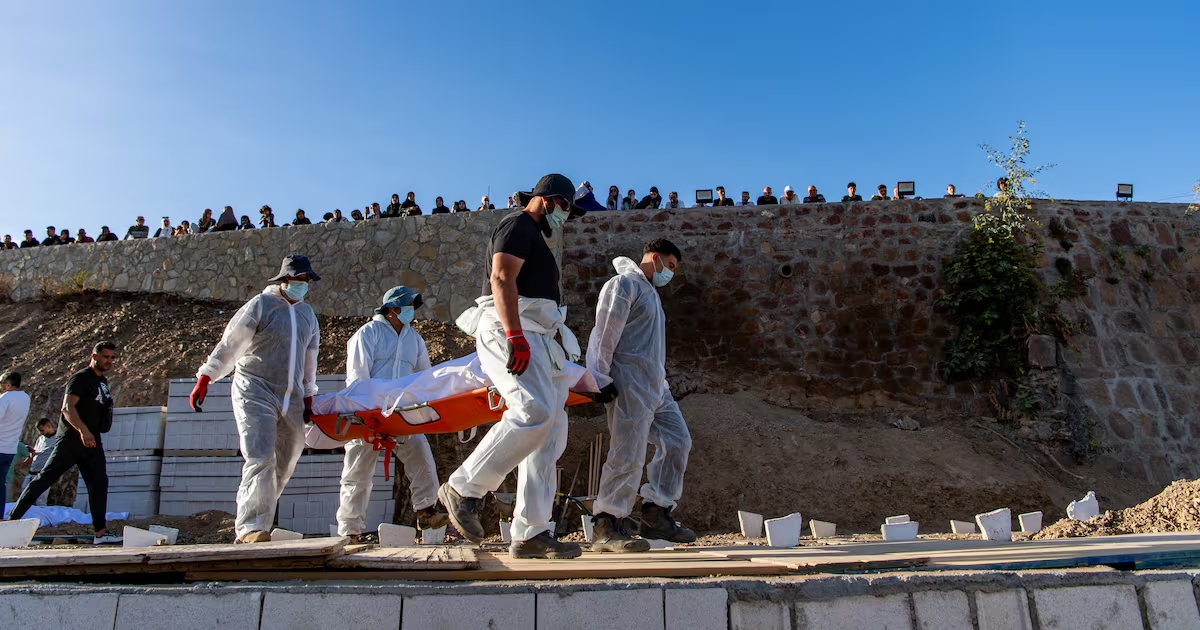
There have been violent scenes in the Spanish enclave of Ceuta in North Africa as local people express anger at several thousand unhoused migrants, whose arrival has created a logistical and political headache for the government.An estimated 72,000 people crossed from Morocco to Ceuta, a Spanish exclave on the coast of North Africa, on July 30th and 31st. Most of them swam around the border fence and more than 100 people are believed to have drowned while doing so. Although the vast majority returned to Morocco almost immediately, several thousand remain in Ceuta, many of them children, sleeping rough on the city’s beaches.The delay in resolving the crisis has left locals complaining that they feel unsafe. On Thursday, a group of residents impeded Red Cross workers as they attempted to distribute food and water to migrants. Others burned some makeshift migrant camps on Trampolín beach, where many of them are sleeping, and there were clashes with riot police who tried to prevent them from doing so.The previous day, 12 migrants were arrested after a group of them surrounded a Spanish military vehicle and threw stones at it, injuring the occupants.The socialist-led government has appealed for calm.“You can’t attack immigrants for being immigrants,” said Ángel Víctor Torres, the minister of territorial affairs. “Red Cross workers who are from Ceuta should not feel threatened when they distribute food on Trampolín beach and made to feel that they don’t want to do this voluntary work.” Makeshift tents shelter women and children at the El Tajaral industrial site in Ceuta. Photograph: Antonio Sempere/AFP via Getty Images This week, the central government took direct control of the crisis, with Torres given powers to override the local authority in managing issues related to the migrants.The cause of the mass crossing is still unclear. The government has blamed people traffickers and frenzied social media activity, but many on both the left and right attribute the incident to Morocco, which they accuse of using migration control as political leverage.Local people in Ceuta and the opposition are demanding that those who arrived be sent back across the border. However, the government points out that before that can happen they must undergo a legal process that would be facilitated by housing them in public spaces, such as sports halls. Yet, with many residents and the conservative local authorities resisting that solution, the government warns the deportations will take longer.[ The Irish Times view on Ceuta: a time for calm diplomacy, not blusterOpens in new window ]“We understand that the people of Ceuta are demanding immediate and urgent solutions, but we can’t mislead them,” Torres said. “I’m not going to mislead them by saying that [the migrants] will be sent home tomorrow, knowing that this is untrue.”In 2021, there was a similar but smaller-scale incident, when about 10,000 people crossed to Ceuta. The subsequent rapid deportation of children led to two senior officials being sanctioned for failing to observe legal protocols.An estimated 72,000 people crossed from Morocco to Ceuta, a Spanish exclave on the coast of North Africa, on July 30th and 31st. The opposition has attacked the government both for failing to foresee the events of July t and its response since.“Ceuta is terrified and mired in chaos,” said Ana Vázquez, of the conservative People’s Party (PP), as she questioned the interior minister, Fernando Grande-Marlaska, in Congress about the crisis. She described the crossing as “an attack on national sovereignty, the worst in 50 years”.The far-right Vox party has used stronger language, with its parliamentary spokeswoman, Pepa Millán, describing those who arrived in Ceuta as “an army of armed men”, a claim the government has said is false. Earlier in the crisis, her party colleague, José María Figaredo, said that those who had crossed the border into Spanish territory “must be hunted down, one by one”.The PP and Vox claim the government has been too soft on immigration, identifying its continuing legalisation of several hundred thousand foreign nationals as an incentive for illegal arrivals.The government accuses both parties of deliberately heightening the tensions for political gain.On Thursday, the former PP prime minister, José María Aznar, visited the city.“Whoever attacks our borders cannot remain here,” Aznar said. He added: “National integrity does not take holidays”, in an apparent reference to Prime Minister Pedro Sánchez, who has faced criticism for being on leave in the Canary Islands throughout most of August.Meanwhile, the emergency has encouraged Morocco to reiterate its long-standing claim of sovereignty over Ceuta and its sister city Melilla. The justice minister, Abdellatif Ouahbi, has spoken of his country’s “historical and geographical right” to both cities.The appearance of government ministers in parliament for questioning this week has added to the left-wing coalition’s difficulties. Defence minister Margarita Robles told Congress that intelligence services had information about an imminent mass crossing before it happened. However, Grande-Marlaska appeared to contradict that version of events, saying: “There was no report that suggested that on July 30th what happened was going to happen.”Sánchez’s administration was already struggling amid a series of corruption scandals and judicial cases affecting close allies. In a month that usually sees little political activity, he is facing one of the biggest challenges of his eight-year tenure.“A social crisis could accompany the humanitarian crisis,” warned El País newspaper, as it urged the government to act quickly in Ceuta. “You cannot ask people to keep putting up with this situation as the bureaucratic machinery crawls along in August.”
Violent scenes in Ceuta as Madrid struggles with migrant crisis
Opposition says Spanish enclave in North Africa is ‘terrified and mired in chaos’
904 words~4 min read