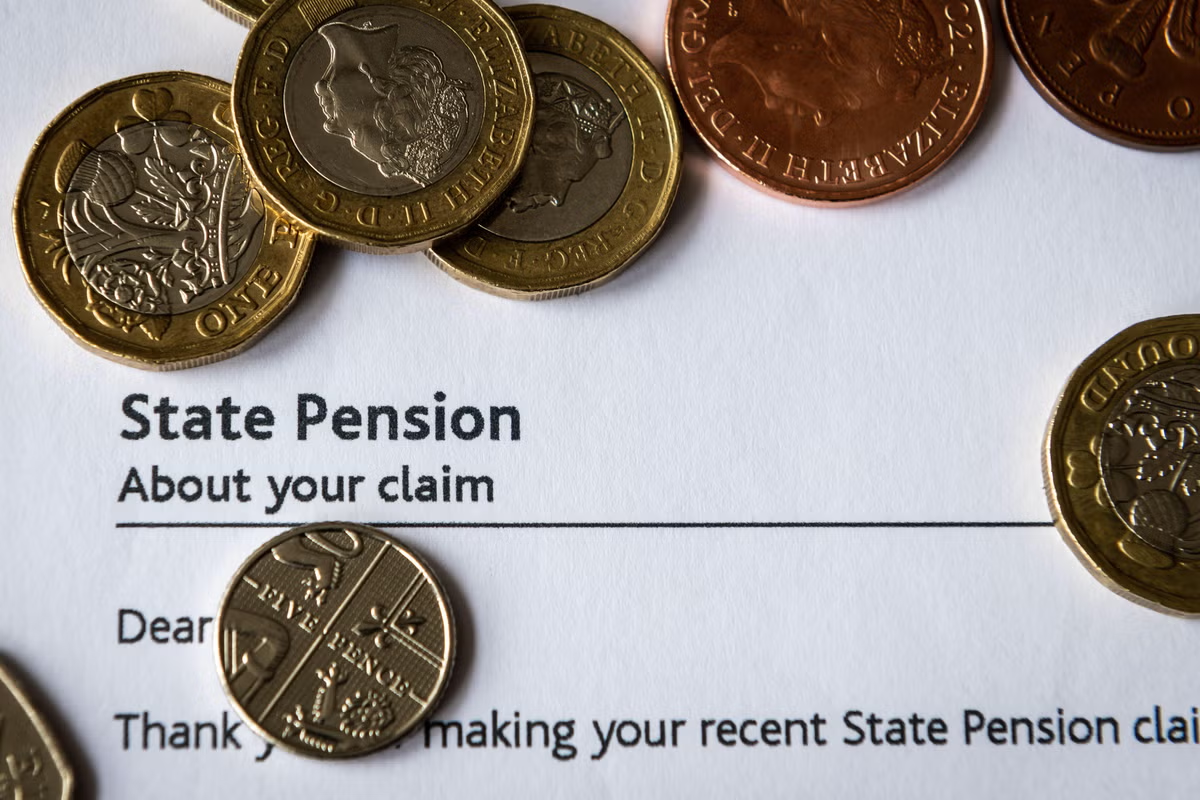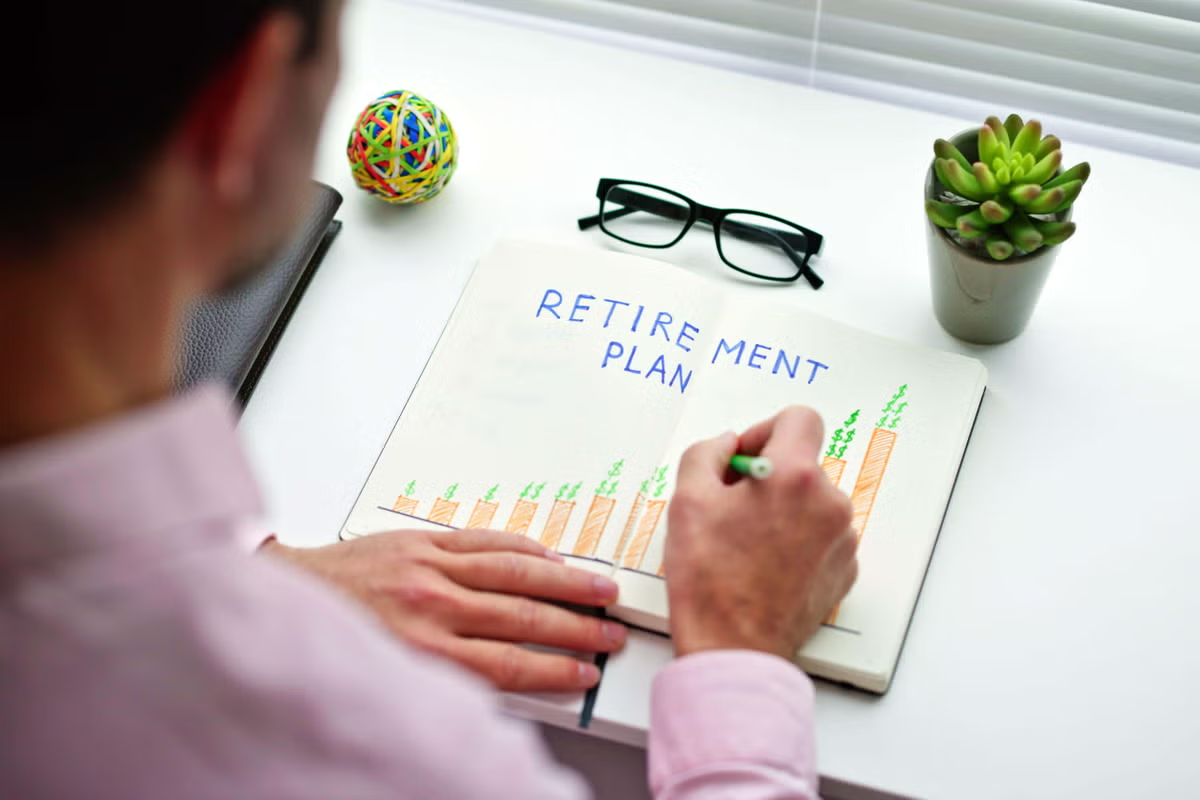
When people reach their 50s and move into later life, their financial priorities frequently alter, as retirement becomes an immediate concern and long-term choices regarding pensions, savings and investments take centre stage.From clearing a mortgage and reviewing past workplace pensions to evaluating investment risk, inheritance tax and prospective care expenses, choices made during this period carry lasting consequences.Jennifer Crichton, associate planning director at Killik & Co, sets out some of the essential financial steps to evaluate across each stage of later life.For people in their 50s, Crichton says it’s important to start thinking about what retirement will actually look like, rather than simply focusing on reaching a particular retirement age.“This is the perfect opportunity to start thinking about what retirement might look like for you and what you want it to look like,” says Crichton.“Figure out what your spending goals are. Maybe it’s more travelling when you get to retirement, or paying for a child’s wedding. Think about some of these big moments, as well as the type of lifestyle you want to live and your day-to-day expenditure throughout.”For people in their 50s, Crichton says it’s important to start thinking about what retirement will actually look like, rather than simply focusing on reaching a particular retirement ageShe adds that this can also be a useful period to make the most of potentially having more disposable income, putting more money towards retirement rather than simply increasing day-to-day spending.One area to consider is any outstanding debt, including a mortgage, and whether it can be reduced before retirement.Get a free fractional share worth up to £100.Capital at risk.Terms and conditions apply.Go to websiteADVERTISEMENTGet a free fractional share worth up to £100.Capital at risk.Terms and conditions apply.Go to websiteADVERTISEMENT“At this stage I start to encourage my clients to think about things like is there a debt that they’ve still got left to pay, or a mortgage that they aim to pay off by retirement age and if they can step that up a little bit more,” says Crichton.“It’s also good to think about investing in pensions as much as possible without the constraints of your normal day-to-day spending and then allowing yourself a cash reserve for anything that might come along in terms of emergency needs over that time.”This is also a good decade to start reviewing old workplace pensions and considering whether they could be consolidated, while checking if you have adequate financial protection in case of long-term illness or death.“Cash savings are always going to be important too, to make sure if you have a job loss or something happens, you’ve got cash available that’s not invested at that point,” advises Crichton.Inflation should also be considered when deciding how much money to hold in cash60s – early retirementBy their 60s, people may be approaching retirement or already beginning to reduce their working hours. Crichton says this is the time to make decisions about what the transition will look like.“Again, I would really be considering at this point what will retirement look like for me? Is it a case of slowly reducing your working hours or is it where they may be in the industry where it’s a full stop and they don’t want to work elsewhere,” she says.Crichton also suggests considering whether investment risk should be reduced as retirement gets closer. She explains that risk means you could equate it to the movement you might see up and down in your portfolio.“Obviously everyone wants that gentle trend upwards, they’re growing their assets over time because they’re investing it appropriately. But if you’re in the type of asset that you’re getting better growth in, it’s more likely that you’re taking risk,” she explains.“What we want, especially as someone’s entering retirement, is to start to make that a more gentle line. You’re getting less than the up and down and more of the gentle trend upwards so you’re not risking retiring at the point where your asset values have come down because you’re a natural part of that up and down.”Crichton also suggests considering whether investment risk should be reduced as retirement gets closer. She explains that risk means you could equate it to the movement you might see up and down in your portfolioInflation should also be considered when deciding how much money to hold in cash.“The other risk to be aware of is inflation,” highlights Crichton. “If you are sat in cash or too much of your assets are sat in cash and you don’t have enough diversification elsewhere, then you are risking that – your purchasing power is eroding over time – which is not something we want to see when we want that sustainable retirement income.“If appropriate, start thinking about inheritance tax planning too.”70s – into retirementBy the time people reach their 70s, spending may have become more predictable, but unexpected costs such as care can still have a significant impact.“Whilst your general spending hopefully would have stabilised, you might have done some of the bigger trips that you wanted to do and you know what you need year-to-year – but you could still have something like care costs hitting at an unknown point.“Care costs can be very expensive in the UK at the moment and it’s something we should prepare for.”Estate planning can also become more important, with Crichton encouraging people to discuss their plans with younger family members.One area to consider is any outstanding debt, including a mortgage, and whether it can be reduced before retirement“When we’re talking about estate planning – this will be something that’s more on the mind now – we need to make sure that there’s enough there in case someone does go into care,” says Crichton.“Sometimes someone might be comfortable relying on the value within their property to help pay for care costs, but there’ll be an impact if you’ve got a couple where they are both living in the property and actually that wouldn’t be a source of potential liquid assets at a later date.“It’s also a stage where if this hasn’t already been the case, I would start to encourage my clients to talk to their younger family members about what they want to do in terms of estate planning.”For those who begin gifting money to family, she recommends keeping detailed records.“The final point is, if you are starting to do a gifting strategy, you might be doing a one off lump sum or smaller regular amounts annually, we would encourage you to keep very good records of this so that you or your executives in the future will know what you’ve done during life,” recommends Crichton.
Financial expert shares the key decisions to make before you retire
The financial decisions made during later life can have an impact for years to come
1,096 words~5 min read