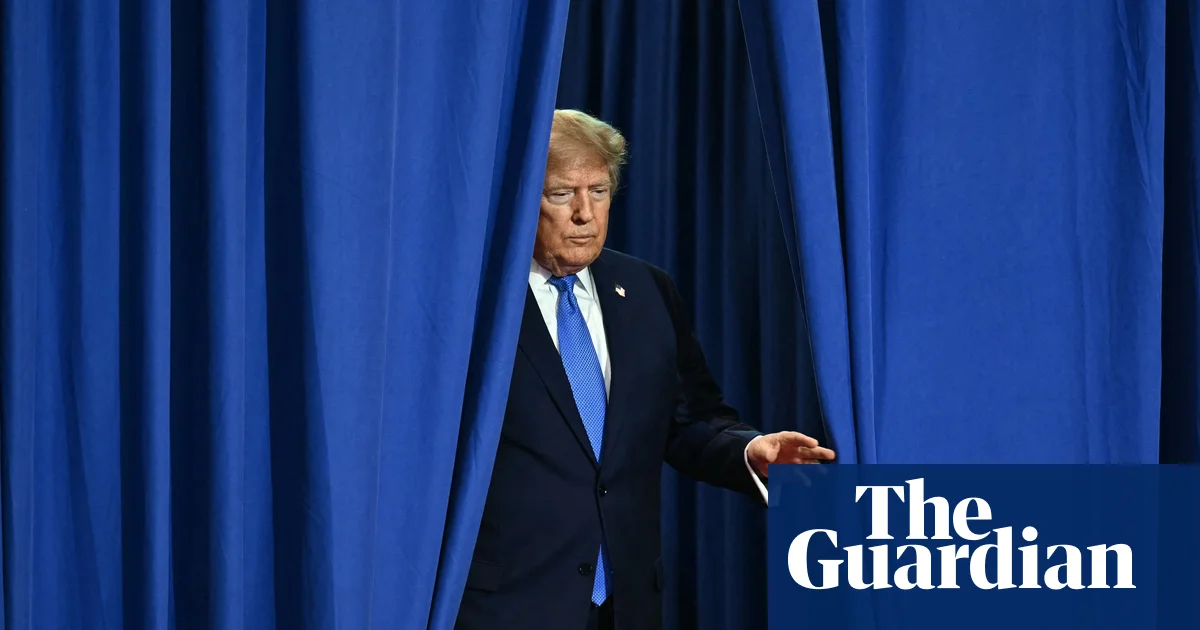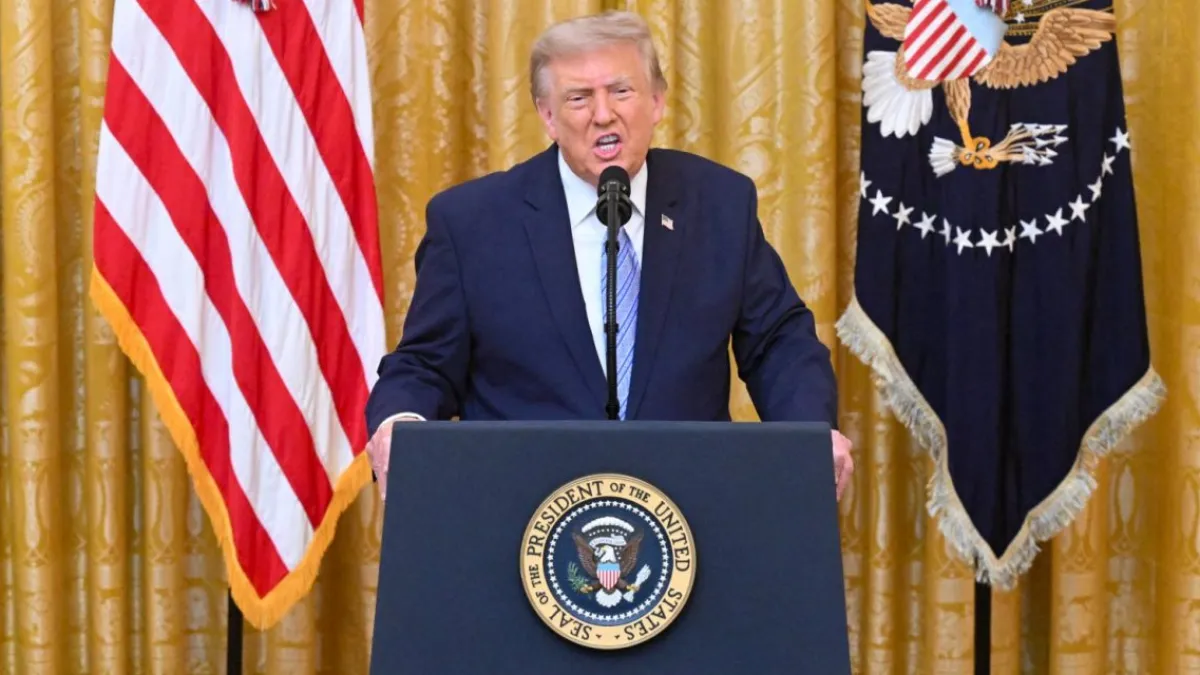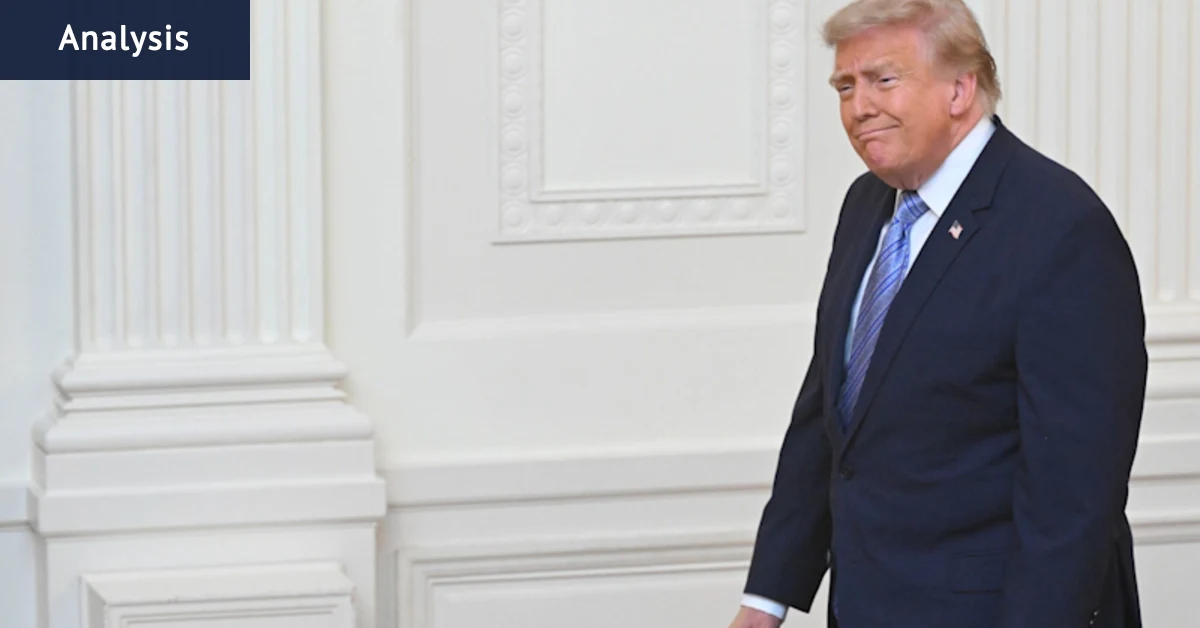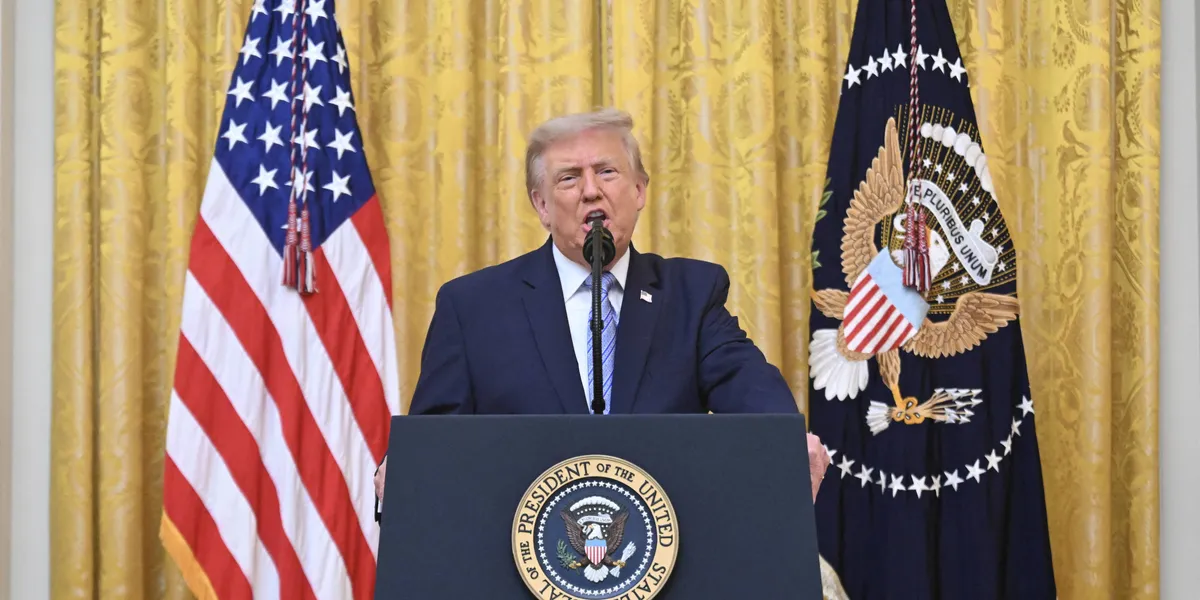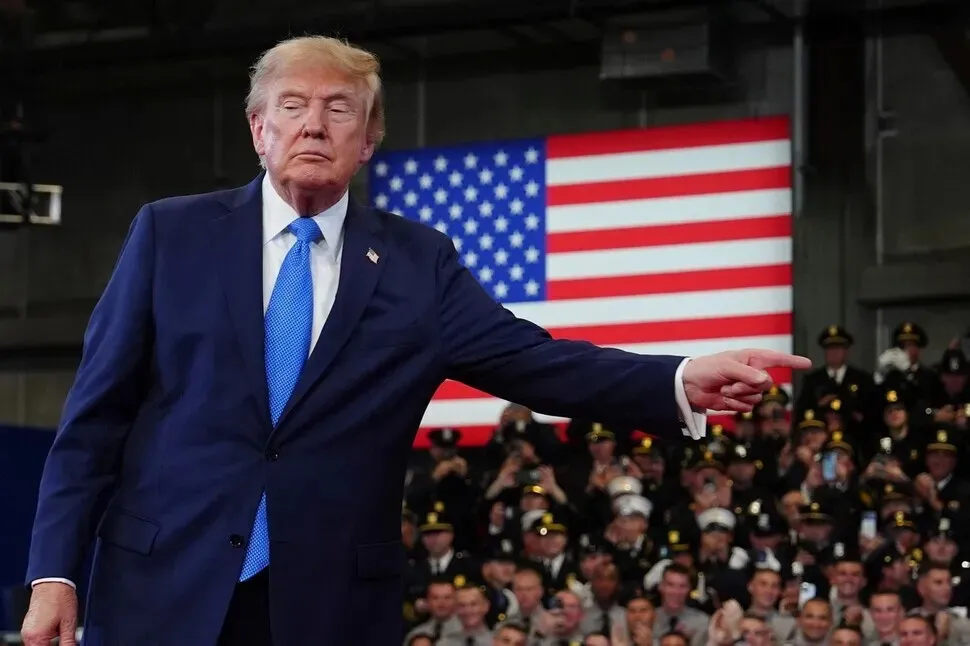
US President Donald Trump gives a speech at the David Mack Center for Training and Intelligence in Garden City, New York, on Aug. 14, 2026. (AP/Yonhap)
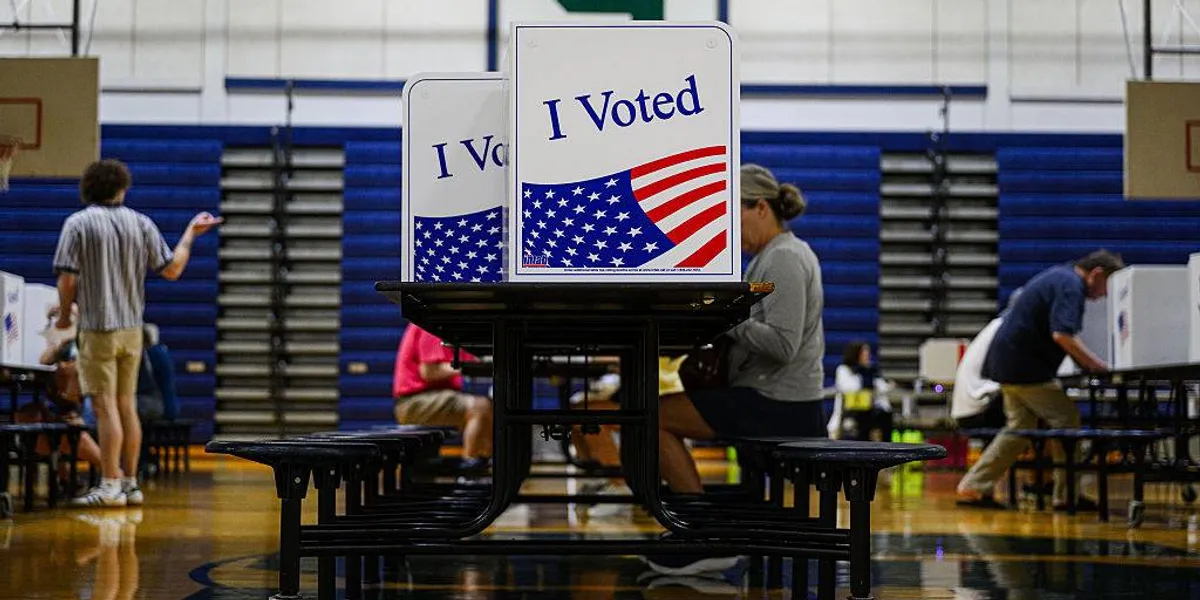
On the night of July 16, a tense tug-of-war erupted within the White House ahead of US President Donald Trump’s primetime speech to the country.Bill Pulte, the acting director of national intelligence, wanted to release the real names of intelligence analysts suspected of withholding information on election interference from the president. Reports said Trump grew agitated after hearing this argument.But the White House chief of staff, Susie Wiles, and other senior aides put the brakes on this, arguing that if the names were made public, this would make the officials targets of conspiracy theorists and lead to violence. Trump was persuaded not to go off script and Pulte also backed down after belatedly acknowledging the risks.This controversy was not just about the revision of a presidential speech, but a clash between the US intelligence chief and Wiles, who runs White House operations, over whom the president should designate an enemy of the state. In the end, Trump declined to disclose the names but publicly warned that the American electoral system was prone to foreign attacks and that China tried to sway the 2020 presidential election, while presenting no evidence of any interference six years ago.This incident fueled the emergence of the most important question surrounding the midterm elections in November: Will Trump accept the results as the outcome of a normal democratic process even if the Republican Party loses?The US magazine Vanity Fair recently highlighted circumstances that compel taking this question seriously.Separately, these events can be explained. The president has the power to appoint officials, and the executive branch can stress election security. Intelligence agencies are tasked with looking for any foreign interference in elections, and the arguments for verifying voter eligibility can also frame it as a policy issue.But a different view emerges when these points are analyzed as part of a broader picture. For Trump, November’s elections are not just a midway report card for his term. If the Democratic Party gains control of the House of Representatives, the ensuing replacement of committee chairs could potentially lead to subpoenas, demands for document submission and public hearings.Congress could simultaneously probe allegations involving Jeffrey Epstein, the Trump family’s business dealings, the president’s use of power during his second term, his alleged retaliation against political opponents and use of military force. And when the dust settles, one word comes back into focus: impeachment.Trump is fully aware of this scenario. Earlier this year, he told Republican lawmakers that they must win the midterms, warning that a loss would lead to a Democratic attempt to impeach him. For the president, this election is ultimately not just a matter of a few seats but preservation of the remainder of his term and power. So what options remain if he doubts he can retain the House through a normal election?Trump showed how he handles defeat in the 2020 presidential election. Rather than abruptly claiming fraud after the completion of vote counting, he attacked mail-in voting and fueled distrust in the electoral system even before Election Day. He announced in advance that if he lost, it would be due to flaws in the electoral system and not voter choice. In short, he invented reasons for public doubt over election results before they were even announced.The same pattern has emerged this year but with more organization and sophistication. Changes in intelligence leadership, controversies surrounding the US Election Assistance Commission, federal pressure on state election authorities, political exploitation of the non-citizen voting issue, reexamination of 2020 election data and claims of foreign interference have appeared. Each appears to be a separate event but all of them keep raising the same question: Can we trust the US electoral system?What Trump needs might not necessarily be conclusive evidence of election fraud because political justification alone could be enough to question the results in case of defeat. If the GOP wins, the midterms will end normally. But if it loses, claims of foreign interference, illegal voting by non-citizens, problems with mail-in ballots, non-cooperation by certain state governments and suspicious circumstances uncovered by intelligence could emerge.Imagine if a national intelligence agency claims to have evidence of foreign interference just before an election or during vote counting. Even with no proof of fraud, this could serve as powerful political ammunition for Trump to attack the legitimacy of the electoral process.Partial disclosure of a single classified document or piece of information taken out of context could give tens of millions of people reason to doubt the elections. The most effective way to undermine democracy is not to steal ballot boxes but fuel voter distrust in them.When public skepticism over elections exceeds a certain level, the losers are transformed into victims. Unsuccessful candidates can paint themselves as victims of a rigged system, not voter choice.Conversely, the winners are attacked for “stealing” an election. Thus, an election can serve as the starting point of new conflict rather than a system for ending discord.Trump doesn’t need to send troops to polling stations or seize ballot boxes to trigger a crisis of democracy. A more realistic approach for him is to preemptively create a political environment in which election results can be rejected.His strategy is to attack election agencies, spread doubt over the administrative capacity of state governments, and repeatedly warn of illegal voting by non-citizens and foreign interference. Another ploy is to constantly imply problems with the elections to the public.