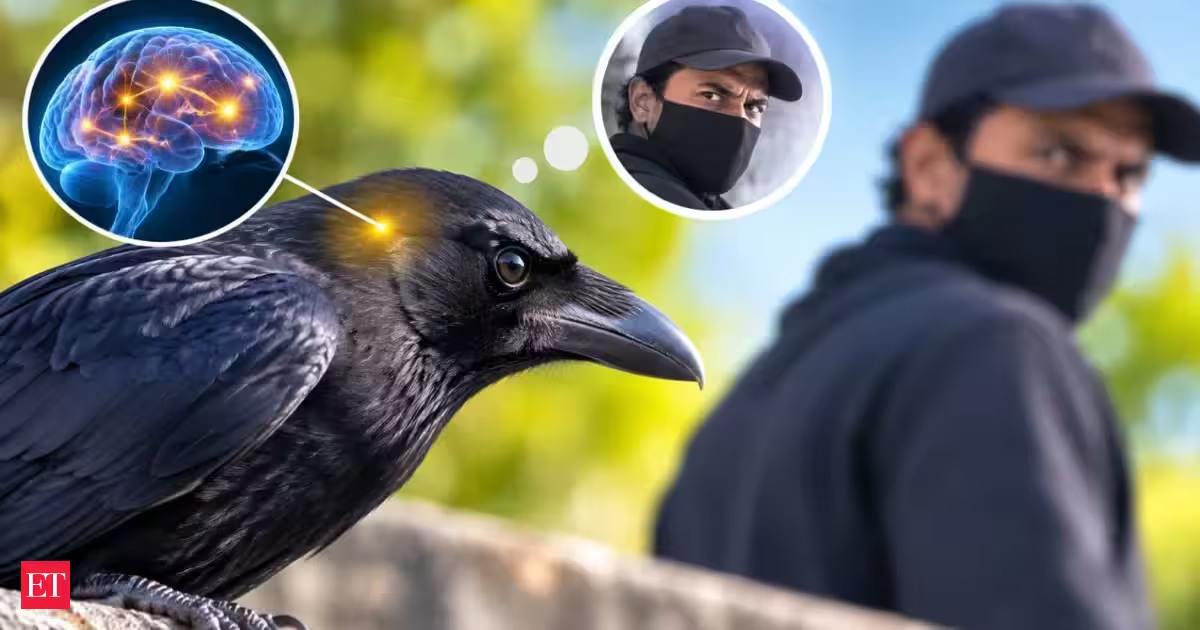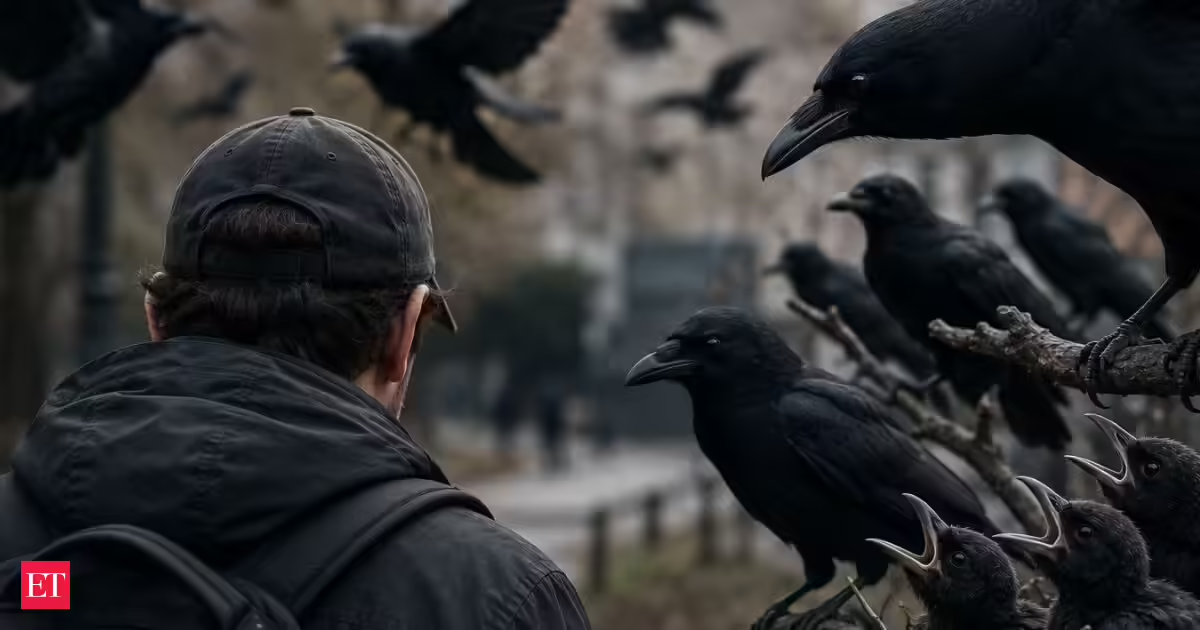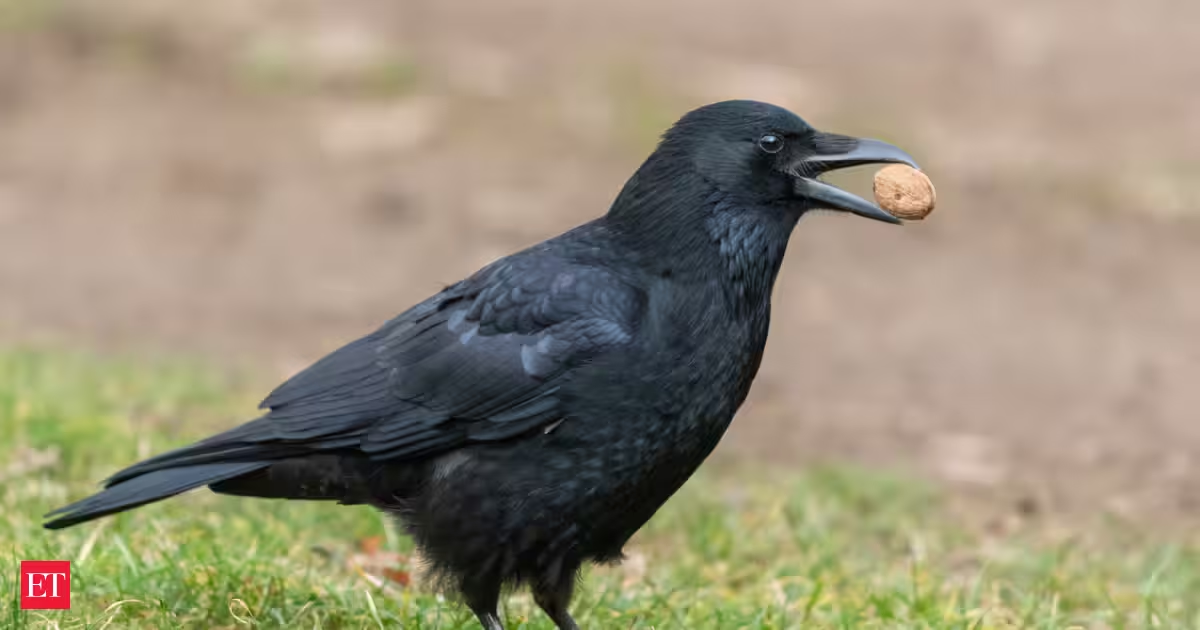
A person may forget a brief encounter with a crow. The crow, however, may not forget the person or the face associated with the experience. Research conducted at the University of Washington has shown that wild American crows can recognize individual human faces they associate with danger and remember them for years. Even more remarkably, the knowledge can spread beyond the birds that experienced the original threat.Crows that witness another bird reacting to a dangerous person can learn to recognize that face themselves, while younger birds can acquire the same response by observing older members of their family and flock.The long-running research has offered a striking look at animal memory and social learning. A single negative encounter can create a recognition that spreads through a crow community, meaning birds that were never present during the original incident may still learn to identify and harass the same perceived threat years later.The research eventually produced a striking long-term finding: knowledge of the threatening face continued to circulate through the local crow population for years after the original 2006 encounter, with the response ultimately tracked over a 17-year period.It began with a mask and a group of captured crowsThe research began in 2006 with a deceptively simple question: could a wild crow recognize a particular human face after a negative encounter? A team led by researchers at the University of Washington tested the idea using masks to separate a human face from other clues such as body shape, age, clothing or gender.At several locations around Seattle, researchers wearing a distinctive caveman-style mask captured and banded seven to 15 wild American crows before releasing them. The mask became the visual cue associated with the threatening encounter, while other masks served as neutral controls during ordinary walks through the same areas.The findings were reported in the 2009 paper, “Lasting Recognition of Threatening People by Wild American Crows,” published in Animal Behaviour by John Marzluff and colleagues.The captured crows soon began reacting strongly whenever they saw the face associated with their 2006 experience. They produced loud alarm calls and scolded the person wearing the threatening mask, while the neutral masks received little attention.Also Read: Nobel-winning chemist born to Palestinian refugees grew up with 9 siblings in one room without running water or electricity; after moving to the US in 1980, he developed technology to harvest water from dry desert air without electricityThe birds appeared to be responding to the facial features themselves. The same mask could be worn by different people and still trigger the response. The original research documented that this recognition could persist for at least 2.7 years.But the researchers soon discovered that remembering was only part of the story.The crows that were never captured also learned the faceA follow-up study revealed something even more remarkable. The birds that had been captured were not the only ones reacting to the threatening face.In a 2011 paper published in Proceedings of the Royal Society B, researchers Heather Cornell, John Marzluff and Shannon Pecoraro examined how knowledge about dangerous humans spread among wild American crows.Their study, titled “Social Learning Spreads Knowledge About Dangerous Humans Among American Crows,” showed that crows could learn about a threatening person socially.Some birds had direct experience with the dangerous mask because they had been captured. Others learned after witnessing the event and observing the reactions of nearby crows.And young crows that had never seen the original trapping could also learn to react to the threatening face by observing older birds.In other words, a crow did not necessarily need to experience danger personally to learn who, or what, to avoid.A dangerous face became known across the flockOver time, the response spread through the local crow population. The 2011 research found that the scolding response increased substantially over several years and extended beyond the original locations where the birds had been trapped. The knowledge had effectively moved through the crow community.The numbers illustrated just how dramatically the response had expanded. At one point during the research, a person wearing the threatening mask was scolded by 47 of the 53 crows encountered on a measured walk. Yet only a small number of birds had originally been captured during the experiment.Most of the birds reacting to the face had not personally experienced the original event.They had learned. The finding offered a powerful example of social learning in a wild animal population. Crows were not simply storing individual memories. They were responding to information passed through observation and interaction with other members of their community.The crow ‘grudge’ lasted far longer than the original encounterThe experiment did not end with the 2010 and 2011 papers. Researchers continued monitoring the response for years after the original 2006 trapping, allowing them to track how the learned recognition changed as the local crow population changed. According to reporting by the University of Washington's Urban@UW research communications, the reaction to the threatening mask persisted in the local crow population for years.The response reportedly peaked around 2013, several years after the original trapping began. It then gradually declined as older birds died and the local population changed.By September 2023, researchers reported that the person wearing the famous threatening mask could walk across the University of Washington campus without being scolded by a single crow. The story had come full circle.The face that had once triggered widespread alarm had finally lost its meaning. That is where the widely discussed 17-year figure comes from.It does not mean that one individual crow spent 17 years personally remembering and feeling angry about a single incident. The more interesting explanation is that knowledge of the threatening face persisted socially within the local crow population over an extended period. The memory outlived some of the original birds.Why a crow may remember you when you have forgotten itThe research also changes the way people might think about the crows watching from trees, telephone wires and city rooftops.Crows are among the animals that have adapted especially well to human environments. They share neighborhoods, parks and campuses with people every day.That gives them countless opportunities to observe human behavior. The University of Washington studies suggest that when a human becomes associated with danger, at least under the experimental conditions researchers studied, crows can attach that experience to a recognizable face and retain the information over long periods.More importantly, that information does not always remain private.A dangerous individual can become well known socially.So the next time a crow seems to be watching from a tree, it may be worth remembering what the research has shown: these birds are capable of much more than simply recognizing the world around them.They can learn from experience. They can remember. And, sometimes, they can teach others exactly who to watch out for.
University of Washington scientists trapped a few American crows in 2006 while wearing a caveman mask; birds learned to recognize the threatening face, passed the warning to younger crows, and the response lasted through the population for 17 years
Research from the University of Washington highlights the fascinating memory of crows, showing that they can recognize threatening human faces for many years. This ability isn't limited to those who have had direct confrontations; the knowledge spreads through their social networks. Young crows learn from observing older members, effectively avoiding danger.
1,115 words~5 min read