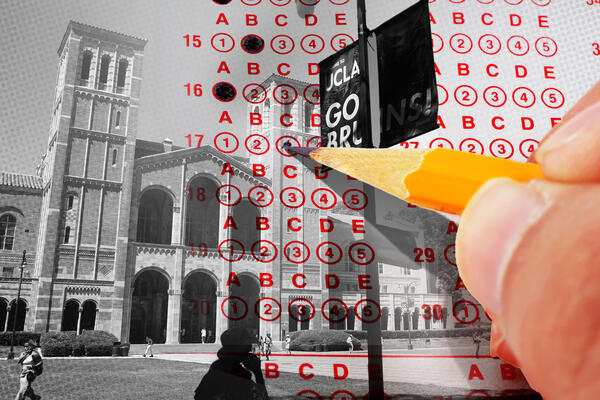
Nationwide, just 161 colleges require test scores in admissions.
Photo illustration by Justin Morrison/Inside Higher Ed | Izusek and Spiderplay/E+/Getty Images
In the six years since most colleges and universities suspended admissions testing requirements amid the COVID-19 pandemic, many have reinstated the requirement or announced plans to do so, including all of the Ivy League universities. But data collected by FairTest, an organization that advocates against the use of tests in admissions, shows that the requirements have not, in fact, had a major resurgence.
In the organization’s analysis of 2,247 admissions policies for the 2026–27 admissions cycle, only 7 percent—or 161 colleges—require test scores for admission. The vast majority, 86 percent, are test optional—students may submit scores if they so choose—while 4 percent are test free, meaning they will not look at test scores. Only 11 institutions introduced new testing requirements for this admission cycle, but another 10 switched from test required to test optional this year. The total number of colleges requiring test scores increased by just one.
Those numbers shift only slightly when looking at top-ranked institutions. Among top institutions—any university that U.S. News & World Report has included in its top 100 ranking—11 percent require scores, versus 82 percent that are test optional. Two Ivy League institutions, Columbia University and Princeton University, remain test optional for this admissions cycle but will switch to requiring scores next year; two other Ivy-Plus institutions, Duke University and the University of Chicago, are remaining test optional indefinitely.