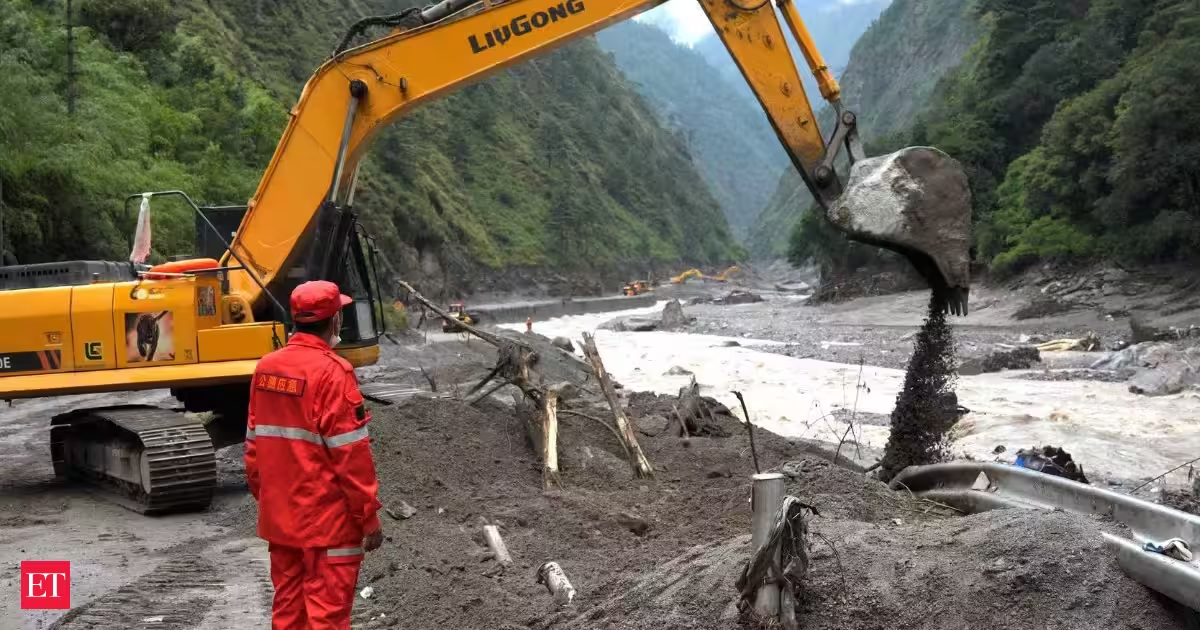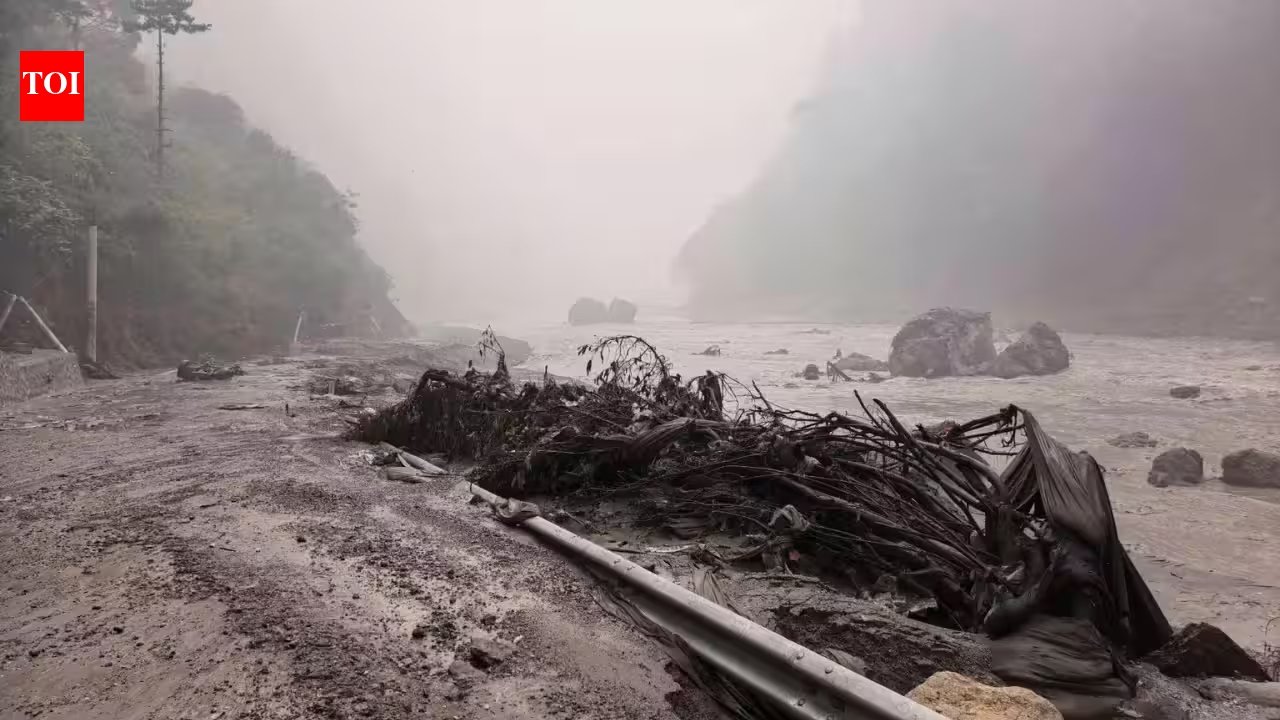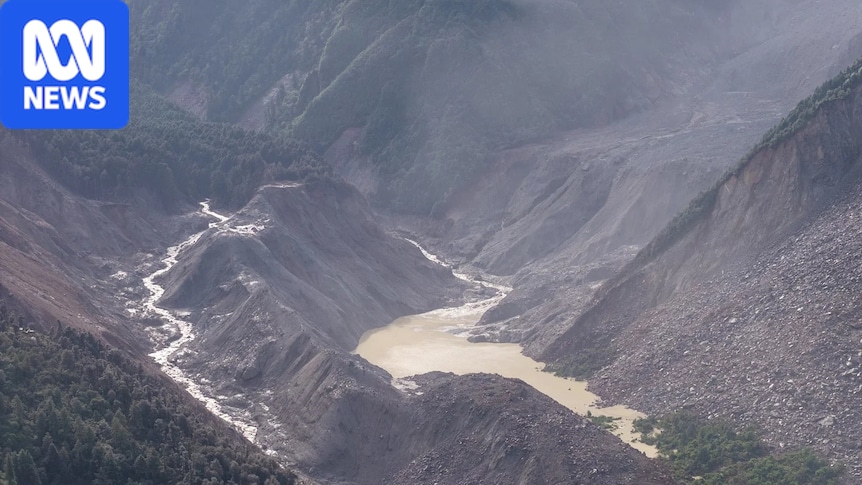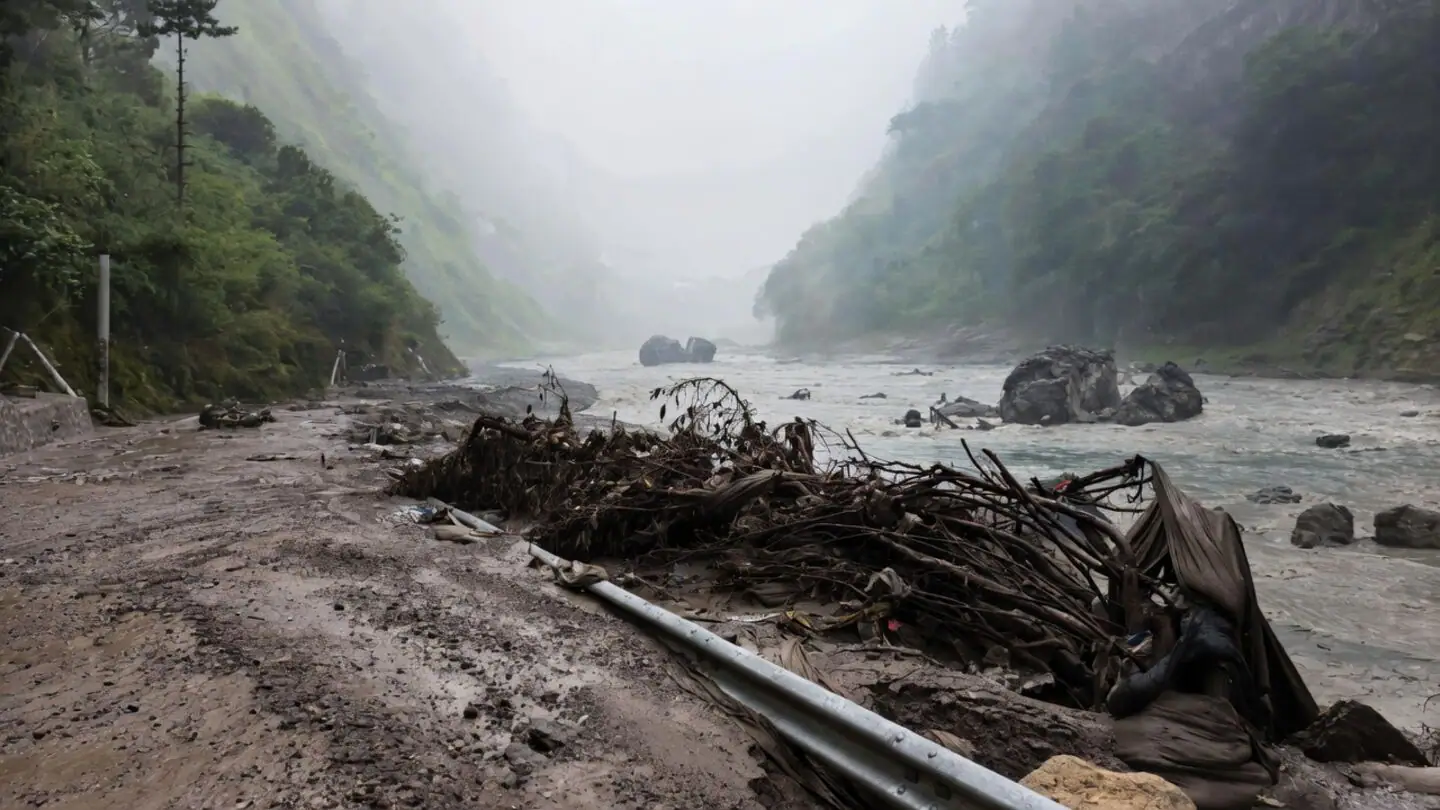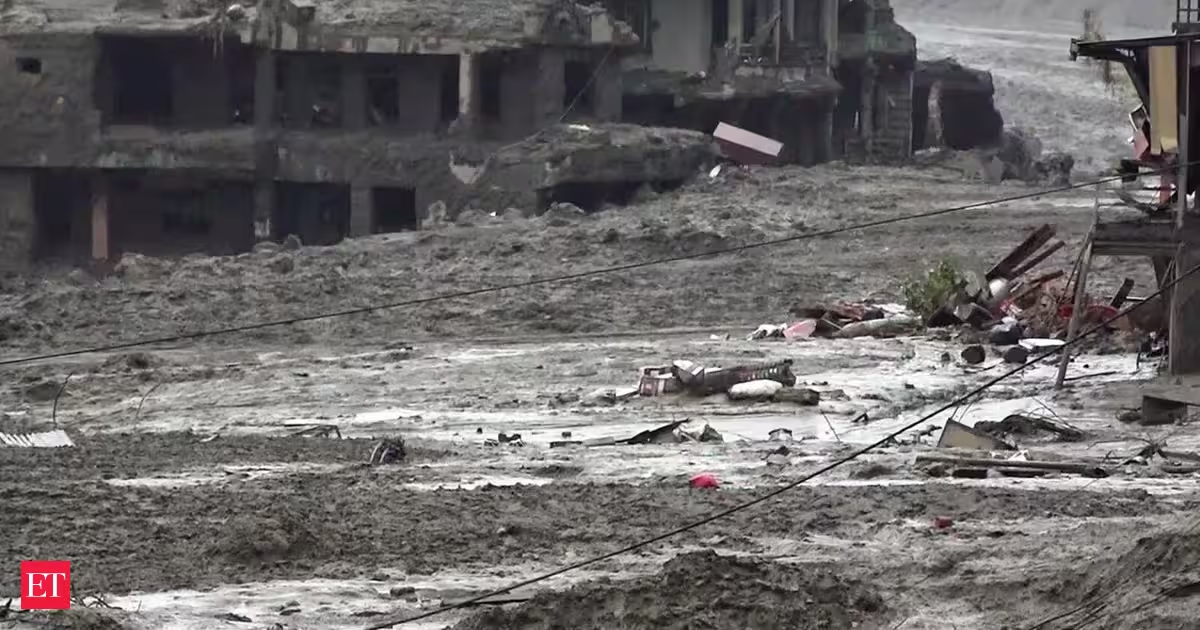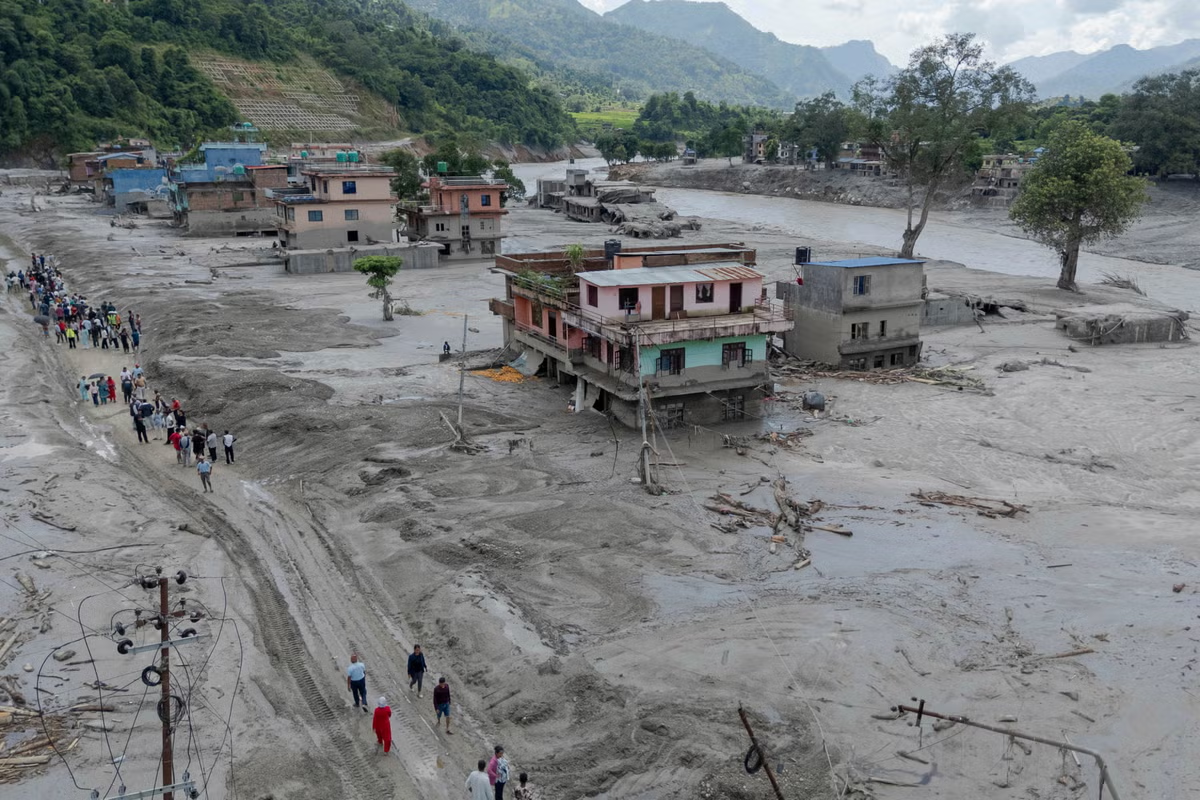
Emergency teams in China have been working to prevent a barrier lake from bursting along the flood-devastated border between its Tibet region and Nepal, where recent flash flooding has already killed hundreds of people. Both countries issued warnings on Thursday regarding fresh flood threats in the Himalayan range, where two unstable lakes formed on opposite sides of the border risked collapsing in a region still reeling from this week's destruction. To evaluate the hazard, Chinese authorities dispatched an eight-person engineering crew to carry out aerial assessments and 3D mapping of the site, state broadcaster CCTV reported on Friday.Chen Hanxiao, one of the engineers assigned to the task, highlighted the physical difficulties involved in accessing the remote location. "After the glacier collapse created the lake, many isolated cliffs and steep cliffs appeared along it," Mr Chen told CCTV on Thursday evening.He explained that the general strategy for mitigating such a threat involved digging a drainage channel at a lower point of the natural dam. However, determining the precise depth and width of this trench required complex calculations based on anticipated water flow rates and how fast the reservoir filled. Data gathered during their initial survey indicated the lake spanned roughly 150m in length, reached 40-50m in depth, and held an estimated 1.5-2 million cubic metres of water.A rescue worker helps a woman move through a muddy road following flash floods and a mudslide in Trishuli, Nepal, on 28 August 2026 (Reuters)The team’s urgent priorities include monitoring the water body, taking measurements from the lake’s bed, and tracking atmospheric conditions over the coming days. Light to moderate rain across the Gyirong border crossing has loosened soil and destabilised rocks around the vulnerable upstream area, with precipitation forecast to continue throughout the week ahead.On Thursday, Chinese officials warned that a further 3 million cubic metres of water – the equivalent of 1,200 Olympic swimming pools – was expected to surge into the obstructed lake over the coming three days. This creates a severe risk of a breach, with peak flow expected around 1 September. Footage captured by a Chinese search-and-rescue team and broadcast on CGTN showed vast quantities of brown water accumulating in a basin without an outlet, submerging surrounding vegetation and pressing heavily against a blockage of rock and debris. Officials confirmed that some 1,000 people remained missing across both sides of the border, including up to 540 foreign nationals from 31 countries.
Chinese engineers rush to prevent barrier lake near Nepal border from bursting
A pair of unstable lakes along the border risk collapsing and compounding the devastation caused by the flash floods
401 words~2 min read