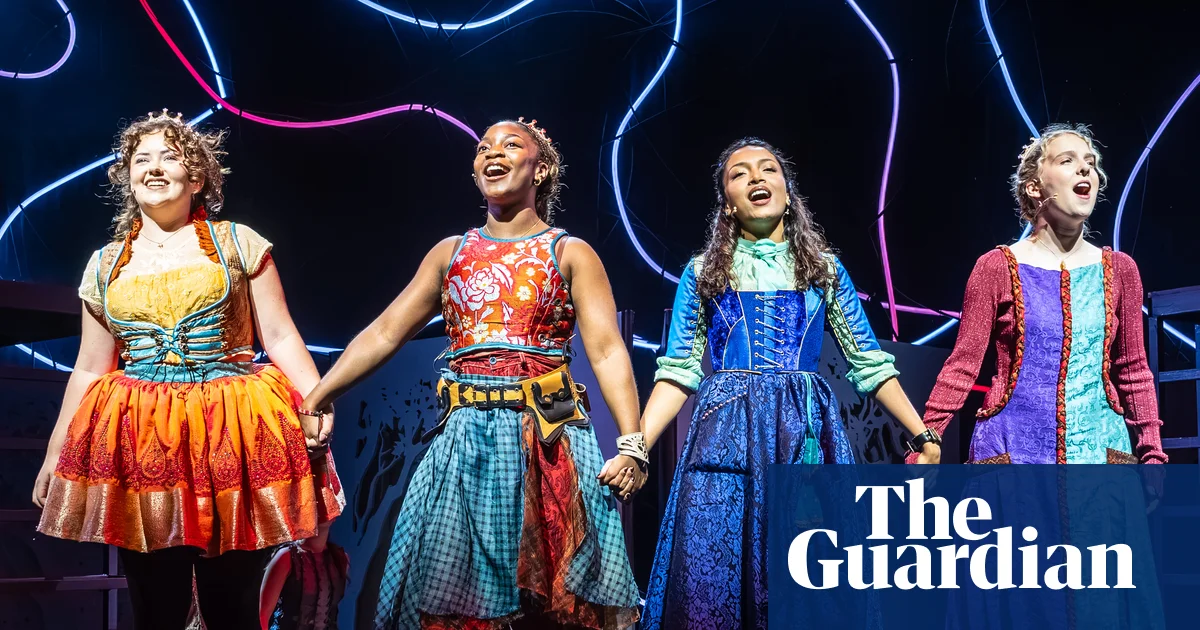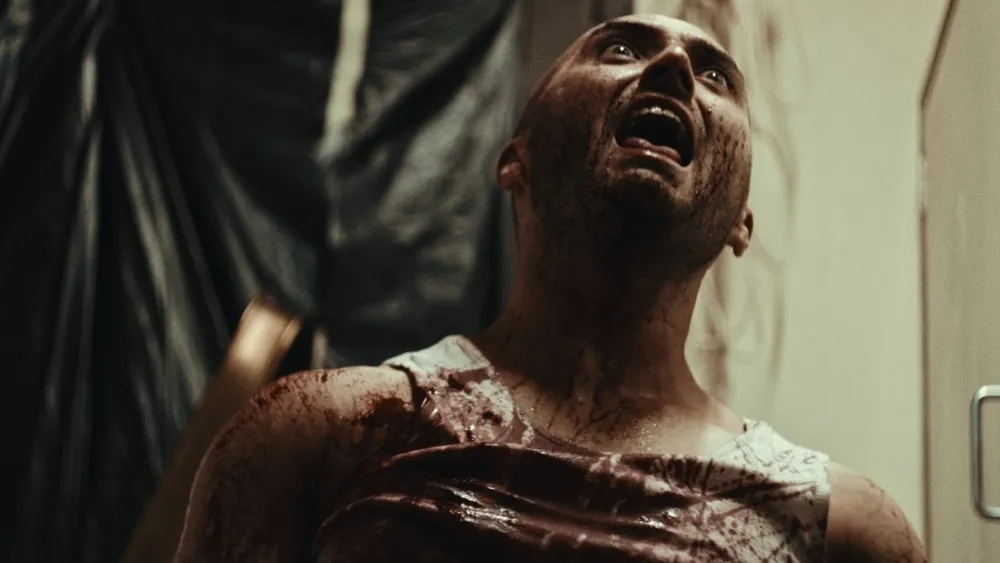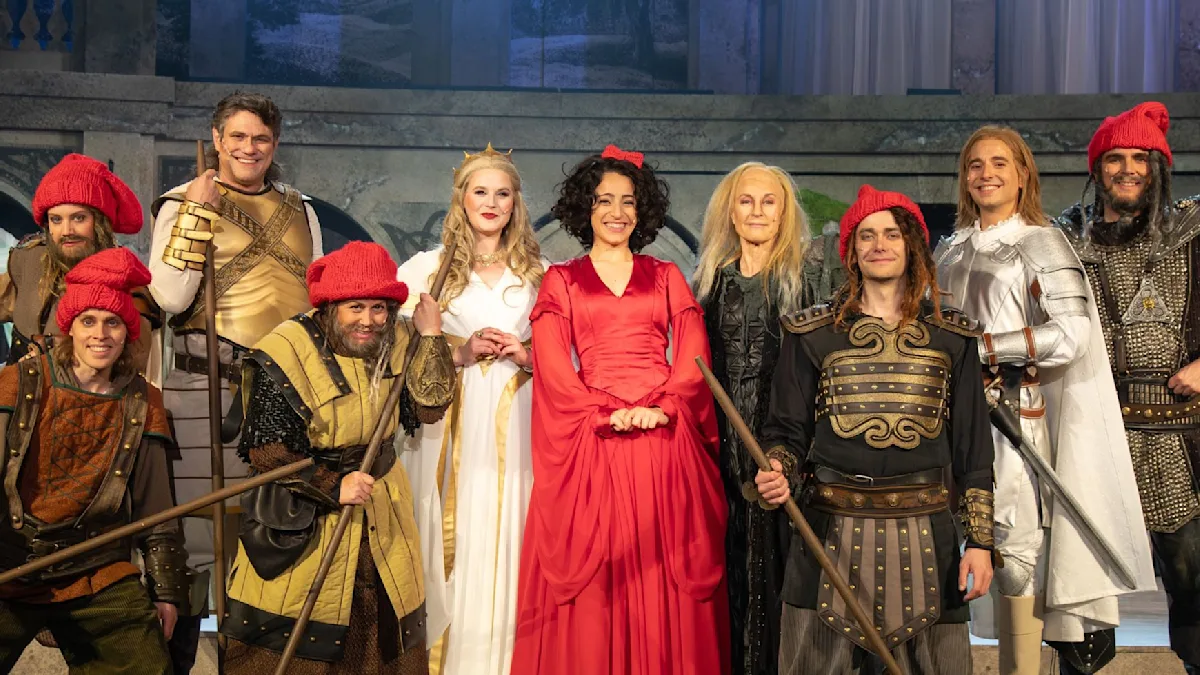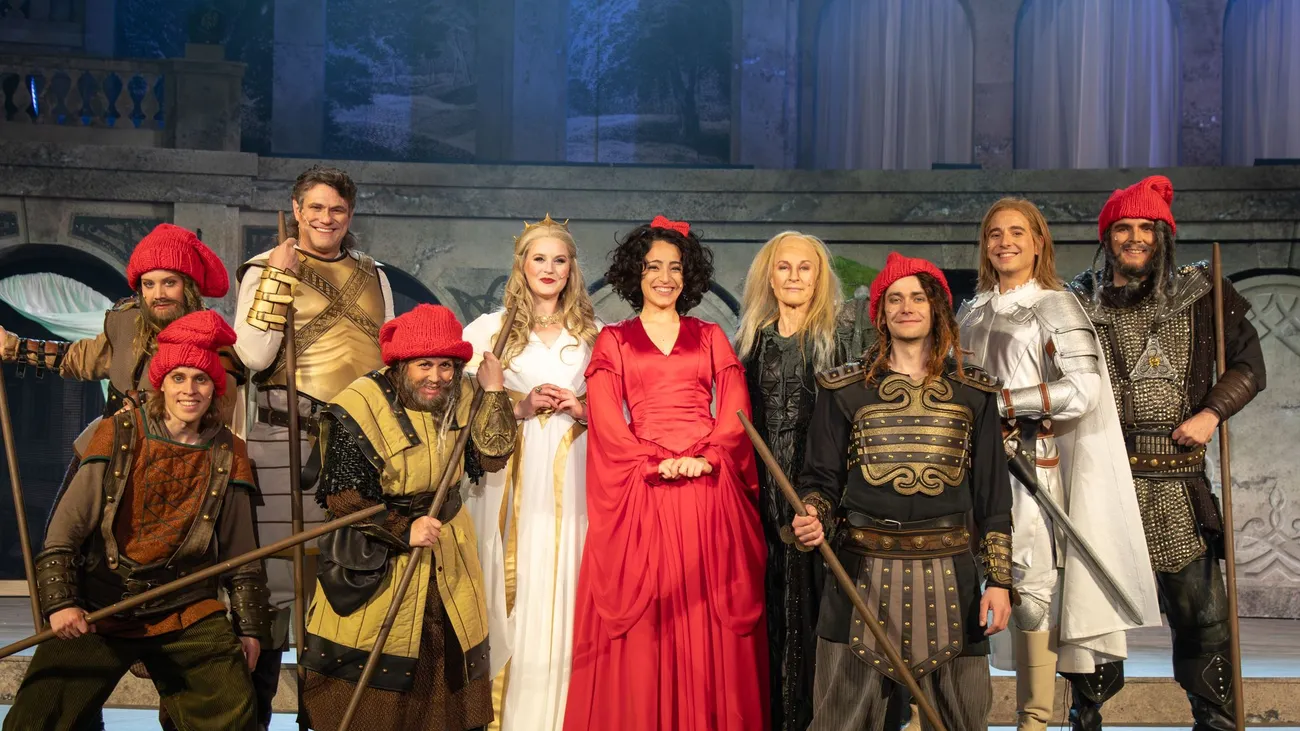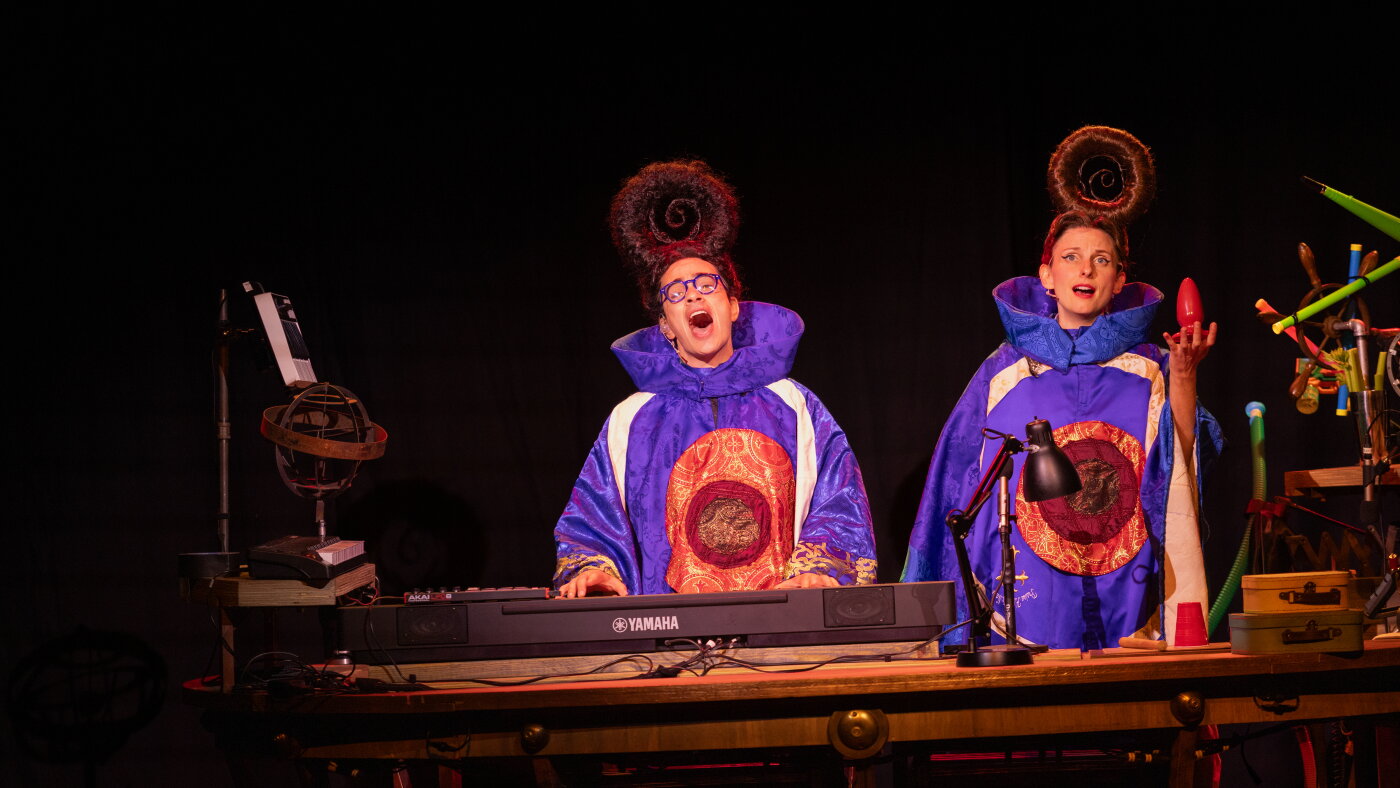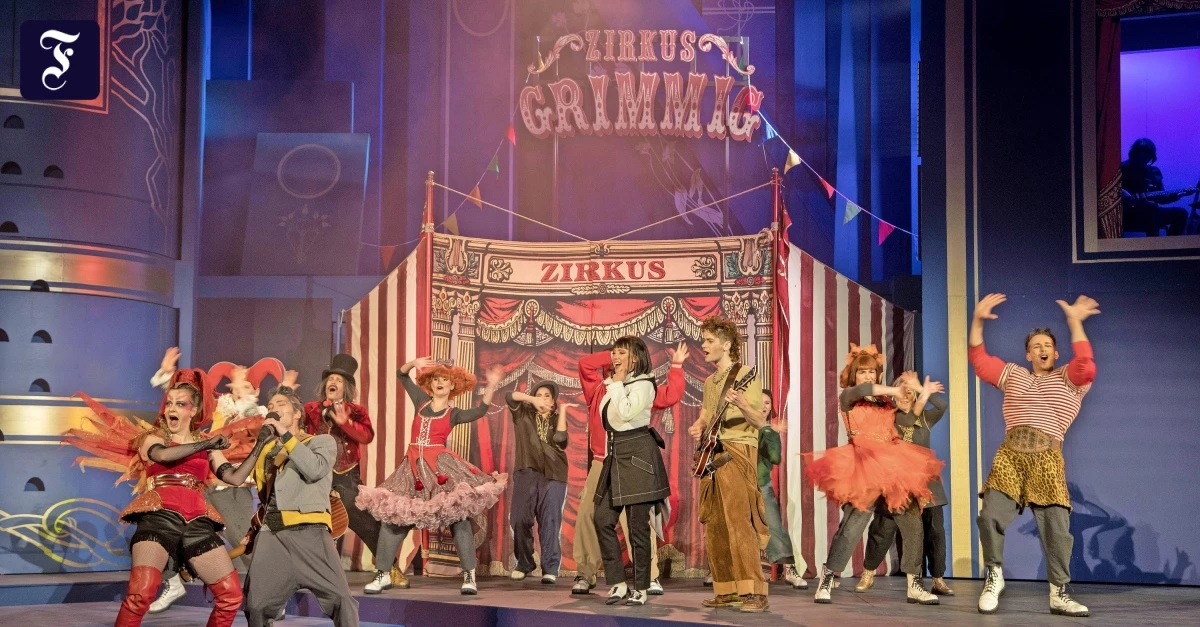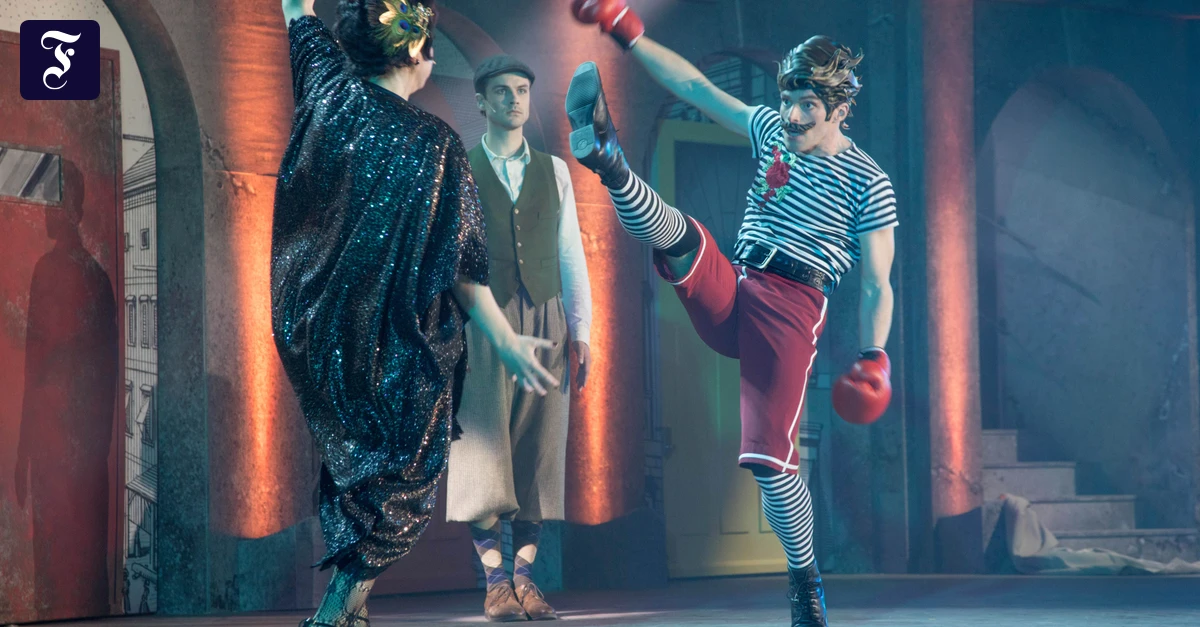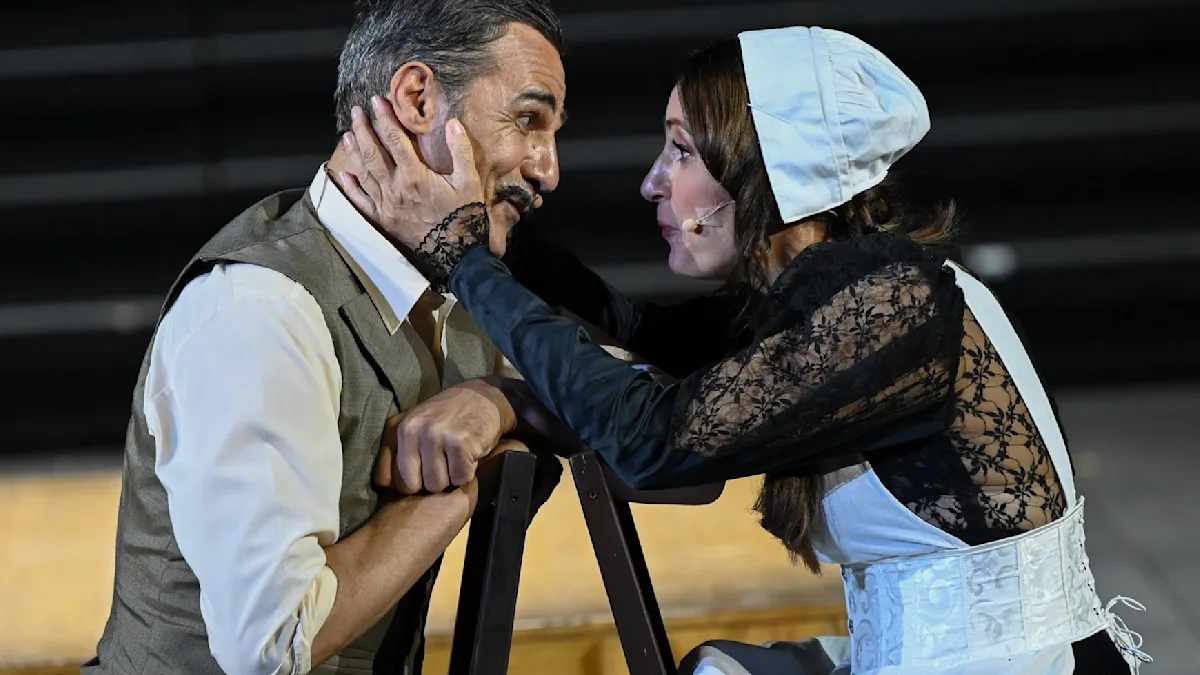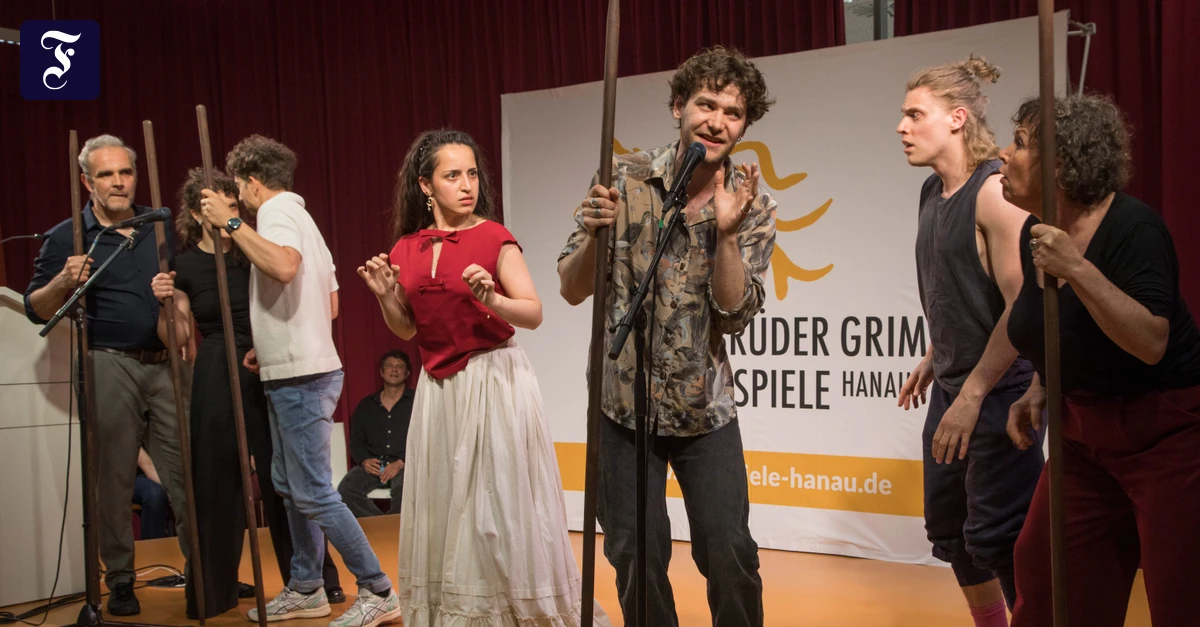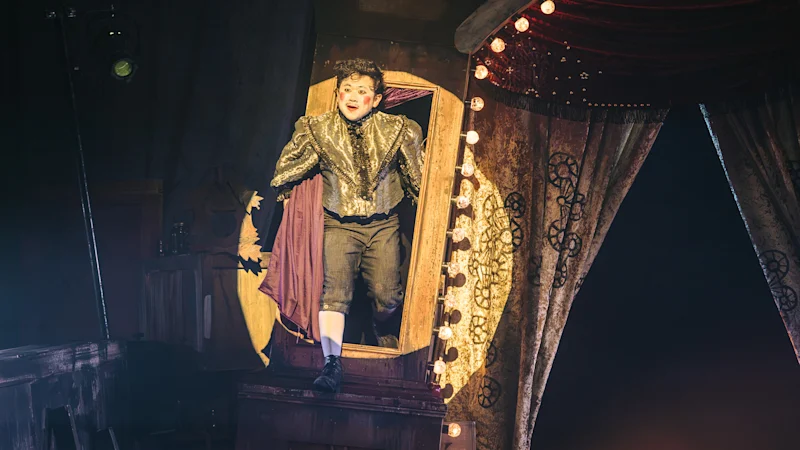
Updated August 28, 2026 — 12:09pm,first published August 27, 2026 — 11:19amTHEATREGRIMM ★★★Arts Centre Melbourne, until September 12Brisbane-based Shake & Stir celebrates its 20th anniversary with a vaudevillian mash-up of Brothers Grimm fairytales. It’s a diverting, if lightweight, entertainment that ricochets with frenzied comedic momentum between the darkness and doom of the original folk stories, and the happily-ever-after whitewash of their Disneyfied progeny.The smattering of pop cabaret and musical theatre homage is performed with great dynamism and charisma by the four-strong ensemble.Cameron GrantAudiences around the country might be familiar with the company’s popular adaptations across children’s and adult theatre. They’ve toured everything from Roald Dahl’s The Twits to George Orwell’s 1984, and this show lands in some twisted panto-zone in between.The plot is a precisely constructed chaos labyrinth of fairytale mayhem. Passages fork through story beats from Red Riding Hood, The Robber Bridegroom, Beauty and the Beast, and so on, though the central tale is Aschenputtel – the super-grim German folk version of Cinderella in which the “ugly stepsisters” hack off their toes to fit into the slipper and … get their eyes pecked out by doves at the wedding afterwards.You can see why Disney didn’t go there, yet this flamboyant panto fears only the dull moment. It heaves with droll invention: splashes of comedy horror, silly sideswipes at some of the obnoxious politics underlying fairytales, and the meticulously choreographed slapstick and japery of commercial farce.True, GRIMM is a bit light on music. In any event, the smattering of pop cabaret and musical theatre homage is performed with great dynamism and charisma by the four-strong ensemble (Aljin Abella, Helen Cassidy, Henry Rollo, Nelle Lee), and you wish there were more Big Bad Wolves and Red Riding Hoods singing it out.As a satirical subversion of fairytales, however, GRIMM can’t match the highest level of musical theatre. It pales in comparison to the sardonic sophistications of Sondheim’s Into the Woods, say, or even Meow Meow’s apocalyptic cabaret reworkings of Hans Christian Andersen stories.GRIMM is built around fairytale mayhem. Cameron GrantWhat GRIMM does give us is much more lowbrow, but no less skilled. If Dracula’s theatre restaurant had ever put on a fairytale-themed show, it might have looked something like this cartoonish crowd-pleaser.Sadly, the Melbourne Dracula’s was staked for good, after 37 years of operation, in 2017. This show may well find a niche among its former clientele, with an energetic mix of undemanding, unpretentious performance styles – theatre restaurant cabaret, pantomime, and inane commercial comedy – geared to ensure popular appeal.Reviewed by Cameron WoodheadMUSICVera Blue | Modern Rituals Tour ★★★★Northcote Theatre, August 26We’re in a forest in the middle of inner-city Melbourne. White gauze curtains form a mysterious cubicle on the stage, imprinted with the ominous shadow of bare trees. A figure steps out from the curtains, large black angel wings cutting a striking silhouette. She opens her mouth and sings.Vera Blue performs at Northcote Theatre, August 26, 2026.Richard CliffordThe woman is Celia Pavey, better known as Vera Blue. She rose to fame in 2013 as a traditional folk singer competing on The Voice and has since become an electro-pop star, but her startlingly controlled voice remains the centrepiece of it all.This show – on her first headline tour of Australia since 2022 – marks the release of her third album, Modern Rituals. There’s something ritualistic indeed about the way that Pavey performs, moving like an otherworldly spirit as she leads the spellbound crowd.The live Vera Blue experience does a lot with a little. Pavey is accompanied by two band members on drums and guitar/keys, occasionally jumping on the keys and a wind synthesiser herself. That curtain becomes a portal to different worlds, as new images appear and the journey continues; Pavey disappears behind it twice to emerge in new costumes, as the colours on stage transform from dark to light.The live Vera Blue experience does a lot with a little.Richard CliffordPavey’s vocal purity stands in stark contrast to the shuddering industrial textures that colour her new record, but she has range. On Private, her vocals transform into a shouted staccato, and elsewhere, they are doubled to create a self-contained harmony. In The Corner shows off her higher register, and on Rituals, bathed in the spotlight, her voice is the sole focus.The energy ramps up as the two band members create a club-like atmosphere with heavy electronic beats, leading into the ecstatic Go Lucky and older hit Regular Touch. Here, there are glimpses of Pavey as a potential arena superstar – one can only imagine what she could do on a bigger stage, whipping the room into a euphoric dance party.But it’s the voice that is the heartbeat of all of this. With just a guitar, Pavey encores with Dolly Parton’s Jolene, paying tribute to the country superstar who passed away just that morning. She encourages the audience to sing along, leading an impromptu choir through a rousing rendition, before closing with her recent cover of Radiohead’s Creep for Triple J, rising to shivering heights on the bridge. Whether she’s singing her own songs or other people’s, Pavey’s voice is a gift.Reviewed by Giselle Au-Nhien NguyenDANCEGG ★★★Now or Never Festival, Arts House Melbourne, until August 30Technology is part of the originary grammar of the street dance imagination. Think of popping, strobing, animation and the robot – and of the electronic music that so often accompanies these forms, with its insistent, machinic beat.GG is a collaboration between street-dance partnership CONJAH and new-media collective PSEUDO.Gregory LorenzuttiAnd think also of the illusions: slow motion and stop-motion, fast-forward and rewind, pulsation, motorised articulation and signals travelling through a system. The fascination of street dance is the way it gives a body to these inorganic rhythms of everyday life.GG – a collaboration between street-dance partnership CONJAH and new-media collective PSEUDO, presented as part of the tech-focused Now or Never festival – continues this tradition of strange embodiments by restaging the constrained movements of video-game characters.The opening is disarming and exceptionally beautiful. A wagon rolls onstage like a medieval puppet booth. Reaching into its tiny theatre from above, Ooshcon uses one hand to create a happy homunculus. It’s an extreme – albeit comic – demonstration of control and illusion-making.The curtain then rises on Ooshcon, Jahra Wasasala, Harrison Hall and Byrin Mita, wreathed in smoke. Here they resemble non-player characters in video games: stiff figures with tiny repertoires of precisely repeated gestures, shuffling around, waving, dying.GG restages the constrained movements of video-game characters.Gregory LorenzuttiIt’s very droll: not hyperreality but hyporeality. GG reproduces the glitches and laborious spatial calculations of older games – turn this way, then that, just to approach another character at the correct angle. Embodied onstage, these familiar limitations become wonderfully strange.The game character is then linked to its prototype, the puppet, in Wasasala’s very fine floor-bound solo. They seem tangled in invisible strings, unable to plant their feet. A sheet engulfs the collapsed body; when it lifts, the puppet seems to float, unencumbered, like Petrushka’s ghost.As a finale, the audience is brought on stage as rough cypher. Movements are translated to avatars in a game projected at the back of the stage – a digital playground created by PSEUDO, whose lead artists here include Hall, Sam McGilp and Henry Lai-Pyne.The conceptual progression is suggestive. Puppets and game characters imitate humans; humans then imitate those figures; finally, avatars imitate the humans. There is some opportunity for audience participation here, but as a spectacle, it’s a bit flat.GG contains several virtuoso vignettes. Overall, however, I think less would be more: less clamorous sound, less video, less sensory clutter.Its best ideas deserve a quieter theatrical frame – the maximal attention that only a less maximal production can give them.Reviewed by Andrew FuhrmannDANCENetworked Flesh ★★★Now or Never Festival, Victorian College of the Arts, until August 28Directed and choreographed by Megan Beckwith, Networked Flesh features a huge ensemble of second-year students dancing on small platforms around Studio 221 while audiences roam freely, viewing an augmented version of the performance through their phones.Networked Flesh is a work that is shaped by the audienceMegan BeckwithPoint your device at a stage and soft, pink, flesh-like forms suddenly appear. You might get dozens of small organisms hovering around the dancers or a single globe pulsating or a pair of them seeming to orbit the moving body, as though caught in its gravitational field.The audience thus provides part of the stage machinery. They also help shape the event. Over the course of the 45-minute work, spectators choose their own journey through the space, while the dancers continually migrate between platforms and an off-stage area.Depending on your setup, Networked Flesh can require some initial mucking about before the augmentation works smoothly. But that friction is also true to contemporary life. So few activities now – even going to the theatre – can be enjoyed without a smartphone.And there is a pleasingly lo-fi underside to the apparatus. The app is activated by QR codes pasted onto signs that are manually exhibited by the performers. Craft glue and cardboard thus become load-bearing components in this gaudy mesh of flesh and code.The dancers perform vigorous, but relatively simple, contemporary phrases that appear to respond to the changing digital patterns. But, of course, in the moment, they are effectively blind to the images of quivering flesh that crowd around them.This production comes out of a dance school rather than a laboratory, so it’s not surprising that the dancing is more advanced than the augmentation. And what I find most interesting here is the opportunity to consider how this mediation alters the experiences of the dancers.What feedback do they receive from an audience watching partly through screens? Has something in the reciprocal relationship been disrupted? Or has that relationship, like the visible space, only been augmented into a more ambiguous form?At times, it all feels a little sinister: a lone dancer surrounded by a silent crowd pointing phones while an unseen network transforms their image. Loose shifts, socklets and the athleticism of the bouncing bodies set up an unmistakable atmosphere of voyeurism.But perhaps the phones introduce a different sort of thrill. Is it a new kind of intimacy for the dancers? A sense of excitement that is heightened by doubts and anxieties about what the audience can see? A kind of double exposure?Reviewed by Andrew FuhrmannThe Booklist is a weekly newsletter for book lovers from Jason Steger. Get it delivered every Friday.More:Melbourne live reviewsArtsFor subscribersPerforming artsSee & DoWhat’s onVictoriaReviewLive musicLive musicReviewFrom our partners
The only thing this flamboyant show fears is a dull moment
GRIMM is diverting, if lightweight, entertainment that ricochets with frenzied comedic momentum between the darkness and doom of the original folk stories.
1,741 words~8 min read