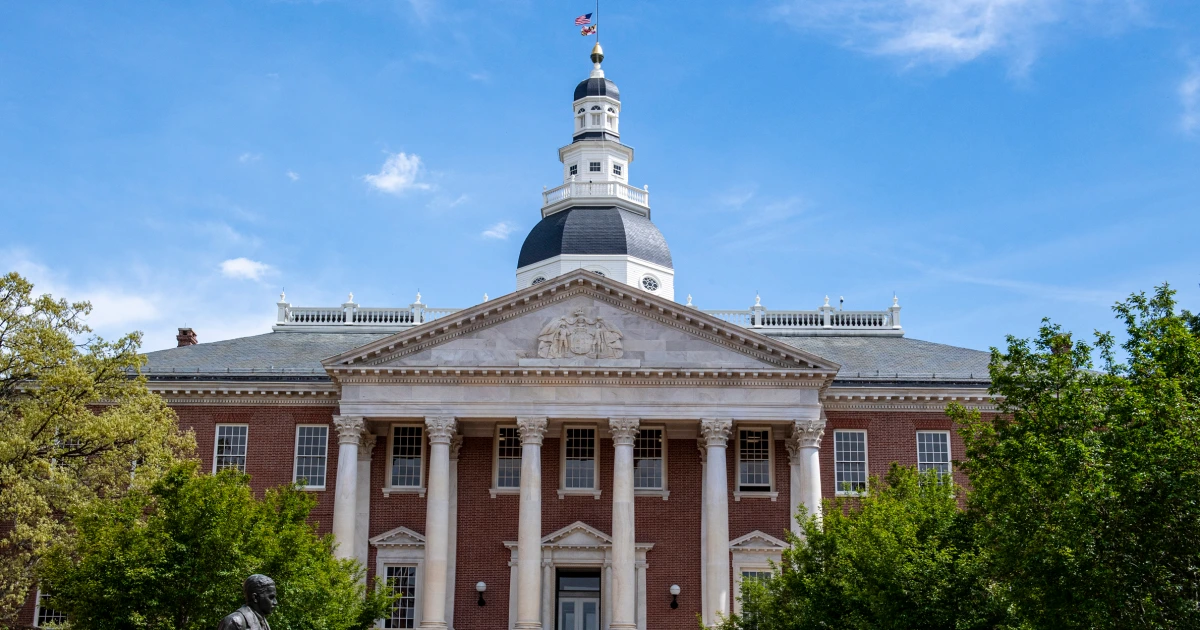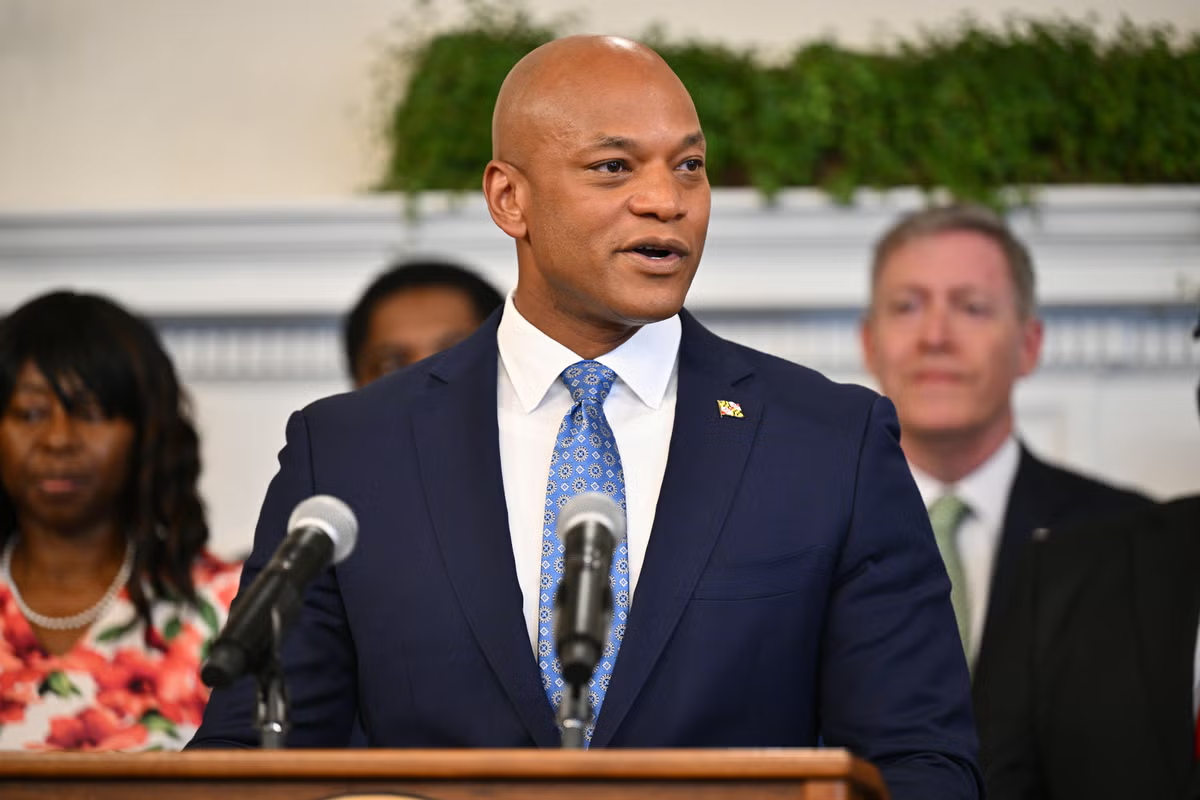
Submitted by Maryland Freedom CaucusAnnapolis Democrats spent months insisting there was nothing to see here. On Tuesday, a Maryland judge told them otherwise — in writing, and in language sharper than anyone expected.The bottom line: a circuit court judge just ruled that House Bill 2100, the constitutional amendment Governor Wes Moore and legislative Democrats rammed through a two-day special session to pave the way for wiping out Maryland's last Republican congressional seat, was placed on the November ballot unlawfully. This is the story of how we got here.The Setup: A Map They Already Lost OnceIn 2021, Maryland Democrats were hell-bent on maximizing their control of the state at every level. Already the most gerrymandered state in the union, they drew an 8-0, all-Democrat congressional map which now-Vice Chair of the Maryland Freedom Caucus, Delegate Kathy Szeliga, took to court. Judge Lynne Battaglia struck it down in a 95-page opinion grounded in the Maryland Constitution and Declaration of Rights. The current 7-1 congressional delegation is the product of both parties compromising in 2022.In pursuit of a potential 2028 presidential run, Governor Wes Moore began pressuring legislative leaders to eliminate the state's last Republican seat — held by Congressman Andy Harris (MD-1), who also chairs the House Freedom Caucus. The House of Delegates passed a bill to do exactly that in February, HB 488, but it stalled and died in the Senate. Senate President Bill Ferguson worried it would invite a court to reaffirm Judge Battaglia's 2022 ruling and hand Republicans an even more favorable map. He held his ground even after House Minority Leader Hakeem Jeffries showed up in Annapolis to lean on him personally.Then the political ground shifted. When the U.S. Supreme Court narrowed how far the Voting Rights Act can justify race-based congressional districting, several states began eyeing mid-cycle redistricting — Maryland among them. Not to be outdone by Gavin Newsom, Governor Moore called a special session for August to finish what he couldn't in February: eliminate Congressman Harris through a constitutional amendment designed to make sure Judge Battaglia's ruling could never stand in the way again.The Special Session: Two Days, One Outcome PredeterminedWhile most of the Maryland General Assembly was on summer vacation, the Maryland Freedom Caucus was at work — researching, planning, and preparing. Before July 31, our strategy to defeat the redistricting amendment was already set. We had found a problem in the Democrats' plan that no one else seemed to catch: Senate Bill 29, signed into law in May 2026.SB 29 amended Maryland's election law to include real reforms for ballot questions — plain language, no legal jargon, a policy statement telling voters exactly what would change if a measure passed. It also set a hard deadline: ballot language for a constitutional amendment had to be submitted to the Secretary of State by July 1 in an election year, giving the public a 15-day comment period to weigh in. For a special session that didn't convene until August 3, that meant Democrats had already blown their own deadline by more than a month.Roughly fifty minutes before the committee hearing on HB 2100 — with the outcome predetermined despite overwhelming opposition registered to testify — Democrats slipped in a clause designed to nullify that deadline entirely. The clause, a non obstante provision, stated that "notwithstanding any other provision of law," the language they'd written would go straight to the ballot in November.When pressed on it, in committee and on the floor, House Democrats' answer amounted to this: they write the rules, so the rules don't bind them. They ignored parliamentary procedure, the single-subject requirement, and the very election law they had codified themselves — all to ram through a measure that would let them rewrite congressional districts whenever and however they wanted.The bill passed both chambers by August 4, 2026, and was on its way to the ballot — until the Maryland Freedom Caucus, together with Senate Minority Leadership, filed suit on August 6, represented by the legal team at the Oversight Project. It wasn't a random pairing. Several members of that legal team are Marylanders themselves — people with a personal stake in whether their own state's Constitution means anything, not just outside lawyers parachuting in for a headline case. The Lawsuit: Not Just "They Missed a Deadline"The complaint, Howell v. Maryland State Board of Elections, was built on the legislature's own paper trail. It argued four things: that Democrats missed deadlines mandated by current election law; that they misrepresented the non obstante clause as a mere "technical" update; that they violated the single-subject rule by combining a constitutional amendment with an unrelated procedural override; and that the ballot language itself — having bypassed the required comment period and plain-language standard — was written in a way that misled voters.That last point matters most. The text for Question 3 on the State Board of Elections website says the amendment will merely "clarify" that Maryland's legislative-district rules — requiring districts to be compact and respectful of natural boundaries — do not apply to congressional districts. But a judge already ruled otherwise, back in 2022. That’s not a clarification at all, it's the elimination of a barrier that stood between Democrats and total control.Oral Arguments: The State's Defense Was "The Rules Don't Apply to Us"Tuesday morning, August 25, we argued our case before Judge Robert Thompson in Circuit Court for Anne Arundel County. Attorney Jeffrey Clark argued for the Oversight Project. Assistant Attorney General Daniel Kobrin argued for the State.Attorney Jeffrey Clark argued for the Oversight Project and knocked it out of the park. The team's command of the record, from the SB 29 timeline down to the exact language of the ballot question, was the product of weeks of meticulous preparation, not a rushed filing. For a legal team with Maryland roots of its own, this case was never just a job. Kobrin's argument boiled down: SB 29's deadlines only bind the process when the Secretary of State drafts the ballot question. When the legislature writes the language itself, apparently, the deadlines evaporate. In his own words to the court: "There's no blackout period set by the constitution."6/ Kobrin says the General Assembly can draft the language itself, and the election deadlines for questions wouldn’t apply.
Judge Crushes Maryland Democrats' Gerrymandering Games
"A chamber that holds a supermajority is still a chamber bound by the law." Apparently, on Wednesday, a judge agreed...
1,612 words~7 min read