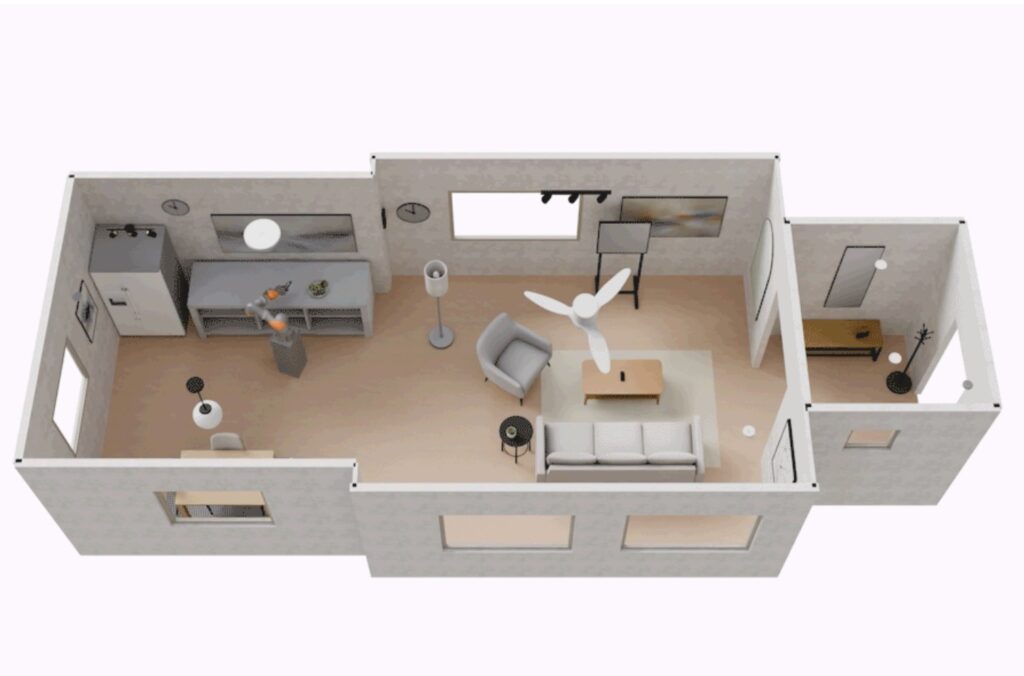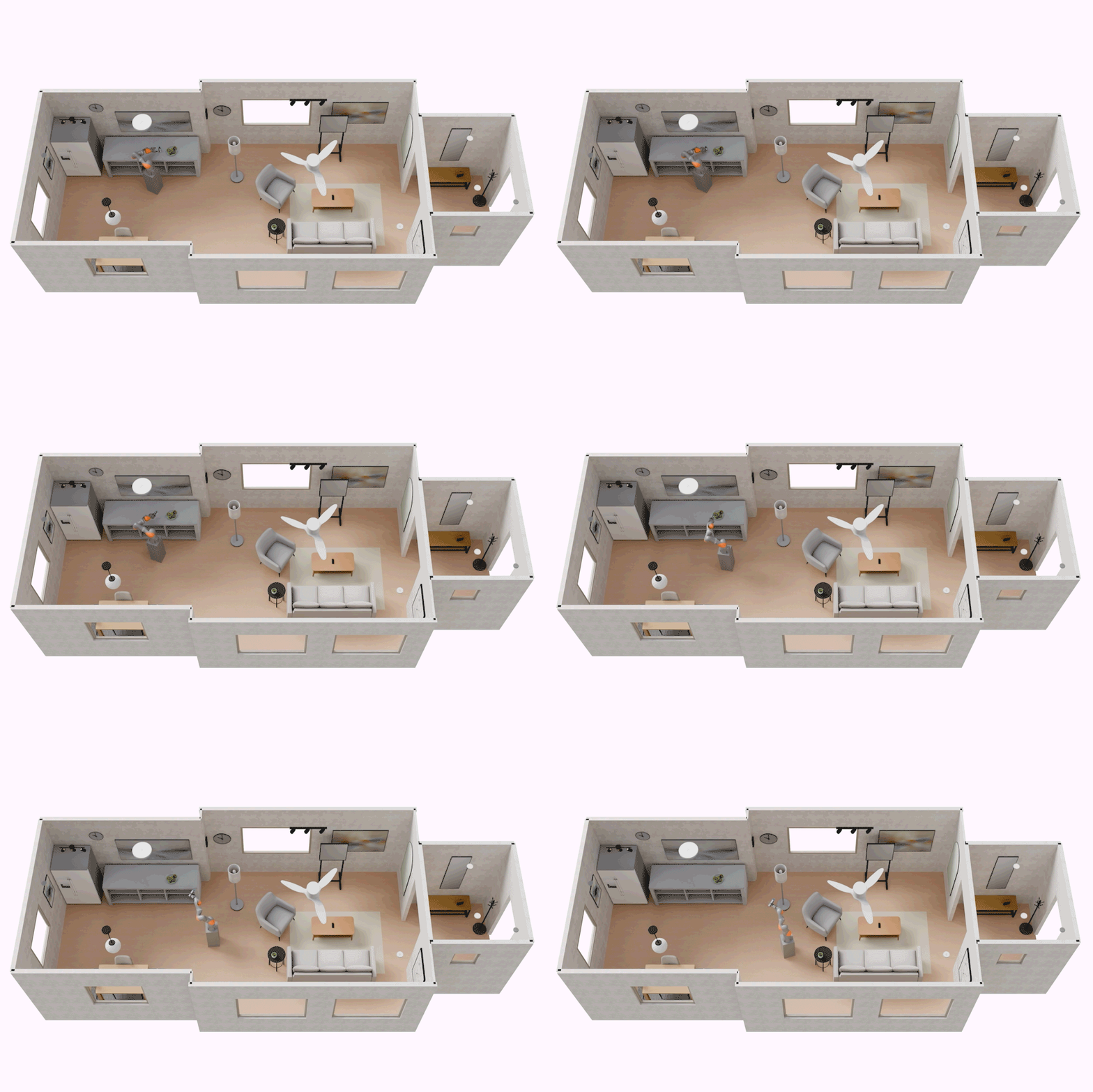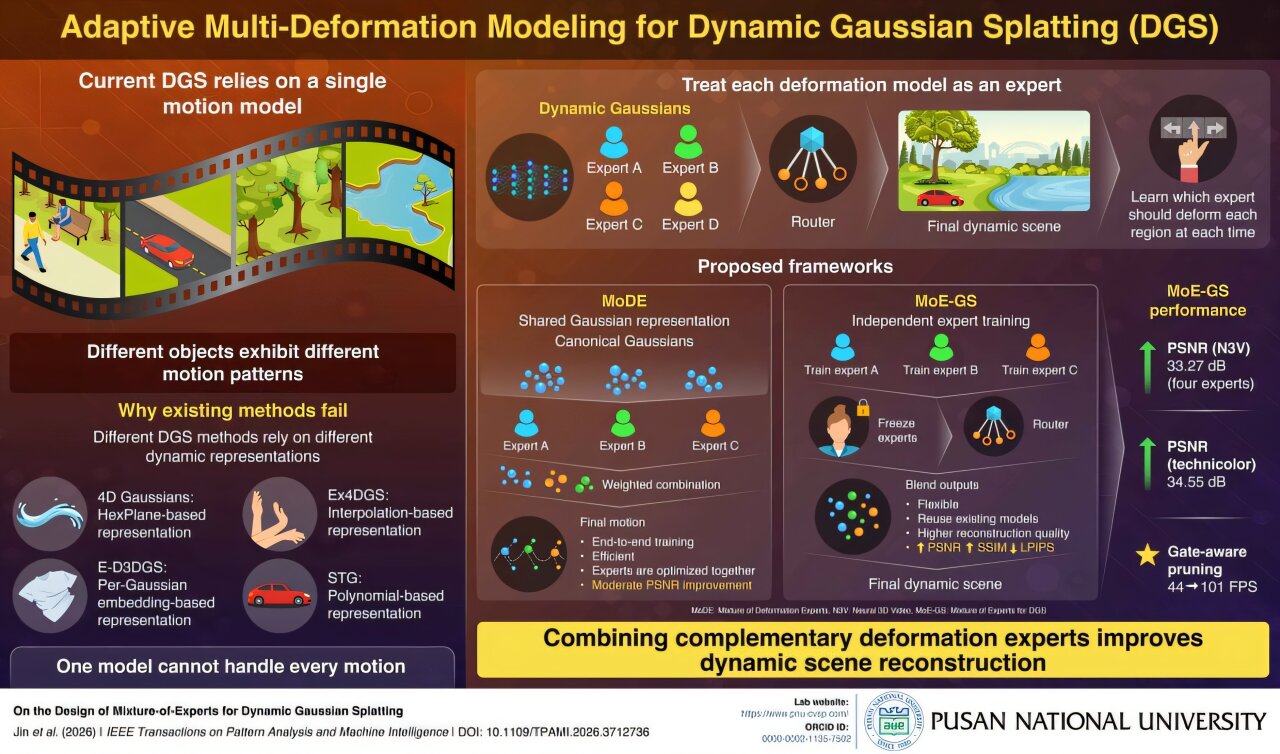
Researchers developed two Mixture-of-Experts strategies that combine specialized dynamic representations to reconstruct complex dynamic scenes more accurately than conventional single-model approaches. Credit: In-Hwan Jin et al
Many AI technologies depend on accurately reconstructing dynamic 3D environments, from self-driving vehicles to immersive virtual reality. However, representing the wide variety of motions found in real-world scenes remains a fundamental challenge because no single dynamic representation can consistently model the diverse motions encountered in practice.
Different Dynamic Gaussian Splatting (DGS) methods perform well under specific conditions, as each motion representation has its own strengths and limitations. As a result, a single representation often struggles to generalize across heterogeneous real-world dynamics.
Two ways to mix experts
To address this limitation, a team of researchers led by Professor Kyeongbo Kong from Pusan National University developed two complementary Mixture-of-Experts frameworks that combine the strengths of multiple motion representations. MoE-GS independently trains multiple dynamic Gaussian models and then adaptively blends their outputs through learned expert routing.