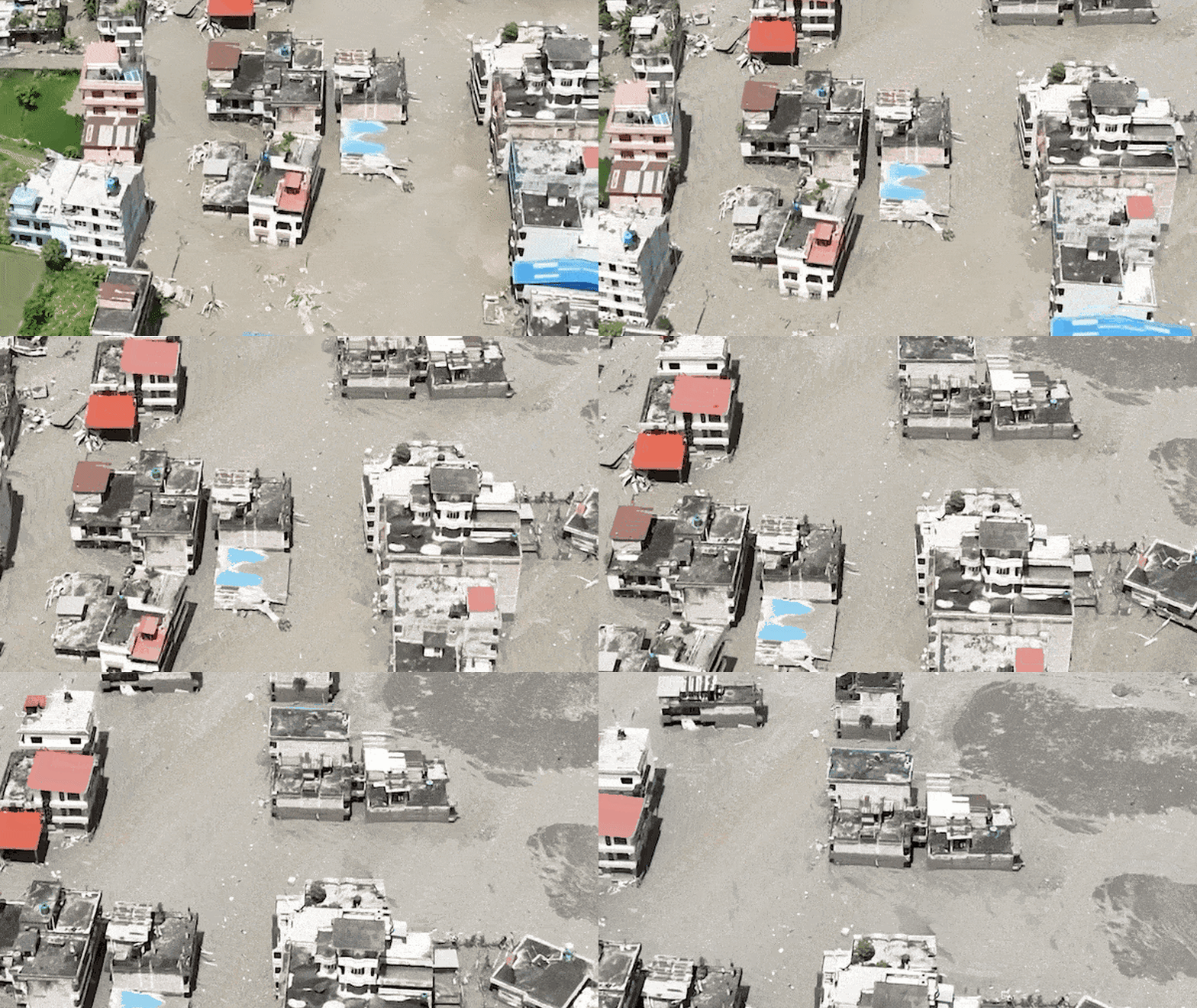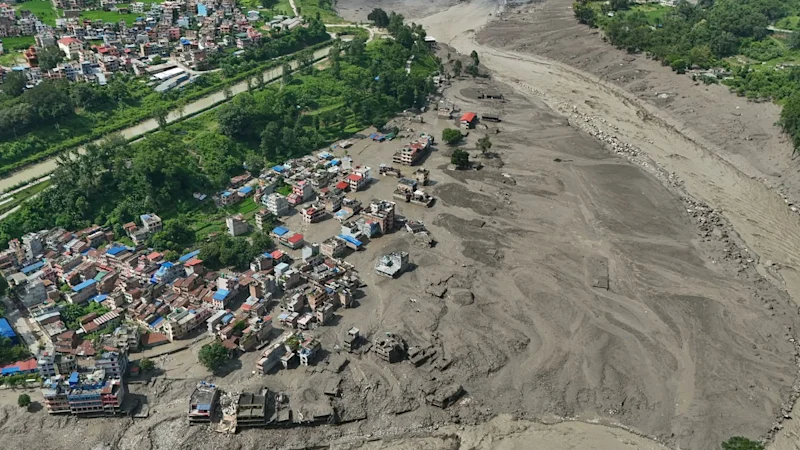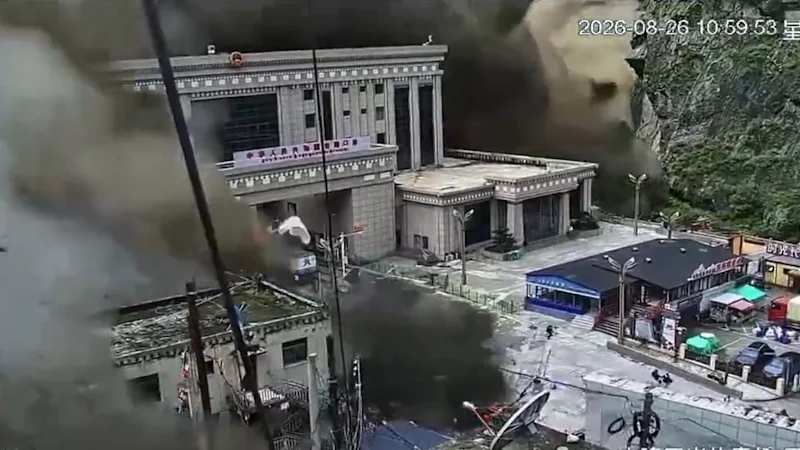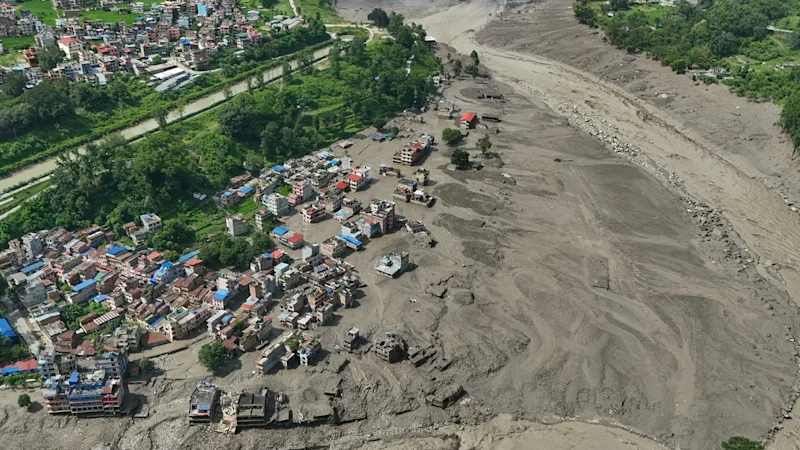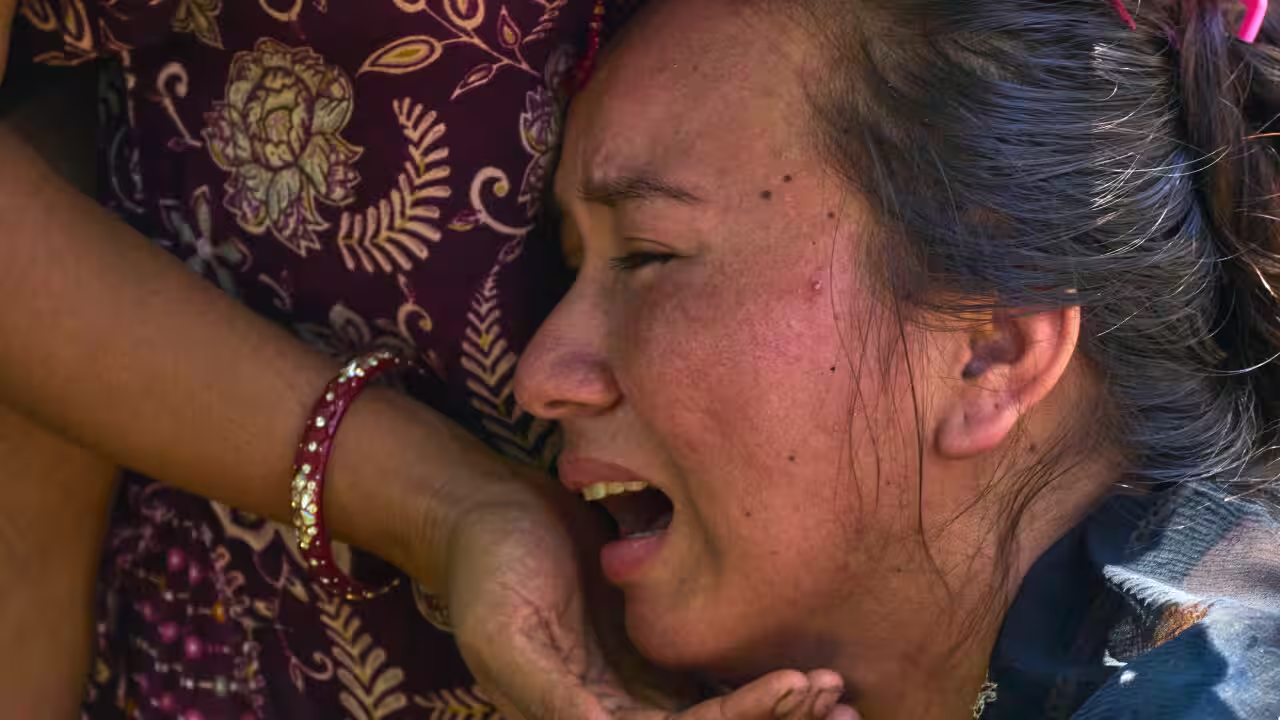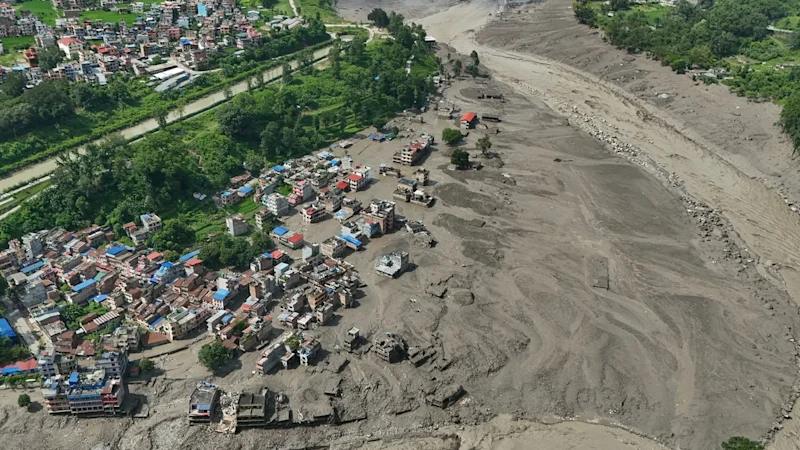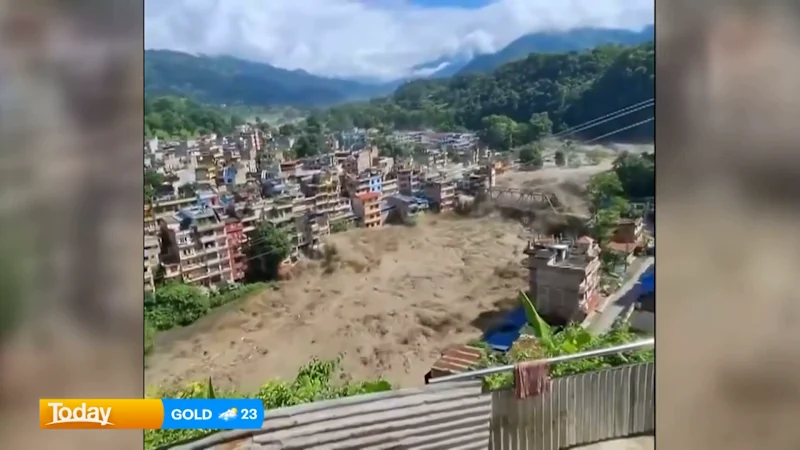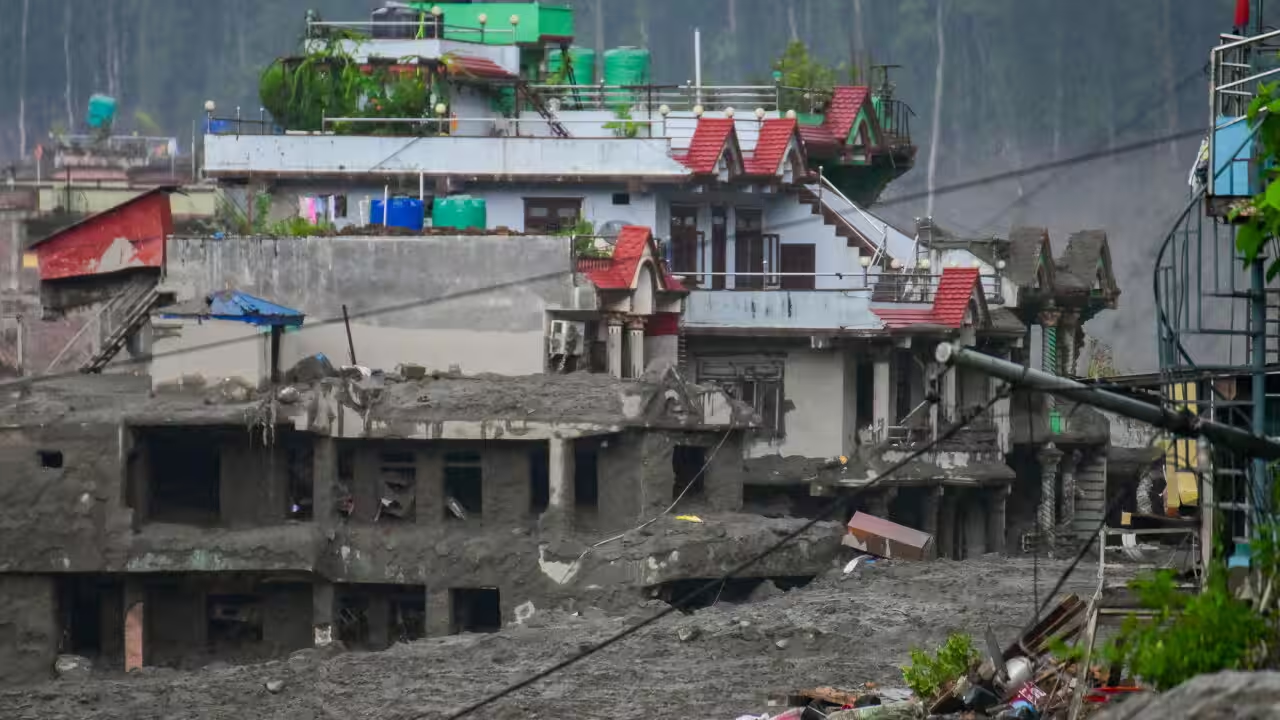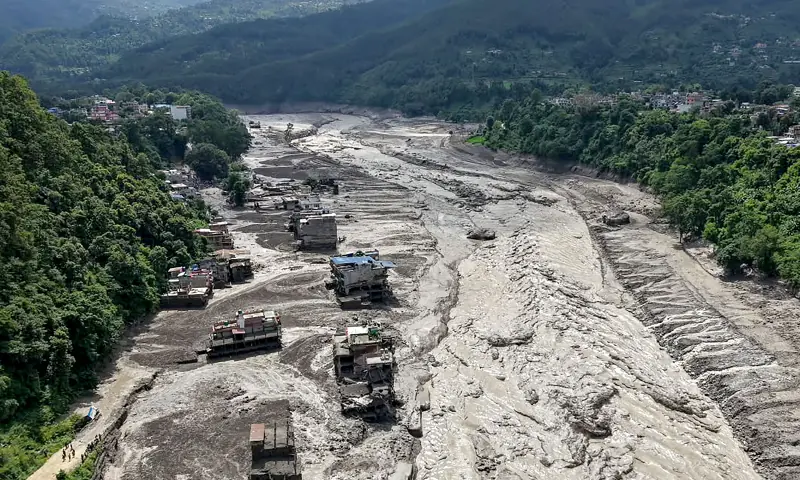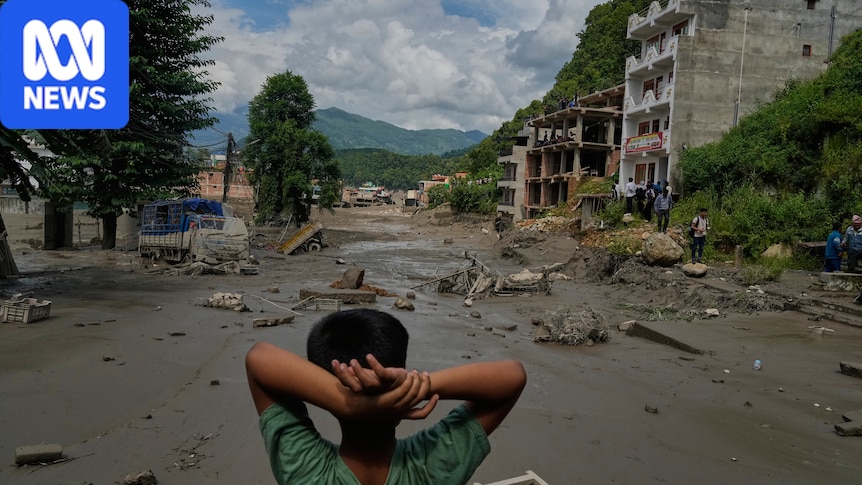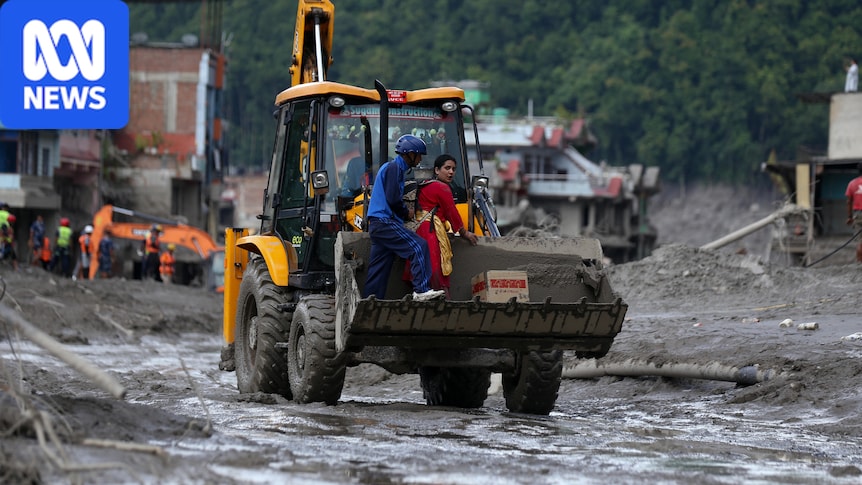
Authorities in Nepal and China warn new floods in the disaster zone could be imminent, with overflowing lakes threatening to burst.At least 389 people have died in Nepal, and more than 900 people are still missing, including at least 35 Australians, according to Nepal's Tourism Board.In Tibet, the death toll still stands at three, with more than 550 people unaccounted-for, Chinese state media has reported.Nepal Police say hundreds of people have been rescued. (Supplied: Nepal Army)Entire villages have been swept away, with rescuers working through the night, pulling both survivors and bodies from deep mud.Among the 35 missing Australians are Venkatraman Balakrishnan, 52, and his wife Chitra Venkatraman, 46, from Western Sydney, who were taking part in a tour with US-based hiking company Himalayan Glacier.There were 13 other Australians on that tour in the Langtang Valley, including two boys aged 11 and 14.Indian spiritual leader Sadhguru Jaggi Vasudev said 11 Australians had completed a pilgrimage with his Isha Foundation, and were clearing immigration on the Chinese side when contact was lost.Kanagamah Sundrasan had visited Mount Kailash to complete a pilgrimage. (Supplied)Six Australians were travelling with Kathmandu-based Kailash Journeys, and one was with Kathmandu Holiday Tours and Travels.Queensland woman Kanagamah Sundrasan, who was visiting Mount Kailash to complete a pilgrimage, is also unaccounted-for.Hundreds of people rescued, including touristsPeople gather at an army training centre where rescued flood survivors are being brought. (Reuters: Navesh Chitrakar)According to the latest figures from Nepal Police, 466 people have been rescued.That included more than 30 foreign citizens, including people from India, South Korea and the United States, according to Nepal's Tourism Board.No Australians were among the list, but the nationality of eight foreigners rescued had not yet been confirmed.Many of those rescued have been taken to the Tribhuvan Teaching Hospital in Kathmandu, which has become crowded with people trying to find their loved ones.The walls are lined with lists of people's names who are being treated inside the hospital, along with photos of missing people and those who have died.Preksha KC is volunteering taking down the details of missing people at a hospital in Kathmandu. (ABC News)Preksha KC is volunteering there, even though her uncle is missing."It is really helpless, hopeless, but we are building our confidence to find people with our team and our Nepal government," she told the ABC.Ranjana Poudel is searching for her brother-in-law who was at the Nepal Tibet border. (ABC News)Ranjana Poudel is at the hospital to try and find news of her brother-in-law who was at the border when the flood hit."Last time he spoke to his family it was 8:15, and he said he would enter China by 10. But after that we had no contact with him," she told the ABC.New flood warnings issuedNepal's National Disaster Risk Reduction and Management Authority (NDRRMA) has warned a lake forming at the site where the flood occurred is now at risk of bursting, triggering fresh floods.Similar alerts have been issued in China and Tibet.The barrier lake. which formed after a glacier collapse and mudslide in Nepal, is now at risk of bursting. (Li Jian/Xinhua via AFP)The lake formed after the glacier collapse blocked the river on Wednesday, according to the authority, which urged rescue workers and locals in the area to stay away from riverbanks until further notice in case the lake breached.The formation of the barrier lake was captured in aerial footage by a Chinese rescue team on Thursday, which showed brown water accumulating in a basin with no visible outlet."The notice states that the lake is in the process of rising and is at risk of bursting," Nepal's NDRRMA said.According to the Chinese water resources ministry, the lake was already overflowing, yet another 3 million cubic metres of water was expected to flow into the lake over the next three days.More rain forecast over the coming week was expected to exacerbate the threat, Chinese state media said, citing the Chinese water resources ministry.Many villages have been washed away and cut off from access to aid. (AP: Niranjan Shrestha)It prompted some rescue workers in Nepal to move towards higher ground."We are here for rescue and don't want to be near the danger zone," Pawan Koirala said, who moved away from the riverbed with his team of 13.Environmental anthropologist Austin Lord, a senior fellow and the Nepal lead at the Stimson Center, told The World the more water, the faster it would travel."The natural dam that's created around it has not yet fully been compromised, and that lake could be gaining volume and could burst again," he said.A flood-damaged section of a highway in Nuwakot, Central Nepal. (NurPhoto: Subaas Shrestha via AFP)He said the terrain was "impassable in many points" for vehicles and that the rescue and recovery effort upstream from Nepal would be "brutal and slow".Mr Lord said given Nepal was still in its monsoon season, there was a risk of landslides."There's always a possibility of another surge, there's always the possibility that … there could be other landslides along the route," he told the ABC."If the slopes have been destabilised or undercut at the bottom, if then rain occurs and they're saturated, the whole topography becomes increasingly unstable."Nepal PM orders rescue operation to 'speed up'After visiting part of the flood-affected area on Thursday, Nepal's prime minister, Balendra Shah, assembled a high-level meeting of his ministers, where he urged authorities to "speed up rescue operations", provide free healthcare to injured people and offer immediate aid and support to impacted families.More than 13,000 personnel from Nepal's police, army and armed police forces are currently deployed to the disaster zone and helping with rescue efforts.More than 400 people have been rescued from the flood zone, including this survivor, who was taken to a makeshift hospital for treatment. (AP: Niranjan Shrestha)David Fisher, head of the Nepal delegation with Red Cross and Red Crescent societies in Kathmandu, told the ABC rescue teams were trying to get aid into affected areas of the Himalayan floods but many communities were completely cut off."The [floods have] cut the roads. The electricity is out in many places. Cell coverage is out. So it has only been accessible from the outside by helicopter," Mr Fisher told The World."We know, at least from those who we have been able to access, that many, many of them have lost their homes," he said."They've lost everything they own."Women carry belongings from their damaged homes after a flash flood and a mudslide, in Galchhi, Nepal, August 27, 2026. REUTERS/Francis Mascarenhas (Reuters: Francis Mascarenhas)International aid organisation UNICEF said at least 17,000 children had been affected by the natural disaster, with that number likely to rise."Children across Rasuwa and Dhading saw their lives being literally washed away in front of their eyes in a very short span of time, with homes, classrooms, and medical facilities damaged," Alice Akunga, UNICEF Representative to Nepal, said."Children who have survived the floods now face heightened risks of disease, malnutrition, violence and exploitation."She said at least 18 schools had been destroyed and 20 others damaged.
New flood warnings issued in Nepal as death toll rises to 392
At least 35 Australians are still unaccounted-for in Nepal as rescuers pull hundreds of survivors from the mud and flood zone.
1,165 words~5 min read