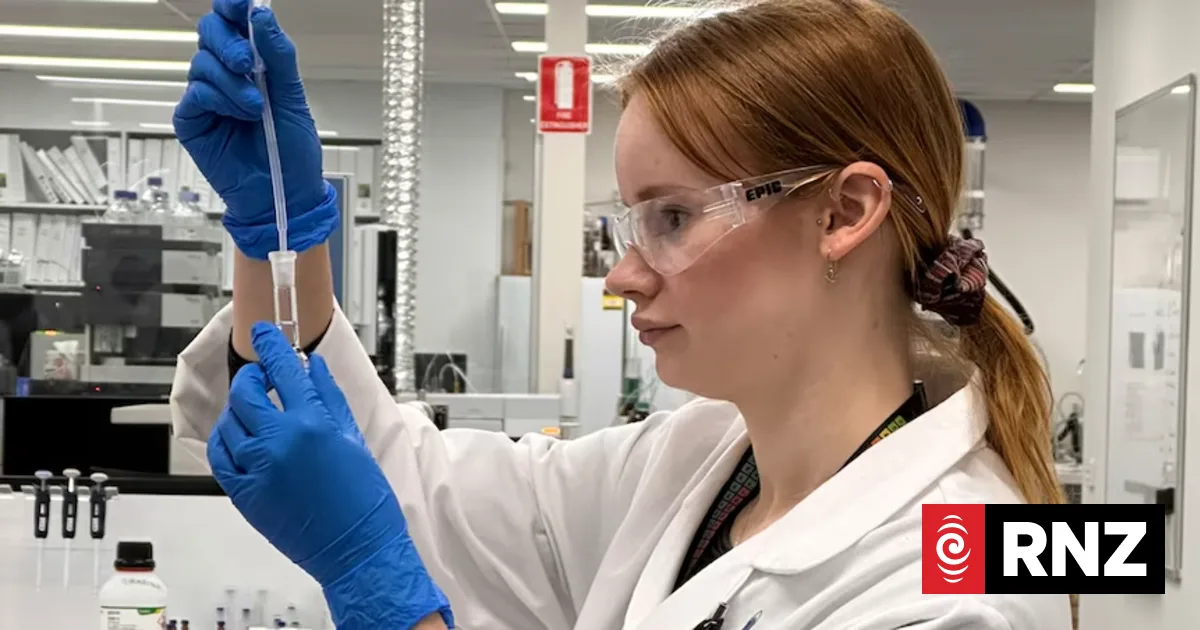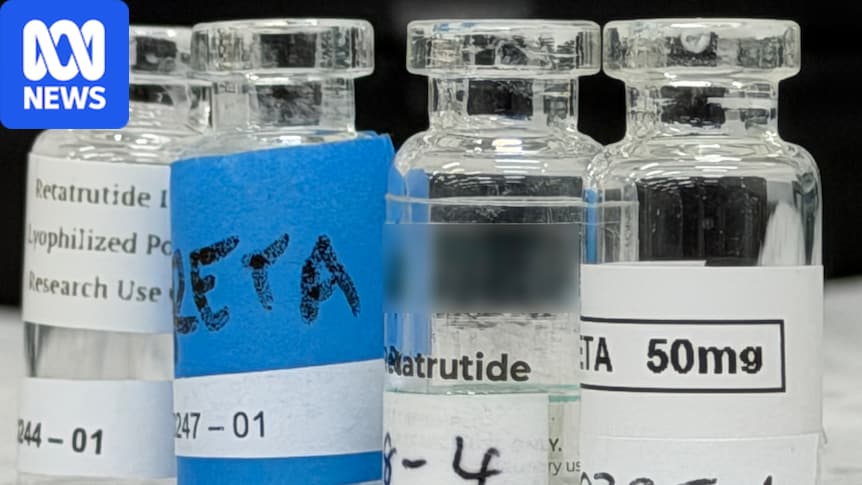
This time last year, analytical chemist Grace Hamann had never heard of black market peptides."Now about 50 per cent of my job is testing peptides … the growth has been exponential," Ms Hamann said."[In] October 2025, we started to get almost daily requests for testing."As unapproved peptides have gained popularity on social media, demand for testing from consumers and the wellness industry has prompted her laboratory, Leeder Analytical, to upskill to test these substances."[We] spent about a month to set up a method to make sure that we could accurately test and report results," Ms Hamann said.Grace Hamann says testing demand for unapproved peptides has surged. (ABC News: Patrick Stone)The laboratory recently tested three vials of popular counterfeit weight-loss peptide retatrutide, obtained from black-market users, at the request of the ABC and The University of Queensland (UQ).Retatrutide is currently still in clinical trials and not approved for human use.Experts said the results were surprising — while one of the vials contained less counterfeit retatrutide than the label indicated, two had much higher concentrations.Leeder Analytical provided the ABC with a breakdown of all its 2026 testing results of black-market peptides.The most common request was purity testing of unapproved peptides labelled as retatrutide.The lab reported that it has tested 18 samples of counterfeit retatrutide this year, with only one matching its label claim.About 30 per cent had higher concentrations and about 30 per cent had lower concentrations, while one vial contained none of the peptide."You would expect if you're buying an unregulated product that they'd want to cut costs [and include less of the drug] … but the fact that we've had almost equal amount to be over 100 per cent than under 100 per cent, surprises me," Ms Hamann said.Testing of the counterfeit peptide retatrutide revealed two out of three vials had a much higher concentration than labelled. (ABC News: Patrick Stone)Higher, inaccurate unapproved peptide dosing an extra 'risk'The testing of the three vials of retatrutide was paid for and arranged by researchers at UQ's School of Public Health and harm reduction organisation PED Test Australia.UQ peptide researcher Tim Piatkowski said while the vials tested were only a very small sample size, the results were unexpected because they contradicted what had been observed in steroid testing ."I definitely didn't expect that level of overdosing," he said."When we tested a number of steroids, we saw underdosing to be hugely prevalent with a very low percentage of overdosed substances."Tim Piatkowski of the University of Queensland says he was shocked by the level of overdosing. (ABC News: Curtis Rodda)Dr Piatkowski and his colleagues reported the results to the Drug and Alcohol Review journal."Although media attention has often focused on counterfeit or adulterated products, these findings suggest that inaccurate dosing alone may represent an important source of risk," the journal article said.Liver transplant specialist Marie Sinclair has recently treated patients in Victoria experiencing liver failure after they took black-market peptides labelled as retatrutide."There is a lot of concern that these unregulated vials of retatrutide may not contain exactly what the manufacturers report that they contain," Dr Sinclair said.She said the variability in concentration of unapproved peptides posed a serious danger to people using them."If you're doing this yourself, without knowing the concentration and without medical supervision, there's a much higher risk of very dangerous potential side effects."Marie Sinclair has been treating patients in Victoria experiencing liver failure after taking black-market peptides. (ABC News: Patrick Stone)Contaminant warningsBut Dr Sinclair said she was concerned consumers may be seeking false assurances with purity testing."All that they know from this testing is that there is some retatrutide in their vials. It doesn't actually tell them if there's any other contaminants or any other drugs or medications that could be mixed with them," she said.Dr Sinclair has facilitated testing of vials from patients who had severe liver failure."We had two different laboratories help us with that and did a very extensive analysis of components in these vials and even with extensive testing we don't have the full picture," she said.A laboratory in Melbourne analysed the weight loss peptide retatrutide, which was acquired from an unregulated internet site. (Supplied)Ms Hamann said in her testing experience, the peptide usually only made up about 10 per cent of what was in the vials."So, there's another 90 per cent that's unaccounted-for, which could contain a different toxin or something else unsafe," she said.She said businesses in the wellness industry were seeking lab testing of the unapproved peptides to provide customers with assurance through a certificate of analysis."Our results don't give the validation sellers are after," she said.Robyn Langham, chief medical advisor at the Therapeutic Goods Administration (TGA), Australia's medicines regulator, said while test results may show the concentration of a substance with the same components as retatrutide, it could not be considered a replica of the peptide currently in clinical trials."This is a counterfeit product. Anytime you slightly change the molecular structure of a product, especially peptides, you will have a different drug," she said.Robyn Langham says the black-market product could not be considered a replica of the peptide currently in clinical trials. (Four Corners: Keana Naughton)"[Counterfeit peptides] have not been tested in clinical trials, they have not been tested in terms of their manufacturing, and they've not been tested for their safety — and people are injecting these into their body."Professor Langham said testing for the presence of a peptide was just one factor and there were multiple other serious risks, including endotoxins such as bacteria and contaminants such as heavy metals.But she said inaccurate concentrations also posed a risk."There can be a risk with the dosage alone," she said.Eli Lilly owns the patent for retatrutide, which is still in clinical trial development.The company told the ABC any version of the drug available online was unapproved, unverified and simply not worth the risk.It has also launched legal action against several black-market suppliers of products labelled as retatrutide.In a statement the company said it "wants Australians to be protected from the risks posed by unapproved products falsely labelled as retatrutide"."Lilly supports stronger action against the illegal market including intelligence led enforcement operations, disruption of illicit supply chains and the seizure of unlawful products," it said.The TGA has reported more than 94,500 unapproved peptide products had been destroyed this year, in collaboration with the Australian Border Force.Last week, the TGA and New South Wales Police seized more than $120,000 of "illicit peptide and anabolic steroid products" from premises allegedly linked to a social media influencer.In April, authorities seized $2 million worth of steroids and peptides.
New testing of black-market peptides reveals high-dose risk
A chemical testing lab begins testing unapproved peptides as demand for the products booms on social media.
1,090 words~5 min read