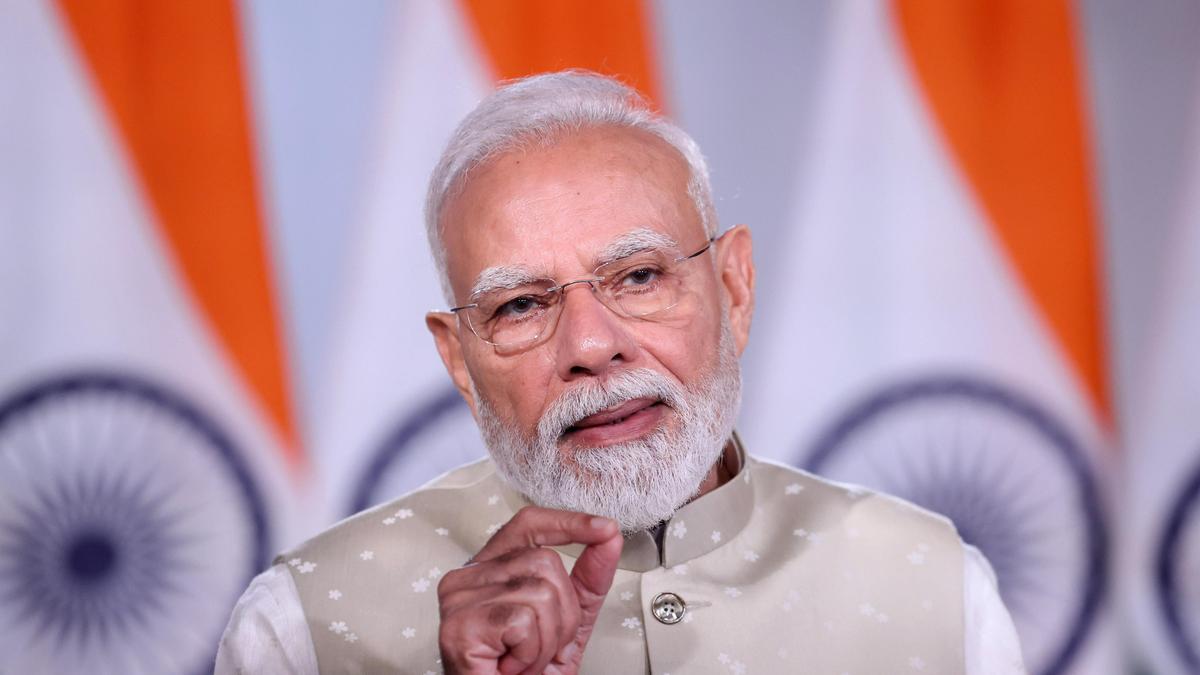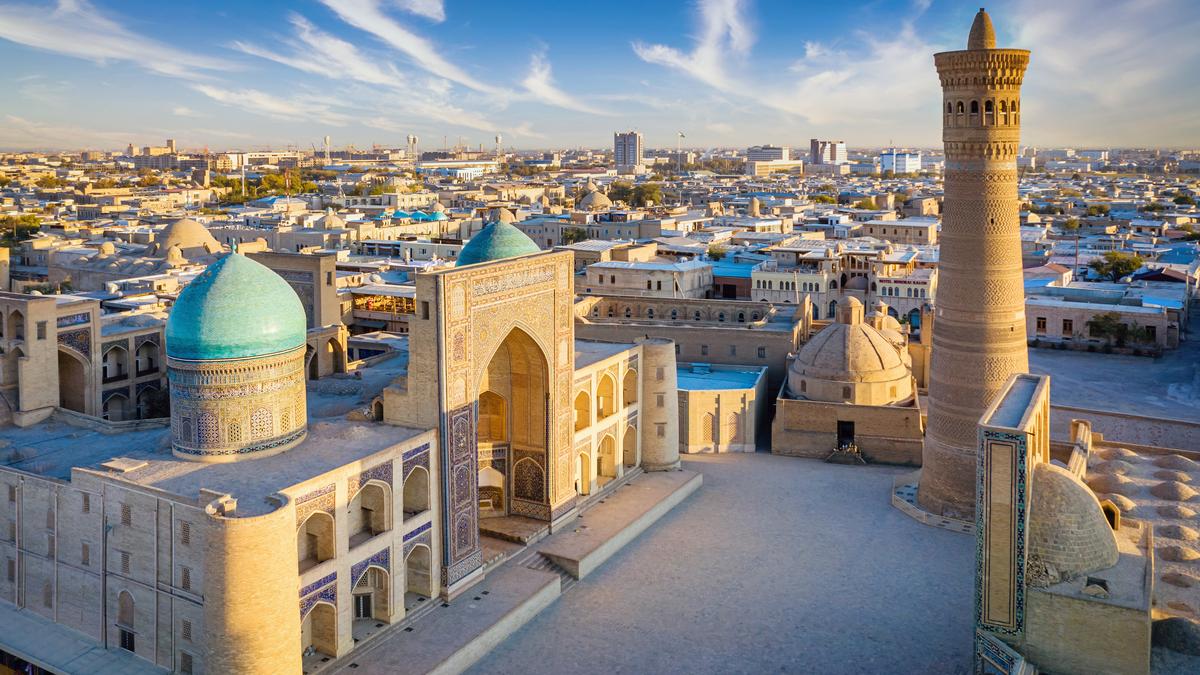
Prime Minister Narendra Modi is set to travel to Central Asia in the next few days, the first port of call being a state visit to Uzbekistan, followed by participation in the meeting of Heads of State of the Shanghai Cooperation Organization (SCO) in the Kyrgyz capital, Bishkek, called Frunze in Soviet times. The change of names is not just symbolic. It represents the birth of a new region.Central Asia is an evocative moniker. The region lies landlocked, situated between two giants, Russia and China. In most of its countries, the post 1991 generation has largely taken over, engaged in finding a new internal equilibrium. Islam is the main religion, but does not define identity and is therefore not a political project. The fight against radicalisation and terrorism is uncompromising. Occasional catastrophes such as the devastating Crocus City Hall terror attack in Moscow in 2024, China’s constant fear of spread of radicalisation in the border regions and export of instability and extremist ideology from Afghanistan are everyday reminders of the challenges.In Central Asia, there are a multitude of ethnicities, languages, geographies and resource endowments. These influence domestic and foreign policy choices, with Turkmenistan practising rigorous neutrality. Relations among countries are complicated by legacy disputes over borders, water resources and overlapping ethnicities. Türkiye and Iran are dominant influences, while the United States and the European Union are working their way in as Russia’s hold weakens and China’s grows.Mr. Modi’s 2015 visit to all five Central Asian countries was historic. It marked the end of an unstated Indian policy of deferring to Russia in its periphery — politely keeping away. In 2017, India was welcomed into the SCO as a full member by Russia, as Pakistan was, by China. To mark the 30 years of their independence/diplomatic ties, India made an unprecedented gesture of inviting all Central Asian leaders as chief guests for the Republic Day in 2022. The COVID-19 pandemic forced the event to be held only virtually, but not without it leading to the creation of high-level mechanisms for cooperation, including the India-Central Asia Dialogue.Beyond geographyIf South Asia and West Asia, not to speak of East Asia and the Indian Ocean Region are India’s neighbourhoods, Central Asia is no less. A lack of overland connectivity does not take away from the civilisational links India has with the region — in culture, religion, language and architecture. Geographically, India and Tajikistan are separated only by the narrow Wakhan corridor that lies in Afghanistan. India is part of the continuum that is the Eurasian landmass.Pakistan, a historically new piece in the equation, seeks to usurp the historical lineage based on religious affinity. Its tactic to cut India off, physically and otherwise, from these historical connections, like its other India-centric gambits, is, as anecdotal evidence shows, doomed to failure. Yet, India must not allow this to succeed. Countries of the region are today looking beyond Russia and China for partners in their socio-economic development. India’s lived experience as a plural, moderate and democratic society is admired not feared in the region.It is against this background that Mr. Modi’s decision to go back to the region must be welcomed. India should build upon the foundations to consolidate its rightful place in the region, whether in the economic, trade, defence, natural resources, technology spheres or in softer areas such as cultural, educational, health and tourism exchanges. The choice of a state visit to Uzbekistan is consistent with the steady improvement of relations under President Mirziyoyev since 2016. It is among the most dynamic countries of the region, and most forward in the diversification of its foreign policy. Any Indian visitor to Tashkent, Samarkand or Bukhara will vouch for the empathy and resonance between the two peoples.There are also hardnosed reasons — Uzbekistan has been uncompromising in its fight against terrorism and extremism. Its intimate knowledge of Afghanistan, and pragmatic approach towards the Taliban, are of key importance to India. India has had detailed discussions with it on alternative rail and road connectivity routes through Iran and Afghanistan which need to be revisited in the light of recent developments in these countries.India and the SCOStarting from the small beginnings of the “Shanghai Five” in 1996, the SCO, in its 25th anniversary, has grown to 10 members, 15 dialogue partners and two observers. With the exception of 2024, Mr. Modi has been a regular participant in SCO Heads of States meetings. India’s SCO engagement is driven by geography, not ideology. Within the SCO chambers, negotiating against a China-Pakistan dyad is demanding but essential. India has kept its head above the swamp by suggesting several ideas to enhance cooperation in the economic, technological and civilisational fields. In Tianjin last year, Mr. Modi put forward the vision of security, connectivity, and opportunity for the SCO. In the instant case, for a country as overwhelmingly dependent on China as Kyrgyzstan, the SCO, and India in particular, offers a valuable geopolitical lifeline.Taken together with his visits to the Indian Ocean Region last month, Mr. Modi would have traversed far-flung corners of India’s maritime and continental neighbourhood in quick succession reflecting India’s geostrategic imperatives and opportunities.Pankaj Saran is a former Deputy National Security Adviser and Ambassador, and Convenor, NatStrat
India’s return to its Central Asian neighbourhood
India should build upon earlier foundations to consolidate its place in the Central Asian region, whether in the economic, trade, defence, natural resources, technology spheres or in softer areas
866 words~4 min read