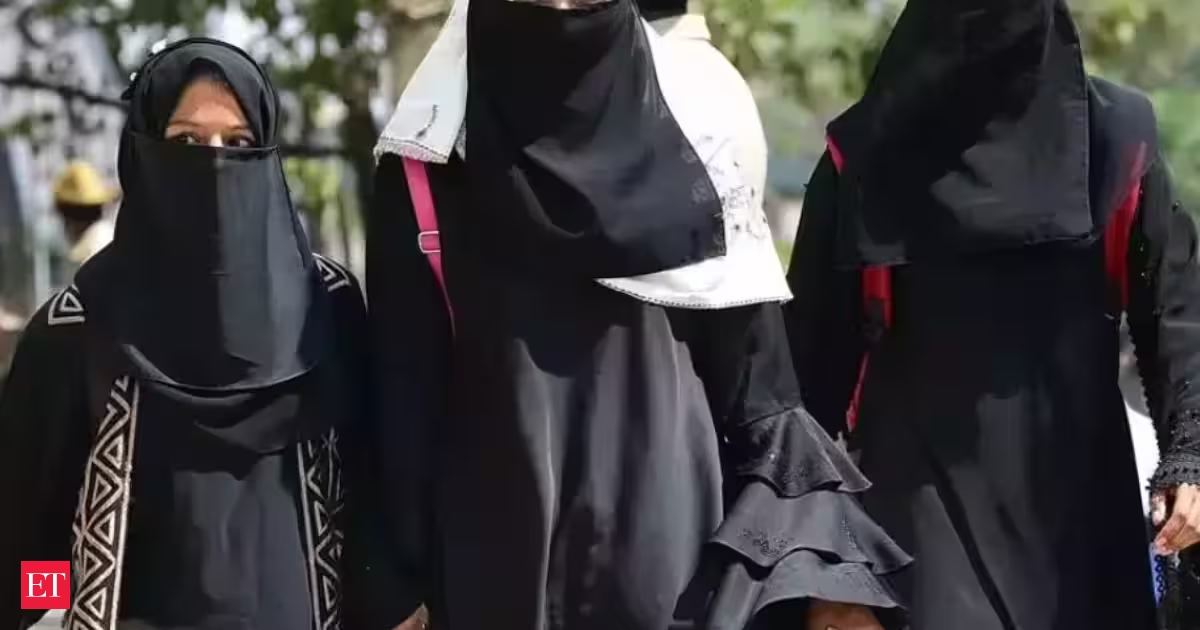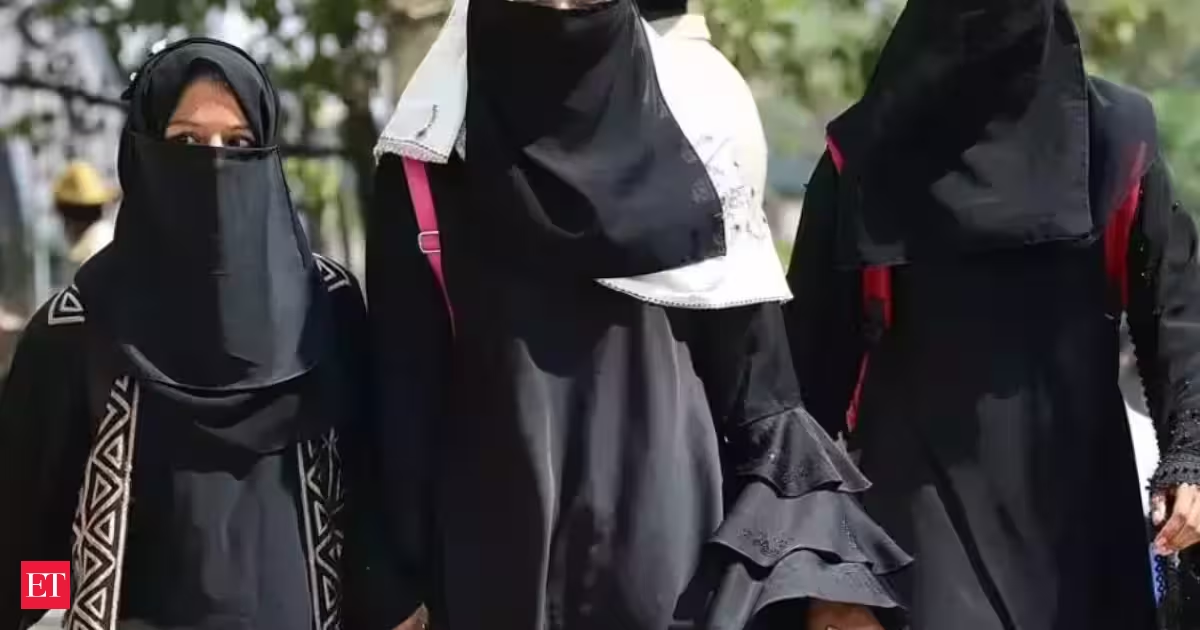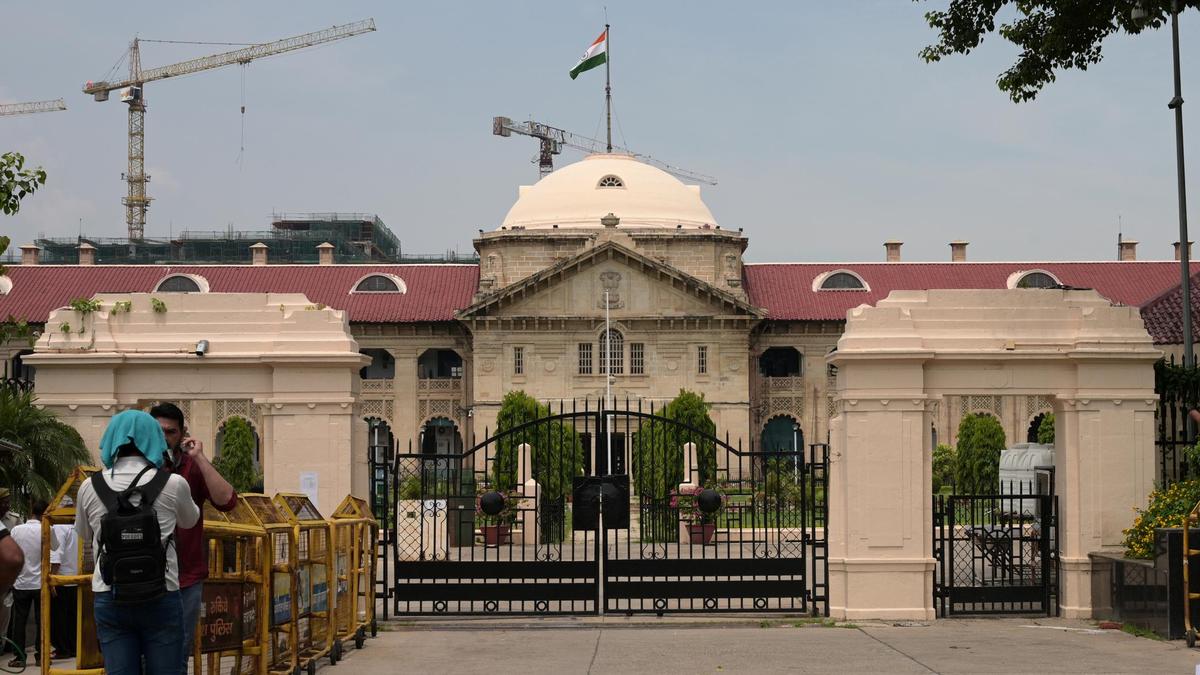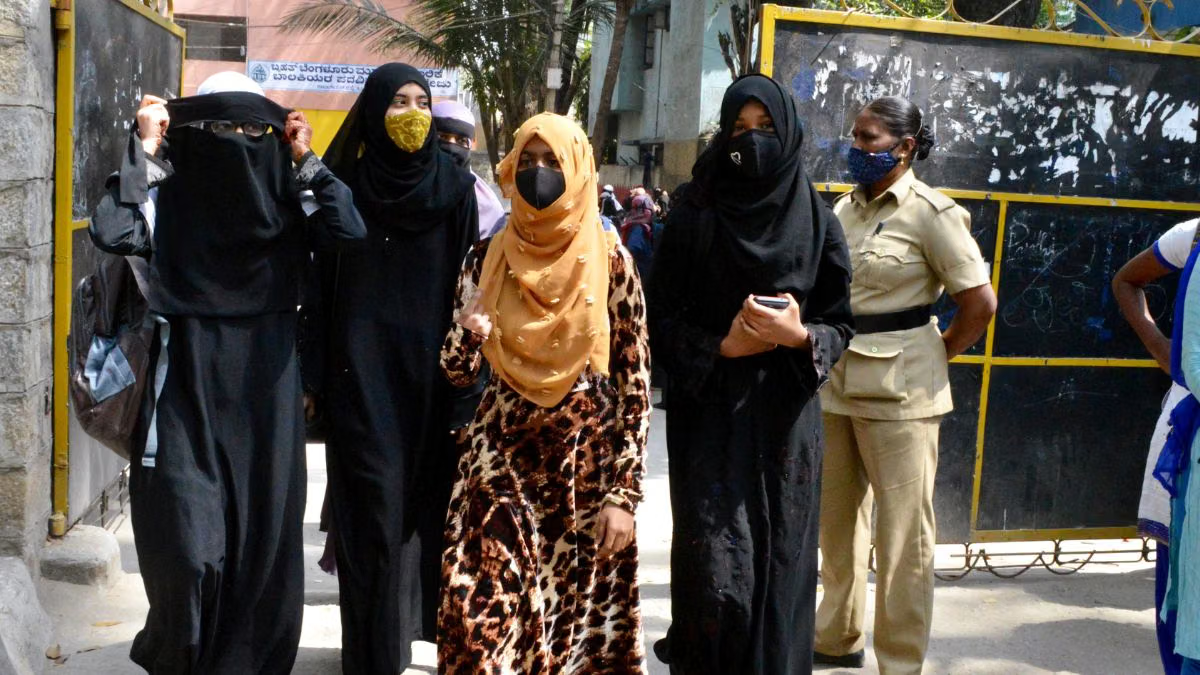
The Allahabad High Court’s recent refusal to allow a schoolgirl to wear a hijab in school rests on a familiar line of reasoning. The court’s verdict rested on the fact that schools have the right to prescribe uniforms, provided the rules are uniform, non-discriminatory and intended to maintain institutional discipline.
The court also observed that no authoritative religious text, expert material or other evidence had been placed on record to establish that wearing a headscarf inside the classroom was obligatory upon the petitioner or that not doing so would alter the fundamental character of her faith.
Legally, the judgement may fit within institutional autonomy and religious freedom. But it reveals a deeper discomfort in how India discusses and judges the hijab. We seem unable to view it as anything other than either a symbol of oppression force-fed to women or as a theological practice that is now too redundant.
In reality, for many Muslim women, it is neither. Rather, it is an act of faith and a matter of personal identity and conviction.No concept of force
The modern debate on hijab is viewed through a singular lens: patriarchy. It is an obvious statement, rather than evidence of female subjugation, something from which women should be liberated. And I agree; anyone subjugated through religion as a tool of patriarchy must be freed. Religion should not be a dog collar around someone’s neck.