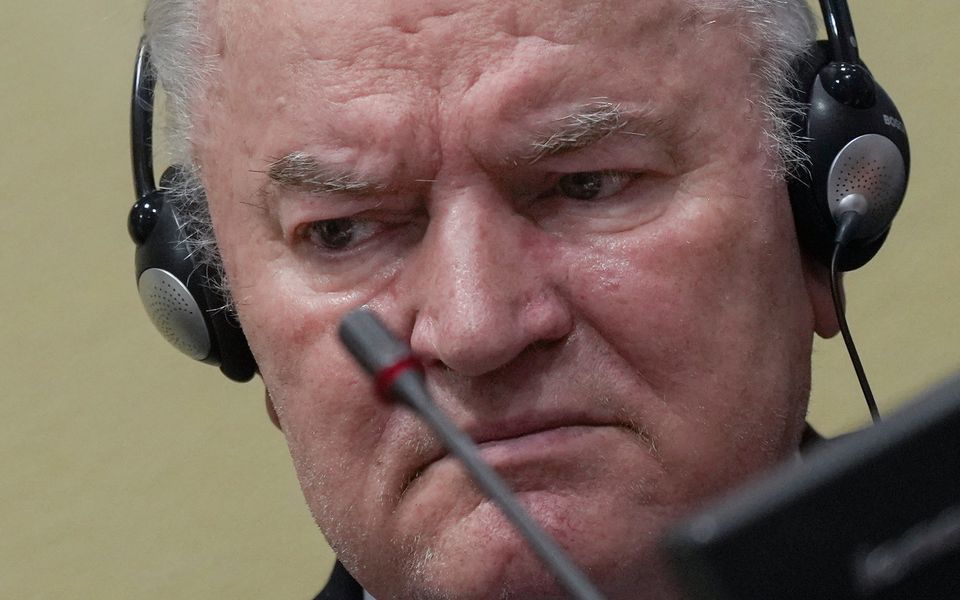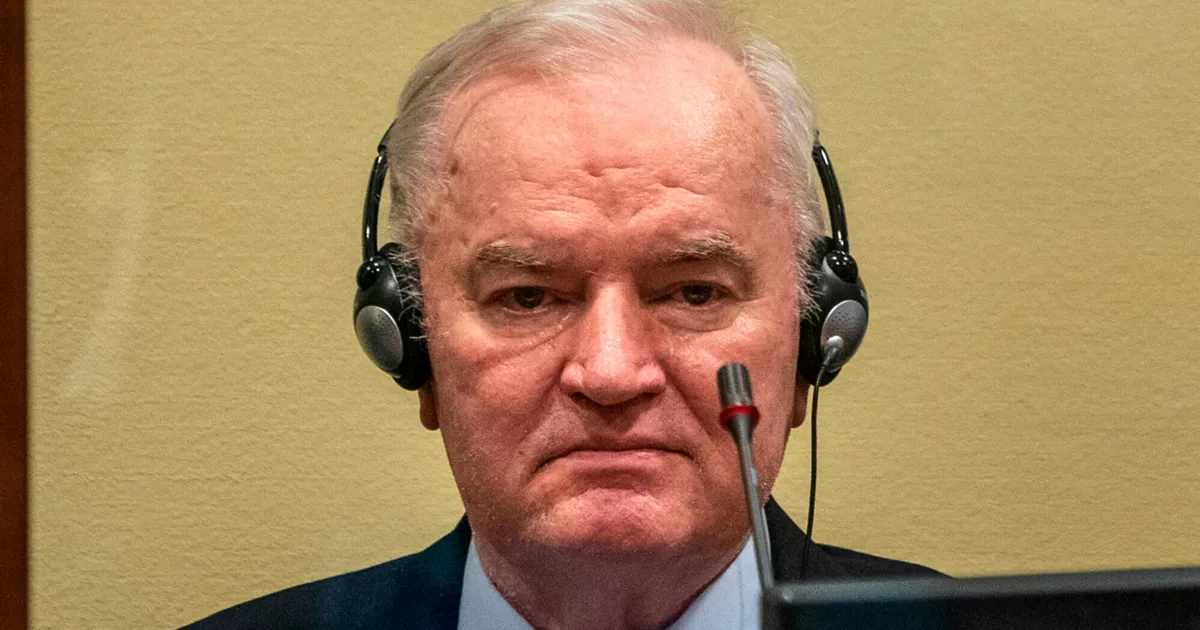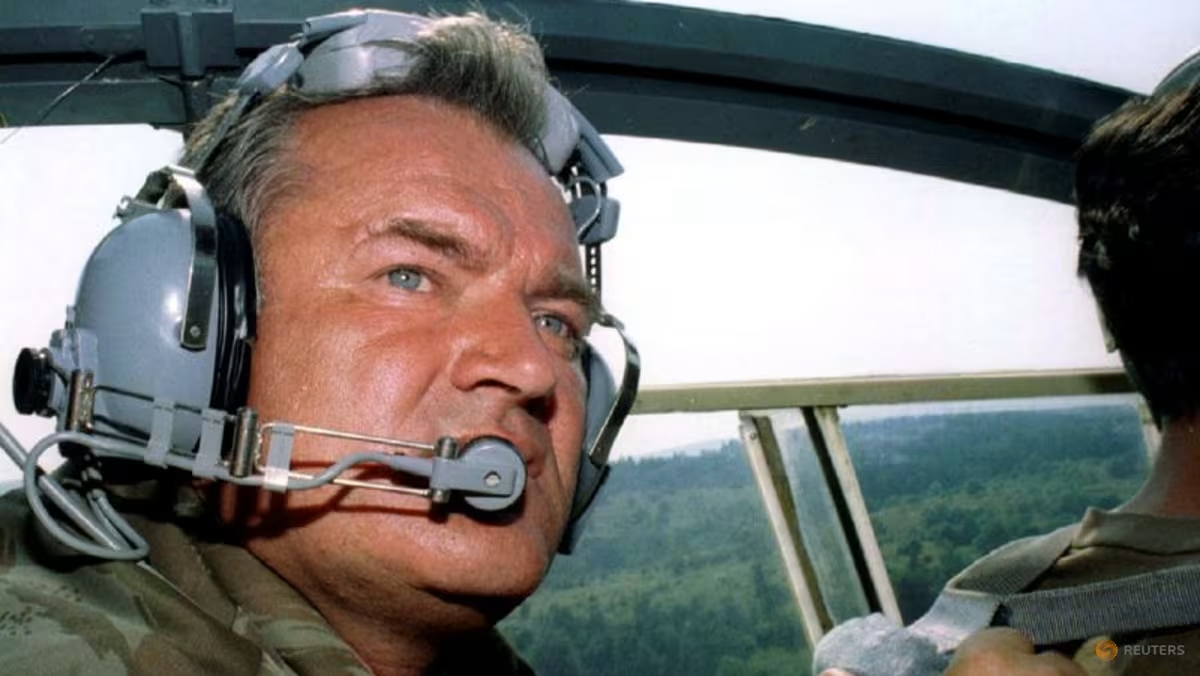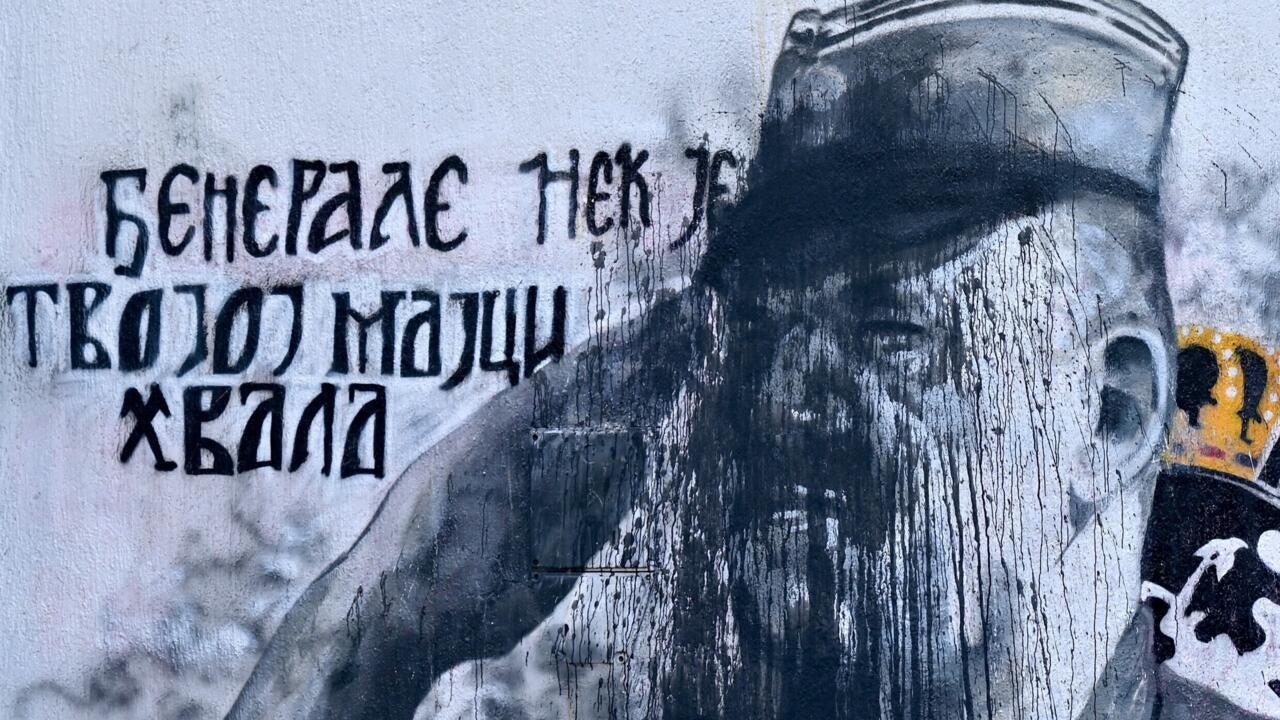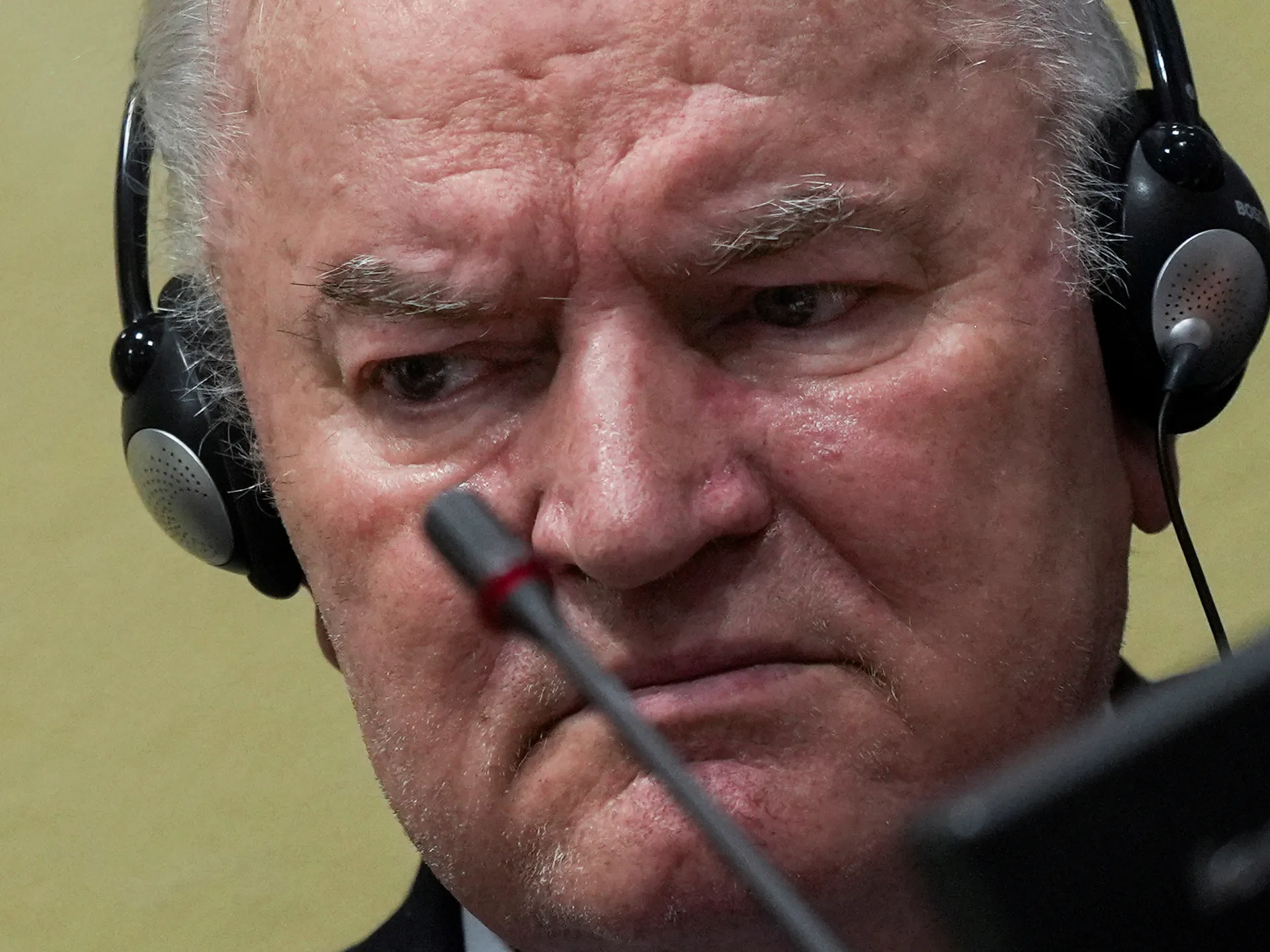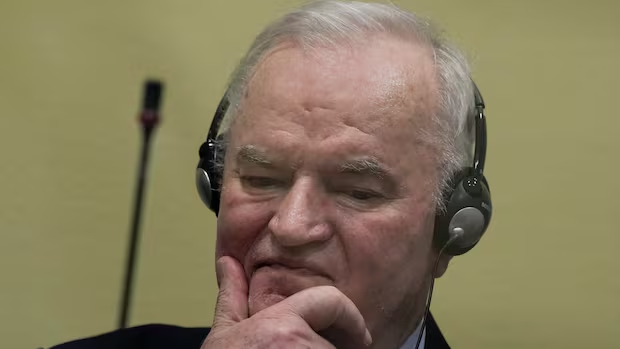
WorldRatko Mladic, convicted of genocide for orchestrating the 1995 Srebrenica massacre of at least 8,000 Muslims in Europe's worst atrocity since the Second World War, has died.Was among trio convicted by UN court for massacring Muslims in former YugoslaviaThomson Reuters · Posted: Aug 27, 2026 12:58 PM EDT | Last Updated: 1 hour agoListen to this articleEstimated 5 minutesThe audio version of this article is generated by AI-based technology. Mispronunciations can occur. We are working with our partners to continually review and improve the results.Former Bosnian Serb general Ratko Mladic sits in the court room in The Hague, Netherlands, on June 8, 2021, when the United Nations court rejected an appeal of his convictions for genocide and other crimes. (Peter Dejong/The Associated Press)Ratko Mladic, convicted of genocide for orchestrating the 1995 massacre of at least 8,000 Muslims in Europe's worst atrocity since the Second World War, has died.Mladic died in UN custody on Thursday, his lawyer Dragan Ivetic said, without giving a cause. The former general had spent his last months in the hospital ward of the UN detention centre holding him in a suburb of The Hague, Ivetic added.The slaughter in Srebrenica was the grisly culmination of a war that had lasted over three years, in which Mladic pounded the besieged capital Sarajevo daily with the artillery, tanks, mortars and heavy gunfire of his nationalist Serb army, killing 10,000 people.The dead from Srebrenica were bulldozed into mass graves over four days in July 1995, some of them dug up and relocated to remote mountains so as to hide evidence of the killings.The goal, as determined by the United Nations International Criminal Tribunal for the former Yugoslavia (ICTY), was "ethnic cleansing" — the forcible expulsion of Bosnian Muslims, Croats and other non-Serbs to clear Bosnian lands for a Greater Serbia.The tribunal found that Mladic, together with Serbian President Slobodan Milosevic and Bosnian Serb political leader Radovan Karadzic, were part of a criminal conspiracy to implement the plan."I do not recognize this court," Mladic, dubbed the "Butcher of Bosnia" by his opponents, said at an ICTY hearing on his case in 2014. When he was sentenced to life in prison in 2017 he shouted that it was "all lies."Bosnian Muslims carry coffins containing remains of 10 newly identified victims of the Srebrenica massacre, during a mass burial ceremony in Potocari, Bosnia on July 11. (Armin Durgut/The Associated Press)Karadzic, also convicted of genocide in 2016, and Mladic topped the ICTY wanted list for years after Western powers ended the war. But until Milosevic was toppled by a popular uprising in 2000, Mladic lived securely — if discreetly — in Belgrade. Milosevic died in detention on March 11, 2006, a few months before a verdict in his four-year tribunal trial for genocide and other war crimes in Croatia, Bosnia and Kosovo.Taunted peacekeepersThe army Mladic created to fight in Bosnia was a model of ruthlessness. In some of the most horrific examples, prisoners suffocated in the heat after being forced to eat salt and denied water; were starved and raped in prison camps; were made to jump off a bridge and shot; and were gunned down at night by the hundreds after being driven out of detention with chemical gas."For me Mladic is a symbol of all horrible crimes that happened during the war — our girls were raped, and boys killed, only because they were Muslim," said Munira Subasic, whose son and husband were killed by Bosnian Serb forces after they overran Srebrenica.Mladic had a cameraman film the blitz on the encircled enclave of Srebrenica, haranguing Dutch UN peacekeepers who misguidedly accepted his solemn word that the inhabitants would be safe in his hands. Srebrenica supposedly had "safe area" status, meant to protect civilians from ethnic cleansing."We give this town to the Serb people as a gift," Mladic said to the camera, claiming the victory as revenge against Muslim Turks, who once held the area as part of the Ottoman Empire. When NATO tried in 1995 to rein in his forces with the threat of limited airstrikes, his troops defiantly seized UN peacekeepers as human shields, chaining them to likely targets.In November 1996 Mladic and top generals gave in to strong Western pressure that he step down as ordered by Bosnian Serb President Biljana Plavsic, who succeeded Karadzic and was later jailed for her role in war crimes.According to his son, Mladic was born in 1943, although official documents indicated a birthdate a year earlier.He was an officer in the old communist Yugoslav People's Army (JNA) when Yugoslavia's disintegration began in 1991.A defaced mural depicting Mladic is shown in Belgrade on Thursday, with a Cyrillic inscription reading, 'Only God and no one else.' (Andrej Isakovic/AFP/Getty Images)When Bosnian Serbs rose in 1992 against Bosnia's Muslim-led secession, Mladic was picked to command the new Bosnian Serb army that swiftly overran 70 per cent of the landlocked country.Dozens of towns were besieged with heavy weapons that once belonged to the JNA and villages were burned down as 22,000 troops of the UN Protection Force stood by more or less helplessly, with orders not to take sides.A combination of Western pressure, covert American arms and training for Croats and Muslims gradually turned the tide against Mladic's army. Determined NATO strikes did the rest.Despite Western appeals, the reformists ruling Serbia after Milosevic's fall did not dare move against a man who was a hero to a core of nationalist Serbs.Mladic's conviction in UN court upheldWhen he was finally arrested in 2011, he put up no resistance. His right arm was lame, the apparent result of an untreated stroke. He looked nothing like the burly general of the mid '90s. He suffered a heart attack in 2013 and seemed older than his years. By his own account, he felt like a frail old man. His appeal against conviction was rejected in 2021, as were repeated requests for his release on compassionate grounds, including in recent weeks.
War criminal and former general Ratko Mladic dies in custody | CBC News
Ratko Mladic, convicted of genocide for orchestrating the 1995 Srebrenica massacre of at least 8,000 Muslims in Europe's worst atrocity since the Second World War, has died.
987 words~4 min read