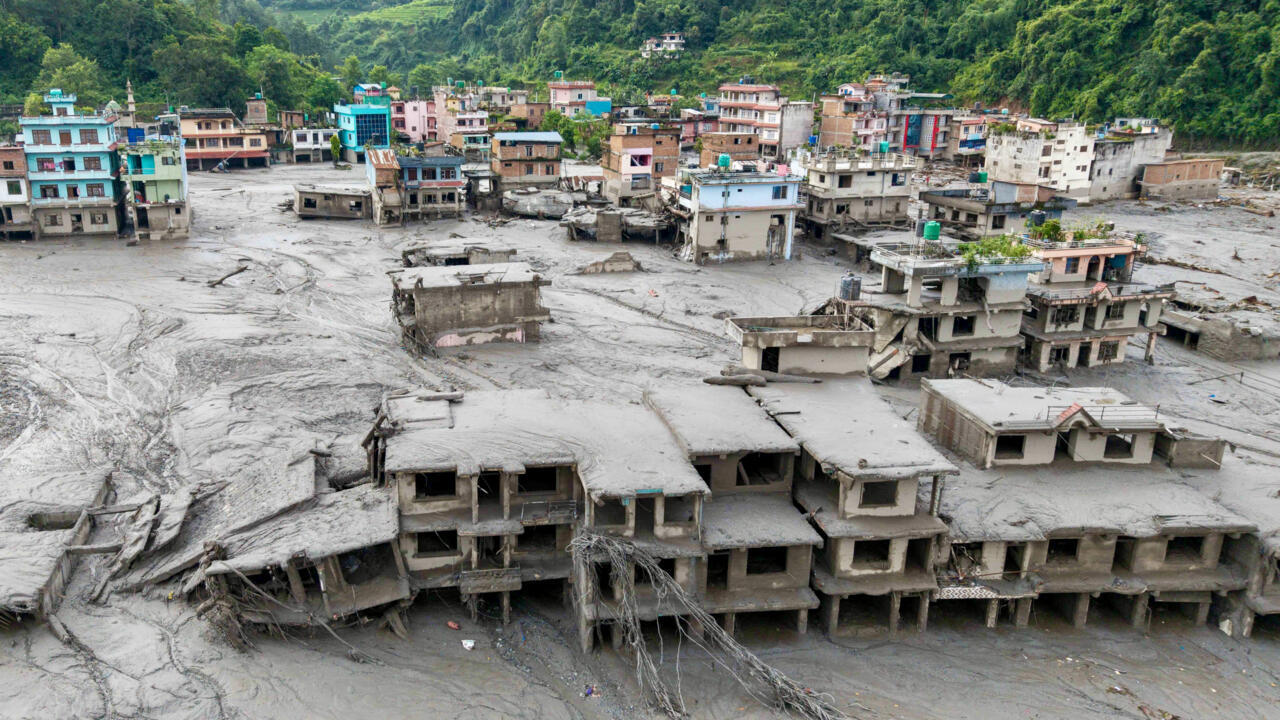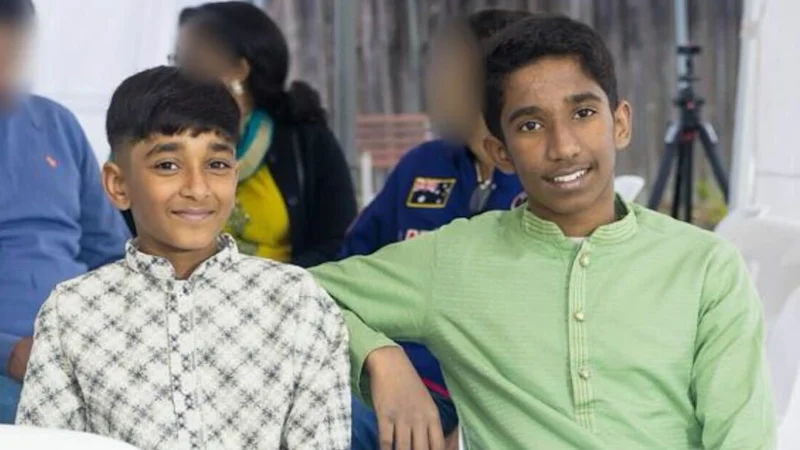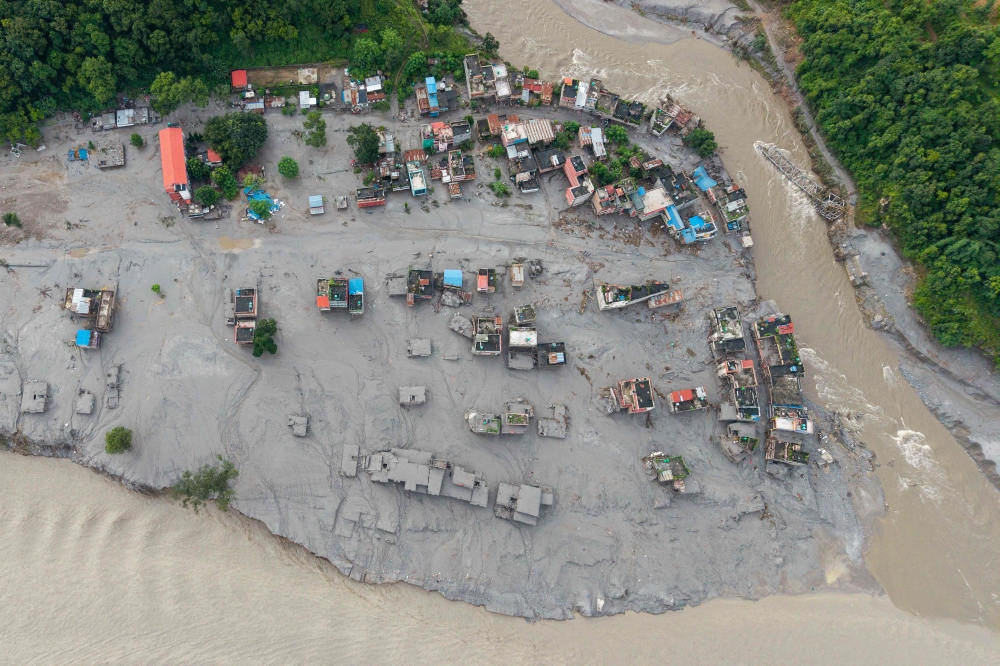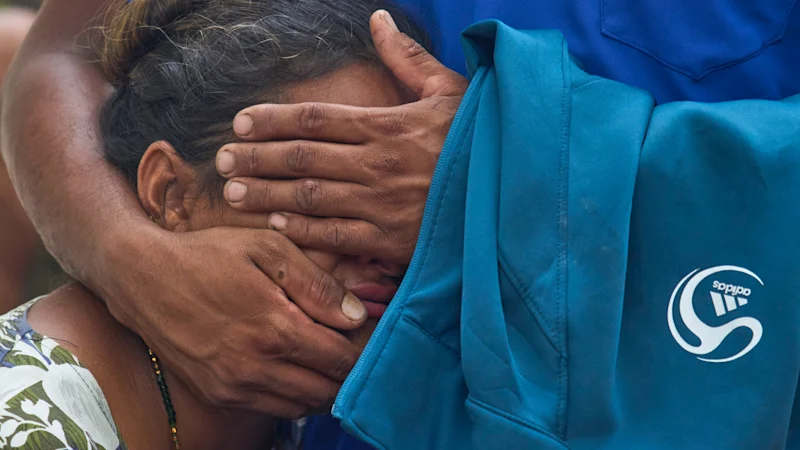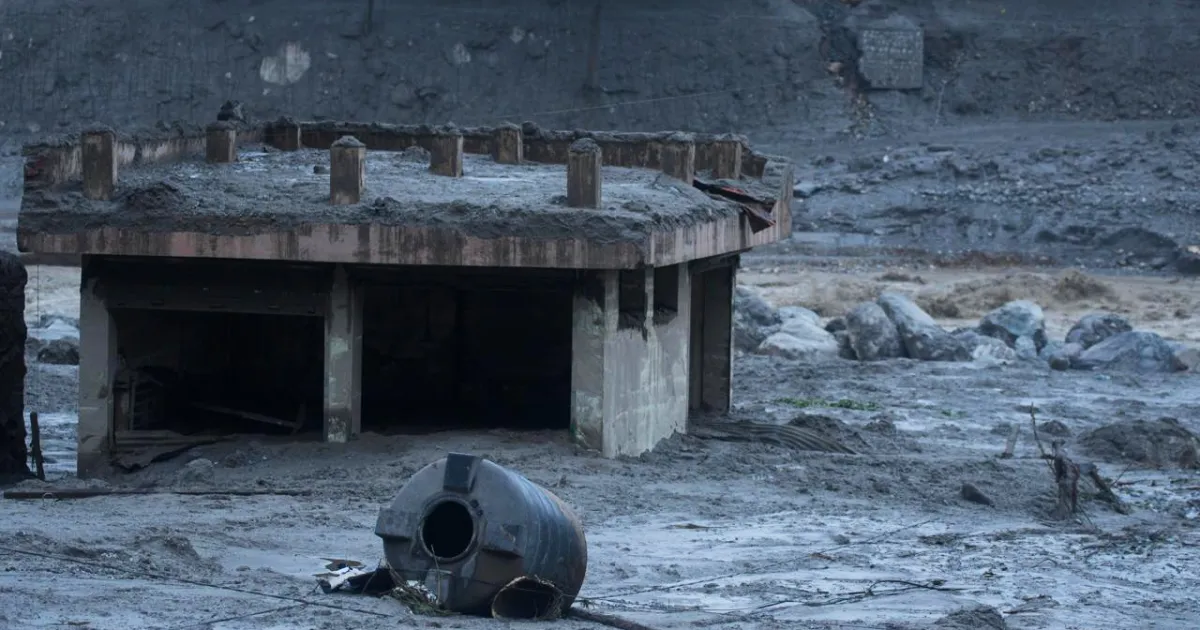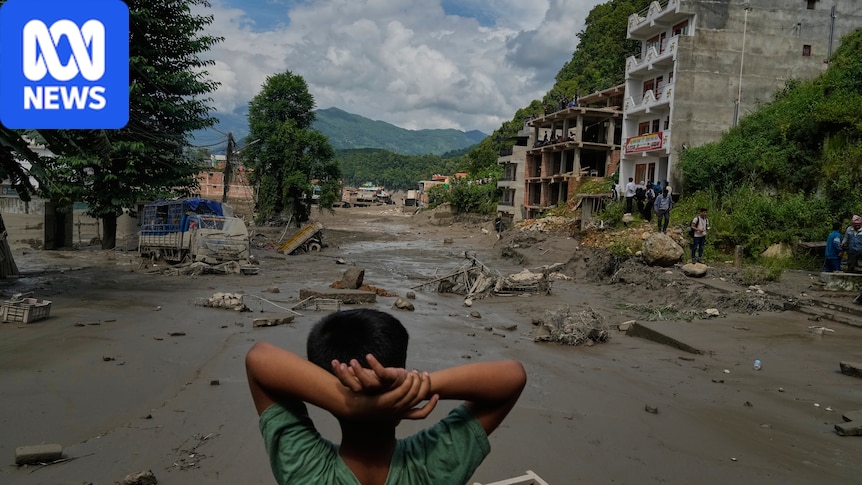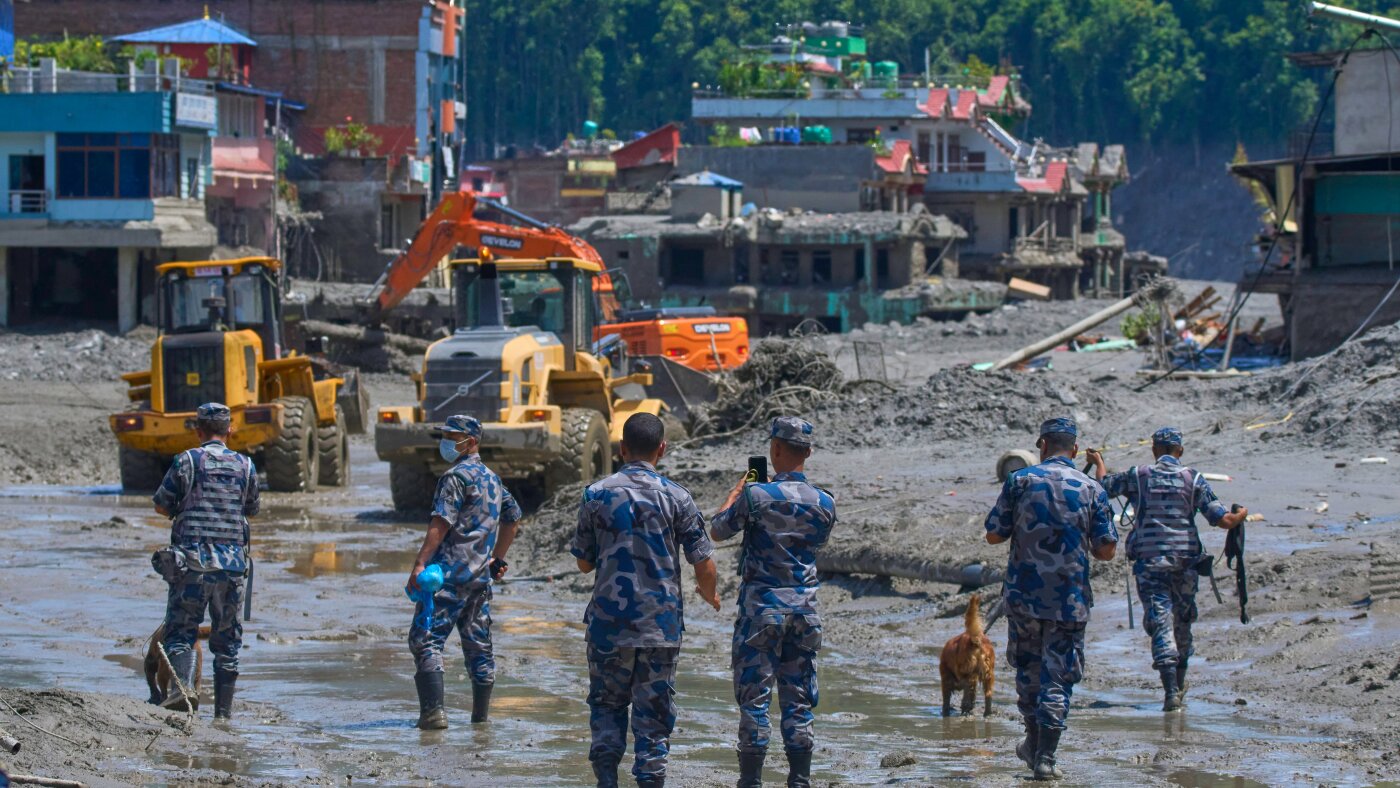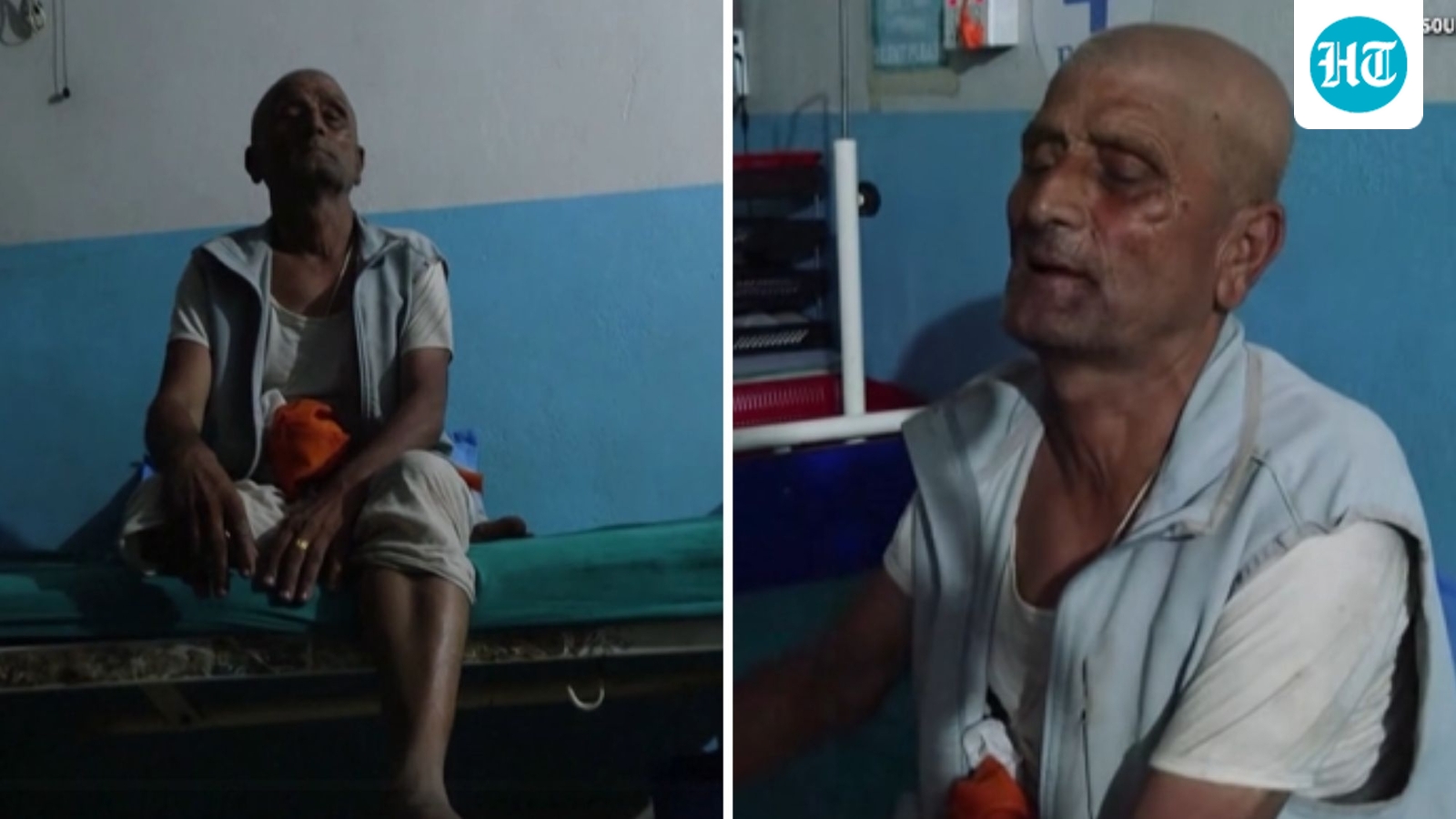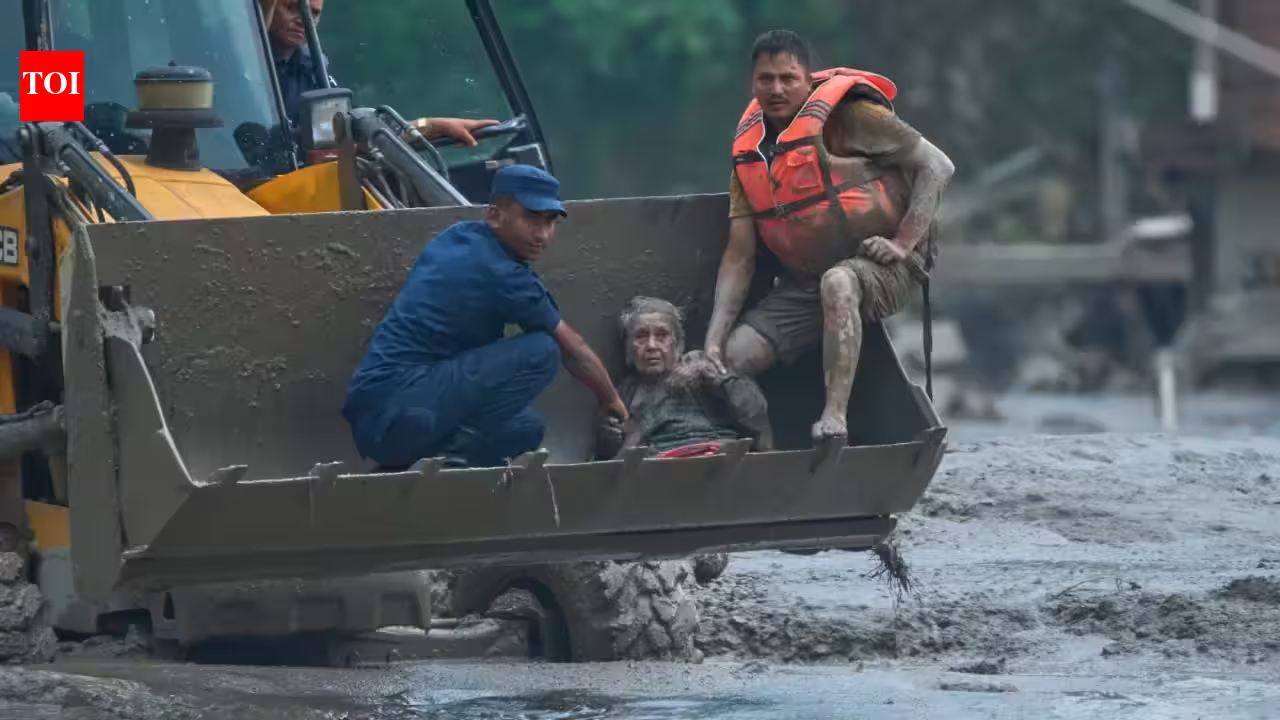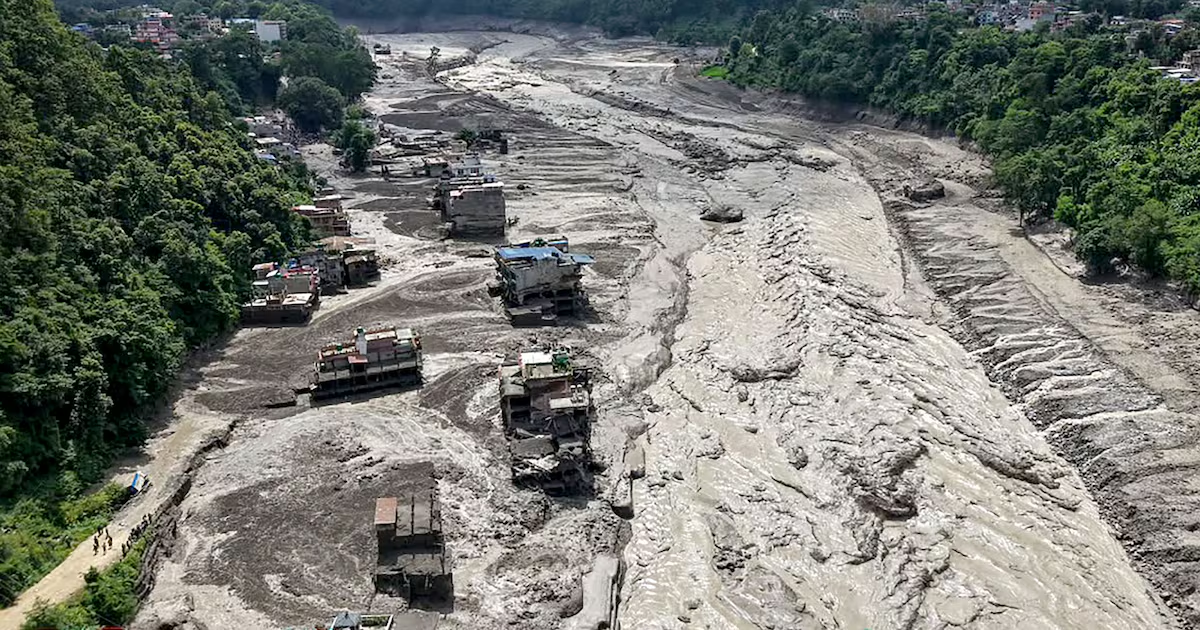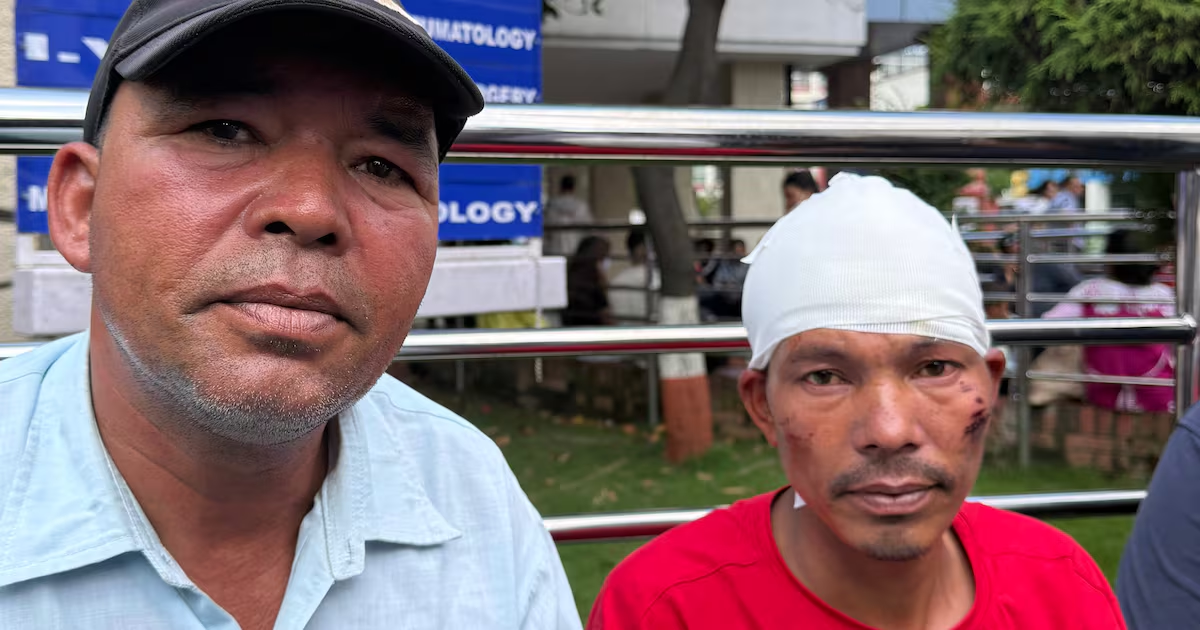
Two heart-broken brothers have told of how their lives have been torn apart after devastating floods struck the Nepal-Tibet border, leaving hundreds dead and many more missing.“The flood took my wife and child. It took everyone,” Girilal Budhathoki told The National from a hospital offering critical care to those caught up in the disaster.His brother Newall desperately sought to console him as he admitted he no longer wanted to live after losing his loved ones during a harrowing ordeal.Sitting beside Girilal at Tribhuvan University Teaching Hospital in Maharajgunj, Newall recalled the moment he realised his brother had survived the flood but most of his family had not.“There was no chance to save anyone,” Newall said. “Nobody knew it was coming.”Rescuers were continuing to search for survivors in the valleys and hillsides of Nepal on Thursday.An aerial view of damaged homes in the Nuwakot district of Nepal. EPAShow caption: An aerial view of damaged homes in the Nuwakot district of N…More than 1,000 people remain missing in the Himalayan country and neighbouring China after a wall of ice, mud and rock collapsed into a mountain river, triggering a catastrophic flash flood.Nepalese media put the death toll at 359, with dozens of bodies swept down into the plains from where they were being recovered.Authorities in Nepal are using helicopters to search for survivors and drop emergency supplies to thousands cut off in towns and valleys, after Wednesday's disaster swept away a road thronged with trekkers and pilgrims that links Kathmandu with Lhasa in Tibet.Newall said at least 11 people from their village were still missing, including relatives.Trail of destructionWith roads leading into the area destroyed, he was eventually evacuated by helicopter and taken to Tribhuvan University Teaching Hospital for treatment.At the hospital, his was one of many stories of loss and survival.Ambulances were arriving one after another, carrying people rescued from flood-hit districts. Relatives waited outside and gathered around information counters with names and photographs of people they could not find.Some had already checked other hospitals. Others stood making calls, hoping somebody might know whether their loved ones had been rescued, admitted elsewhere or were still missing.Play00:43Trail of devastation after flash flood hits NepalScene of devastationI later visited the National Trauma Centre in Mahankal, where more survivors were being treated.A doctor there said patients had arrived with broken arms, spinal injuries and other trauma. More were expected as rescue teams continued trying to reach communities cut off by washed-out roads and bridges.The doctor said the hospital was prepared to treat survivors, including those who arrived without money, documents or relatives. The government and other authorities were expected to help cover the cost of their care.Watching the injured arrive, I kept thinking about my journey back from a trek in Mustang just a day before the flash floods.It had been raining heavily and the river beside the mountain road had become increasingly rough. The water moved with frightening speed and had risen so high that it appeared almost level of the road.We were already high in the mountains but the water still felt dangerously close. From inside our car, I remember thinking that a little more rain could have been enough to sweep us off the road.It was a different part of Nepal from the region later devastated by the floods, but it gave me a sense of how quickly conditions in the mountains had changed.The roads were narrow and the rain did not stop. On one side were steep slopes, on the other fast-moving water. If the river had risen suddenly, there would have been nowhere for us to go.The following day, a huge surge of ice, rock, water and debris tore through the Nepal-Tibet border region.The Trishuli river reportedly rose by as much as nine metres in only 30 minutes. Dozens of bridges were destroyed, cutting off towns and villages and leaving helicopters as one of the few ways to evacuate the injured and deliver emergency supplies.Even in Kathmandu, signs of the disaster were impossible to miss. Ambulance sirens could be heard across the city and helicopters passed overhead.At both hospitals, families continued to arrive with photographs and names, searching for people who had still not been found.
'It took everyone': Brothers tell of devastation after deadly floods on Nepal-Tibet border | The National
The National's Shazia Ahmed speaks to survivors of natural disaster which has claimed hundreds of lives
697 words~3 min read