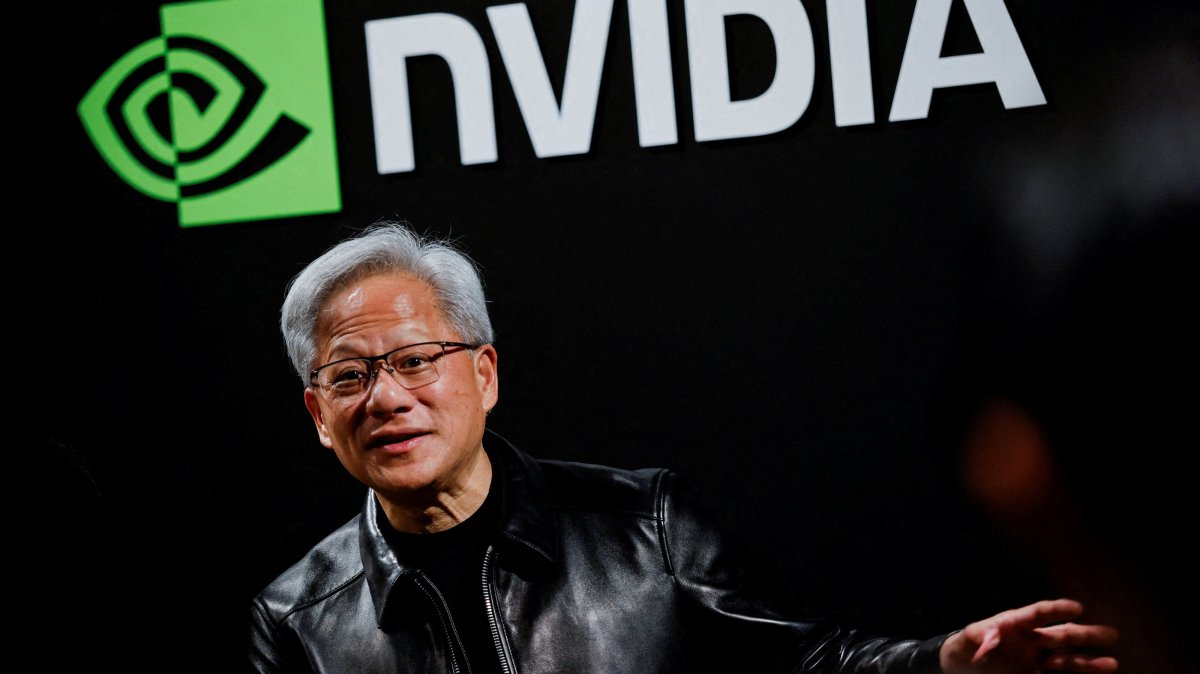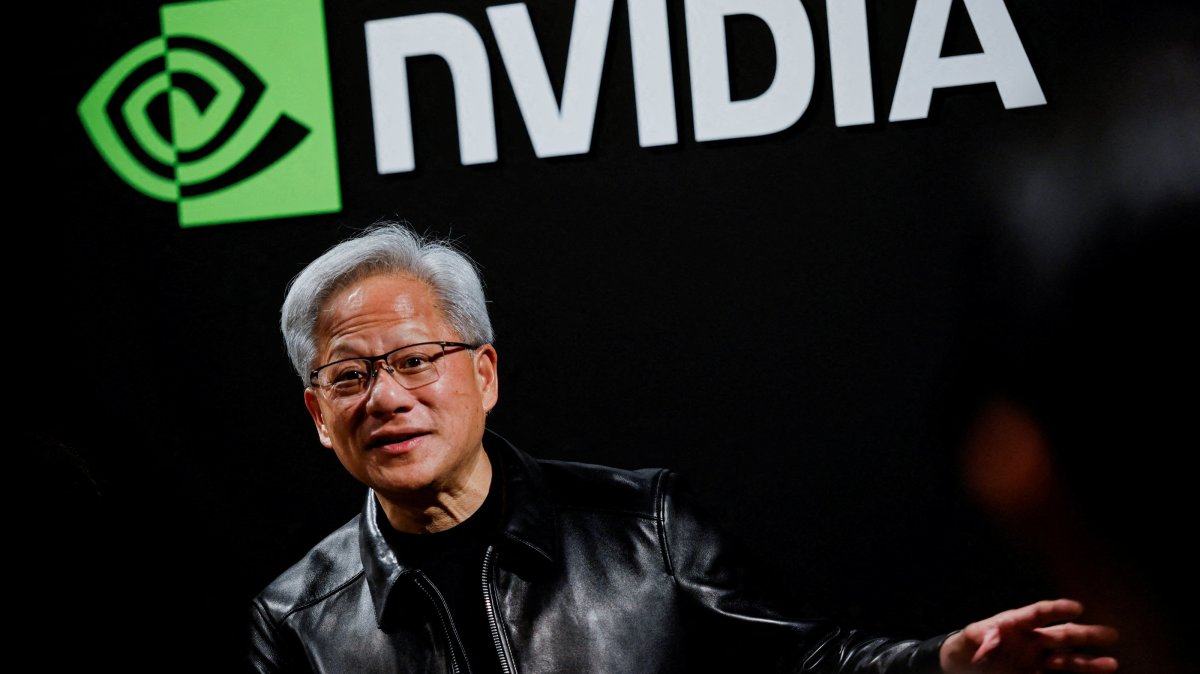
Nvidia has delivered another blockbuster quarter, sending a powerful message to Wall Street: The artificial intelligence spending boom is showing no signs of running out of steam.The world's most valuable company reported $96.2 billion in quarterly revenue, up a staggering 106 percent from a year earlier, while revenue from its crucial data-center business surged 117 percent to $89 billion.And Nvidia is already pointing to an even bigger quarter ahead, forecasting revenue of approximately $108 billion in its fiscal third quarter.But behind the eye-watering numbers is a question that is becoming increasingly difficult for investors to ignore. Will the hundreds of billions of dollars being poured into AI infrastructure ultimately generate enough revenue and profits to justify the spending?That is the $1 trillion question hanging over Nvidia and its biggest customers as Amazon, Microsoft, Alphabet, Meta and Oracle race to build the data centers needed to power the next generation of AI.For now, Nvidia CEO Jensen Huang - who founded the California-based company in 1993 with an initial focus on graphics chips for video games - is firmly betting on the technology’s staying power. He declared that AI had reached an 'inflection point,' arguing that it is no longer simply experimental but is already producing useful, revenue-generating work. 'Now, compute is revenue,' Huang said. And the companies buying Nvidia's chips appear to agree. Nvidia has reported $96.2 billion in quarterly revenue, up a staggering 106 percent from a year earlier, and it is forecasting revenue of approximately $108 billion in its fiscal third quarterMicrosoft, Amazon, Alphabet, Meta and Oracle have embarked on an extraordinary race to build data centers capable of training and running increasingly powerful AI models. Together, the so-called 'hyperscalers' are expected to spend more than $700 billion on capital expenditure this year, with AI infrastructure accounting for a significant portion of that investment.Alphabet, Google's parent company, recently boosted its spending on tech infrastructure to more than $200 billion this year, after spending more than $80 billion during the first six months of 2026. Google Cloud revenue jumped 82 percent to $24.8 billion in its latest quarter, helped by demand for AI infrastructure and enterprise AI services.Then there is Microsoft, which reported $90 billion in quarterly revenue in July. Its capital spending has also surged as it expands Azure's AI capacity, with the company recently reporting a staggering $35 billion in capital ex in a single quarter.Amazon is making an even bigger bet. The company expects to spend roughly $200 billion on infrastructure in 2026, with a large share directed toward AI and Amazon Web Services (AWS), its cloud-computing business.During Nvidia's earnings call, executives said they would expanded their partnership with Amazon under which AWS plans to deploy another two million Nvidia GPUs across its data centers by 2028. That comes only months after Amazon agreed to deploy more than one million Nvidia GPUs. Nvidia CEO Jensen Huang declared that AI had reached an 'inflection point,' arguing that it is no longer simply experimental but is already producing useful, revenue-generating workThe deal is notable because Amazon is simultaneously developing its own AI chips, including its Trainium processors, to reduce its dependence on Nvidia.Meta is also pouring money into the technology. Mark Zuckerberg's company has committed more than $130 billion to AI-related investment, while its capital expenditure could approach $170 billion next year, according to reports.That creates a crucial question for investors: how quickly can all this infrastructure generate enough revenue to justify its cost?Oracle provides another glimpse at how the AI buildout is being financed. The company's remaining performance obligations soared to $638 billion, with much of the increase coming from large-scale AI contracts.Oracle has said customers have either prepaid for GPUs or supplied the GPUs themselves under major AI contracts, arrangements that can reduce the amount Oracle needs to raise itself to build AI data centers.Nvidia, meanwhile, is becoming involved in financing the infrastructure race itself. The company has announced partnerships with Apollo, BlackRock, Blackstone, Brookfield, Goldman Sachs and KKR to establish independent AI-compute financing platforms capable of mobilizing more than $500 billion of third-party capital over time.That illustrates the extraordinary scale of the infrastructure now being contemplated. Amazon is simultaneously developing its own AI chips, including its Trainium processors, to reduce its dependence on NvidiaIt also highlights one of the biggest concerns surrounding the AI boom: where is all the money ultimately coming from - and how much of the apparent demand is genuinely organic?There has been growing scrutiny of so-called circular financing arrangements, in which companies involved in the AI ecosystem invest in or provide financing to other players in the same ecosystem.Skeptics argue that such arrangements can make it harder to determine how much underlying demand exists without financial support from other participants.Nvidia itself disclosed that its maximum gross exposure under land, power and shell guarantee agreements is $3.5 billion, a relatively small figure compared with its quarterly revenue. For now, however, demand remains extraordinary.Company shares jumped more than 7 percent after the results, while at least 10 brokerages raised their price targets.
World's biggest company reports another RECORD quarter
Nvidia is the world's most valuable company, and the stunning results in its latest quarterly report show that the orgy of spending on AI is only getting bigger.
838 words~4 min read