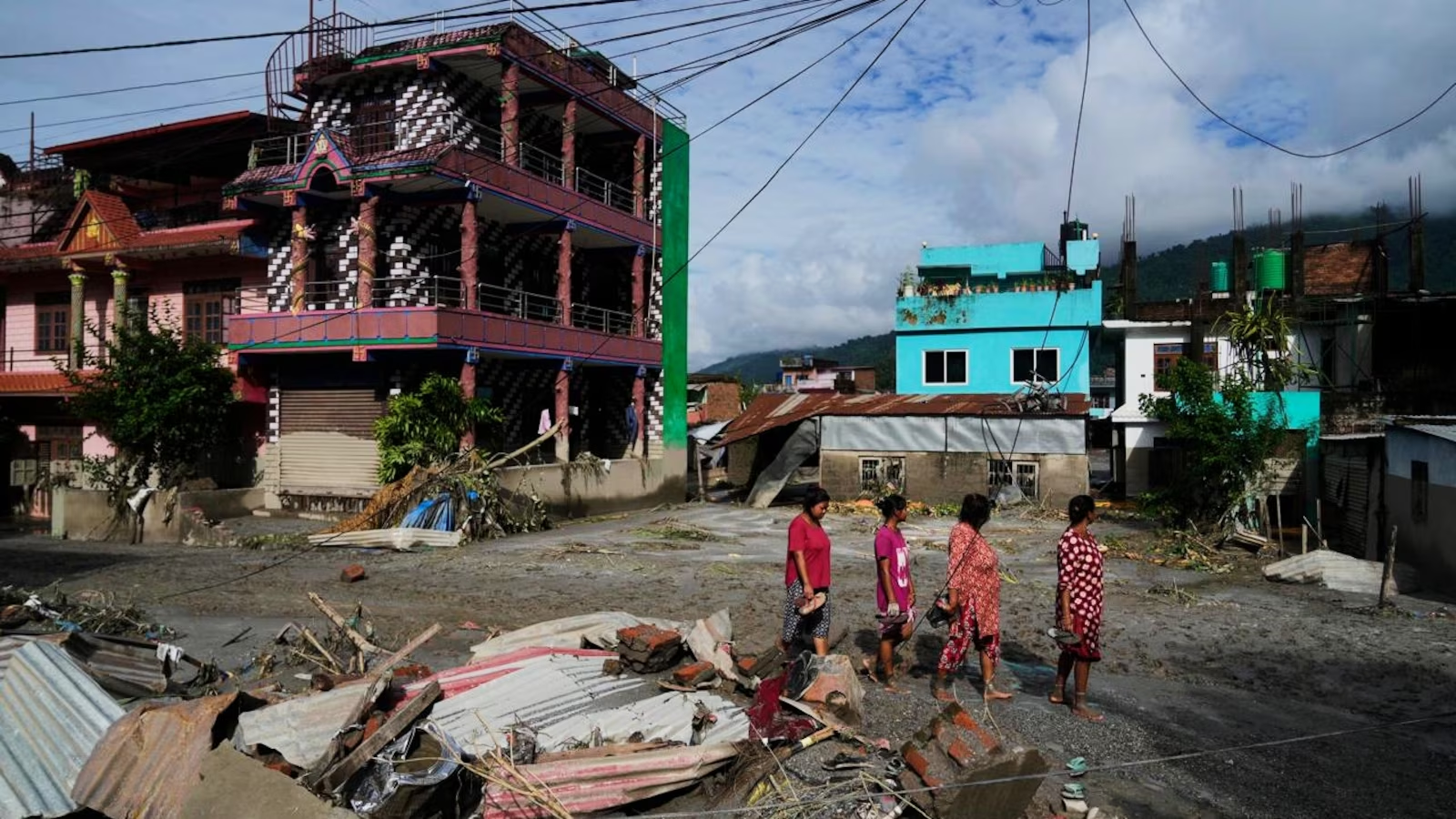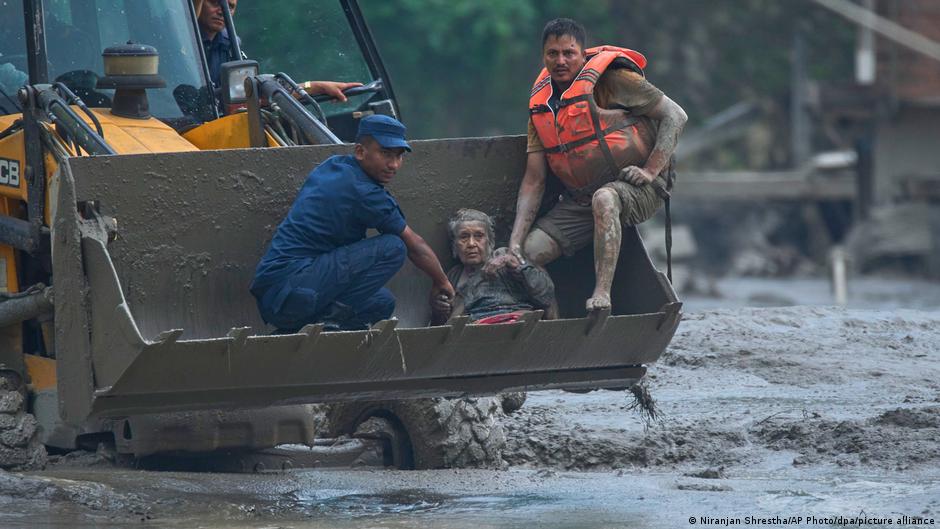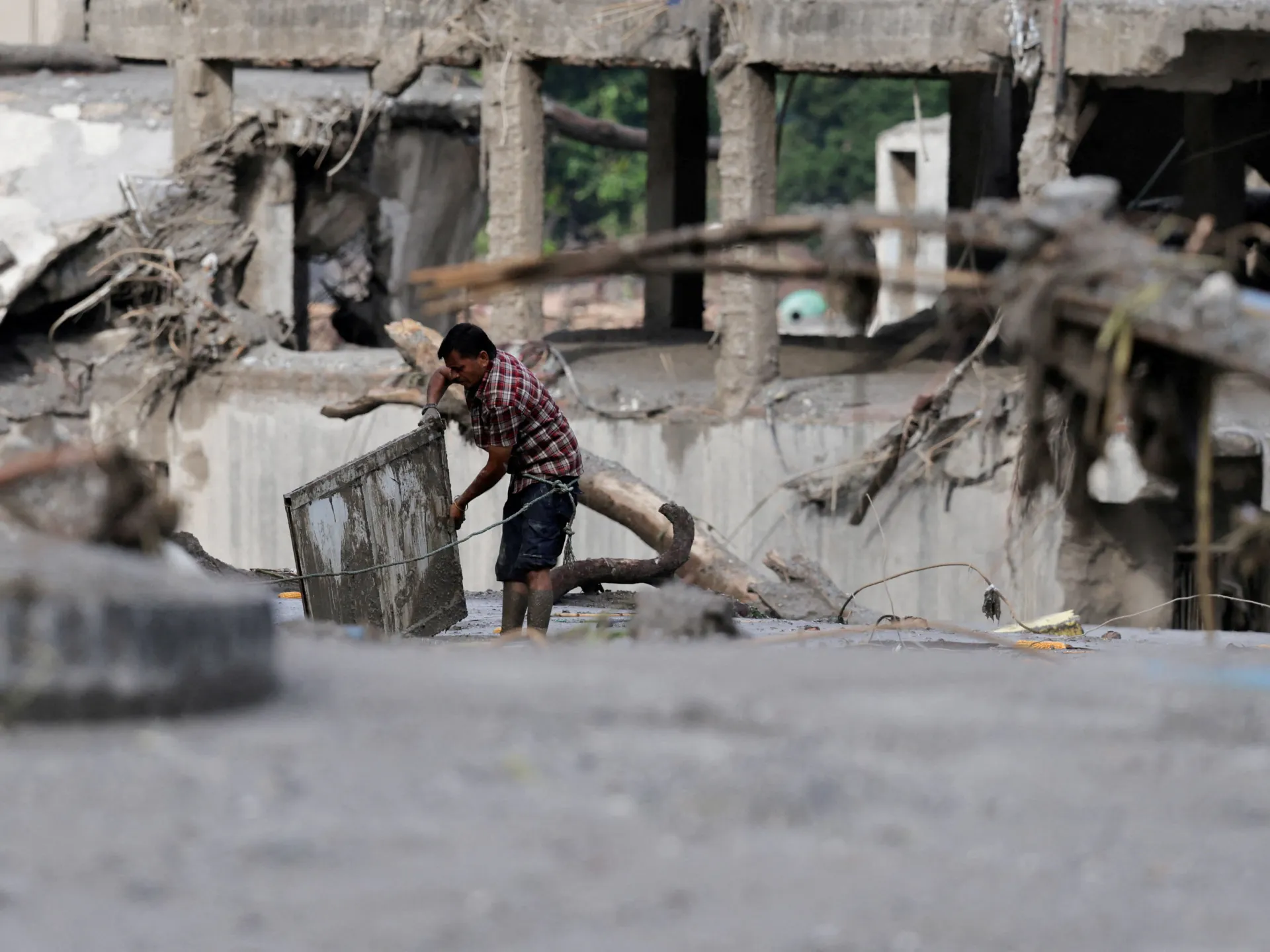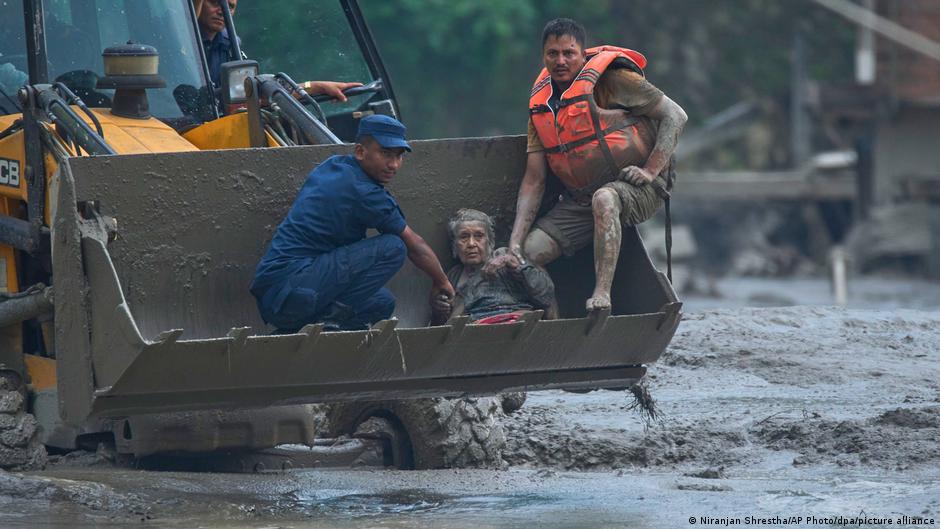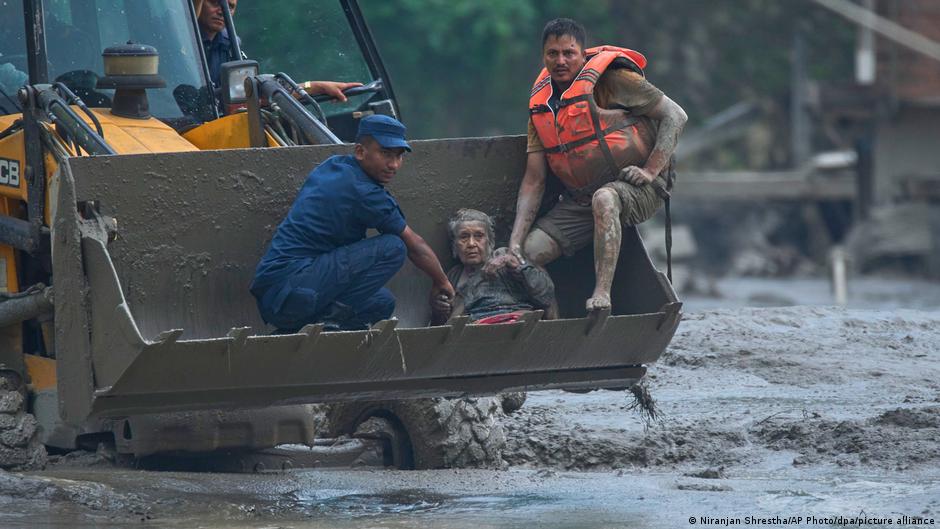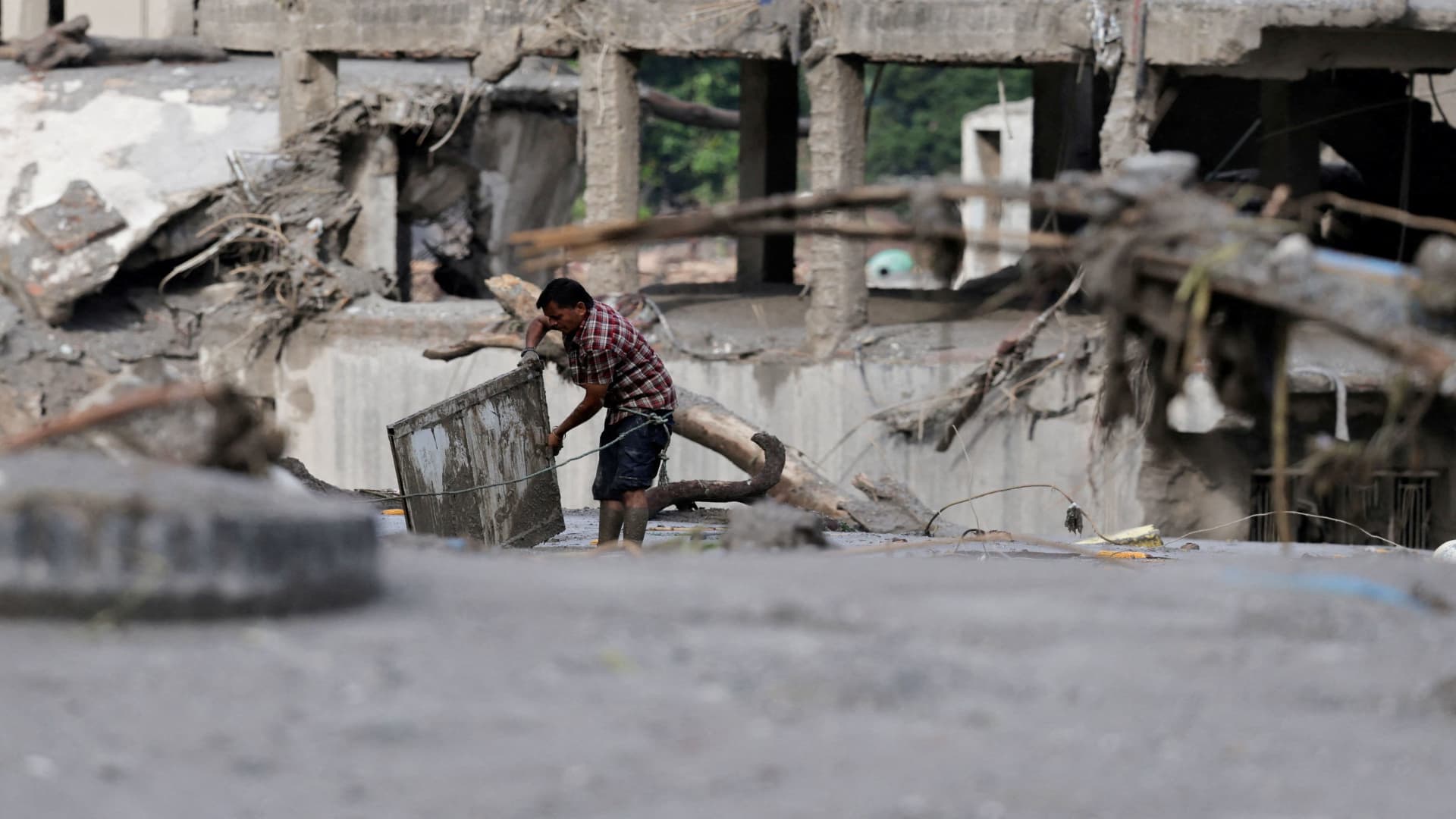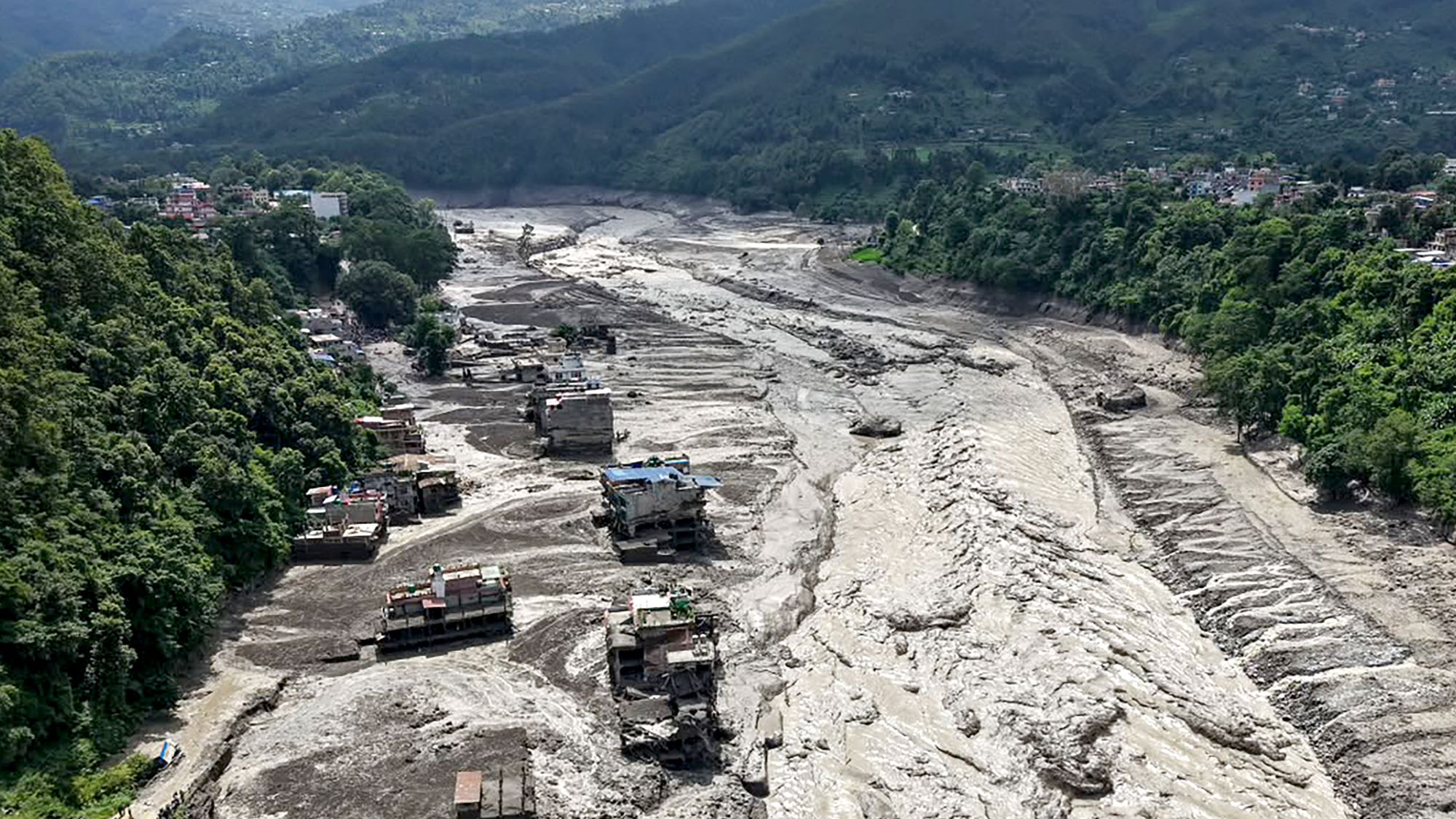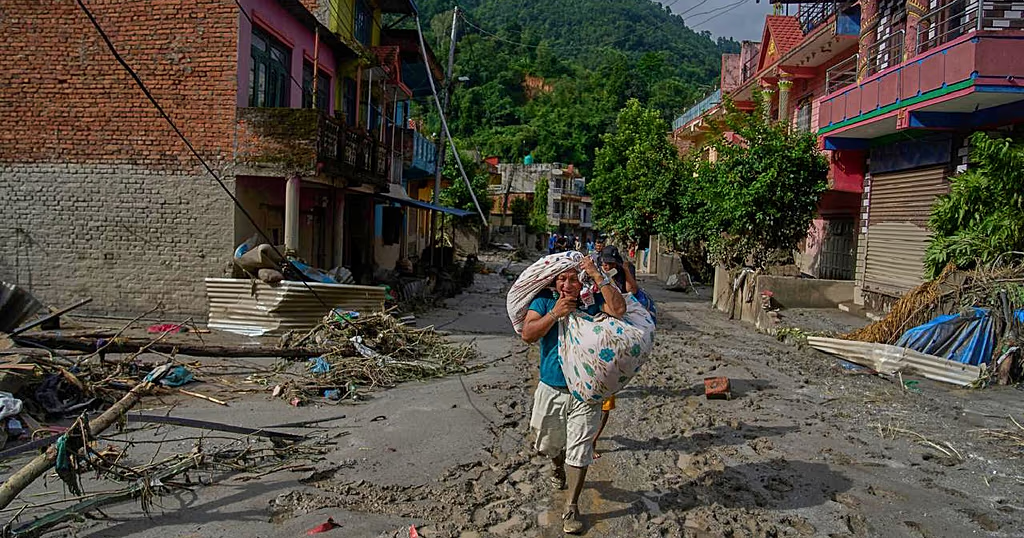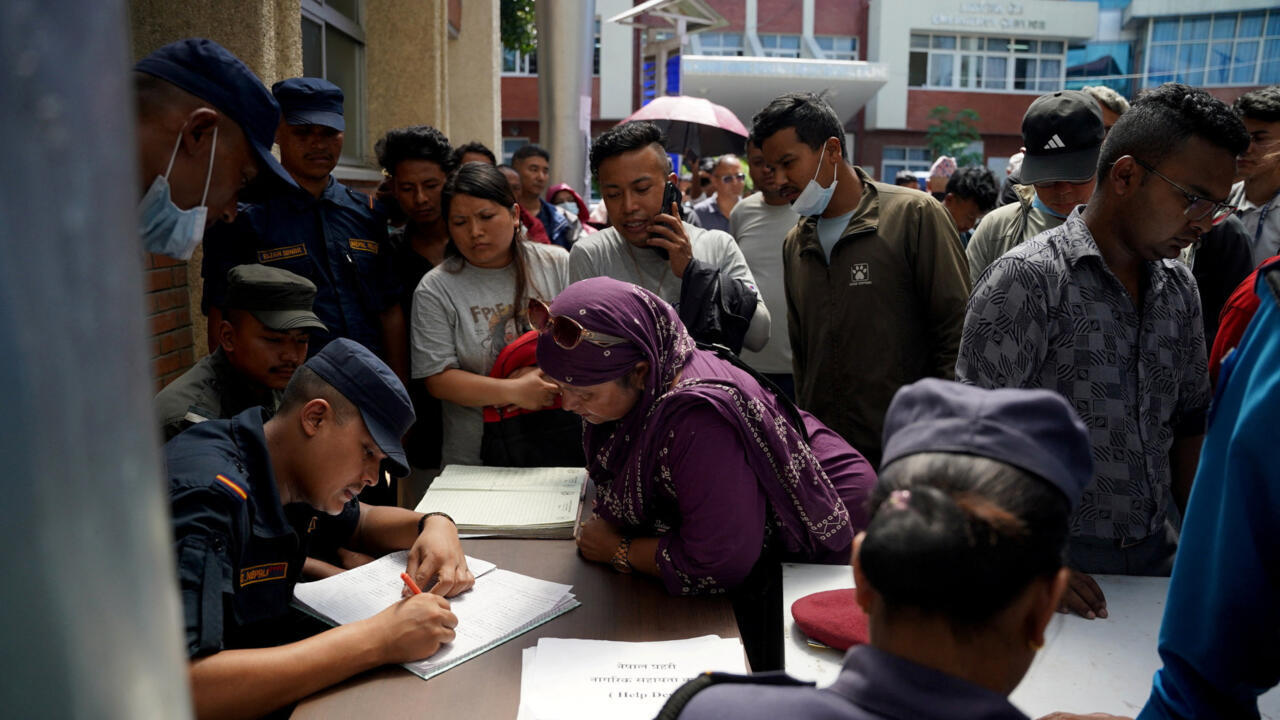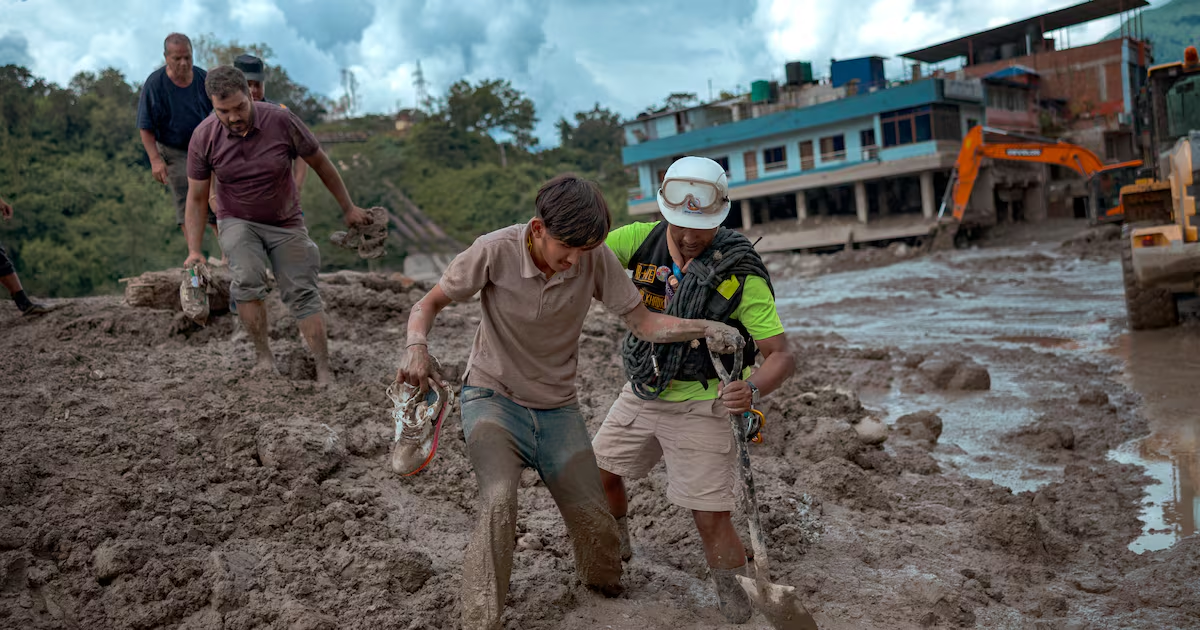
Rescuers were continuing their search for survivors in the debris-strewn valleys and hillsides of Nepal on Thursday. More than 1,000 people remain missing in the Himalayan country and neighbouring China after a wall of ice, mud and rock collapsed into a mountain river, triggering a catastrophic flash flood.Nepalese media put the death toll at 359, with dozens of bodies swept down into the plains from where they were being recovered.Authorities in Nepal are using helicopters to search for survivors and drop emergency supplies to thousands cut off in towns and valleys, after Wednesday's disaster swept away a road thronged with trekkers and pilgrims that links Kathmandu with Lhasa in Tibet.The Red Cross said entire villages had been destroyed and impassable roads and bridges had left communities cut off. The full scale of the disaster has yet to be established, it added. More than 600 foreigners missingMany of this week's victims were pilgrims heading to Kailash Mansarovar, a high-altitude site in Tibet revered by Hindus and Buddhists, among others. Play00:37CCTV captures devastating Nepal flash floodMore than 650 foreigners were still unaccounted for, while Nepal's authorities were yet to determine the number of its citizens missing.Nepal's Home Minister Sudhan Gurung said the focus remained on finding survivors, as rescue teams found 100 missing Indian visitors, mostly pilgrims, and 25 Chinese workers in the worst-hit region around Trishuli. The missing foreigners in Nepal come from more than two dozen countries, including 288 from India, 63 from the US, 51 from Malaysia, 34 from Australia, 33 from Britain and 25 from Canada.What happened?Early reports from Nepali officials suggested an earthquake in the area could have caused the lower part of a glacier to collapse and trigger the floods.The US Geological Survey said an earthquake with a magnitude initially reported as 4.4 was in fact seismic energy generated by the collapse of glacial rock and ice, followed by debris flow.Chinese government geologist Guo Zhaocheng said the ice-avalanche debris flow that caused the mudslide travelled at about 50 metres per second, leaving people with little time to react, and extended for more than 20km, causing severe losses.Mr Guo said a high-altitude ice avalanche triggered the debris flow, which picked up glacial rock as it moved down a channel, before becoming a mudslide that struck port facilities and areas on either side of the China-Nepal border.Verified videos showed crushing masses of water and debris sweeping away dozens of people at a border crossing in Gyirong, with homes, roads and power stations washed away in Nepal, as the flows gushed downstream.Latest warningsChina's CCTV reported that the edge of the debris flow reached about 2.5km downstream from Gyirong Port, with mud deposits up to 1.5 metres thick. A barrier lake has formed in the region, complicating rescue operations.Another three million cubic metres of water – about 1,200 Olympic-size swimming pools – is expected to enter the lake over the next three days, posing a high risk of a breach, with peak flow expected around September 1, it said.Last July, the rapid drainage of a lake on top of the Purepa glacier in Tibet unleashed deadly flooding in Nepal.Nepal's rescue helicopters would be unable to land in the affected areas until the waters recede, army representative Raja Ram Basnet said.China's official Xinhua news agency said the mudslide occurred on the Nepali side of the border and hit Gyirong port in Tibet, cutting road, communications and power links in the Shigatse region near the Chinese border with Nepal.China's President Xi Jinping urged “all-out” search efforts for the missing as well as stronger monitoring and early warning systems to prevent secondary disasters.Nepal's energy ministry said 430MW of electricity supplies were affected, mostly from hydroelectric projects, or more than 12 per cent of the total national hydropower capacity of 3.2GW, according to a Reuters calculation.Police and military personnel were joining in the rescue effort, said Nepal's Prime Minister Balendra Shah.“Instructions have been given … to move the people living in the lower areas to safer places,” he said. “People along the river are advised to exercise extra caution and remain alert.”From its origins in Tibet, the Bhote Koshi river empties into Nepal's Trishuli river that eventually flows into India as the Gandak river.Last year's Bhote Koshi flood killed nine people, with 24 missing, as it washed away a “friendship bridge” linking Nepal and China, disrupting trade and transport for months.That flood was triggered by the draining of a supraglacial lake in Tibet, a regional climate monitor said.
More than 350 dead and thousands missing after floods on Nepal-Tibet border | The National
Missing foreigners in Nepal come from more than two dozen countries
744 words~3 min read