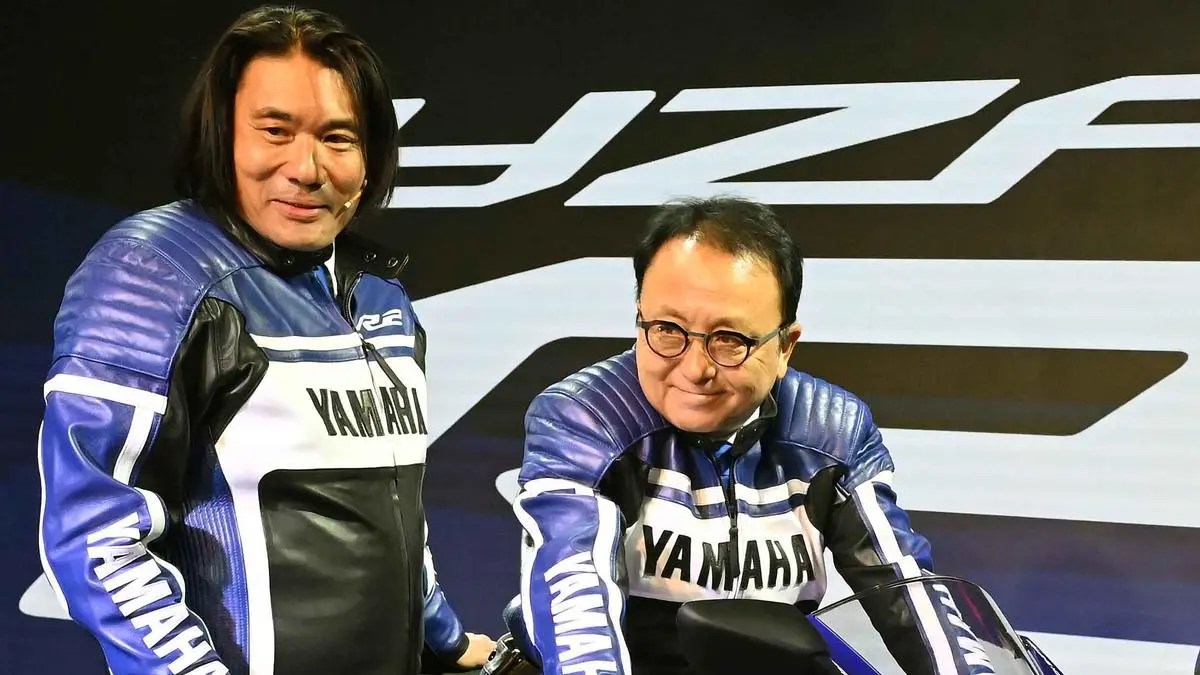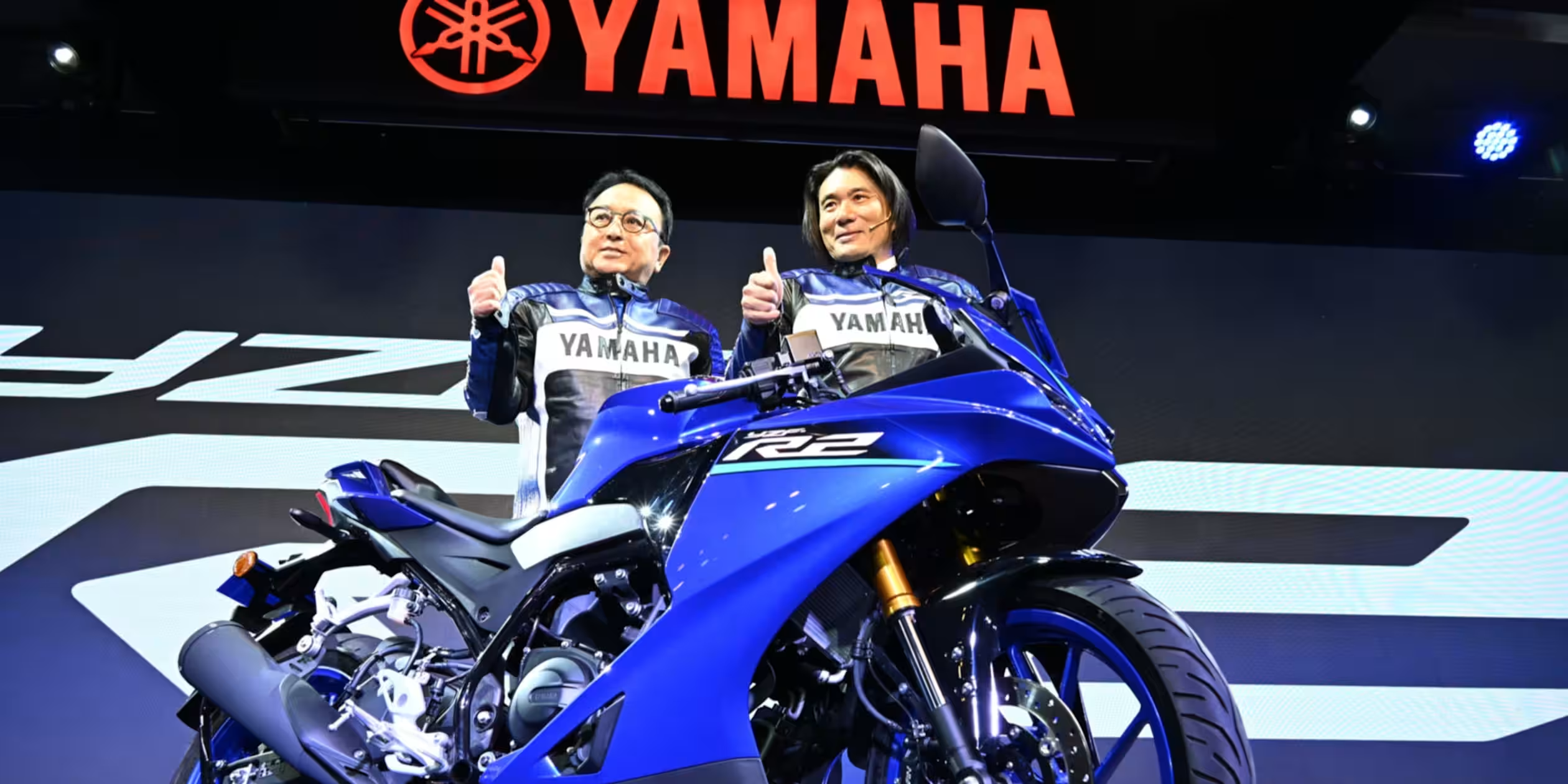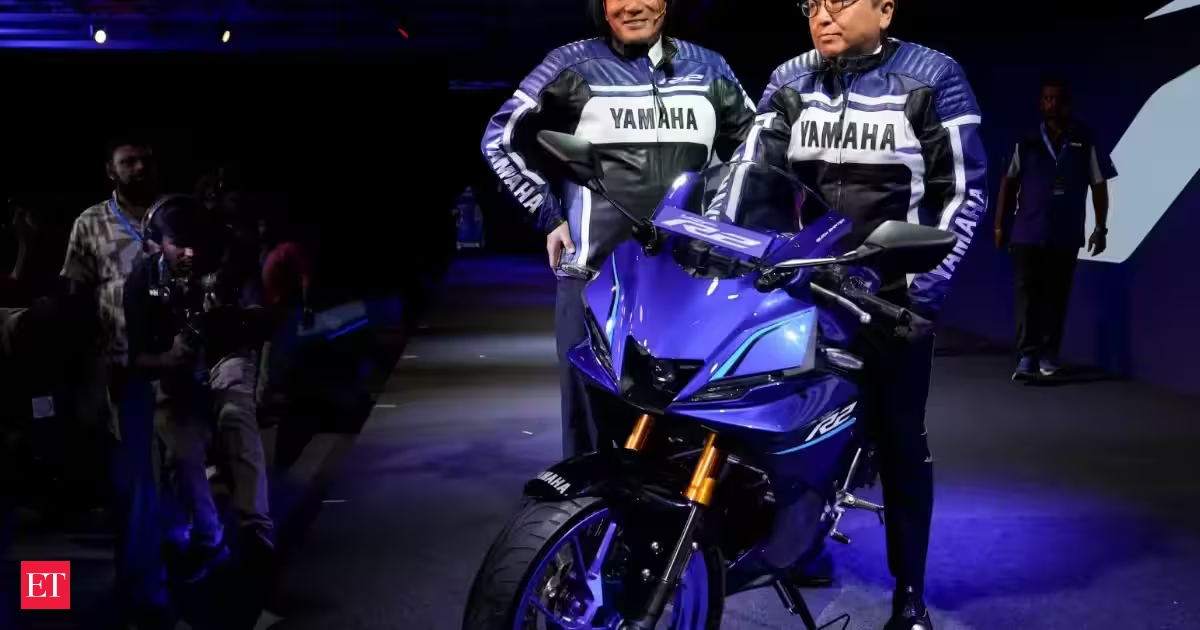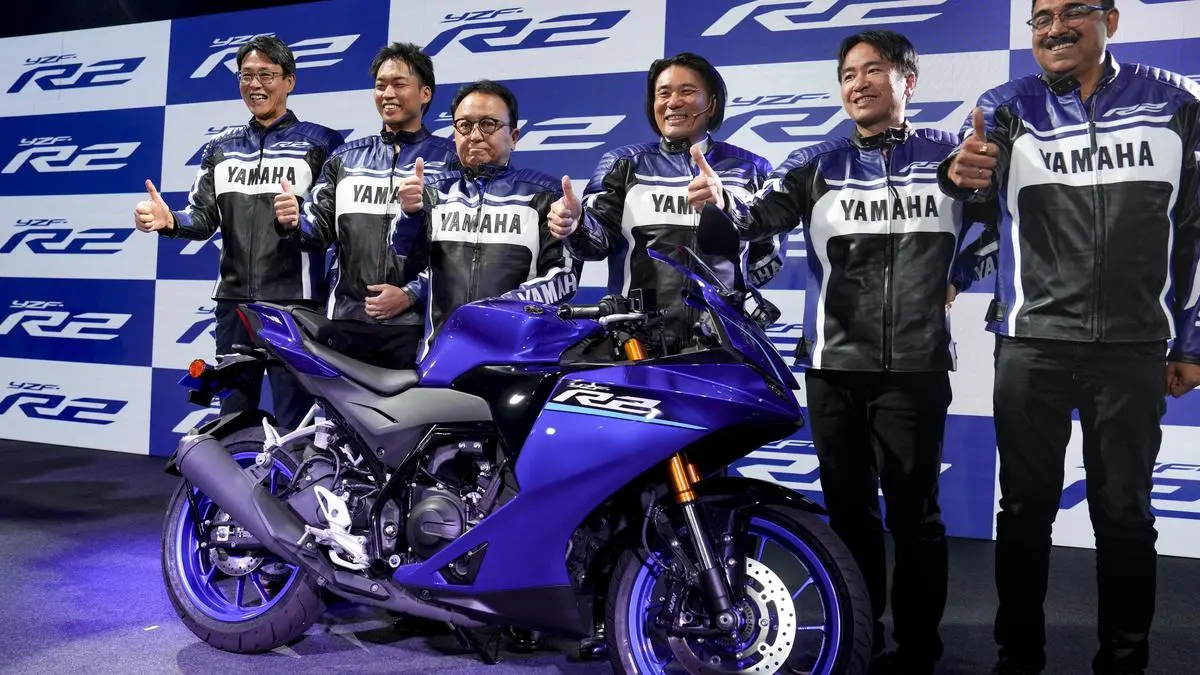
Yamaha Motor India expects its combined production capacity in India to be fully utilised within the next two to three years, prompting the Japanese two-wheeler maker to evaluate expansion of its manufacturing footprint, even as it remains undecided on whether to set up a new plant.The company currently has annual production capacity of nearly 1.5 million vehicles across its facilities in Kancheepuram, Tamil Nadu, and Surajpur, Uttar Pradesh. The company is already in discussions with the government on optimising and expanding its manufacturing operations.“Currently, my feeling is that within two or three years, this capacity is going to be fulfilled. In that case, we have to start something for the expansion of the plants,” Hajime Aota, Chairman, Yamaha Motor India Group, told reporters in Chennai, at the global launch of the YZF-R2, the company’s first offering in the 200cc segment.Aota said Yamaha has additional space at its Chennai facility and could expand capacity there before considering investment in a new location.“At this moment, we have capability and we have space. So in that case, I don’t need to commit to making some new purchase or new acquisition of the plant,” he said.Yamaha completed a second engine manufacturing line at its Chennai facility this year. Further expansion at the site will depend partly on how the company structures its manufacturing processes, including which activities it retains in-house and which it outsources to suppliers.India a growth engineAota described India and Indonesia as Yamaha Motor’s two “big engines”, with India expected to become the company’s highest-growth market and one of its largest markets globally.However, he said Yamaha still needs to narrow the gap with Indonesia in terms of manufacturing quality and technical sophistication while preserving India’s cost competitiveness.“The challenge is to improve quality without allowing costs to rise to a point where India loses competitiveness,” he stressed.Yamaha India currently has a roughly 70:30 mix between domestic sales and exports. Aota said shifting to an equal 50:50 split would be difficult given the size of the Indian domestic market.R2 makes global debut in IndiaThe base YZF-R2 is priced at ₹2,30,500 (ex-showroom, Delhi), while the Quick Shifter variant costs ₹2,39,500 and the range-topping R2 M is priced at ₹2,53,000.Yamaha has set a rolling one-year sales target of 50,000 units for the R2. The company will initially focus on the Indian market while assessing export opportunities.The company is also evaluating whether the newly developed engine can be used in other global markets. Potential export destinations identified include Japan, Europe and Taiwan.He said the R2 was developed to meet demanding global specifications while retaining India’s manufacturing cost advantage.The company has overall made a cumulative investment of more than ₹3,800 crore, including ₹2,000 crore in R&D and manufacturing in India over the past eight to 10 years. Aota did not disclose the investment specifically allocated to the R2.Cautious on E2Ws Yamaha does not expect to become a volume leader in electric two-wheelers, with Aota saying the company currently lacks the ability to produce EV volumes of 40,000-50,000 units a month.Profitability and the battery supply chain remain key constraints. Unlike conventional motorcycles, for which Yamaha manufactures its own engines, its electric vehicles currently rely on externally sourced battery cells and motors.Aota also highlighted challenges in securing battery cells specifically suited to two-wheelers, as suppliers often prioritise the much larger requirements of the four-wheeler industry.E20 pressureOn the government’s E20 ethanol-blending policy, Aota said Yamaha supports the move as it can help reduce India’s dependence on crude-oil imports. However, he called for greater policy stability once the specification is finalised.The concern is that manufacturers investing in engines optimised for E20 could face another costly redevelopment cycle if the government subsequently increases the blending requirement.“If E20 is going to be the way to go, I really want to see the government is going to stay in E20 for a while,” Aota said.
Yamaha India eyes expansion as plants near full utilisation, sounds cautious on E2Ws
Yamaha India plans expansion amid rising production capacity, aiming for significant growth in the Indian market alongside Indonesia.
640 words~3 min read