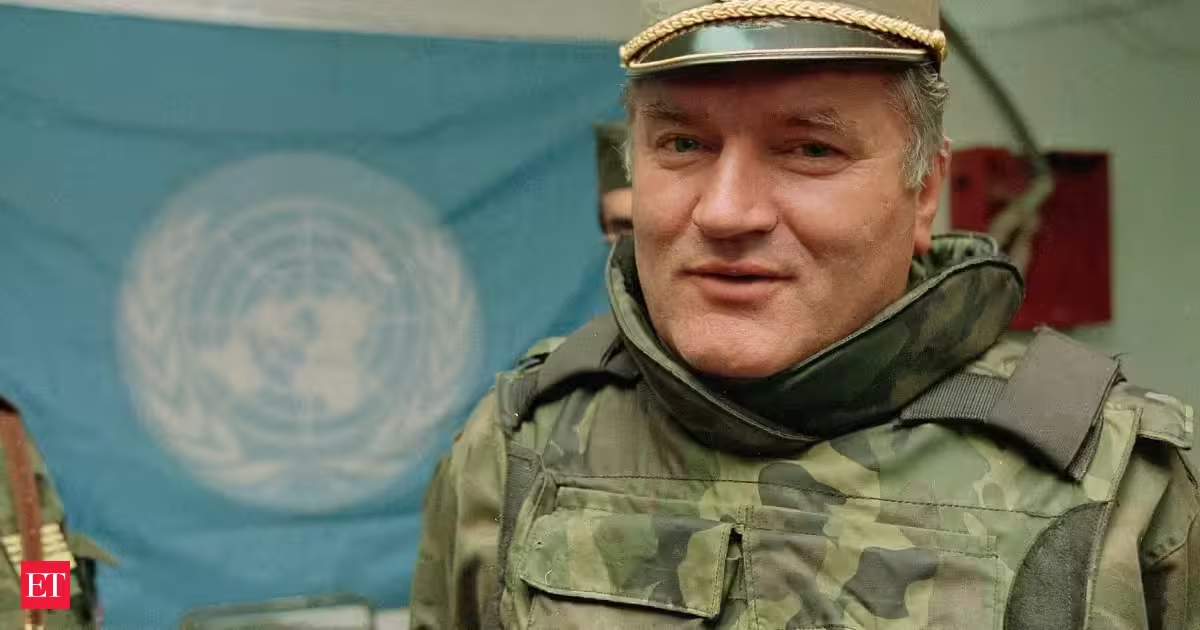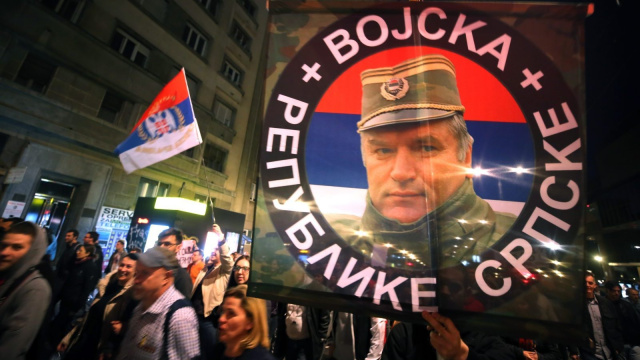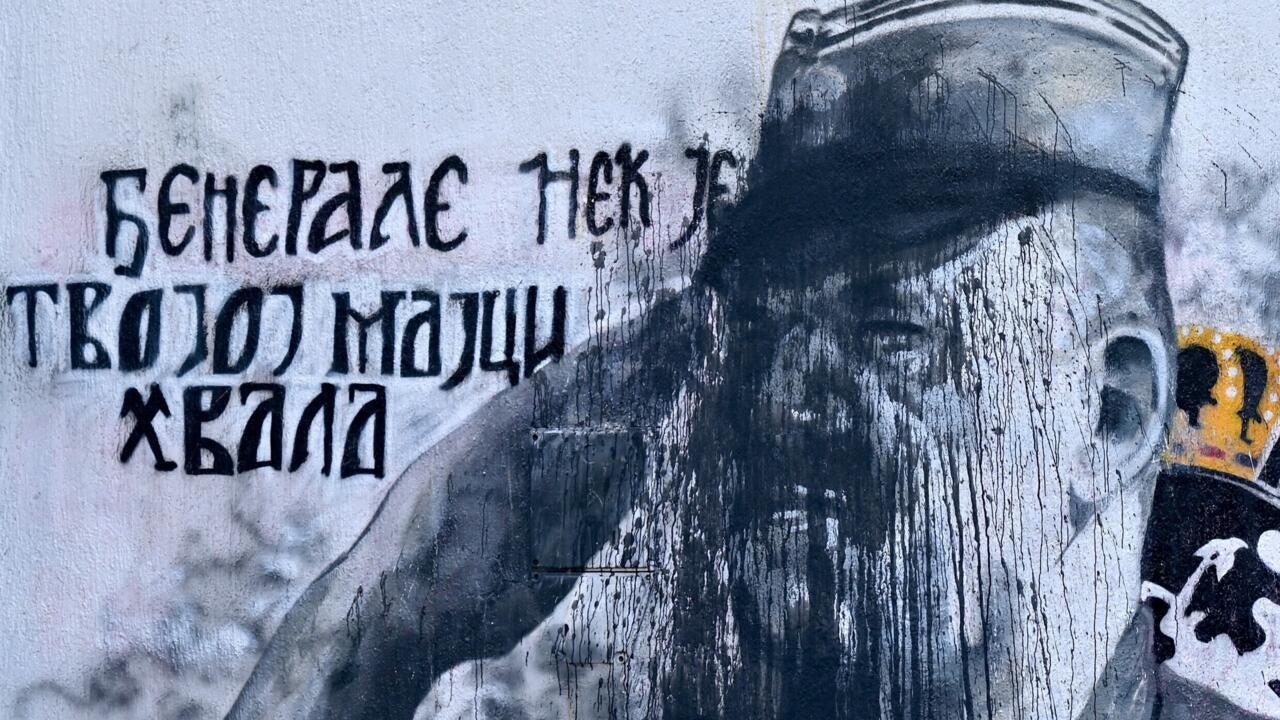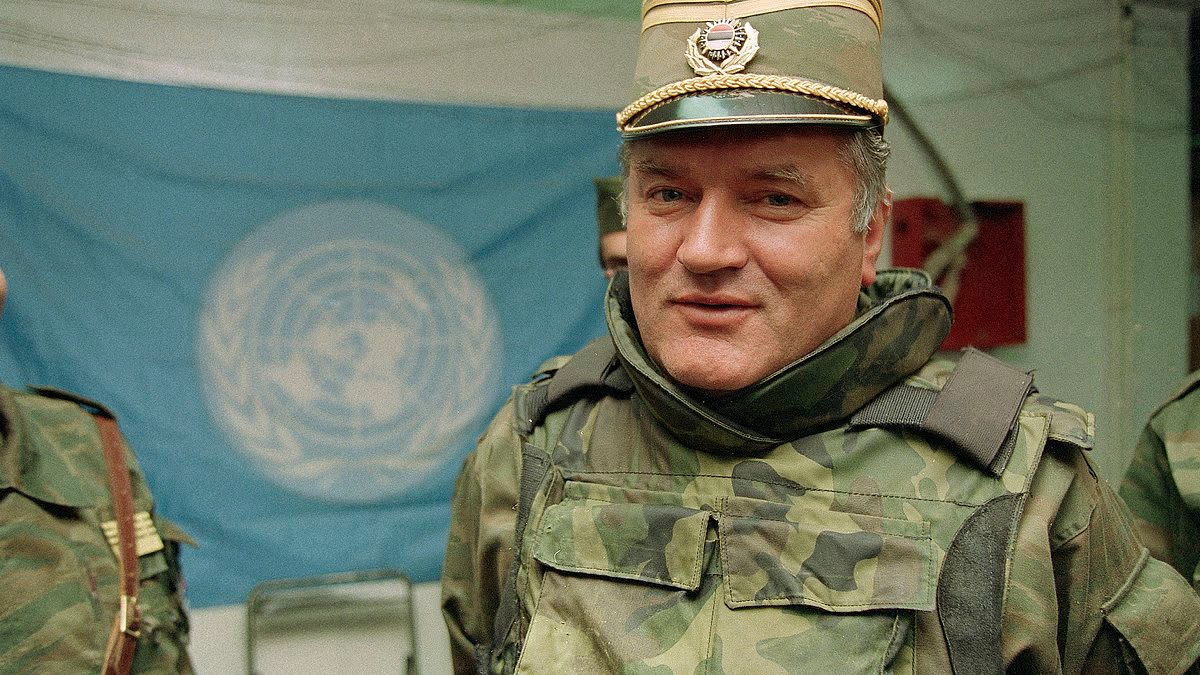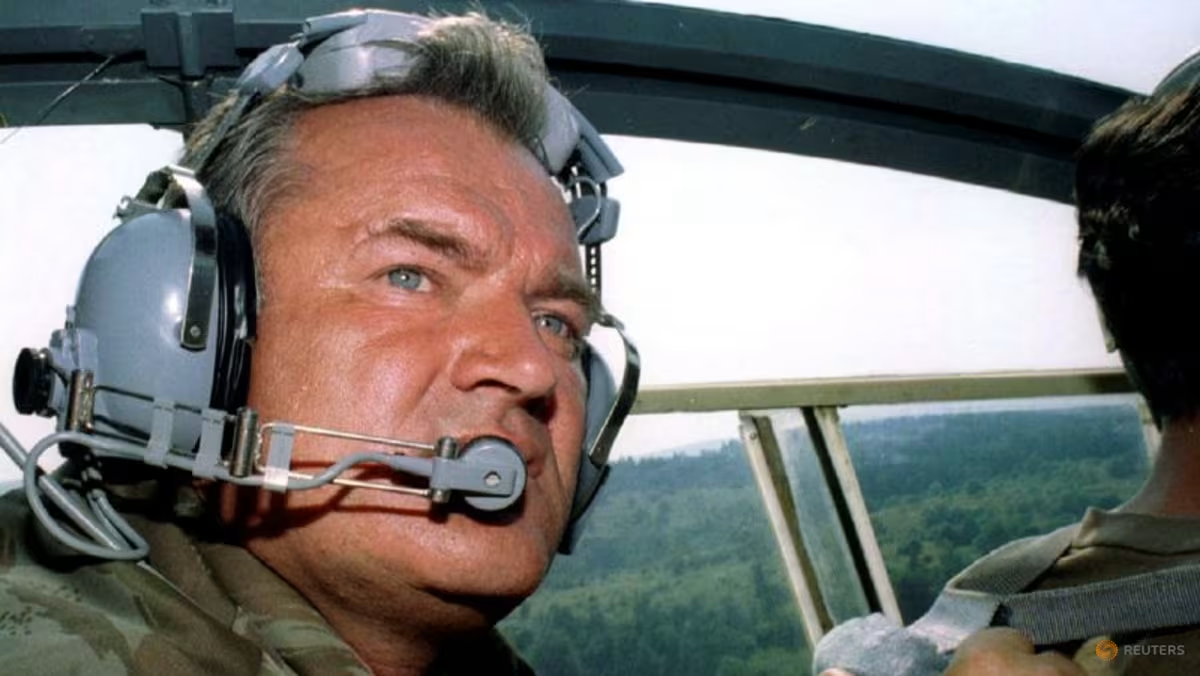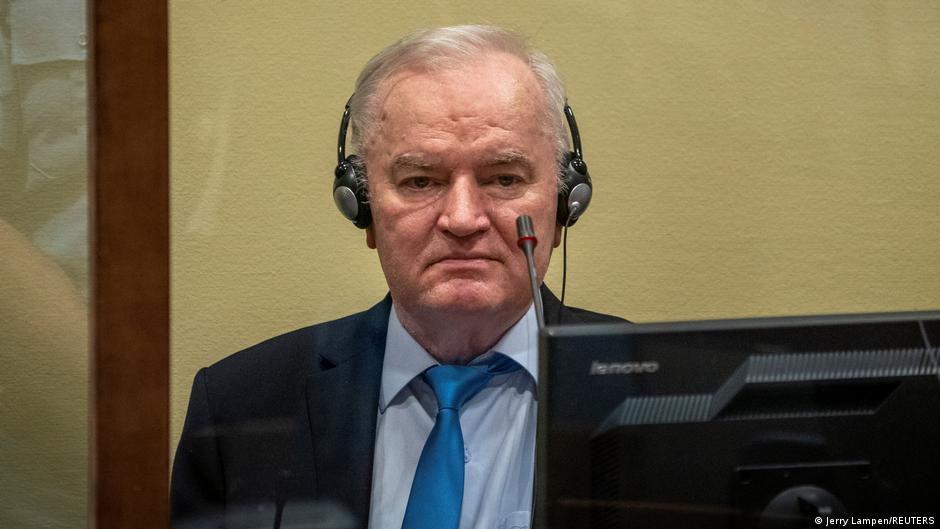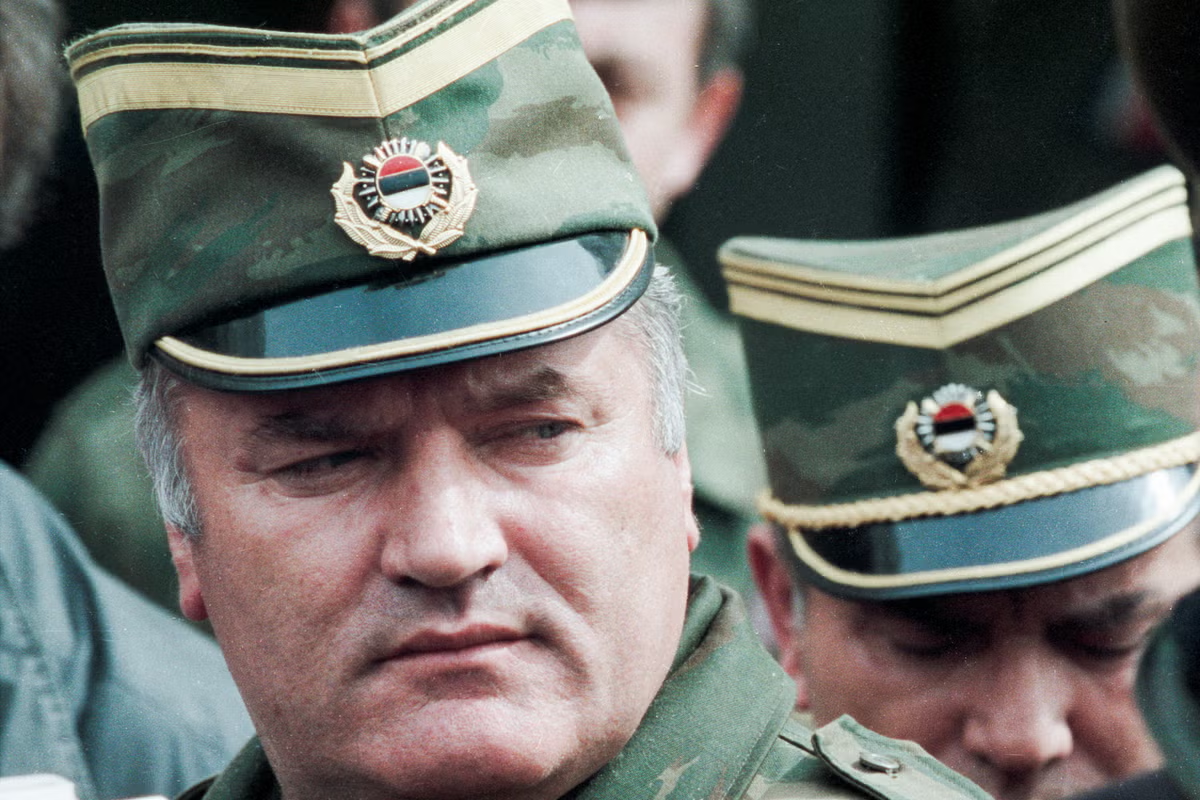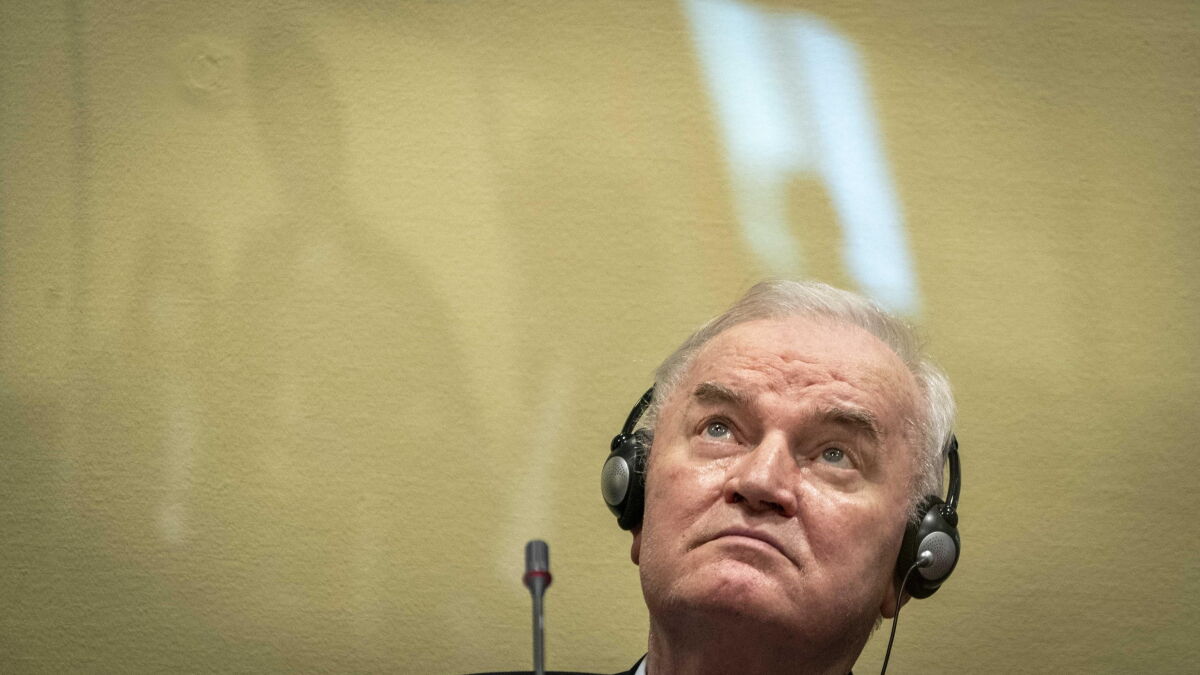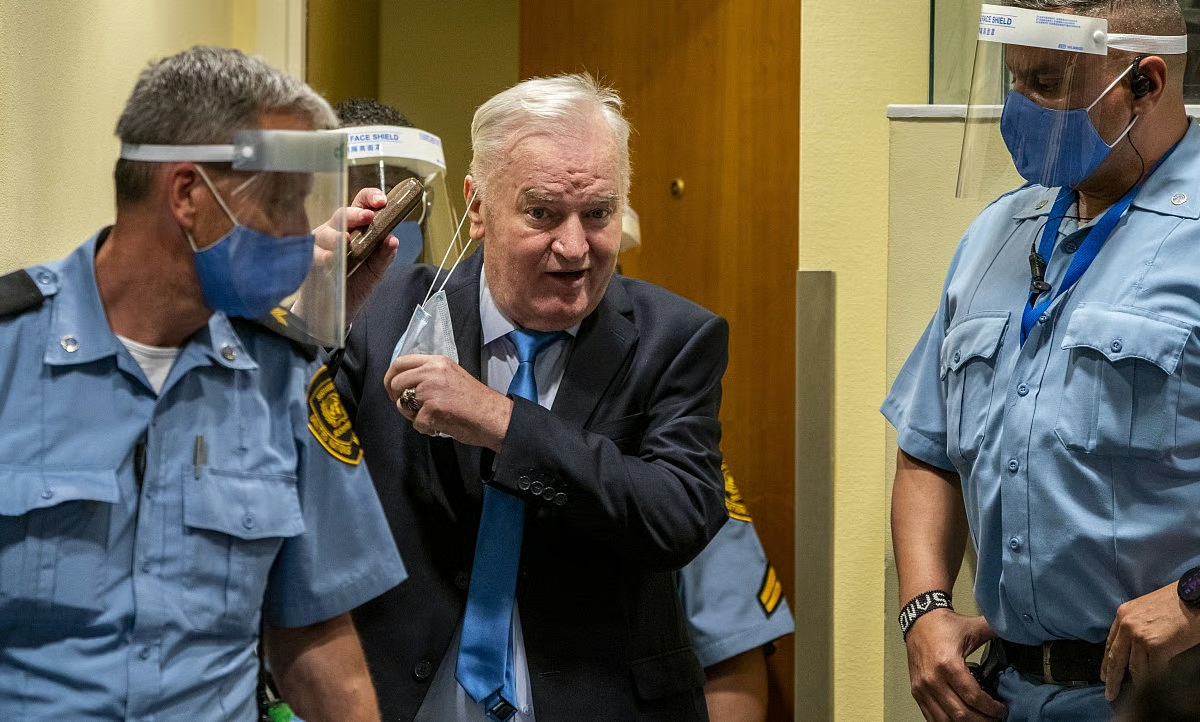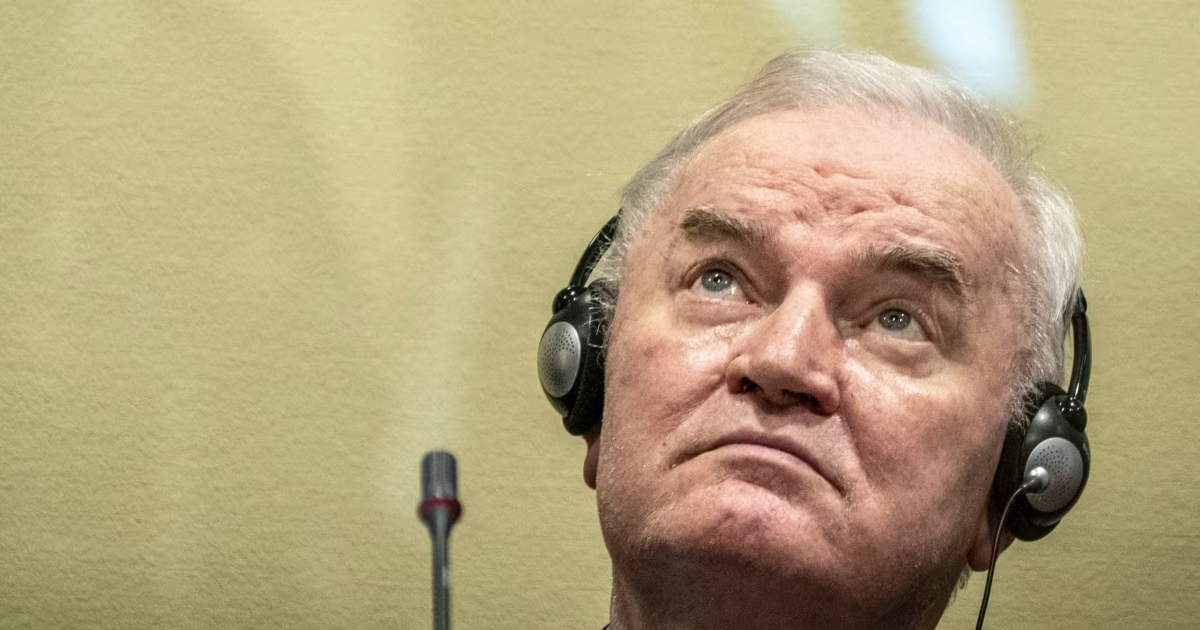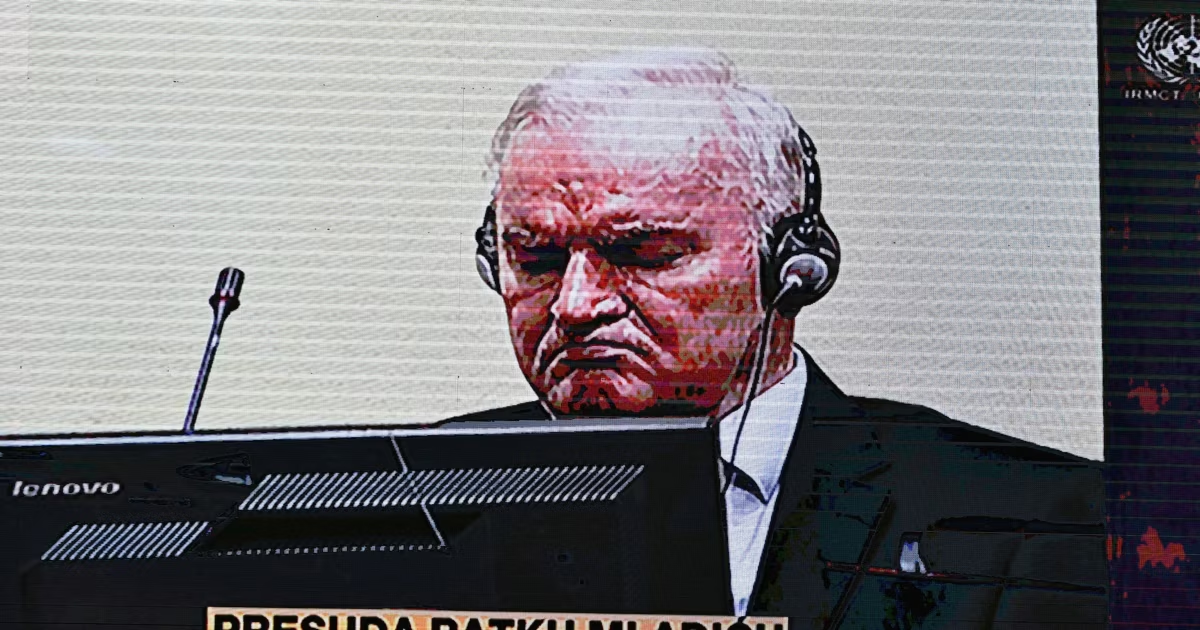
Ratko Mladic, the Bosnian Serb wartime commander convicted by an international court for genocide and crimes against humanity committed during the Bosnian War from 1992 to 1995, has died at the age of 84.Serbian state broadcaster RTS reported on August 27 that he had died in a prison hospital in The Hague after suffering several strokes.Mladic was convicted of one count of genocide, five counts of crimes against humanity, and four counts of war crimes by the International Criminal Tribunal for the former Yugoslavia (ICTY) in the Netherlands in 2017 -- more than 20 years after he was indicted.
Known to his victims and others as the "Butcher of Bosnia,” Mladic was found guilty of ordering the massacre of more than 7,000 men and boys in Srebrenica in 1995 -- the worst single atrocity perpetrated in Europe since the end of World War II.Since the ICTY verdict, the number of victims from Srebrenica has risen to more than 8,000.
Mladic was also deemed responsible by the ICTY for the siege and bombardment of the Bosnian capital, Sarajevo -- a crime against humanity that, according to the international court, resulted in the deaths of 4,548 Bosnian soldiers and 4,954 civilians. An estimated 50,000 people were also wounded during the siege.The ICTY found that the wartime president of Bosnia-Herzegovina's Serb-majority entity, Radovan Karadzic, had set the policies that led to acts of genocide and crimes against humanity while Mladic, his top military commander, carried out the plans.Mladic and Karadzic were charged with heading a chain of command over operations with the aim of ethnically cleansing Bosnia of non-Serbs through torture, intimidation, the forced evictions of population, and mass killings.Hailed by Serb nationalists and many Bosnian Serbs as a hero, Mladic commanded Bosnian Serb forces during the 1992-1995 Bosnian War, a conflict in which more than 100,000 people were killed.The ICTY found that when Srebrenica fell to Bosnian Serb forces in July 1995, Mladic gave direct orders for Bosnian Serb troops to round up and execute Bosniak men and boys who were trying to flee the area.It found that Bosnian Serb forces later attempted to hide evidence of genocide by reburying the bodies of the victims in mass graves scattered in isolated rural areas around Srebrenica.The Srebrenica massacre was all the more shocking because the city had been designated by the United Nations as a safe haven for refugees who were fleeing war in other parts of Bosnia-Herzegovina.The tribunal found that Mladic directed the siege of Sarajevo, which began in April 1992 and lasted more than three years.