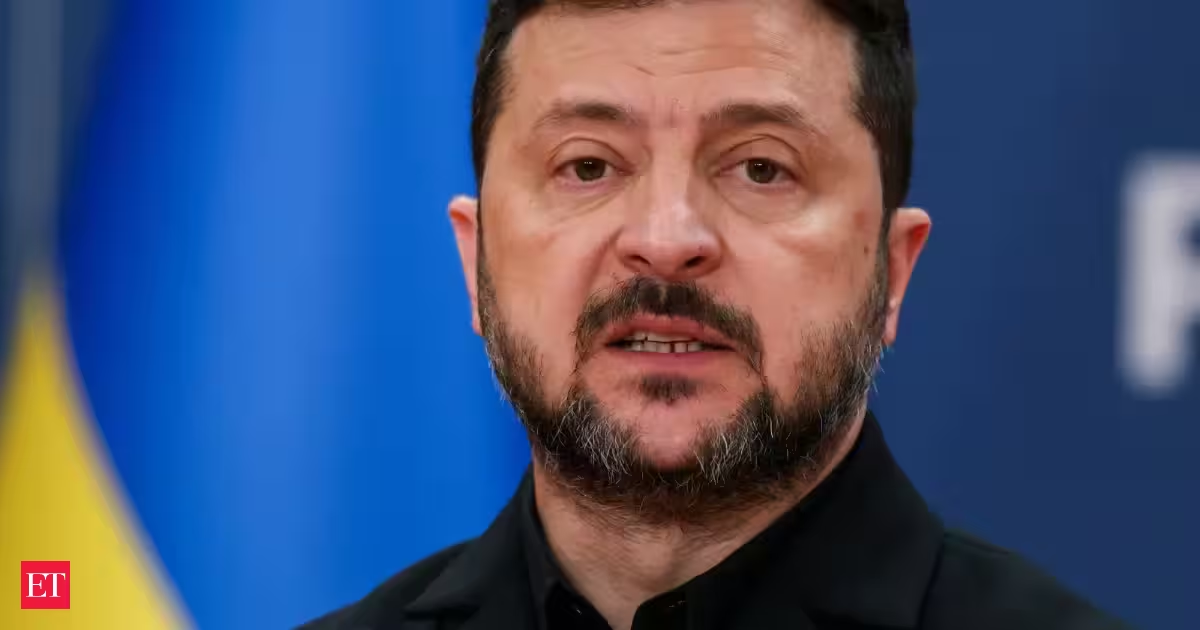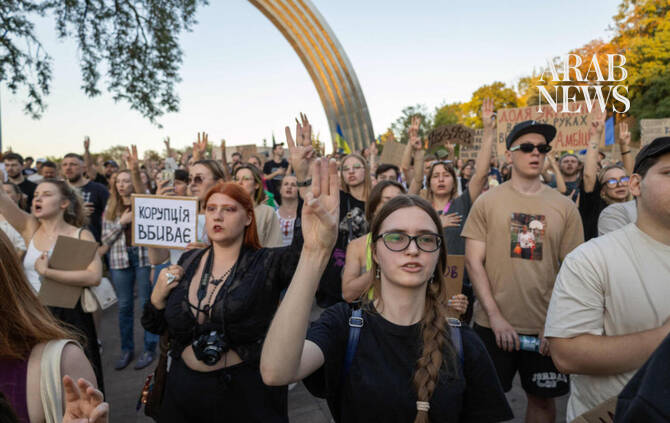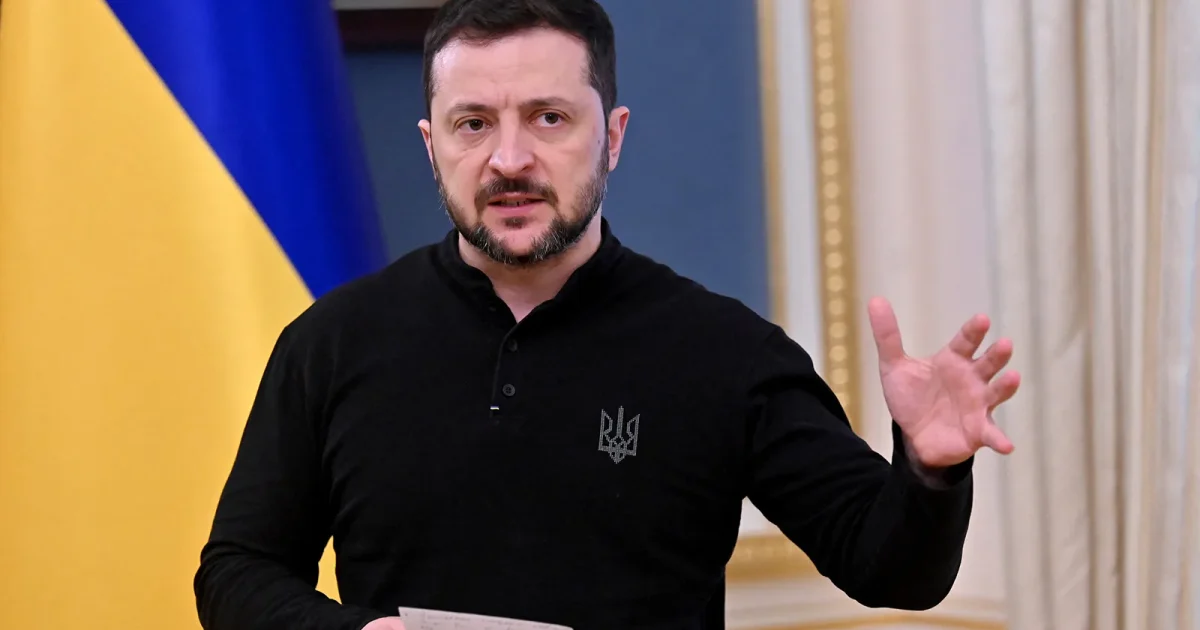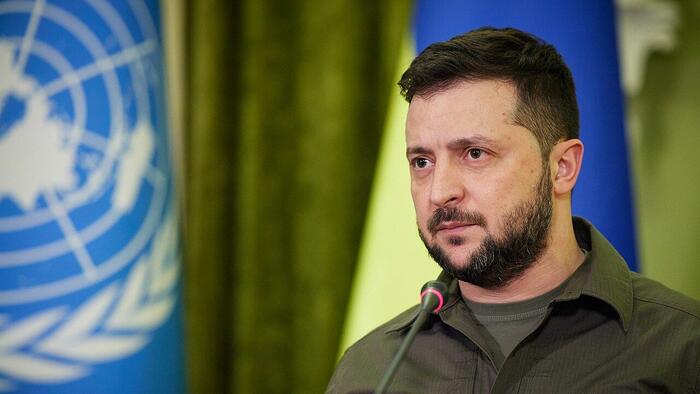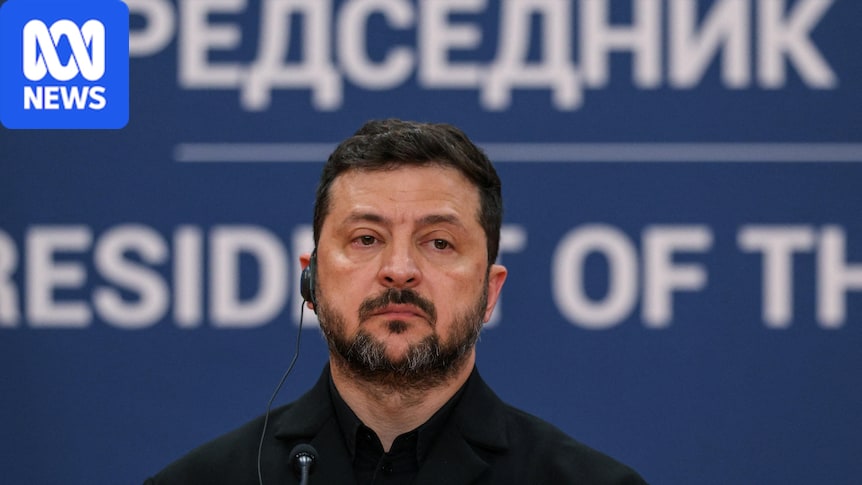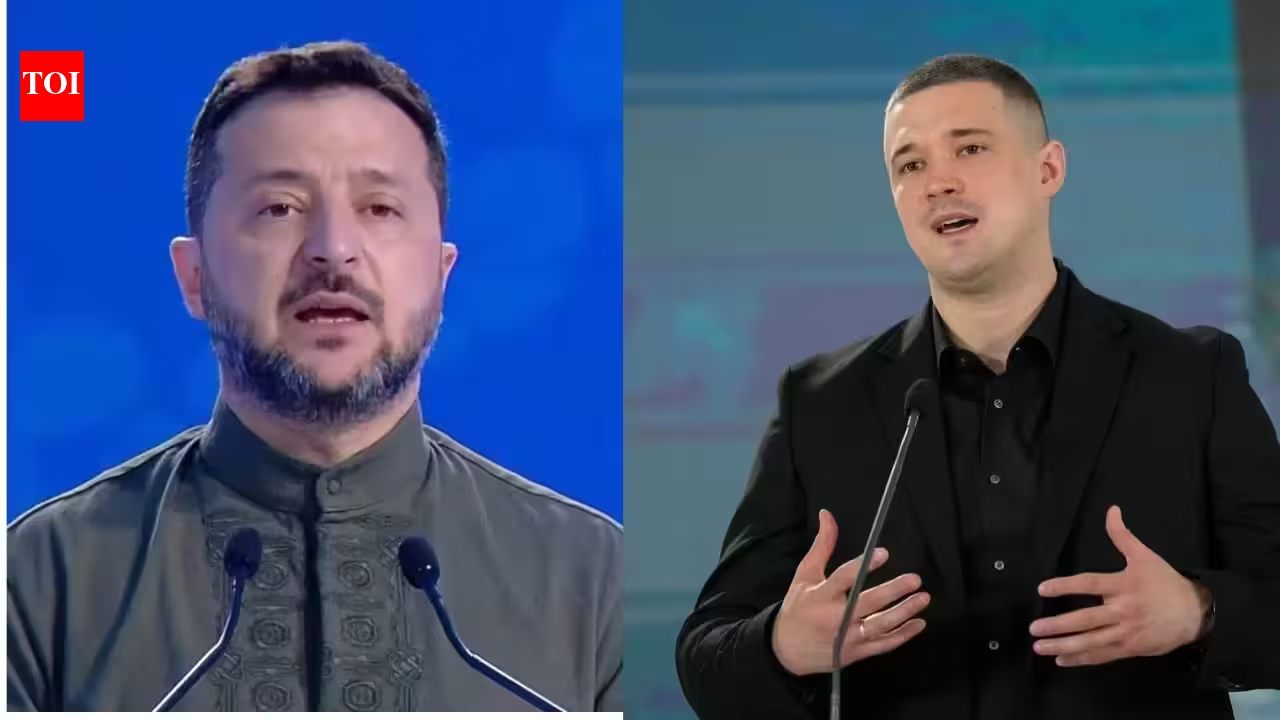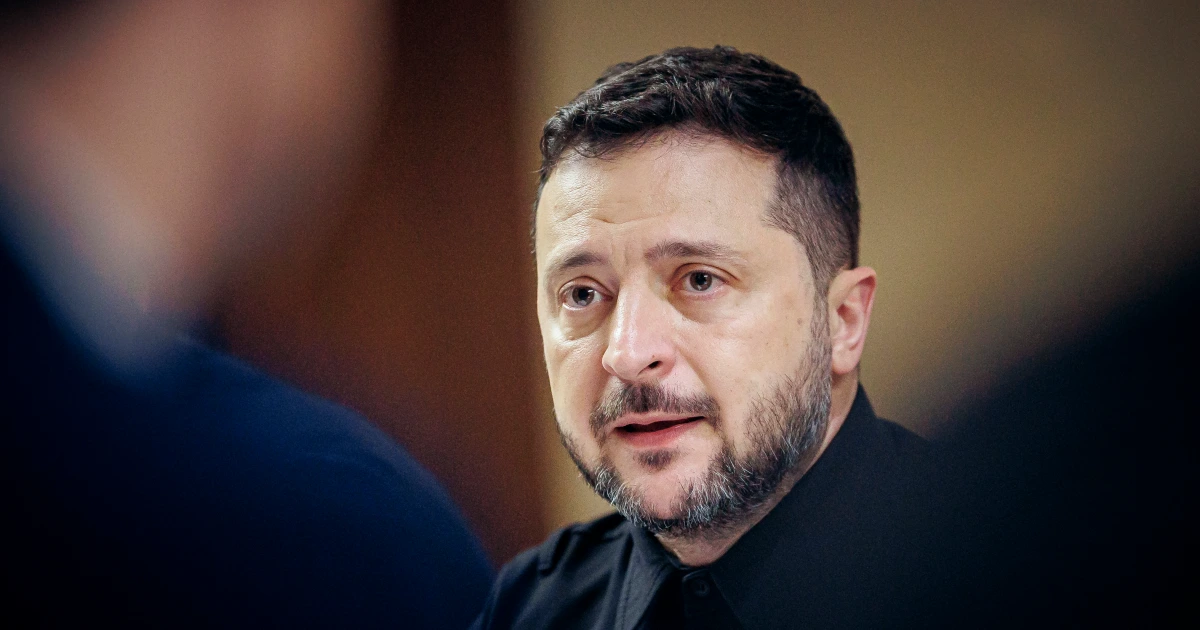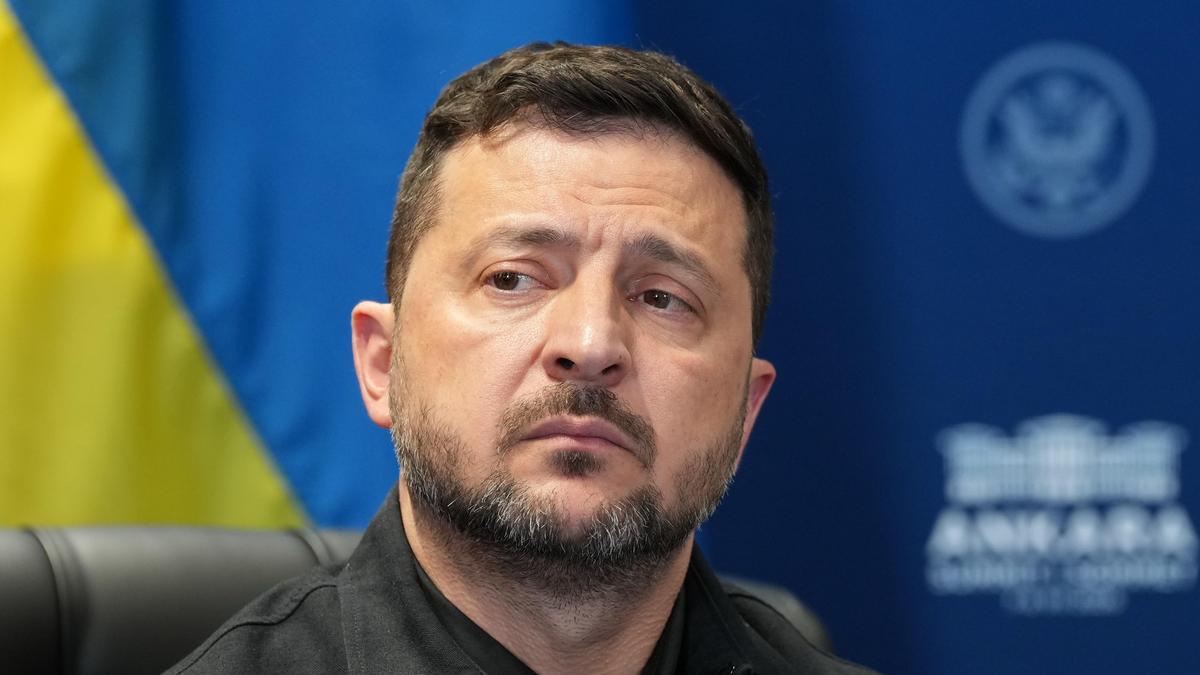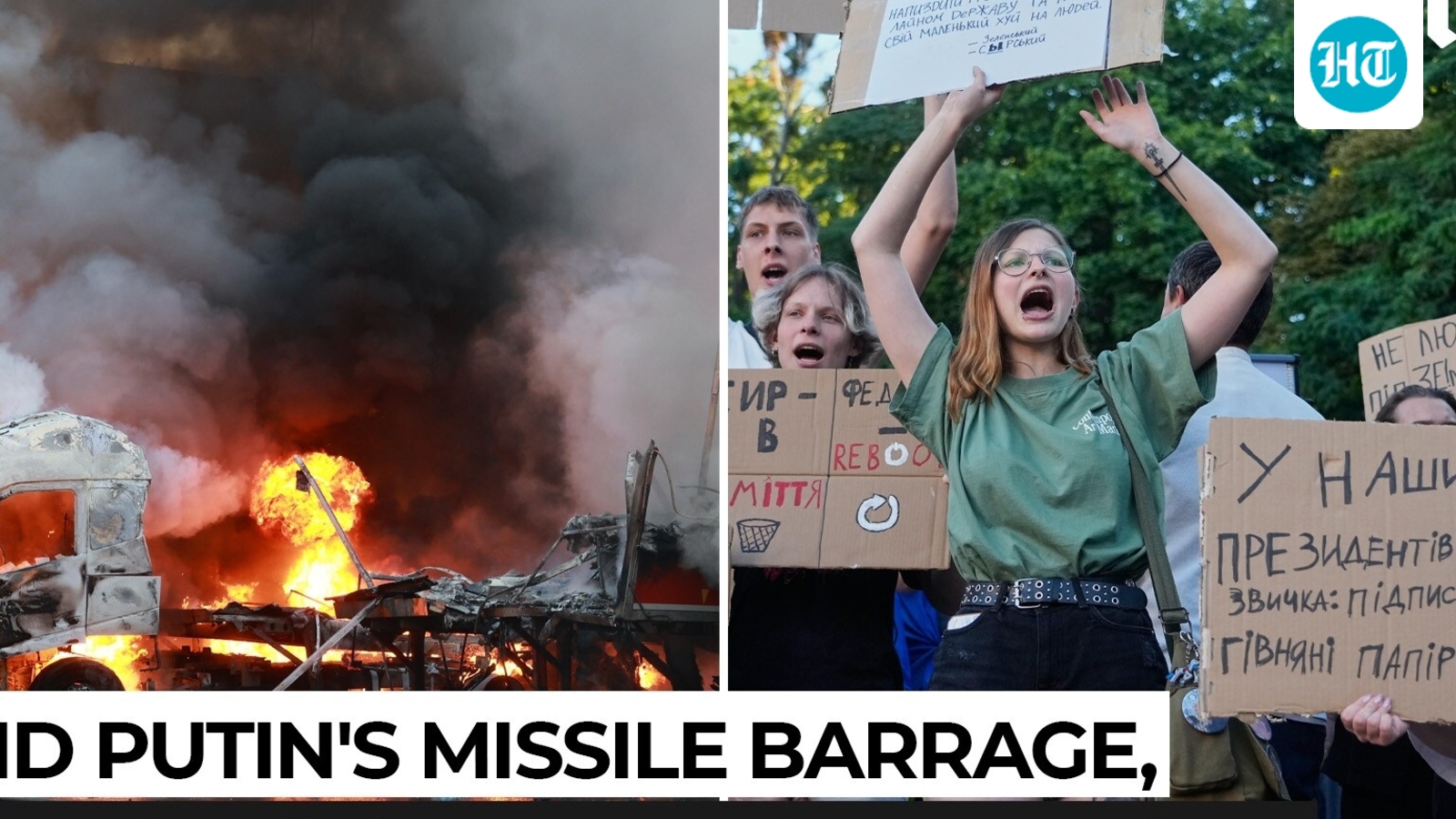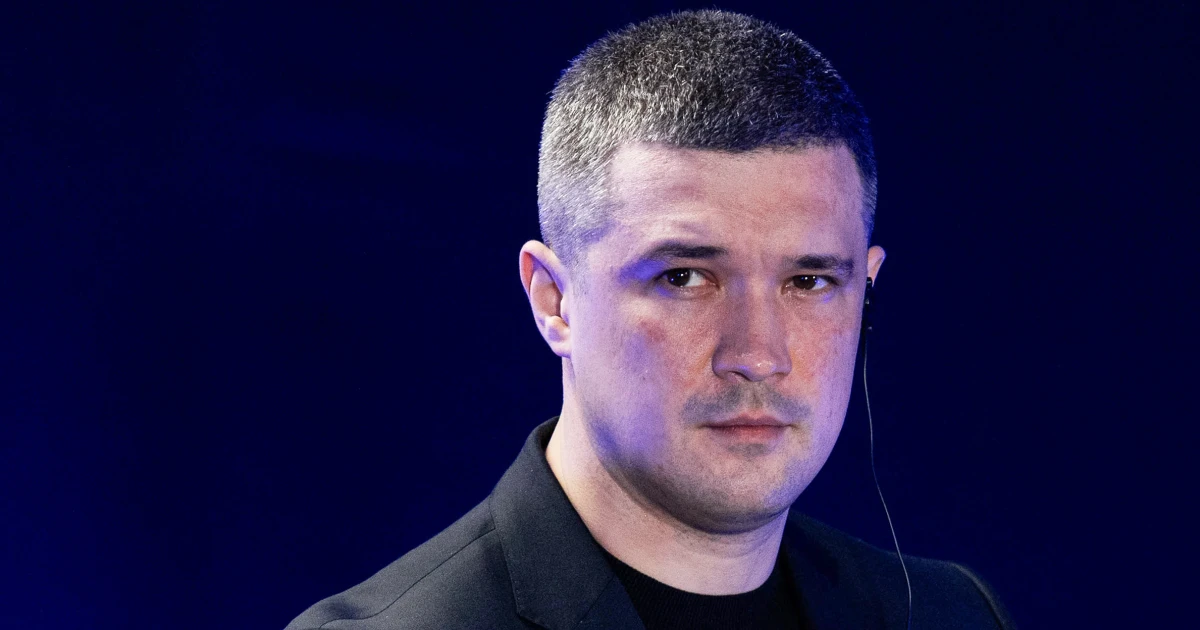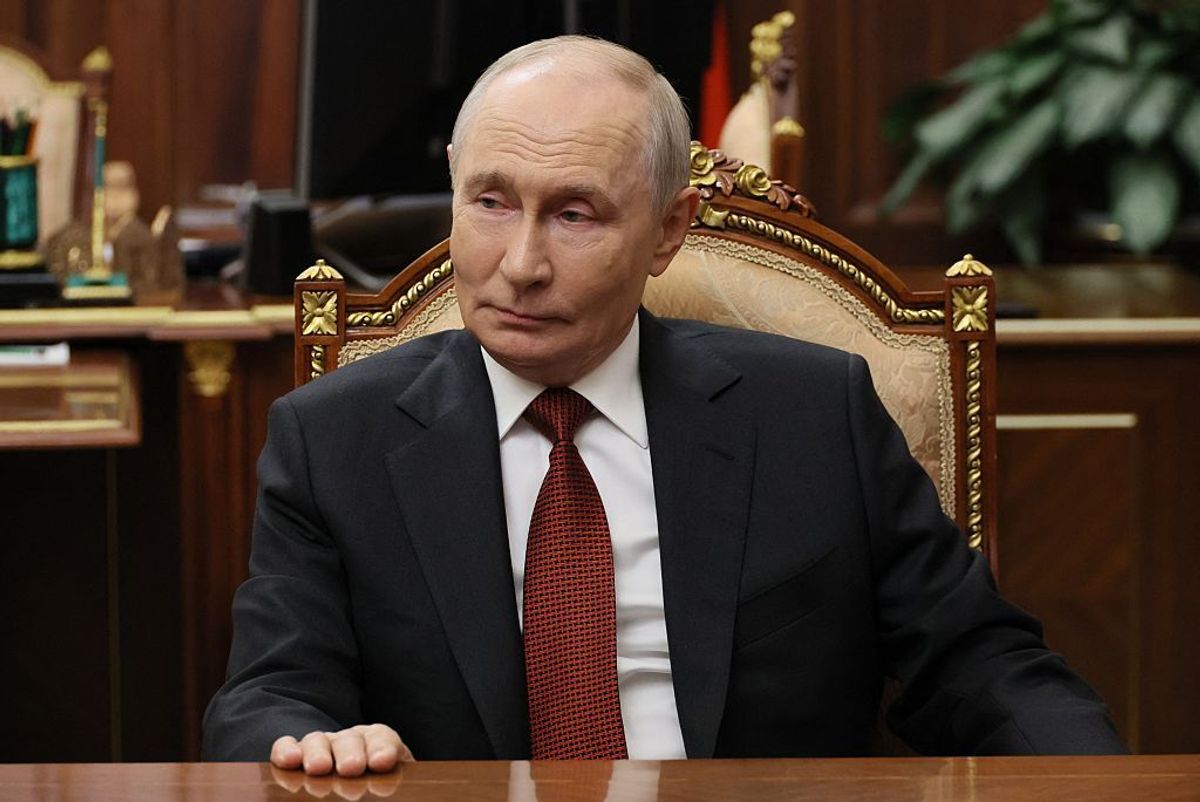
In this pool photograph distributed by the Russian state agency Sputnik, Russian President Vladimir Putin gives an interview to Vesti TV channel in Moscow on Aug. 22, 2026. (Mikhail Metzel / Pool / AFP via Getty Images)President Volodymyr Zelensky's firing of popular Defense Minister Mykhailo Fedorov triggered a wave of street protests and, weeks later, a call from Fedorov himself for wartime elections. It also offered a preview of Russia's playbook for exploiting Ukraine's internal divisions.Fake articles, fabricated claims, and manipulations over the past few weeks have fed into the Kremlin's portrayal of Ukraine as a country hopelessly divided, and its government — illegitimate.And while Ukraine cautiously begins discussing what wartime elections would actually mean, Moscow's propaganda machine has long been at work to undermine any result that the Ukrainian voters choose.Whenever and however the elections are eventually held, Ukraine must brace itself for a Russian disinformation onslaught.An opening for RussiaThe confusion, uncertainty, and division sparked by Zelensky's ousting of Fedorov were a fertile ground for Russian disinformation.Russian propaganda portrayed the subsequent rallies both as a Western-orchestrated farce and as genuine evidence of the supposedly collapsing support for the war effort.Pushing contradictory claims is nothing unusual for Russia's disinformation tactics.The goal is not so much to convince the audiences of a specific claim, but rather to "undermine trust in political actors, institutions, and, ultimately, the democratic process itself," Alyona Hurkivska, a political scientist and disinformation expert at the Kuras Institute of Political and Ethnic Studies of the National Academy of Sciences of Ukraine, told the Kyiv Independent.Online fakes leaned into the surging tensions in Ukraine. A fabricated video bearing the logo of the Ukrainian news agency Unian discussed a non-existent Reuters article about Zelensky's plot to assassinate the fired minister.A screenshot of a fabricated video bearing the logo of the Ukrainian news agency Unian, which discussed a non-existent Reuters article about Zelensky's plot to assassinate the fired minister. (Russian propagandist video; screenshot: The Kyiv Independent)Russian propagandists soon folded the issue of elections into the narrative, with several sources falsely claiming that the vote had already been set for Dec. 1, and that Zelensky's surprise reshuffle is just a tactic to stall the vote.Then, in a bombshell statement on Aug. 18, Fedorov himself said that Ukraine should prepare for wartime elections, breaking one of the country's most sensitive taboos.Notably, the statement itself did not seem to trigger a surge in outright fakes, said Olha Yurkova, a co-founder of StopFake.org, a Ukrainian fact-checking organization.What happened instead was a "rapid amplification and manipulative reframing of election-related narratives in Russian state and pro-Kremlin media," Yurkova told the Kyiv Independent.The uniting theme is one that the Kremlin propaganda machine has long employed against Ukraine — that of an illegitimate government in Kyiv and a divided nation.Divide and conquer"Yes, the Kyiv regime, its quasi-political arena, is quite heterogeneous. We see that many are trying to fish in troubled waters; some are trying to invoke democracy and democratic norms, while others don't even try," Kremlin spokesperson Dmitry Peskov commented on Fedorov's call for elections.The Kremlin spokesperson also reiterated Moscow's long-standing claim that Ukraine's wartime suspension of elections means that Zelensky lacks legitimacy.Kremlin spokesperson Dmitry Peskov speaks on a mobile phone during a Russian-Kazakh forum in Omsk, Russia, on July 25, 2026. (Contributor / Getty Images)While Zelensky's constitutionally designated five-year term ended in May 2024, the country's legislation says that elections under martial law are impossible.But this postponement has nevertheless proved useful to Russia.The Kremlin has argued that without new elections, Zelensky is not a legitimate representative of Ukraine in peace talks, and propagandists have had an easier time depicting the president as a "dictator" or a "puppet of the West."Pro-Kremlin media channels have used the renewed debate to lambast Zelensky, alleging that he is intentionally prolonging the war to keep himself in power.Rybar, a pro-war Russian Telegram channel with over 1.5 million followers, claimed that Fedorov's call for elections "questions the legitimacy of Zelensky himself as head of state" — even though the ex-minister made no such statement about Zelensky's legitimacy."This is a good example of how the disinformation mechanism works," Yurkova said."A real statement is selectively quoted and shifted in meaning until it becomes 'evidence' for a pre-existing narrative."
Russian disinformation tests its Ukraine election playbook
President Volodymyr Zelensky's firing of popular Defense Minister Mykhailo Fedorov triggered a wave of street protests and, weeks later, a call from Fedorov himself for wartime elections. It also offered a preview of Russia's playbook for exploiting Ukraine's internal divisions. Fake articles, fabricated claims, and manipulations over the past few weeks have fed into the Kremlin's portrayal of Ukraine as a country hopelessly divided, and its government — illegitimate. And while Ukraine cautiou
1,283 words~6 min read