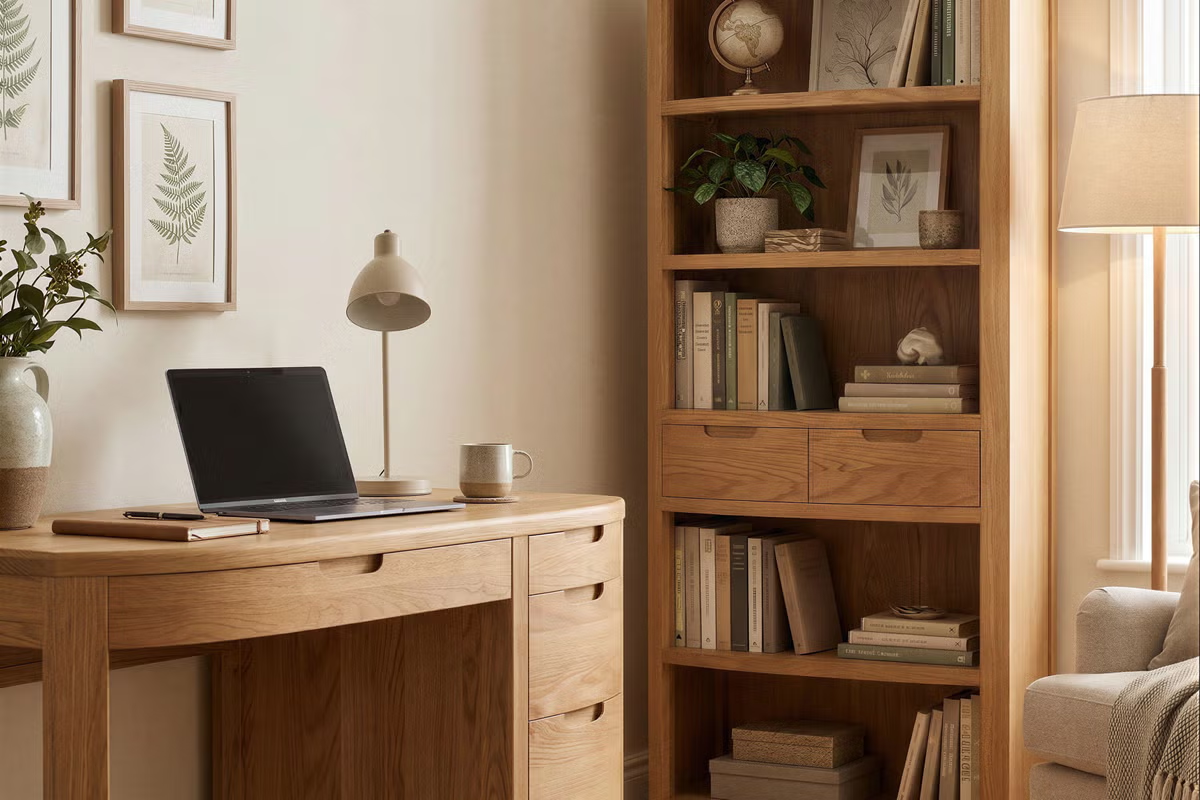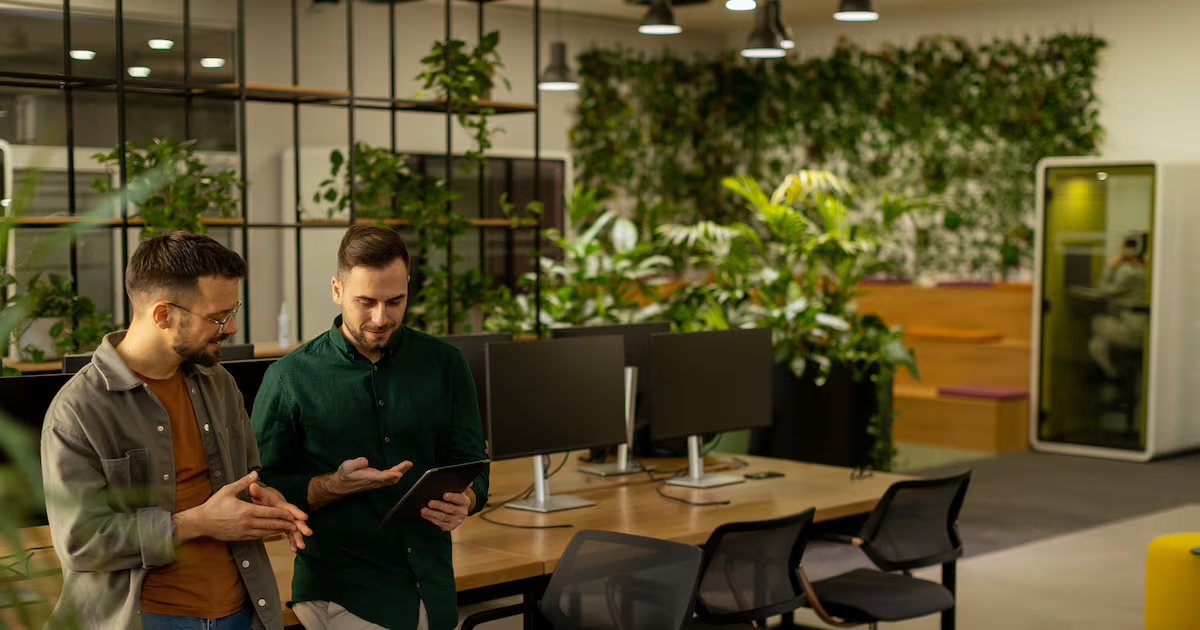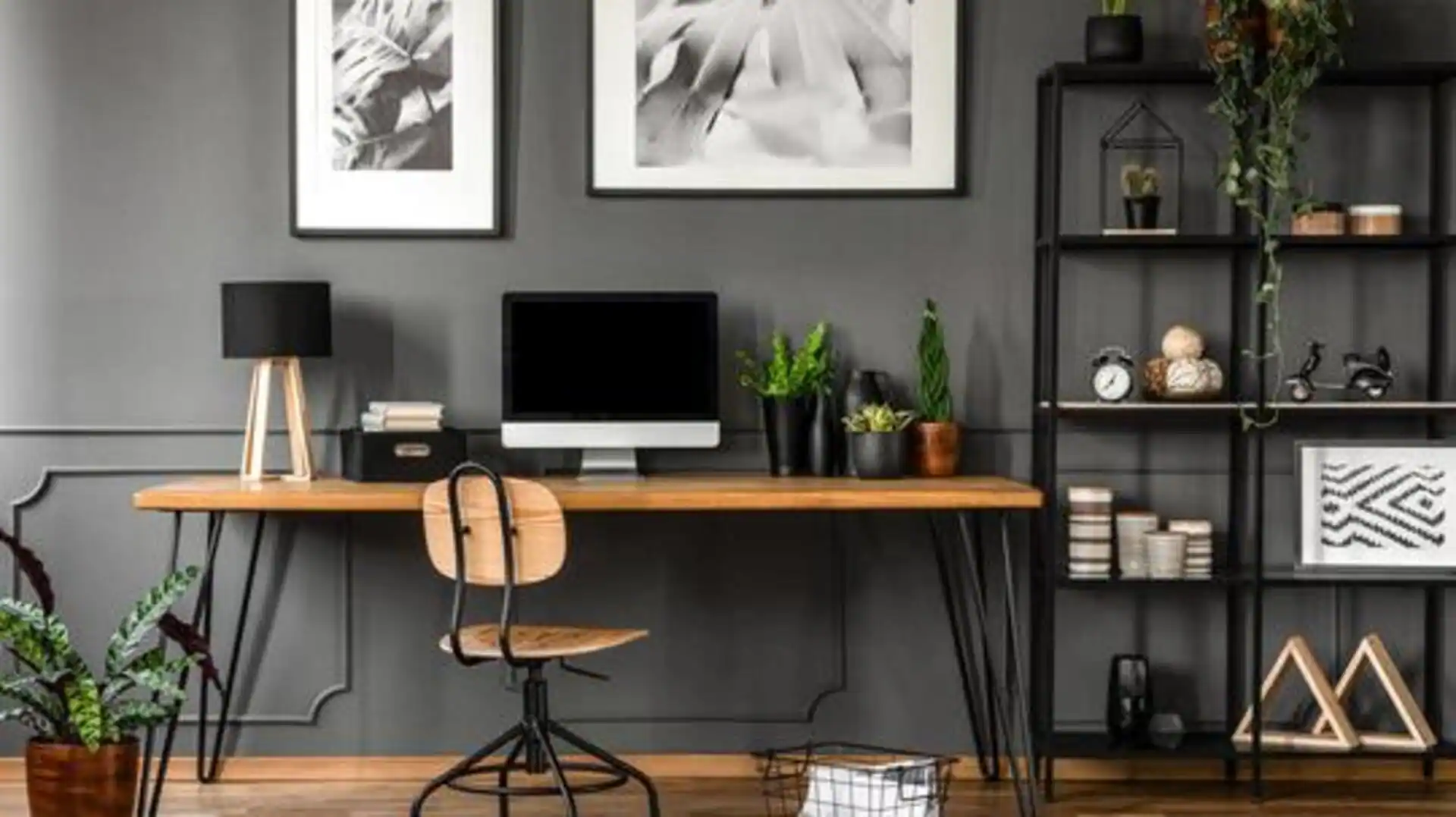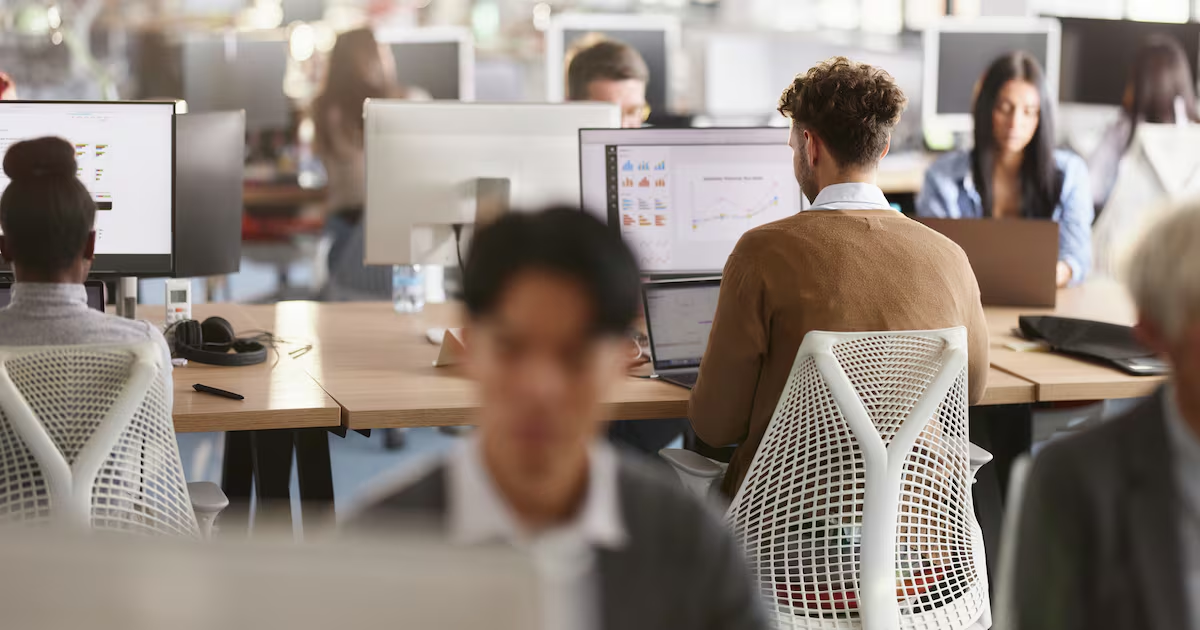
Computer, desk, chair, phone, keyboard, mouse. These are the things we have the most physical contact with during the working day but what about the impact of our overall environment? Looking beyond our computer, we might see a busy open-plan office, large windows, filing cabinets, the conference room, a kitchen and even notice boards or plants.Most humans apparently spend roughly 87–90 per cent of their time indoors, and about a third of that time working. So understanding the brain’s response to physical spaces is critical for designing healthier, more productive offices. An emerging field called neuroarchitecture uses neuroscience to study how workplace design affects the brain. This new field brings together experts in neuroscience, psychology and architecture to examine how built environments influence human behaviour, performance and wellbeing. Think about the many places you have worked. How did you feel going into the office or workplace? Throughout the day? When leaving the office? Many of these feelings are related to the work itself and your relationships with colleagues but the “built environment” may have something to do with it too. The science shows that workplace design significantly impacts employee productivity and wellbeing across physical, psychological and social dimensions.Workplace design includes the layout of the area, the use of colour, lighting, acoustics, ergonomics, indoor environmental quality and the biophilic bits.Including biophilic design elements – plants, daylight – shows the strongest positive impact on productivity (15 per cent) plus a reduction in mental fatigue and improved mood. Introducing plants into offices significantly improves perceived attention, creativity and productivity, while removing them causes significant declines in these same metrics. Lighting is another important wellbeing indicator. In offices where there’s poor quality light, there are more reported eye strain and headache issues. Open-plan designs have been negatively associated with health, satisfaction and productivity in studies. Photograph: iStock Despite their popularity with employers, open-plan offices are shown to reduce focus-based productivity by up to 10 per cent and increase stress due to lack of privacy and increased chatter. When the acoustics are poor and there’s lots of noise, stress increases while concentration levels decline. Ergonomic furniture – such as well-positioned supportive chairs, raised computers and stand-up desks – can reduce physical discomfort and increase productivity. “A systematic review of 31 studies found that open-plan designs were negatively associated with health, satisfaction and productivity, with not a single study measuring productivity finding a positive effect,” says a Comparison of Psychological and Work Outcomes in Open-Plan and Cellular Office Designs by academics Olivia James, P Delfabbro, Daniel L King.“Most studies indicated negative effects on social relationships and interactions. Overall, the findings showed that while open-plan workplace designs may offer financial benefits for management, these appear to be offset by the intangible costs associated with the negative effects on workers.”Some like it hotIn one office where I worked, the women were often seen wearing jumpers, cardigans and even scarves while the men were in short sleeves. Some of the women employees were frequently ill, especially those who sat under the air vents. The women complained about the temperature settings, both privately and publicly, but the male manager didn’t see any problem so it remained an uncomfortable and chilly place for women to work. Little did I know then that thermostat wars are quite the thing. An influential academic paper called Overcooling of Offices Reveals Gender Inequity in Thermal Comfort reports that a large-scale survey of 38,851 office workers across 435 buildings found that women were 1.8 times more likely to be dissatisfied with office temperature, comprising nearly two-thirds of all unhappy respondents. Women are almost twice as likely to be dissatisfied with office temperature as men, according to an influential academic paper. Photograph: iStock Women consistently prefer warmer office temperatures than men, with comfort temperatures of approximately 24 degrees for women versus 23.2–23.5 degrees for males across multiple building types. Who knew?“This gender gap in comfort widens when larger groups of people share one thermostat controlling the same space. Greater dissatisfaction for women occurs despite them being more compromising than men when resolving conflicts. This leads to less favourable outcomes in comfort negotiations,” the study found.Years later, we heard rumours that our office may have suffered from what’s known as “sick building syndrome”, a phrase coined by the World Health Organisation. Some of the potential effects include headaches, fatigue, skin irritation or dryness, itchy eyes, throat irritation, coughing, wheezing or other asthma-like symptoms, congestion or runny nose, nausea or dizziness, brain fog or problems concentrating and even muscle and joint pain.Sick building syndrome symptoms are strongly linked to thermal discomfort – maybe we can call this the Goldilocks thermostat effect? – with the frequency reported varying by the temperature and gender. Adequate ventilation was found to reduce a range of respiratory diseases such as asthma and, more recently, the spread of Covid-19. [ From the archive: Is your office air conditioning sexist?Opens in new window ]The three design features that most significantly impact on worker productivity are: air quality, natural light and temperature, or thermal comfort. Even so, what constitutes a healthy workplace also depends heavily on individual workstyles and user preferences, particularly regarding the balance between privacy and social contact. Introverts naturally prefer quieter spaces for thinking while extroverts crave regular social interaction.The science of workNeuroarchitecture is evolving so don’t be surprised if one day you see your colleagues wearing strange, space-age looking helmets, heart monitors or spitting into tubes. Workplace science is a serious business. When neuroarchitecture researchers and academics examine spaces, they use many different tools. Sometimes it’s portable neuroimaging devices that measure how design features affect brain activity and stress including electroencephalography (EEG) to track electrical activity and functional near-infrared spectroscopy to monitor stress markers in the blood. Heart-rate monitors and saliva tests that look for stress biomarkers can add to the overall picture. Neuroscience – including using eye tracking devices like those used on self-service checkouts for supermarket shoppers – can also measure cognitive interest, mental fatigue and visual attention, offering a more objective assessment of worker comfort than traditional self-reports.Even so, researchers still ask workers what they think impacts on their performance at work, especially now that more people are working from home. According to a study in the Journal of Environmental Psychology, “temperature, noise, workstation furniture and aesthetics were the most significant predictors of performance”. The Impact of Workplace Design on Perceived Work Performance and Wellbeing: Home Versus Office analysed 614 worker survey responses from the United States and Canada. Most perceived that work performance was significantly higher at the office, while comfort and wellbeing were significantly higher at home. “Access to amenities and access to the outdoors were both significant predictors of sense of connectedness and physical activity.”Work and space, people and place have long been an area of fascination not just for architects and work researchers but for philosophers, poets, planners and historians. One of the most seminal and interesting works was published way back in 1958. The Poetics of Space by Gaston Bachelard examined the human relationship with interior spaces and the emotional architecture of a home. He analyses physical space and design to understand how people exist in the world and how their surroundings contribute to their relationship to the universe, the collective and themselves. Corners are optimal for daydreaming, apparently.It’s a broad-ranging work but he attempts to understand what it is to be human and how the physical world can contribute to consciousness and how we navigate the imaginary world. Imagine that?Margaret E Ward is chief executive of Clear Eye, a leadership consultancy. margaret@cleareye.ie
Thermostat wars to open-plan stress: the neuroscience of workplace design
Three design features that most significantly impact on worker productivity are air quality, natural light and temperature
1,258 words~6 min read