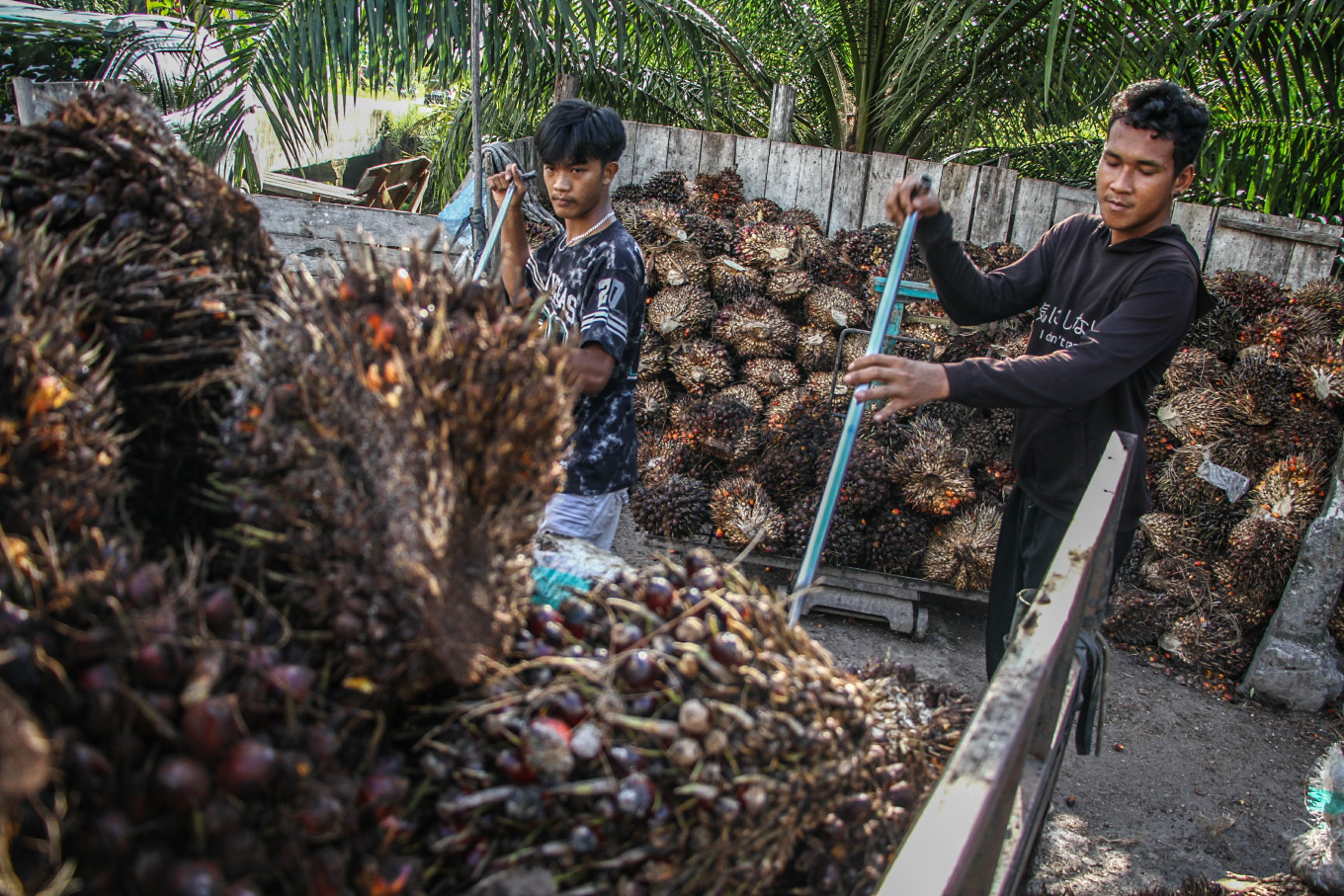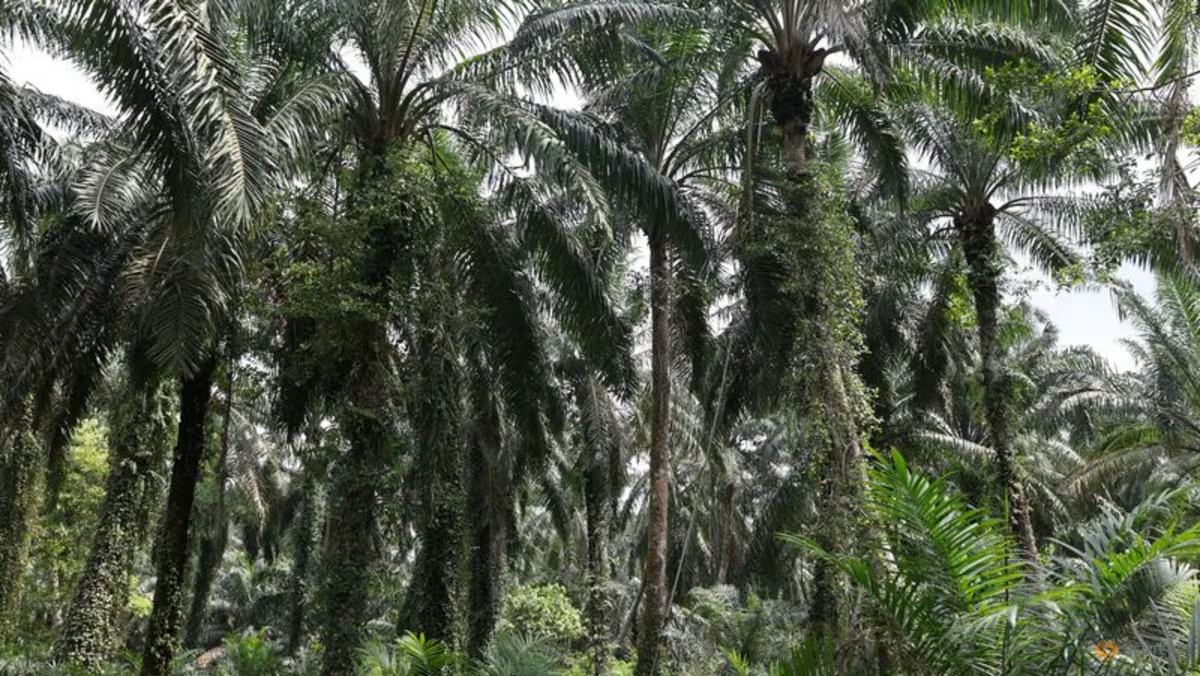
Close up of fresh oil palm fruits and cooking oil, selective focus.
| Photo Credit:
slpu9945
Tightening near-term balance and a narrowing production surplus in the 2026-27 season starting in November will likely lift global palm oil prices, analysts said. “Broadly flat global output, held back by a 3.5 per cent decline in Malaysian production, is set against consumption growth of 2.7 per cent, driven in large part by Indonesia’s accelerating biodiesel programme, which will divert additional palm from the export market into the domestic fuel pool,” said research agency BMI, a unit of Fitch Solutions.Price forecastThere are two near-term supportive factors - robust Indian restocking ahead of the festive season and disruption of shipments (mainly sunflower and soybean oils) in the Black Sea - for this. In addition, intensifying El Nino weather conditions introduce a risk to production and add another layer of price support, said the research agency. This will continue into the first quarter of 2027. “We are raising our 2026 average price forecast for front-month Bursa Malaysia-listed crude palm oil (CPO) futures to (Malaysian ringgit) MYR4,453/tonne, up from the MYR4,300 forecast we had held since October 2025,” it said. The forecast is some 4 per cent higher than the 2025 average of MYR4,279/tonne. BMI expects prices to average MYR4,550/tonne this quarter and MYR4,582 in the next. US-based Expert Market Research, quoting industry analysts, said palm oil prices are expected to remain firm, with prices likely to top MYR6,000 ($1,500) a tonne.Current pricesCurrently, palm oil November futures are quoted at MYR4,884 a tonne on the Malaysia Derivatives Exchange. Spot prices are MYR 4,946. Palm oil has gained nearly 20 per cent this year.“Indonesia’s planned mandatory B50 biodiesel blending from July 1 is expected to boost domestic consumption of palm oil feedstock and potentially reduce export availability from the world’s largest producer, while the possible emergence of El Nino weather conditions later in the year adds further upside risk to production in key growing regions,” it said.From July 1, Indonesia has implemented a biodiesel programme with a 50 per cent palm oil blend. It is the first country to come out with such a biofuel blend. Rising food demandDutch multinational financial services firm Rabobank said global palm oil prices will remain elevated between 2026 and 2031, driven by rising food demand, expanding biodiesel use across South-East Asia, and limited replanting of oil palm in Indonesia and Malaysia.“Although global palm oil production is expected to increase over this period, total output is still likely to fall short of demand,” it said. Biodiesel mandates – particularly Indonesia’s B50, Malaysia’s B15 and Thailand’s push for B20 in addition to its B7 mandate – will further constrain export availability, tightening global supply, it said.BMI expects global palm oil production to reach 81.4 million tonnes (mt) in the 2026-27 season, a marginal decline of 20,000 tonnes from 2025-26. “At the same time, we forecast global consumption to rise by 2.7 per cent year-on-year to 79.9 mt. As demand growth outpaces broadly flat supply, we anticipate the global production surplus will narrow from the 3.6mt recorded in 2025-26,” it said.Sourcing challengesExpert Market Research said the main upside risk is a combination of the B50 mandate reducing export availability and El Nino weather disruptions curbing production simultaneously, which could push prices toward or beyond the MYR 6,000 level. “The main downside risk is a smoother-than-expected seasonal production peak in Indonesia and Malaysia combined with continued competitive pressure from soybean and rapeseed oil, which would cap the pace of any recovery,” it said.Rabobank said palm oil buyers may face ongoing sourcing challenges, while producers are likely to benefit from sustained price strength. “Buyers will need to adopt strategic procurement approaches to manage risk and secure long‑term supply. At the same time, government policies and geopolitical developments will likely remain key sources of price volatility,” it said.Production forecastsBMI has cut its Malaysian palm oil production forecast. It expects the output to ease to 19.5 mt in 2026/27, down 3.5 per cent year-on-year.Indonesian production is projected to reach 47.5 mt in the next season, up 1.7 per cent from the current season. It could offset the impact on global production stemming from a downturn in Malaysian output, said the research agency.Lending support to the uptrend will be an over 5 per cent likely rise in Indian demand to 9.1 mt this season, a 5.2 per cent increase from a year ago. Published on August 27, 2026