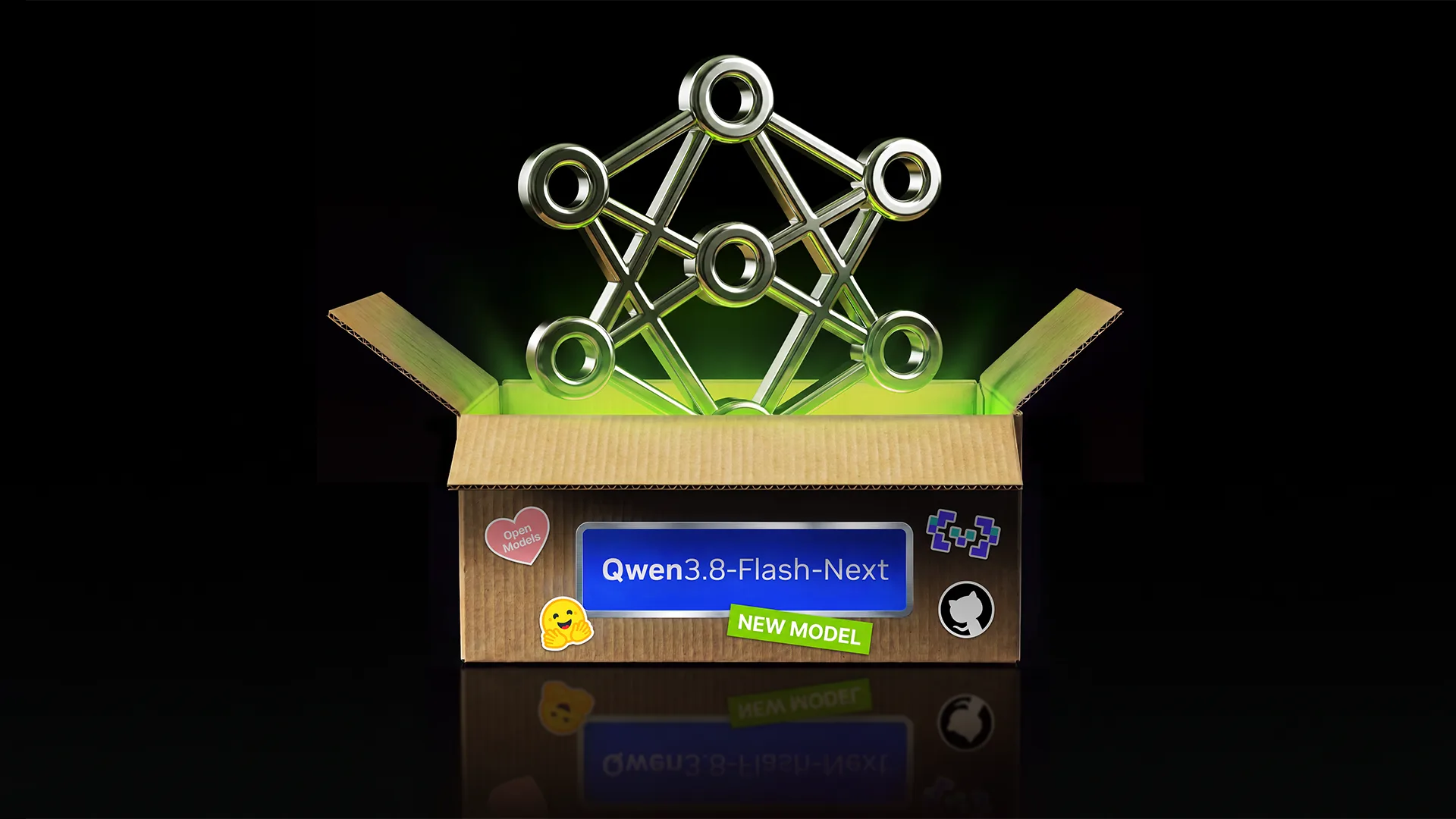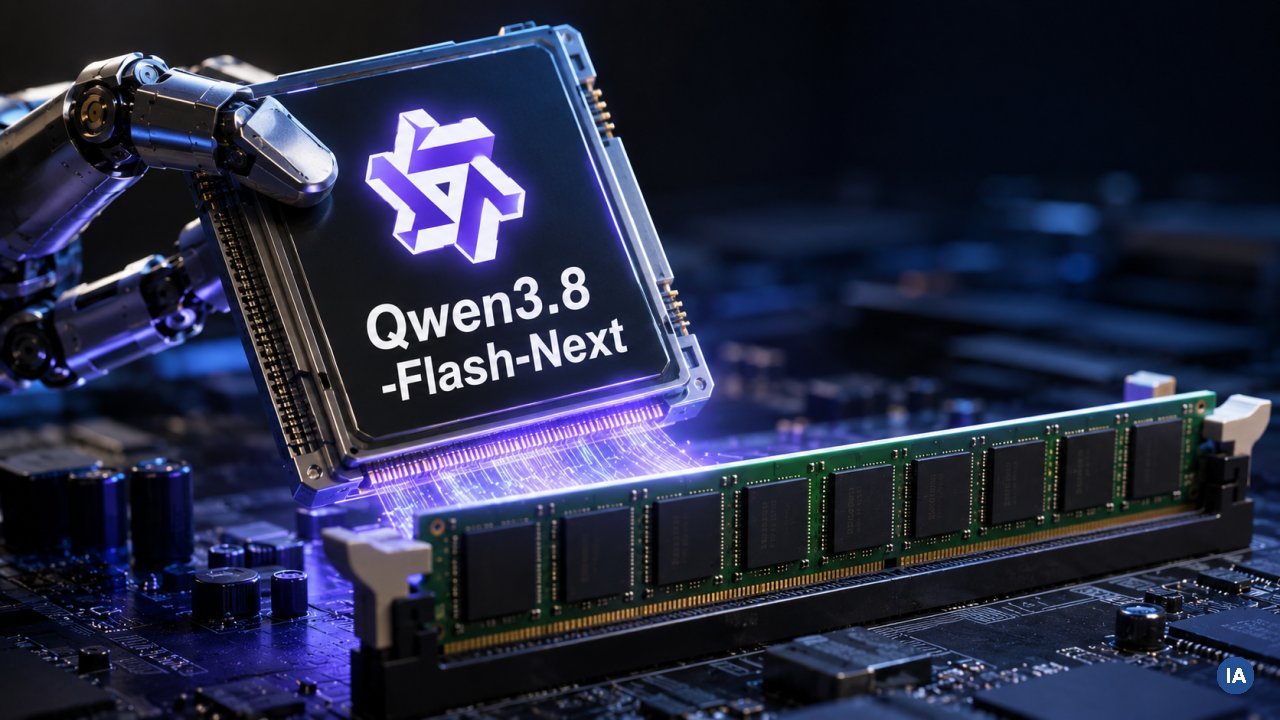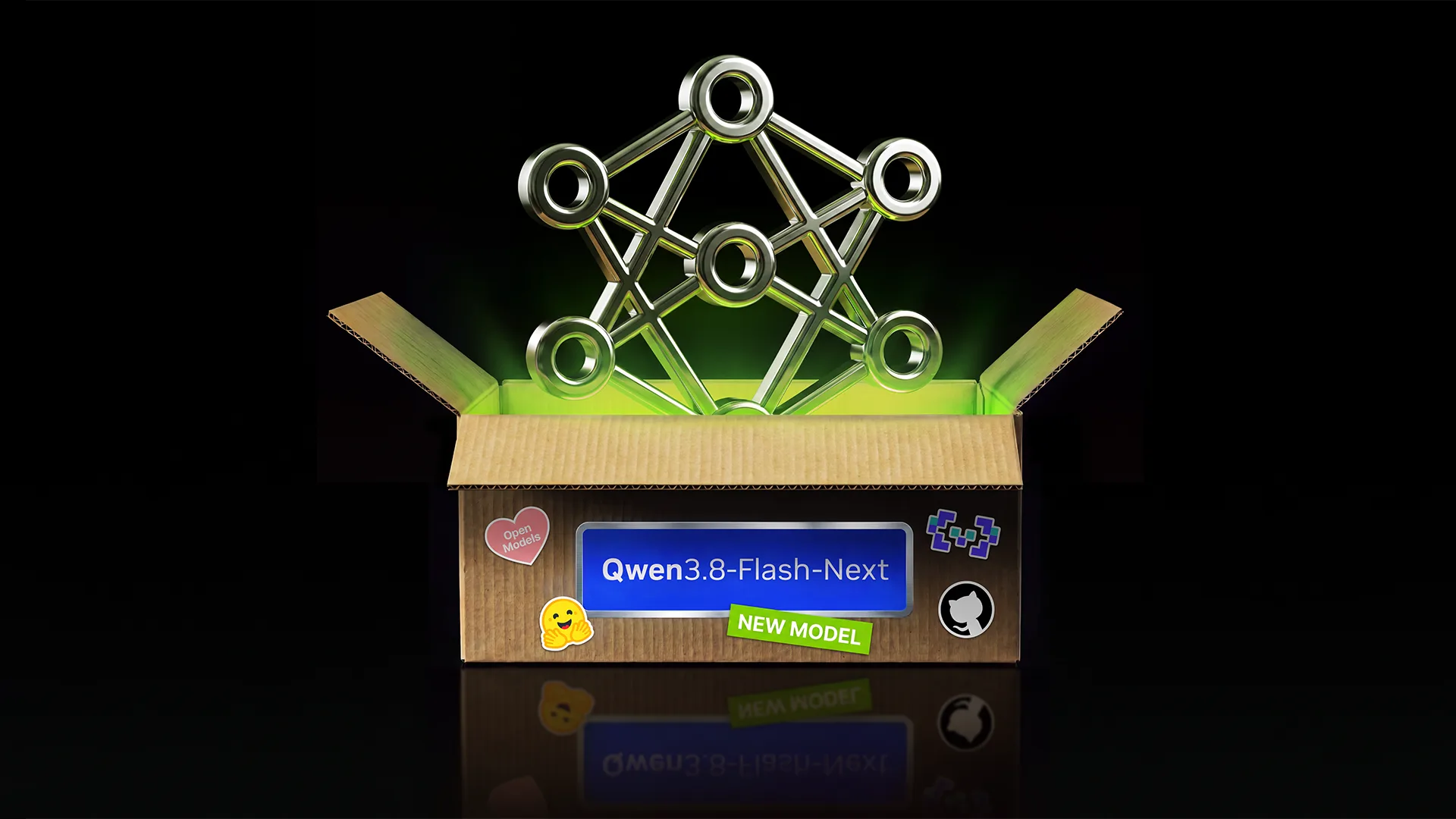
Alibaba released the model weights for Qwen3.8-Flash-Next as a preview of the upcoming Qwen4 architecture for developers to experiment with and evaluate. It’s a multimodal mixture-of-experts (MoE) model with a 125B-parameter main model supplemented by an additional 51B N-gram embeddings, with 6B parameters activated per token. It has a native 262,144-token context window, extensible to 1M tokens with YaRN.
NVIDIA provides best-effort Day 0 functional support through SGLang, vLLM, and NVIDIA TensorRT LLM, validation across NVIDIA GB300 NVL72 for inference, and post-training recipes from NVIDIA NeMo AutoModel and NVIDIA NeMo RL.
Architectural innovations for long-context inference
Qwen3.8-Flash-Next is designed for high-volume, context-intensive applications such as agentic coding, document processing, and tool-driven workflows. As context grows, attention compute and KV cache memory become bottlenecks. The model addresses both with a hybrid architecture combining Gated DeltaNet (GDN) and Qwen Sparse Attention (QSA). Three out of every four layers use GDN to continuously compress historical context into a fixed-size recurrent state, eliminating KV cache growth as sequences lengthen. The remaining layer uses QSA for precise retrieval across the full context.