Every cloud architecture diagram you've ever drawn for a "modernize the legacy system" project probably has the same box in it: a sync job. Something that watches an old file share and copies what it finds into S3, so the new, shiny, event-driven, AI-powered part of the stack has something to read.
That box is a lie we tell ourselves. It says "the data is now in the cloud." What it actually means is: there are now two copies of the data, and something has to keep them the same.
This post is about a pattern that gets rid of that box entirely — zero-copy, multi-protocol storage — and a proof of concept I built on Amazon FSx for NetApp ONTAP (FSxN) that uses it to turn an insurance claims intake pipeline into something that reacts in seconds instead of on the next scheduled sweep.
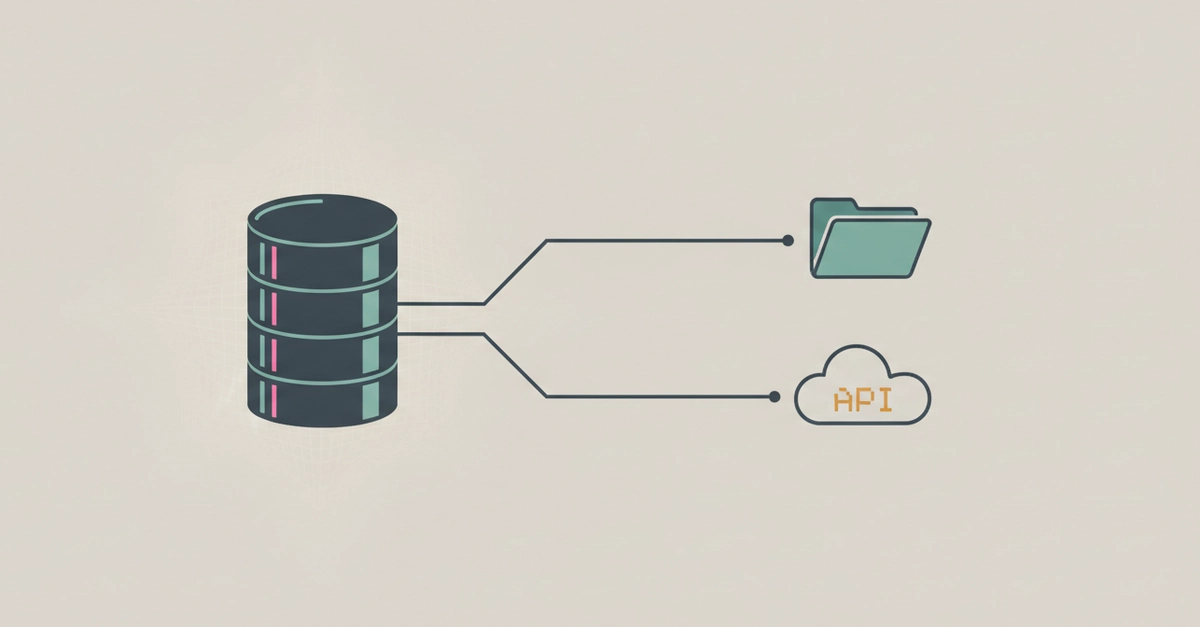
The concept: one copy, reached two ways
"Multi-protocol" storage means the same underlying data can be accessed through more than one protocol — SMB, NFS, and the S3 API, in this case — without translation, replication, or a gateway service in between. "Zero-copy" means that when a second consumer reads the data through a different protocol, it isn't reading a copy. It's reading the same bytes, through a different door.