The Marine Corps released its new strategy on Wednesday for the future of its ground units and infantry troops that will heavily incorporate artificial intelligence, but emphasizes that humans will remain in the chain of decision-making. It’s unclear if adversaries will do the same or if it will disadvantage the United States.The first of five pillars that make up the new Marines’ Ground Combat Element 2040 is called “human-centered warfighting,” and it notes that, “While enabled by advanced technology, this force is fundamentally human-centric, grounded in the willpower, discipline, and adaptability of the individual marine. Technology enhances human judgment but never replaces it.”Artificial intelligence allows the military to synthesize intelligence gathered from countless sources in a fraction of the time it would take a human to. Eliminating the human element altogether would further reduce decision-making time, and while the U.S. does not intend to pursue such opportunities, an adversary could gain an advantage over the U.S. if it does not have the same restrictions.
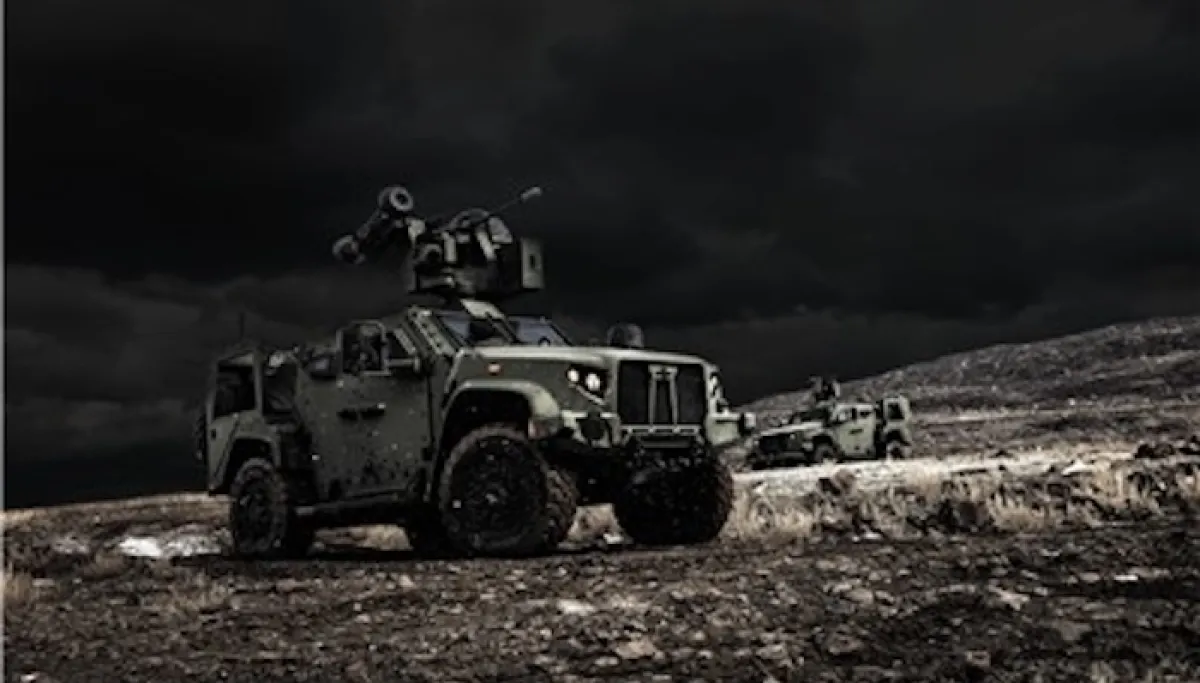
“It’s a landscape that’s defined by rapid technological change and the reemergence, importantly, of peer-level adversaries like China and Russia,” Lieutenant General Jay M. Bargeron, Deputy Commandant for Plans, Policies, and Operations, told reporters on Wednesday. “The future battlefield, and really today’s battlefield, is already characterized by ubiquitous sensing, artificial intelligence, drones, a contested electromagnetic spectrum, and long-range precision fires at echelon, just to name a few. And so, in the future, it’ll be critical that we continue to do as we do today to field a tough, capable, adaptive force that can quickly gain decision advantage and out-cycle our adversaries.”Oshkosh Defense Joint Light Tactical Vehicle (JLTV) (Photo: Business Wire)