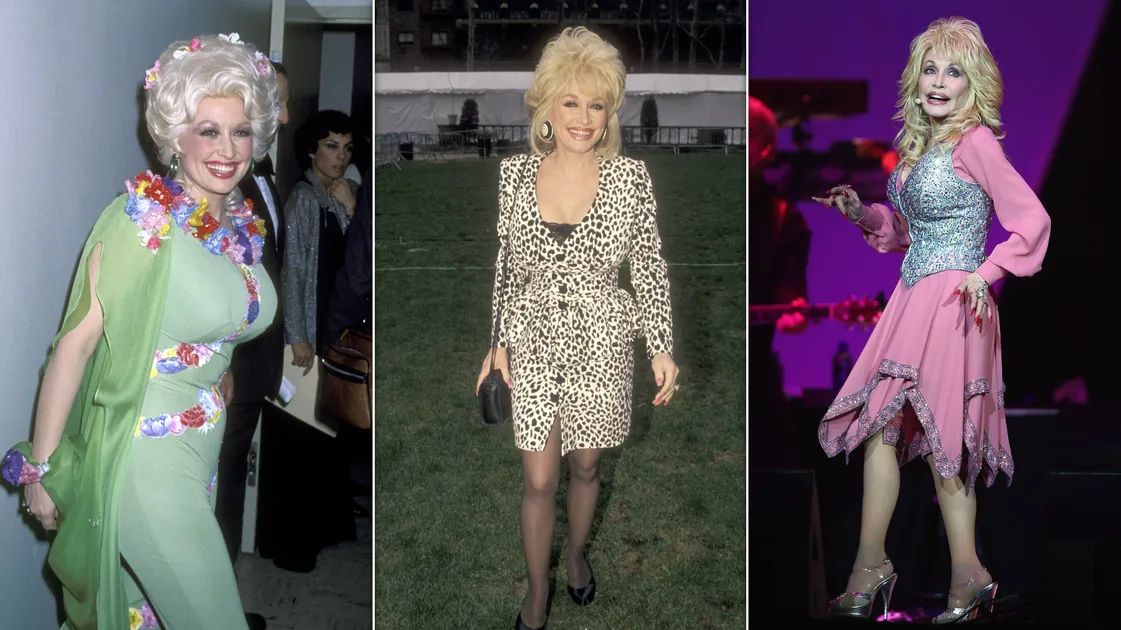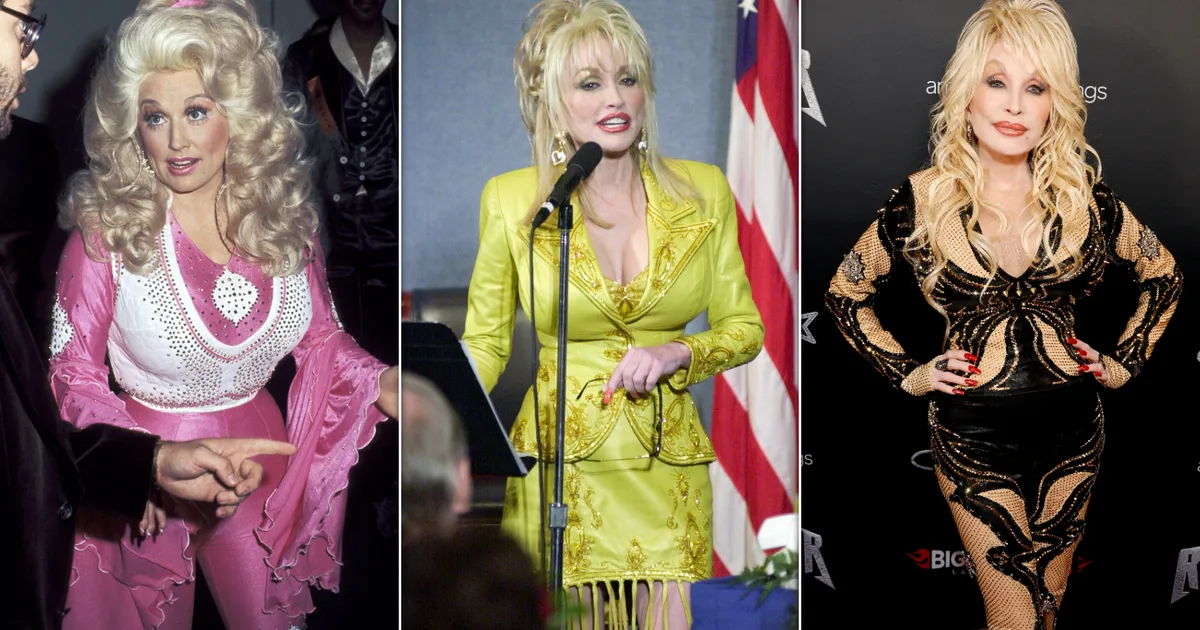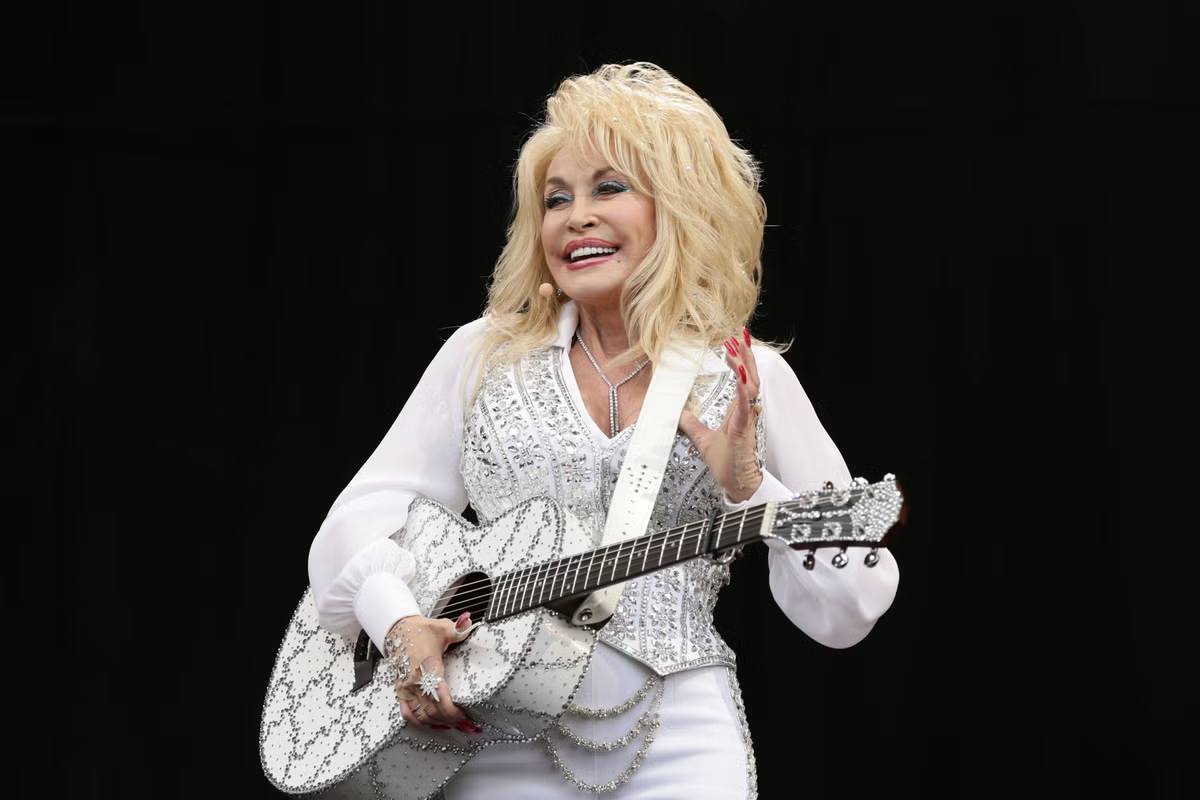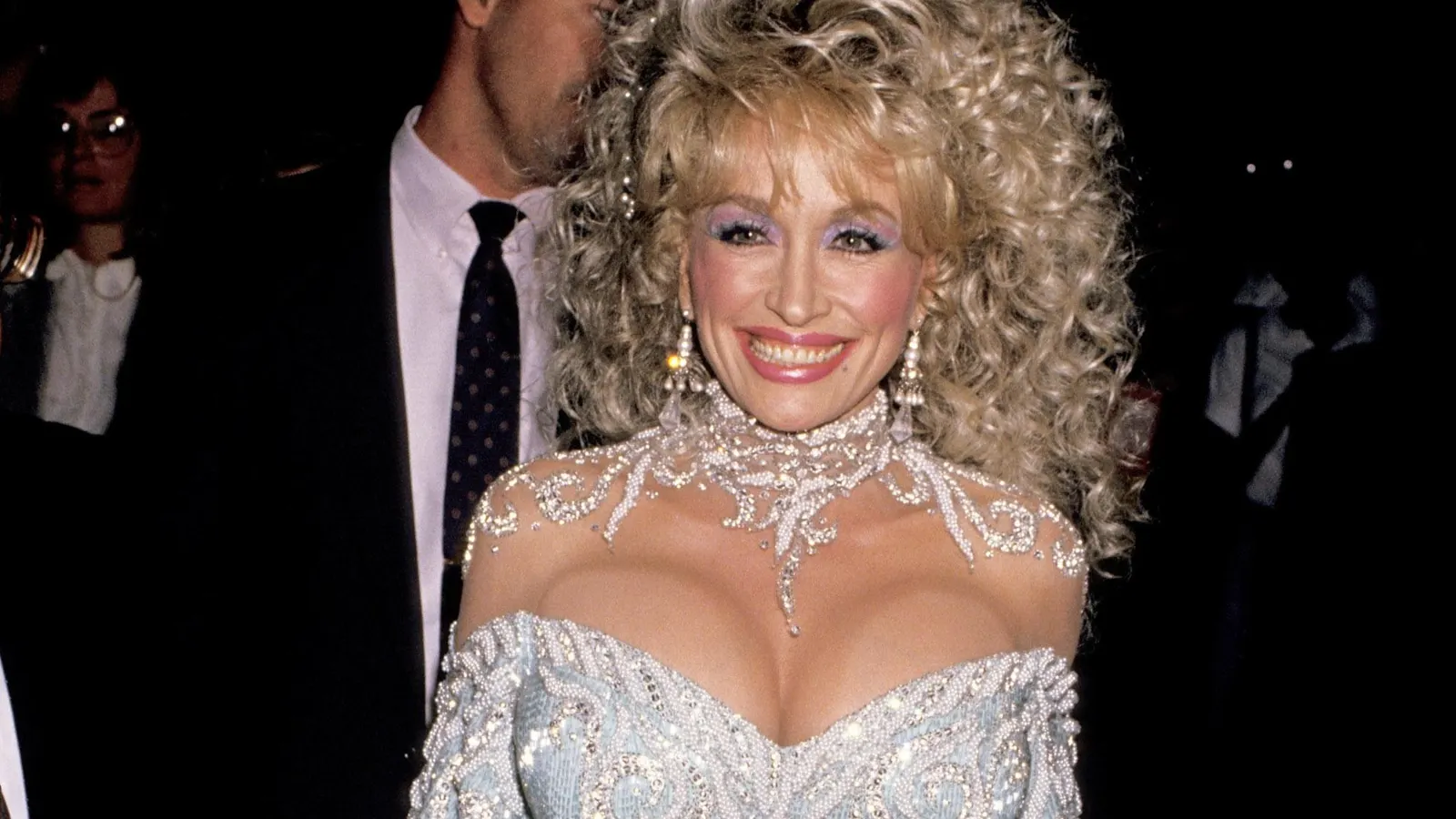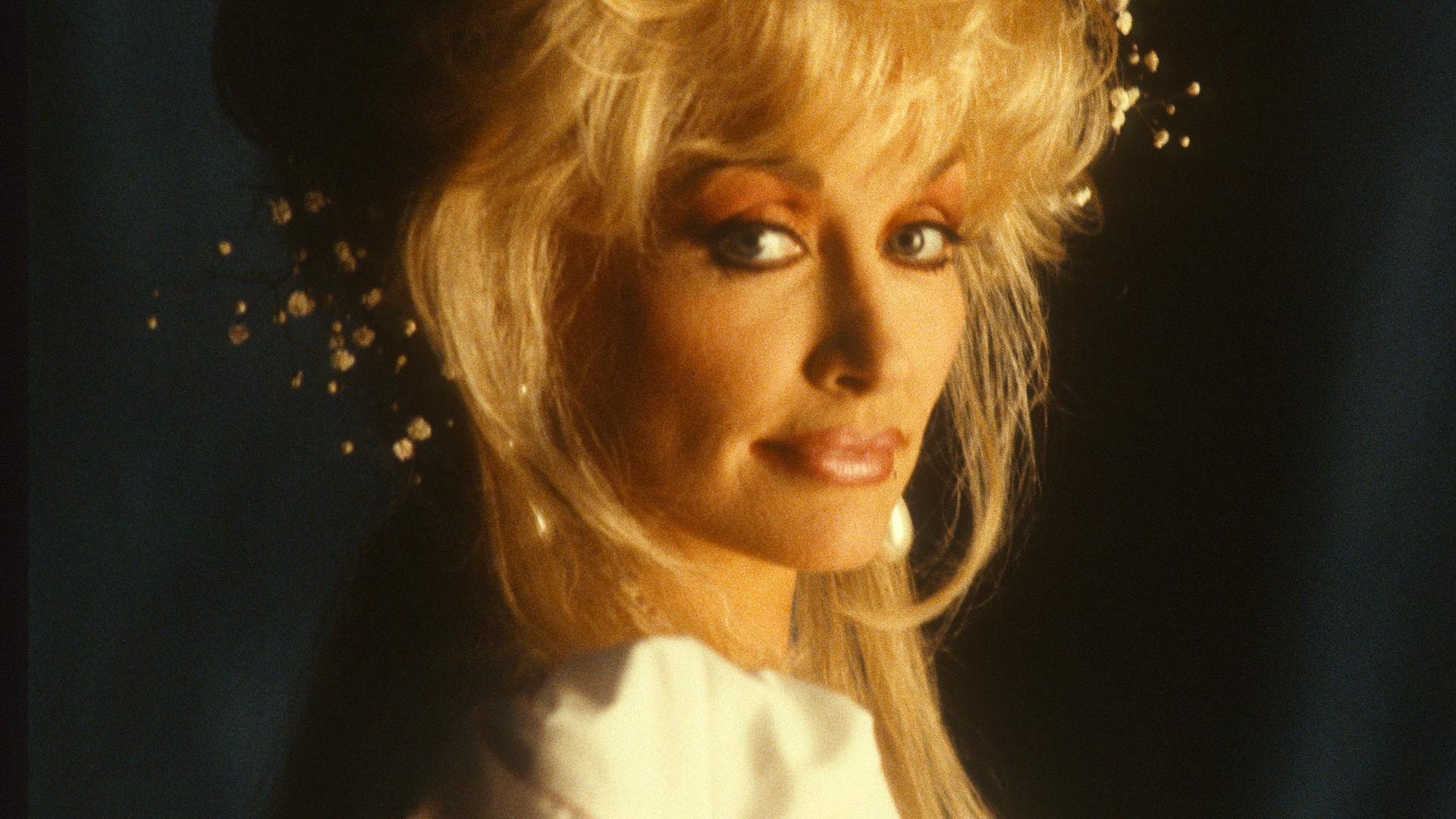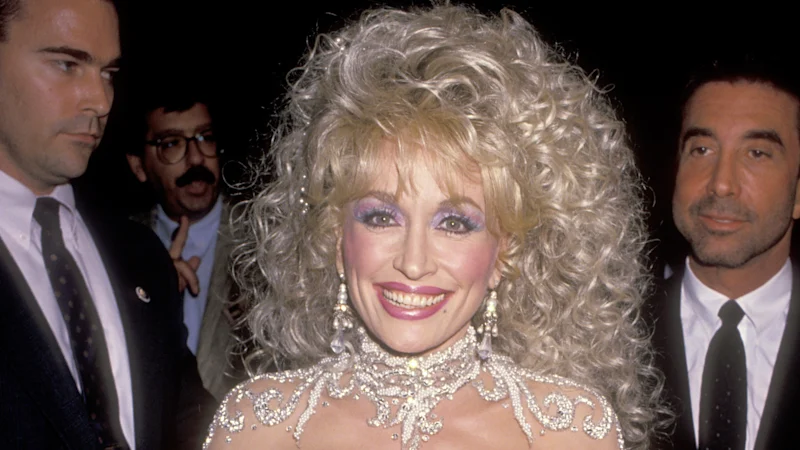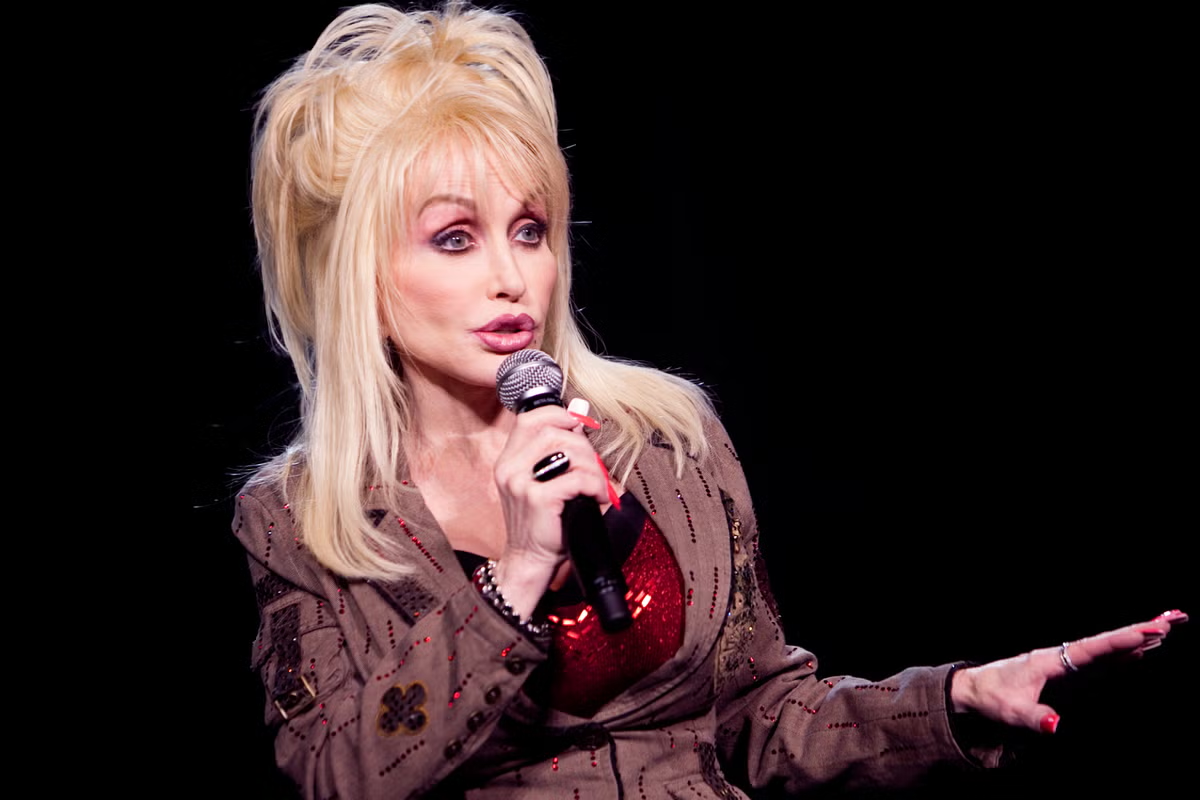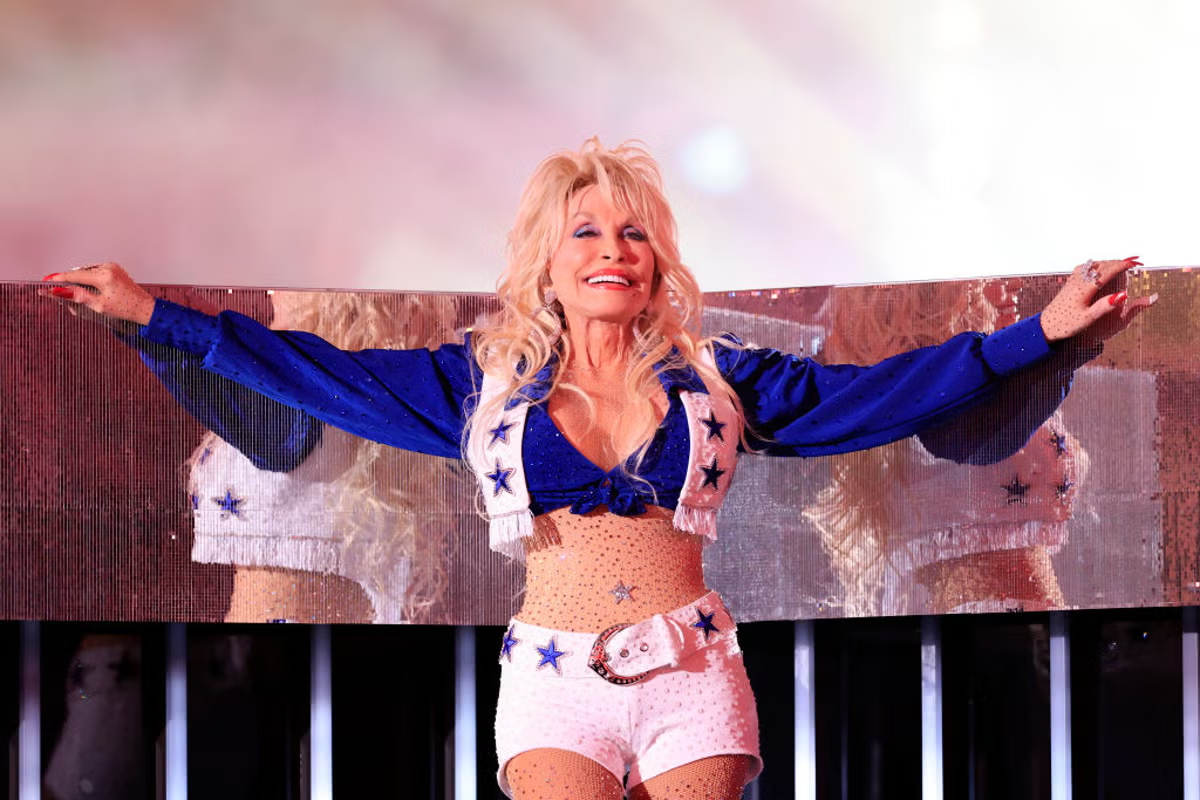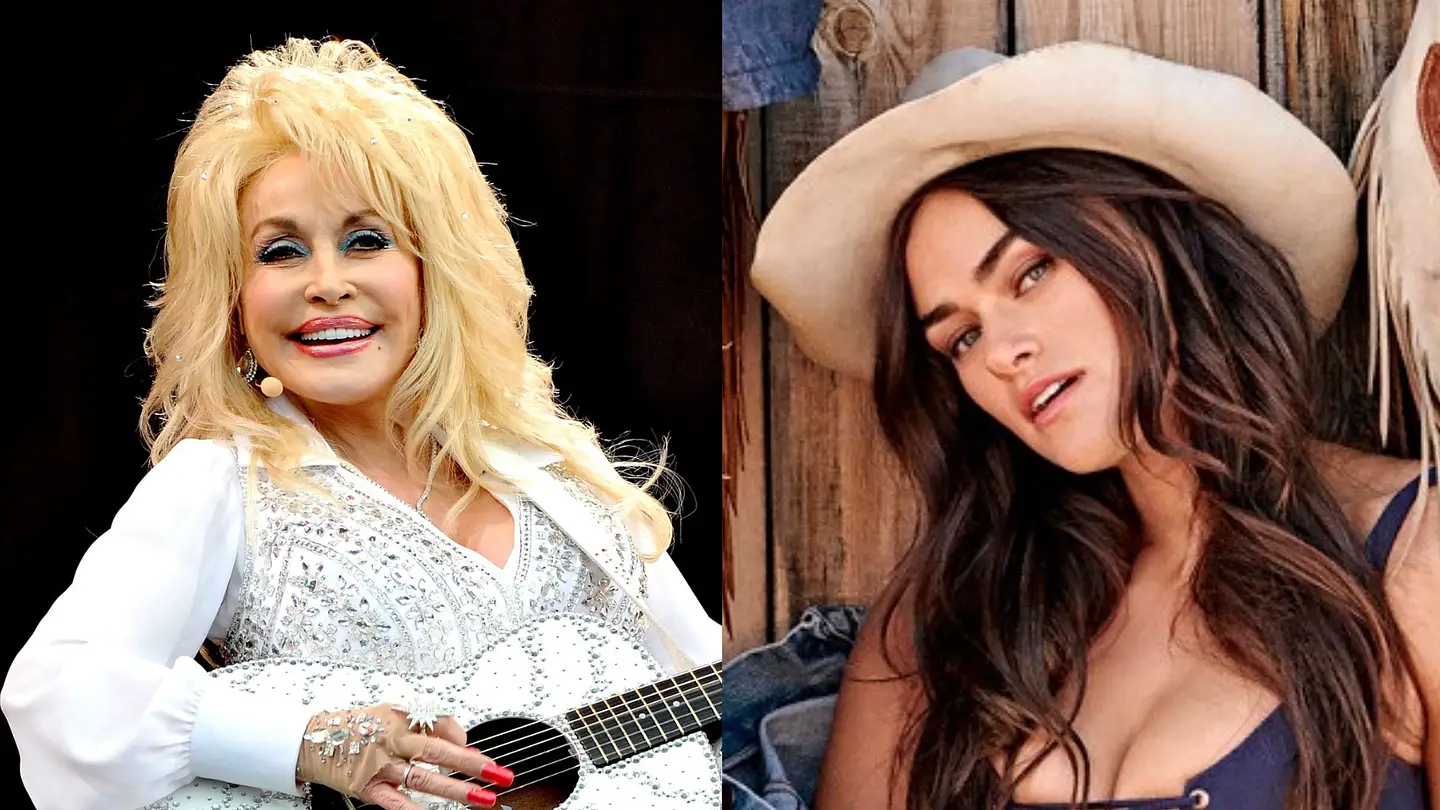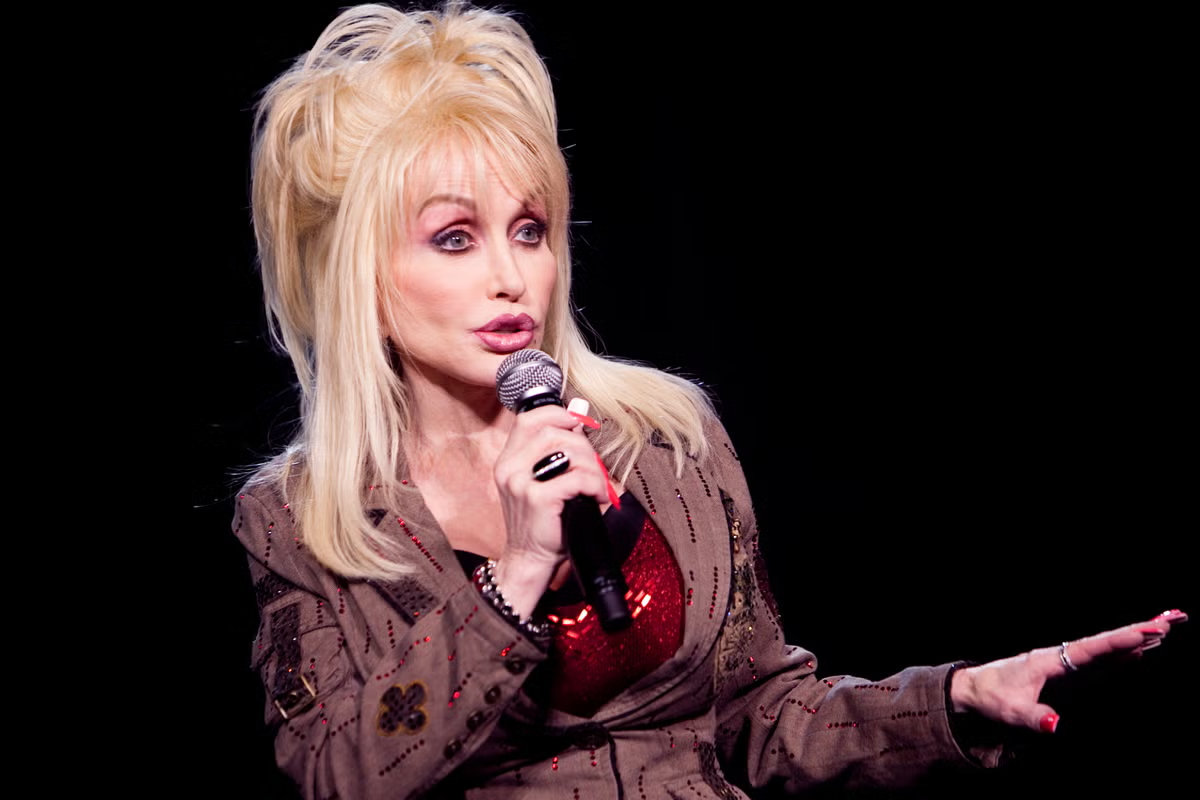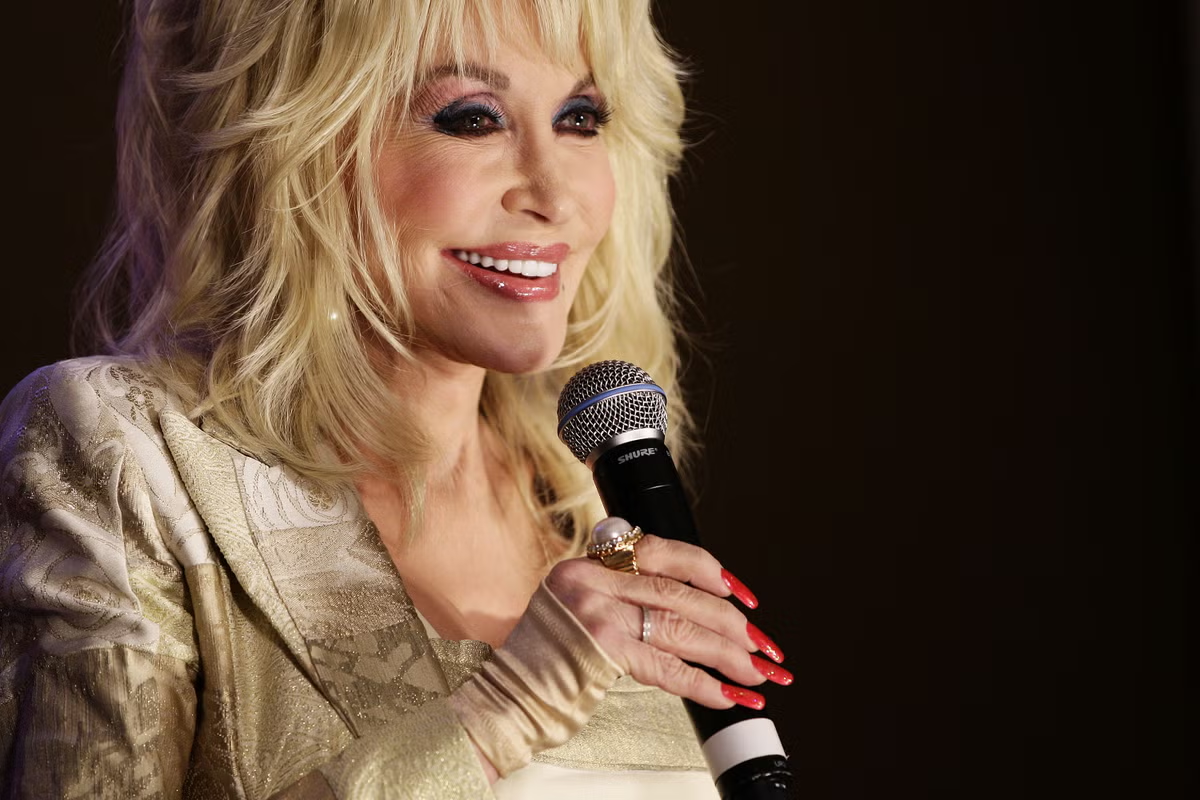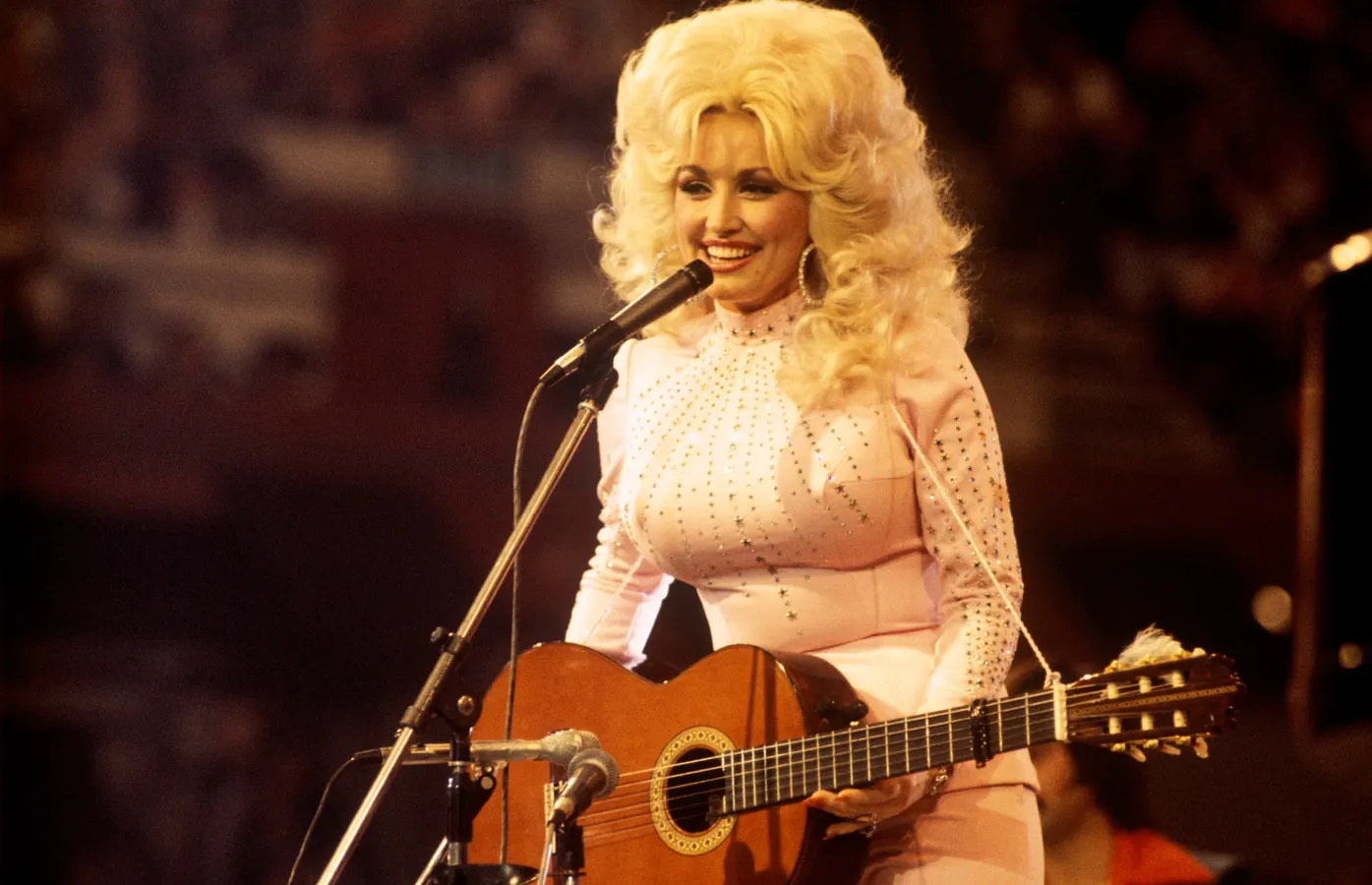
Dolly Parton performing in the UK in 1976. Photo by David Redfern/RedfernsRedfernsIt did not matter what the era was, nor the venue, Dolly Parton was always only her fabulous self. From the time that she was trying to start her career in Nashville, this was when Parton was 15, what she wore on stage was always at the forefront of the future Queen of Country Music’s mind. Whatever the lady wore on stage was what she knew to be her best, it was important to her that the image projected was that of the star Parton always knew she was. Dolly Parton in New York City in 1981. Photo by Robin Platzer/Images/Getty ImagesGetty ImagesIt was in 1965, Parton was about 19, she signed her first professional contract, with Monument Records, the label immediately wanted to capitalize on her image. But the direction they wanted to go didn’t really fit with how Parton saw herself. She’d idolized women from the Grand Ole Opry like Jean Shepard and Pearl Butler, who openly embraced the Western aesthetic and used it to add sparkle and personality to their performances. The label wanted Parton to straighten her hair, go more youthquake, aim for a more 1960s mid pop princess sort-of vibe. The singer was taken to all the best whomevers, this writer pictures it like the makeover montage in Funny Face (1967); she did not like it. Dolly Parton poses for a portrait in 1965 in Nashville, Tennessee. Photo by Michael Ochs Archives/Getty ImagesgettyThe look wasn’t her, Parton said being styled that way made her feel “naked”, or like she was a little girl playing dress up in someone else’s clothes. The music was what mattered to Dolly Parton, that and connecting with the people who came to see her perform. She simply could not understand why she needed to be packaged. This would be a theme throughout the entirety of the lady’s career, and her insistence and fortitude on this matter were but one of the reasons she was destined for greatness.Not that dressing the way she wanted was a simple thing- from the very start of Parton’s pushback against labels there was crit. Dolly wasn’t going to be taken seriously. She was too flamboyant, her chest too prominent, her hair too tall. But Parton knew who she was and how she wanted to be seen. There were knock-down, drag out fights with executives, the sort of meetings anyone would hate on principle, and it very literally came down to threats and ultimatums. Dolly Parton knew who she was and how she felt her best and she never had a single question about how she wanted to be seen on stage. Self-deprecating, often calling herself “cheap”, the superstar built a career around insisting on her not ever being herself. Lily Tomlin, Dolly Parton, and Jane Fonda onstage during the 69th Annual Primetime Emmy Awards in Los Angeles in 2017. Photo by Lester Cohen/WireImageWireImageOver the years her style evolved, but it was always in the same direction. From the one-room cabin she was reared in, up in the Great Smoky Mountains of Tennessee, to the sold out arena shows the artist crushed for decades, the authenticity of her persona elevated every performance while simultaneously offering her millions of fans the sort of grace which cannot be overstated.From the beehives and bedazzled ensembles of the 1970s through the most over-the-top outfits worn to promote the endeavors Parton enthusiastically engaged in over the many decades which made up her career. The 1980s brought some of her biggest film hits, 9-5 (1980), The Best Little Whorehouse in Texas (1982) and Steel Magnolias (1989) adding to the phenomenal musical career and life-long dedication to charitable causes. Dolly Parton poses for a portrait session in 1978 in Los Angeles. Photo by Harry Langdon/Getty ImagesGetty ImagesIt has been estimated that, over the course of her career, Dolly Parton donated at least $600 million to causes she believed in. This included disaster relief, innovations in healthcare (including covering the costs of COVID-19 vaccine research) when it was pediatric) and education, especially in and around her home state of Tennessee. The country music superstar often told people that, if anything, she felt “addicted to the feeling of giving.”In 2022 Parton was the recipient of the Carnegie Mellon Medal for Philanthropy, in recognition of her many, many years of consistently working to give back to everyday people. Dolly Parton in costume in a scene from the film 'Nine To Five', 1980. Photo by 20th Century-Fox/Getty ImagesGetty ImagesBeginning in 1988, with the creation of her Dollywood Foundation, Parton began to use her resources, access, platform (and literal dollars) to do something about the rate of high school students dropping out before graduation. 'Parton openly stated, many times, that above and beyond all else, it was her Imagination Library which gave the artist the most pride. Dolly Parton dressed as a Playboy Bunny in 1978. Photo by Harry Langdon/Getty ImagesGetty ImagesFrom its foundation in 1995, the program donated at least 300 million books to children. From Australia to the UK and US, the IL mailed to the homes of members on a monthly basis to make delivery of the volumes as simple as possible for those families which needed them most. For the under-five demographic, one-in-six children in the United States was a participant in Dolly’s Library. Designed to spark a chance at a life-long love or reading, IL was purpose-planned to include an evolving panel of literacy experts, her aptly named ‘Blue Ribbon Book Selection Committee’, to ensure that every book sent was both age appropriate and of the quality which would have the best chance of entrancing humanity’s smallest and youngest readers. Watty Piper’s ubiquitous classic, The Little Engine That Could, was always the first package any new member received.To say that Dolly Parton was much-lauded would be an almost unfathomable minimization of her impact on global culture. The lady received two Oscar nominations, a Tony nomination, and won a GLAAD Media Award and two Golden Raspberries, which Parton accepted with grace of course. This is on top of the innumerable awards and nominations for Parton’s music, of course. There are far too many of those to even try to start listing them. She took home 11 Grammy Awards. 26 of Parton’s songs hit the number one position on the Billboard country charts, more than any other woman artist in the genre, and spanning the seven decades of her career; by that metric, more than any artist regardless of gender. Dolly Parton and Kenny Rogers at Brendan Byrne Arena in East Rutherford, New Jersey, October 20, 1988. Photo by Gary Gershoff/Getty ImagesGetty ImagesParton openly embraced her aesthetic, openly explaining that it was, at least in part, based on her childhood fascination with, to use the lady’s own words, the ‘Town Trollop.”“I didn’t know what she was,” Parton told the Grand Ole Opry in October of 2019, “just this woman who was blond and piled her hair up, wore high heels and tight skirts, and, boy, she was the prettiest thing I’d ever seen.”Miley Cyrus and her godmother Dolly Parton in 2022. Photo by: Katherine Bomboy/NBC via Getty ImagesKatherine Bomboy/NBC via Getty ImagesIt did not ever matter who might think what, or who said what, the Jolene singer was certain of how she wanted to be looked at, even when her lyrics indicated that she wasn’t necessarily certain of the fidelity of a man. There is an undeniable impact Dolly Parton had, borrowing a much used phrase, one might call it a pioneer spirit, on the ability of women performers to assert their agency as to the manner in which they are perceived. To be sure, even in 2026, it is impossible for any woman in the public eye to escape the running commentary about her looks, outfits, weight or styling choices which haunt any lady celebrity. But by fighting for herself, consistently across time and regardless of who might offer what dissent, Parton made it patently clear that it was possible for a female performer to say ‘no’ to an idea she did not like and never have it harm her career in any substantial way. Dolly Parton sings on stage. Photo by Richard E. Aaron/RedfernsRedfernsThis writer has gone deep with some truly wonderful women in music, Qveen Herby and Lauren Sanderson to only name two, and any of my regular Lovely Readers will understand how intrinsically linked music and the clothing worn to make it can be. And while the two are not always overlapping, in that specific Venn diagram, especially where Dolly Parton was concerned, the clothing was always a vital storytelling tool. The music would have been phenomenal regardless, a once-in-her-generation artist like Parton probably couldn’t help but create work that moved millions, but the way she wore what she wore, the specific choice to only ever articulate the lady’s preferred version of her self made ever song, single, record or EP into something that could never be confused with any other artist or their music.Doing so, even before she attained a position of power, doubling down on the ethical choice of only ever dressing like Dolly Parton, changed music. There is no way to separate that objective fact from any other commentary or description of who the woman was or how her decades of songwriting improved American culture forever.'Dolly Parton at her Dolly Parton's Rockstar VIP Album Release Party in November of 2023 in Nashville. Photo by Jason Kempin/Getty Images for American GreetingsGetty Images for American GreetingsThat matters, it matters a lot, and there are superstar singers who have not yet been born who will, nonetheless, have a slightly easier time at convincing their labels (or whatever representation) to listen to an artist when they say who they are and what that is going to look like on stage or in that little square which is asked to convey the mood of a newly released single.There’s a question this writer regularly asks the designers and other creatives that I speak with. I always want to know their earliest memory of a time when they came to understand or learned that clothing meant more to them than it seemed to matter to other people. Over years and years I’ve heard hundreds of varied responses, but there’s always a throughline that I believe Dolly Parton would appreciate: children know who they are, sometimes long before the adults who love them pick up on the nuances. People generally need to listen a lot harder when kids tell adults things that matter to them. Dolly Parton, backstage during the 57th Academy of Country Music Awards, in March of 2022. Photo by Kevin Mazur/Getty Images for ACMGetty Images for ACMIn an essay for Time Magazine in 2023, How I Developed My Glitzy Personal Style, Dolly Parton answered that question, it wasn’t posed or framed as anything the lady might have seen as her own fashion origin story. It was about what moved her, what inspired the lady when she was small, and it her own words, and feels correct for me to leave you with this quote from that piece: “I remember that feeling of first standing onstage in show clothes. When I was around 12 or 13, visiting Nashville with my uncle Bill, I got to sing on the Opry on a Friday night. I wore a little blue-checked satin dress with a lace collar that my uncle Lester had gotten me. I got three encores that night. By the time I was 15, Uncle Bill and I were making the rounds in Nashville trying to get me a record deal. I never wore just “whatever.” I’d wear my very best-fitting clothes, in what I thought were my best colors, red (of course!) and blue. When I was 15, I made a 45 rpm record for Mercury Records. I returned home to finish school, and at my graduation, I was asked, “What are you going to do?” I said, “Be a star.” Everyone laughed, but I knew what I wanted, and I moved back to Nashville for good.”Dolly Parton during the taping of 3rd Annual Rock Awards TV show in Hollywood, CA in 1977. Photo by Mark Sullivan/Getty ImagesMark SullivanYour memory is a blessing already, we are all a little worse off now that you are gone, but the work you did absolutely made the world a better place for more people than anyone will ever be able to count. Thank you for that, Dolly Parton, thank you so very, very much. MORE FROM FORBES: ForbesTo A Countess Saving Historic Haute Couture, Every Gown Is A Clue About The PastBy Rachel Elspeth GrossForbesJeremy Matlow On Designing A Better Future With A New Style Of InnovationBy Rachel Elspeth GrossForbes‘The Making Of American Girl,’ A 40-Year Celebration Of GirlhoodBy Rachel Elspeth Gross
Remembering Dolly Parton (1946-2026) And Her Impeccable Style
Dolly Parton, country music superstar and generally all around good person, used clothing to tell stories and to make sure her look matched the music beloved by millions.
2,136 words~10 min read