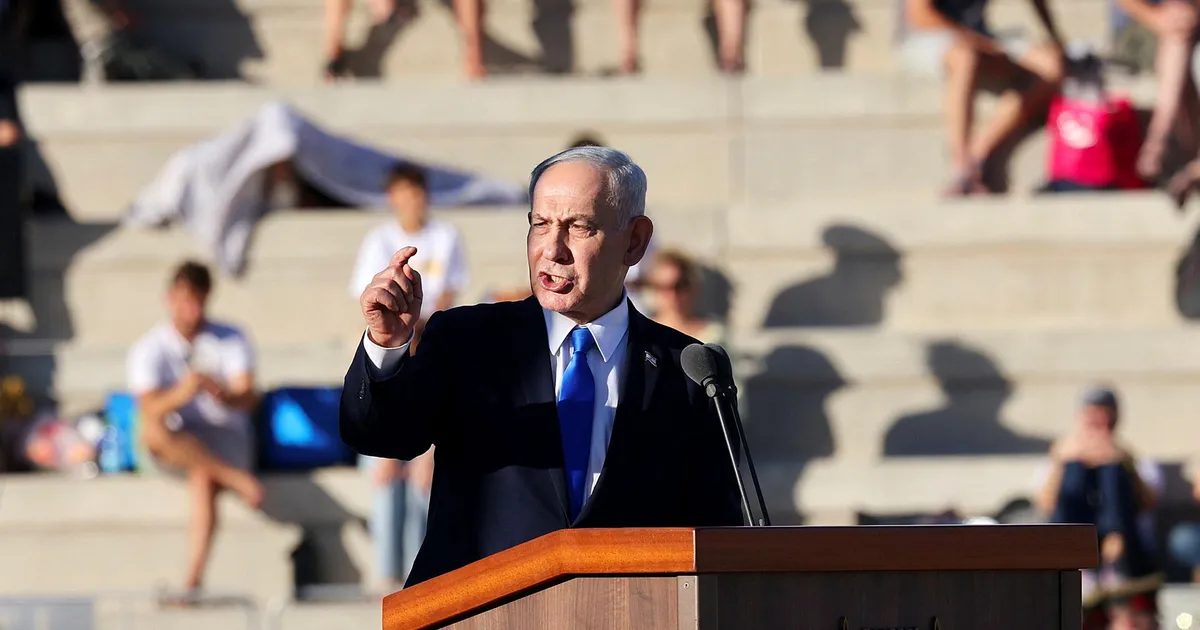
Current sectionIsrael NewsIsrael Elections 2026According to the poll, the opposition party Yashar wins to 24 seats, and the Eisenkot-led bloc has 57 seats for the Jewish opposition, versus 48 seats for the coalition. The Arab parties jump to 15 seats after the Joint List mergerShare to FacebookShare to XArticle printing is available to subscribers onlyPrint in a simple, ad-free formatSubscribeComments: Zen reading is available to subscribers onlyAd-free and in a comfortable reading formatSubscribeNetanyahu at a conference in Jerusalem, Tuesday. Credit: Itay CohenNetanyahu at a conference in Jerusalem, Tuesday. Credit: Itay Cohen11:11 PM • August 26 2026 IDTA new Channel 13 poll published Wednesday evening projects the opposition bloc would win 57 seats if elections were held today, two seats fewer than the previous poll, as Prime Minister Benjamin Netanyahu's Likud party continues to drop. The current coalition, according to the poll, wins 49 seats, and the Arab parties 15. The Yashar party, led by Gadi Eisenkot, would be the largest party with 24 seats, a drop of two seats compared to its peak in the previous poll. Likud plunges to 19 seats, a drop of four seats compared to the previous poll. According to the poll, Naftali Bennett's Together party maintains stability with 13 seats, immediately followed by the Democrats with 11, consistent with the previous poll. Channel 13 pollYashar24Likud19Together13The Democrats11Joint List10Yisrael Beiteinu9Shas8United Torah Judaism8Otzma Yehudit8UAL5Religious Zionism5The Arab parties' Joint List wins 10 seats in the first poll conducted after the merger – five seats more than Hadash-Ta'al received without Balad in the previous poll. The poll further predicts that Yisrael Beiteinu will win nine seats. Otzma Yehudit, United Torah Judaism and Shas each win eight seats – with the latter gaining one seat compared to the last poll. Religious Zionism maintains its strength with five. The recently announced "Amkha Yisrael" party led by ex-IDF general Ofer Winter (2.2 percent), Chili Tropper and Yoaz Hendel's Zionist Home (2 percent), Benny Gantz's Blue and White (1.8 percent) and Gilad Erdan's "Ha'Ahdut" (0.8 percent) do not pass the electoral threshold. Additionally, the poll examined possible mergers in the political landscape. A merger of Eisenkot, Bennett and Tropper receives 36 seats, versus only 17 seats for Likud. The Joint List drops to nine seats in such a scenario. A possible merger of Winter and Smotrich receives seven seats, and Ra'am with Segalovitz on the list remains at five seats. Conversely, a merger of Gantz, Erdan and Ayelet Shaked does not pass the electoral threshold.The poll was conducted by Hamadad (Samuel Rosner and Noah Slepkov) in cooperation with Stat-Net (Yosef Maklada), Midgam Project (Dr. Ariel Ayalon) and Askaria (Dudi Dror), with 1,407 respondents. Additional data: Hive. Statistical consulting: Prof. David Steinberg. The margin of error is 3.4 percent.In the NewsIsrael's Environment Minister Sidelines Flagship Climate Risk PortalThe Forgotten Jewish Revolt That Erased a CivilizationRon Dermer Events in California Come Under Fire by October 7 FamiliesAs Syria Rejoins the World, Israel's Old Playbook No Longer AppliesThe One Thing Hasan Piker Could Say to Begin Healing Ties With U.S. JewsRemembering and rebuilding two years laterICYMIAn Israeli Startup Is Reinventing Salmon Farming. It May Upend a Global IndustryHasan Piker Talks Hamas, anti-Zionism and Why Americans Are Fed Up With IsraelBeing Israeli Abroad Has Become Embarrassing. You Don't Talk About ItDavid Remnick on Netanyahu, Mamdani and Israel's 'Failure to Face' GazaGermany Found Its Israeli Villain. Will It Continue to Ignore What Produced Him?Ben-Gvir's Ambush Shook Netanyahu – and Unleashed a War for Right-wing Votes
Poll: Likud's decline continues, new right-wing party fails to cross threshold
According to the poll, the opposition party Yashar wins to 24 seats, and the Eisenkot-led bloc has 57 seats for the Jewish opposition, versus 48 seats for the coalition. The Arab parties jump to 15 seats after the Joint List merger
576 words~3 min read