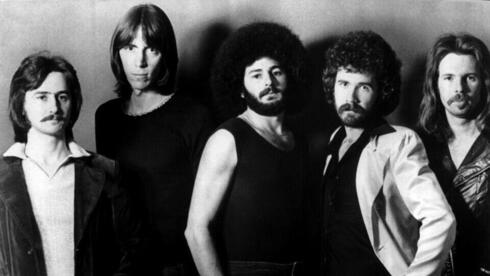
Boston’s debut sold over 20 million copies and made Tom Scholz and Brad Delp rock stars almost overnight; 50 years later, its story is one of basement engineering, relentless perfectionism and a breakthrough so massive the band spent decades trying to live up to itFifty years ago, a virtually unknown band released its debut album and quickly produced one of the biggest commercial success stories in American rock.Boston’s self-titled debut went on to sell more than 20 million copies, making it one of the best-selling debut albums ever. For years it held the record until Guns N’ Roses’ Appetite for Destruction eventually overtook it.But Boston’s story was very different from that of a band that had spent years building a reputation onstage. Guns N’ Roses had worked the Los Angeles club circuit and generated considerable buzz before its first full-length album arrived. Boston essentially appeared from nowhere.There had been no major touring campaign, no established fan base and little of the traditional groundwork associated with a new rock act. Instead, the album was the product of years of obsessive studio work by Tom Scholz, an MIT-trained mechanical engineer who refused to accept the compromises of the recording business and wanted almost total control over how his music sounded.What emerged in 1976 was startlingly polished and unusually precise, an album that sounded as if it had come from a seasoned band at the height of its powers rather than an unknown group making its debut. It sold millions, produced songs that became staples of American classic rock and turned Boston into one of the defining rock bands of the second half of the 1970s.In fact, tune in to almost any classic-rock station today and there is a good chance you will hear the album’s biggest single, “More Than a Feeling.” Chances are, just reading the title is enough to get you start humming it.Radio-monitoring data shows that even 50 years after its release, the song remains in heavy rotation: at one station tracked in 2026, it was played 19 times in 25 days, more than any other song monitored there. On Spotify, the song has surpassed 1.18 billion streams and continues to add hundreds of thousands more each day, while Boston’s catalog has accumulated more than 2.1 billion streams overall, and the band still draws about 12.1 million monthly listeners. Not bad for a group whose last major album came out in 1986.GalleryStill going strong 50 years later. Boston in 1976, with Tom Scholz second from left(Photo: PR)But the more interesting part of Boston’s story is not simply how many records it sold. The debut arrived at a moment when the American music industry itself was changing. Rock was moving from clubs and theaters into arenas and stadiums, record labels were searching aggressively for the next blockbuster act, and advances in recording technology were allowing musicians to construct sounds in the studio that could not easily be replicated onstage.Scholz pushed those possibilities to their limit. He did not rush to finish an album and did not accept anything that merely sounded “good enough.” He spent years refining songs and recordings until the resulting debut sounded like the work of a band with a long discography behind it.Fifty years later, Boston also stands as a document of an era. Its sound is unmistakably rooted in the 1970s, but the way the album was made and received tells a broader story about the relationship between musicians, recording studios, record labels and audiences. It is a story about artistic control, perfectionism and the sometimes punishing consequences of enormous success. The album established a standard the band would spend the rest of its career trying to match. In that sense, Boston’s greatest success also became its curse.Some albums begin when a band walks into a studio. The story of Boston began years earlier. Scholz started writing music in the late 1960s while studying at the Massachusetts Institute of Technology (MIT). One of his early compositions was “Foreplay,” the instrumental passage that years later became the opening section of “Foreplay/Long Time,” the third track on Boston’s debut and its second single after “More Than a Feeling.”After graduating, Scholz worked as a product engineer at Polaroid. His salary helped finance demos and, eventually, the recording equipment he needed to pursue music on his own terms.An engineer who became a musician, then a legend. Tom Scholz(Photo: Elise Amendola/AP)A home studio in that era was hardly the commonplace setup it would later become. Professional recording was expensive, and decades would pass before musicians could use digital systems and laptop software to carry out tasks that once required complex analog equipment.Scholz, who spent his days working as an engineer, looked for a way to make music outside that system using the analog equipment available to him. With money from his day job at Polaroid, he gradually built a home studio in the basement of the building where he lived in Watertown, Massachusetts. There he taught himself how to use recording equipment, layering guitars, bass and keyboards on his own and building songs piece by piece. Those stacked guitar parts would eventually become one of Boston’s defining trademarks.The other essential ingredient was Brad Delp. Scholz met Delp in the late 1960s. Along with guitarist Barry Goudreau, they eventually formed a group called Mother’s Milk, which later evolved into Boston.Delp possessed an extraordinary vocal range and recorded both the lead vocals and the layered harmonies that became as central to Boston’s sound as Scholz’s guitars. Drummer Jim Masdea, whom Scholz knew from his student days, also took part in some of the early recordings.For years, demos were sent to record labels and rejected. But the recordings kept improving. Eventually, Epic Records, which had previously turned the group down, reconsidered and offered a contract.Signing a deal did not change Scholz’s view of how the album should be made. The label wanted the material rerecorded in a professional studio. Scholz, who had become accustomed to working alone and at his own pace, resisted.The compromise was more complicated than the familiar legend that Boston was recorded entirely in a basement. Still, Scholz was able to do a substantial amount of the work in his home studio before recordings were taken to Los Angeles for additional work and mixing.At the same time, the group was expanded into something that could function as a touring rock band. Scholz and Delp were joined by Goudreau, bassist Fran Sheehan and drummer Sib Hashian. Even then, however, there was a gap between Boston’s public image as a five-man rock group and the reality of how its debut had been made.Most of the album rested heavily on Scholz’s studio work and his creative partnership with Delp. “I’d gotten used to working alone,” Scholz later told Classic Rock. “There was nobody else there when I was playing my parts. It was me running the machines and playing the guitar and the organ and the bass.”Scholz never hid the extremes of his working process. “I've spent six months making a recording of a song that I've thrown out,” he recalled in the interview with Classic Rock. To Scholz, it was not necessarily about perfection, a term he would later resist, as much as an inability to release something before he felt he had exhausted its possibilities. “I feel incomplete if I haven’t given it my best shot,” he said.Delp, meanwhile, was far more than simply the singer standing at the front of the band. His voice transformed Scholz’s meticulously constructed songs into something unmistakably Boston. “Brad is one of the best singers I’ve ever heard,” Scholz told Classic Rock. From the first moment, “I knew he was the singer. He was awesome the moment he opened his mouth.”A vocal powerhouse. Brad Delp(Photo: Carl Lender)Boston was released on August 25, 1976. It contained just eight tracks and ran for roughly 37 minutes. It was not a concept album and there was no storyline connecting its songs. What unified it was the sound. Layered electric guitars, soaring solos, elaborate vocal harmonies, enormous melodies and painstakingly detailed production ran through the record from beginning to end, the product of Scholz’s years of painstaking studio work.The breakthrough came with “More Than a Feeling,” Boston’s first single and the album’s opening track. It reached No. 5 on the Billboard Hot 100 and rapidly became the song most closely identified with the band.But one song alone does not explain the album’s extraordinary endurance. “More Than a Feeling” was followed by “Peace of Mind” and the more progressive “Foreplay/Long Time,” giving the record one of the most formidable opening runs in 1970s rock.And the strength did not end there. “Smokin’,” one of two tracks Delp helped write, drove forward with swagger, while “Let Me Take You Home Tonight,” the other Delp co-write, closed the record on a warmer, more nostalgic note. Or take “Hitch a Ride,” which many fans, this writer included, consider the album’s true gem. It is a more reflective, atmospheric track, with a wildly inventive keyboard solo that appears unexpectedly midway through and a jaw-dropping guitar solo that closes the song.The majestic coda has frustrated generations of ambitious young guitarists, and will probably continue to do so for years to come. Just listen to it. It’s extraordinary.To a casual listener, Boston’s songs can initially sound remarkably similar. But that is less a matter of repetition than consistency. The album maintains an unusually strong sonic identity from beginning to end. Few debut records have ever sounded so completely formed.The response was immediate. Boston reached No. 3 on the Billboard album chart and remained on the chart for 132 weeks. Within months it had gone platinum, while three singles reached the U.S. Top 40. The band went from struggling to secure a record deal to playing major venues with extraordinary speed.Boston initially toured as an opening act for groups including Black Sabbath and Blue Öyster Cult. Before long, the hierarchy had reversed and major acts were opening for Boston, among them Cheap Trick, Heart and Bob Seger.In 1977, Boston sold out three consecutive shows at Madison Square Garden and received a Grammy nomination for Best New Artist. It lost to Starland Vocal Band, best remembered for the hit “Afternoon Delight.”Even Scholz had not anticipated the scale of the breakthrough. He later recalled returning to his job at Polaroid after completing the recordings because he did not expect the album to provide him with a living. Only when the sales figures began to pile up did he understand how drastically his circumstances had changed.Boston, 1976(Photo: PR)Success, however, created an obvious problem: What could possibly come next? Boston’s second album, Don’t Look Back, arrived in 1978, less than two years after the debut, as the label sought to capitalize on the group’s momentum. It too was a major commercial success and produced hits including the title track and “Feelin’ Satisfied.”But Scholz later said he was unhappy with the speed at which he had been required to complete it. “I felt it was always a song short,” he told Classic Rock. “It was very rushed along, finishing the album. I’m not particularly happy with the mixes on that.”After that, the gaps between Boston albums became dramatically longer. The band also became locked in a bitter legal dispute with Epic Records. Scholz had agreed to deliver a set number of albums within a particular period, but his working methods and dissatisfaction with the timetable imposed on the second record delayed the third.In 1983, Epic sued for $20 million and froze royalties from the first two albums, even as those records continued to generate substantial revenue.Scholz fought back. Boston’s third album, Third Stage, eventually appeared in 1986 and became another major success. Its single “Amanda” reached No. 1 on the Billboard Hot 100, Boston’s only song ever to top the U.S. singles chart.But Scholz released the album through rival label MCA after obtaining court permission to do so. In 1990, Scholz was awarded millions in damages from CBS, Epic’s parent company, after a court concluded that delays in completing the record were justified by the artistic and creative process and that withholding his royalties had been improper.That victory for Boston and Scholz came to be seen as a landmark in the music industry, reinforcing artists’ right to control the pace of their creative work in the face of commercial pressure from major record companies.But the episode also exposed the obstacle that would follow Boston for the rest of its career. Scholz’s willingness to spend years obsessing over tiny details had allowed him to make the debut album exactly as he wanted and turn it into a historic success. The same need for control and perfectionism, however, made it impossible to work at the pace expected by the industry and limited the output of a band that seemed destined to become one of the biggest in the world, but never quite fulfilled that promise.Tom Scholz(Photo: Matt Becker)Looking back half a century later, Boston is unmistakably a product of the 1970s: its huge guitars, intricate harmonies, the album’s iconic cover featuring a guitar-shaped spaceship, and the ambition to create arena rock that blended the power of hard rock, rather than metal, with the melodies of British pop and rock, especially the British Invasion bands from the Beatles to The Who, along with structures and influences drawn from classical music.The production itself no longer sounds revolutionary in quite the same way. Home studios are everywhere today, and digital technology allows musicians to perform on a laptop tasks that once required expensive and complicated equipment.But that does not diminish what Scholz achieved. His engineering expertise always served a musical purpose. He did not build equipment merely because he could but because he was trying to reproduce the sound he heard in his head.That may also explain why Boston still feels different from many other blockbuster albums of its era. It does not sound like five musicians entering a room and playing together. It sounds like the result of a much longer construction process, with every element carefully fitted into place. Yet despite all that precision, the result never feels sterile. There is movement, exhilaration and enormous energy in the record, qualities that have survived the decades remarkably well.But for all that success, Boston never truly escaped the shadow of its debut. The album made Tom Scholz and Brad Delp rock stars almost overnight, but it also established a benchmark that was nearly impossible to reach again. The sound was so identifiable and the formula so effective that the same questions followed the band for decades: Could they do it again? And did they even need to?Scholz tried. Don’t Look Back was a major hit, but the sense of repetition had already begun to creep in. Third Stage did not arrive until eight years later. Walk On followed in 1994 and sold far fewer copies. Corporate America appeared in 2002, while Boston’s most recent studio album, Life, Love & Hope, was released in 2013. Both received mixed reviews and sold only a fraction of what the band had once managed. Across nearly four decades, Boston released only six studio albums. Few rock bands have sold so many records, retained such a lasting cultural presence and yet left behind such a small catalog.That was largely a consequence of Scholz’s method. He was, in practice, Boston to a greater extent than the group’s public image suggested. The engineer who had built a basement studio, stacked track upon track and insisted on controlling virtually every detail gradually became the guardian of the musical world he had created.The problem was that the world itself changed. Over time, the qualities that made Boston distinctive became targets for criticism: the processed guitars, stacked harmonies, enormous melodic peaks and carefully preserved formula that had sounded futuristic in 1976 could later seem like an attempt to recreate the past.Boston never seriously tried to become a different band, but it also struggled to find a way to remain the same band without repeating itself.The cover of Boston(Photo: Screenshot)And throughout that story stood Brad Delp. If Scholz was Boston’s architect and engineer, Delp was its human voice. His high, supple, remarkably clear vocals made Scholz’s carefully constructed songs sound effortless. Behind one of classic rock’s most recognizable voices, however, was a man who struggled for years with depression and personal difficulties.In 2007, Delp was found dead at his home in New Hampshire. He was 55, and his death was ruled a suicide. It was a tragic end for the man who had been Boston’s defining voice for more than three decades. His death was not only a personal loss but a turning point for the band itself. Musicians can be replaced, new singers can be hired and a group can continue performing under the same name, but it is difficult to imagine Boston without Delp’s voice.After his death, the Boston Herald published a series of reports drawing in part on comments from Delp’s former wife, Micki Delp, and other sources. The reports raised allegations that tensions between Delp and Scholz had contributed to the pressures Delp faced before his death.Scholz sued the newspaper and Delp’s former wife, arguing that the reports implied he bore responsibility for the suicide. In 2015, the Massachusetts Supreme Judicial Court ruled that the disputed statements amounted to opinion that could not be proven true or false and therefore could not form the basis of a defamation claim.A rare voice, a tragic end. Brad Delp(Photo: Craig Michaud)Although Scholz went on to release another Boston album in 2013, the band’s most recent to date, without Delp, whose voice nevertheless appeared on several tracks recorded years earlier, it marked a somber final chapter in Boston’s remarkable story.The band never officially broke up. Instead, different musicians continued to rotate around Scholz, who remained its driving force throughout. But the group that had made one of the most successful debut albums in history was never able to sustain that same level of innovation and energy, gradually fading from the center of the musical landscape.And perhaps that is enough. Not every band has to keep reinventing itself for five decades. Some are destined, from a certain point on, to live with one work too great to escape. In Boston’s case, 50 years later, that album still holds up. And really, why would anyone want to escape something that good?
This band made one of rock’s greatest debut albums; then its success became a curse
Boston’s debut sold over 20 million copies and made Tom Scholz and Brad Delp rock stars almost overnight; 50 years later, its story is one of basement engineering, relentless perfectionism and a breakthrough so massive the band spent decades trying to live up to it
3,059 words~14 min read