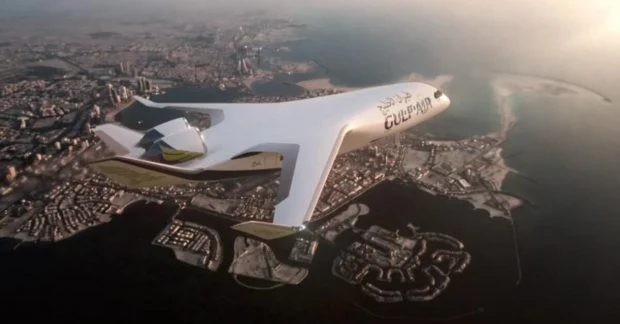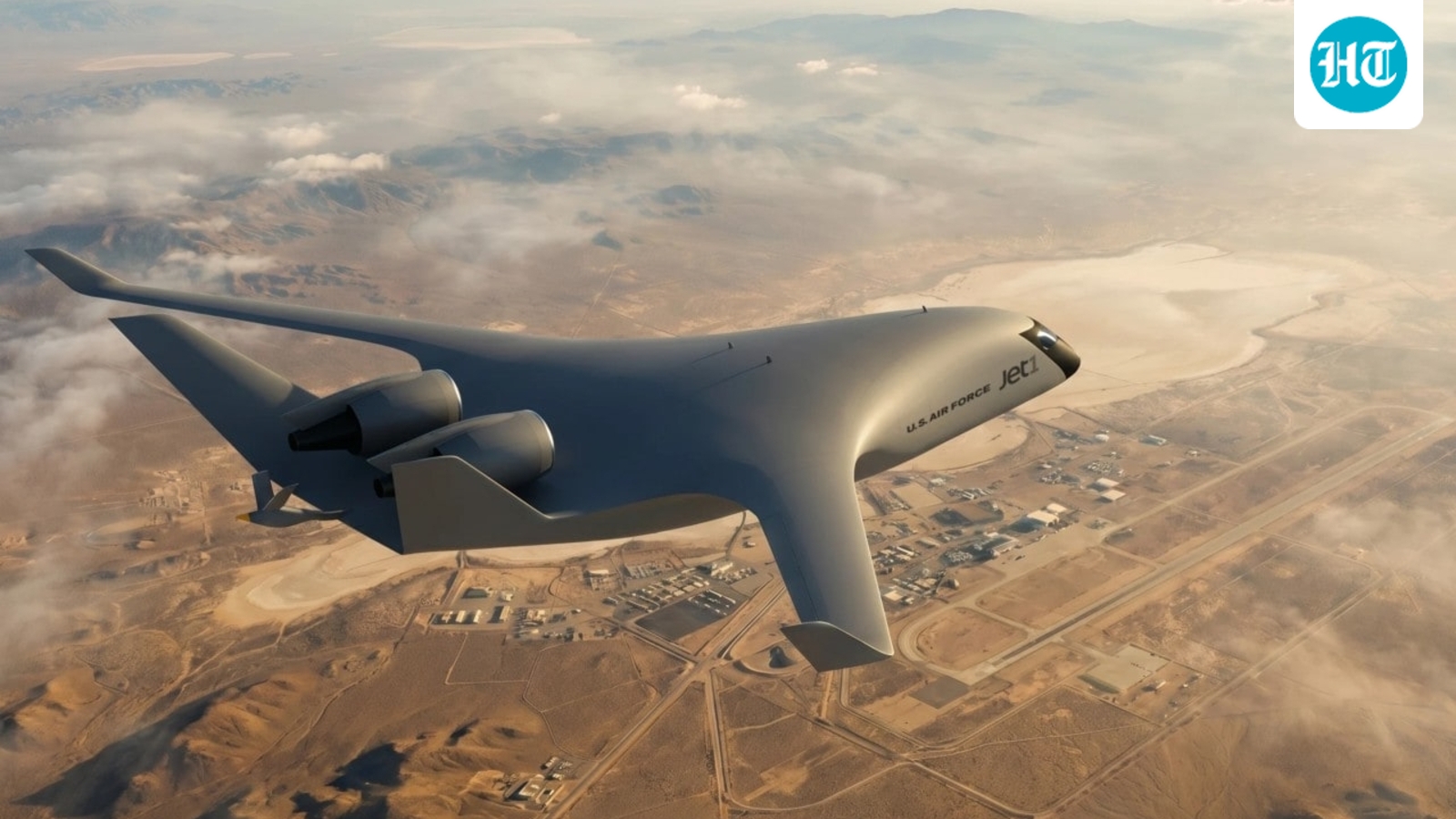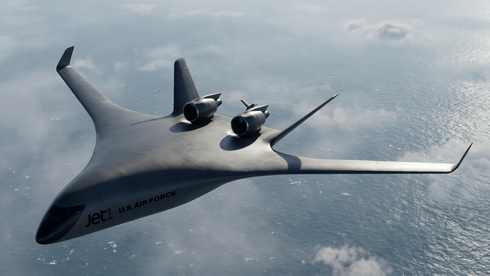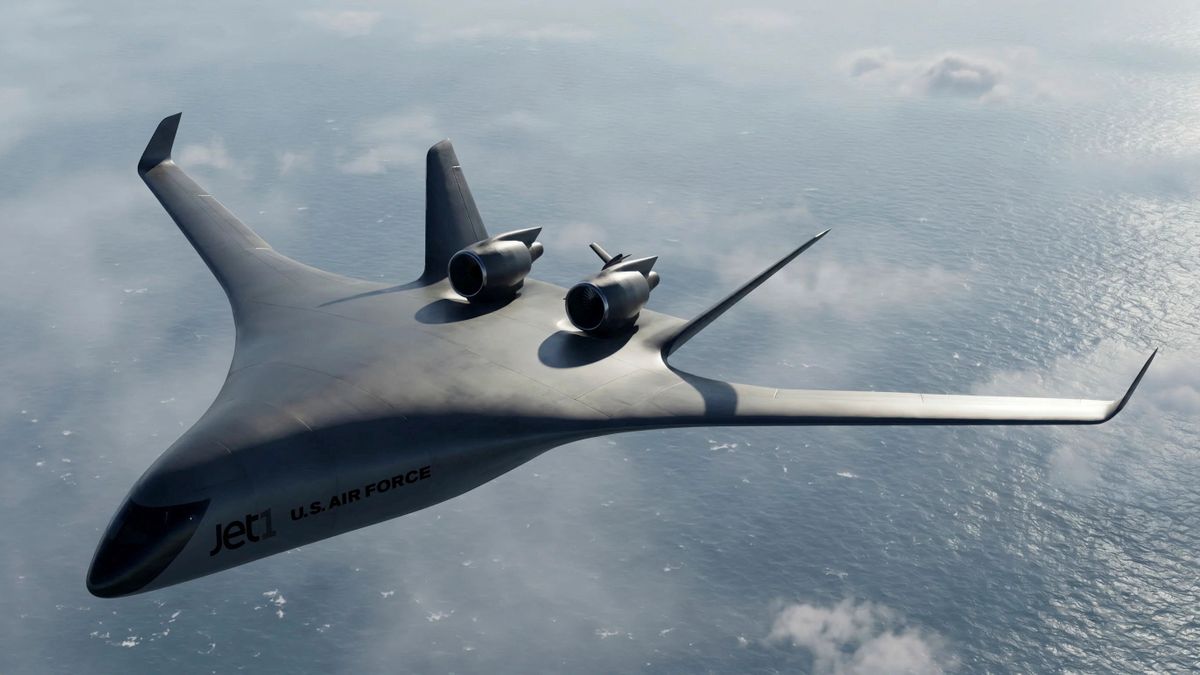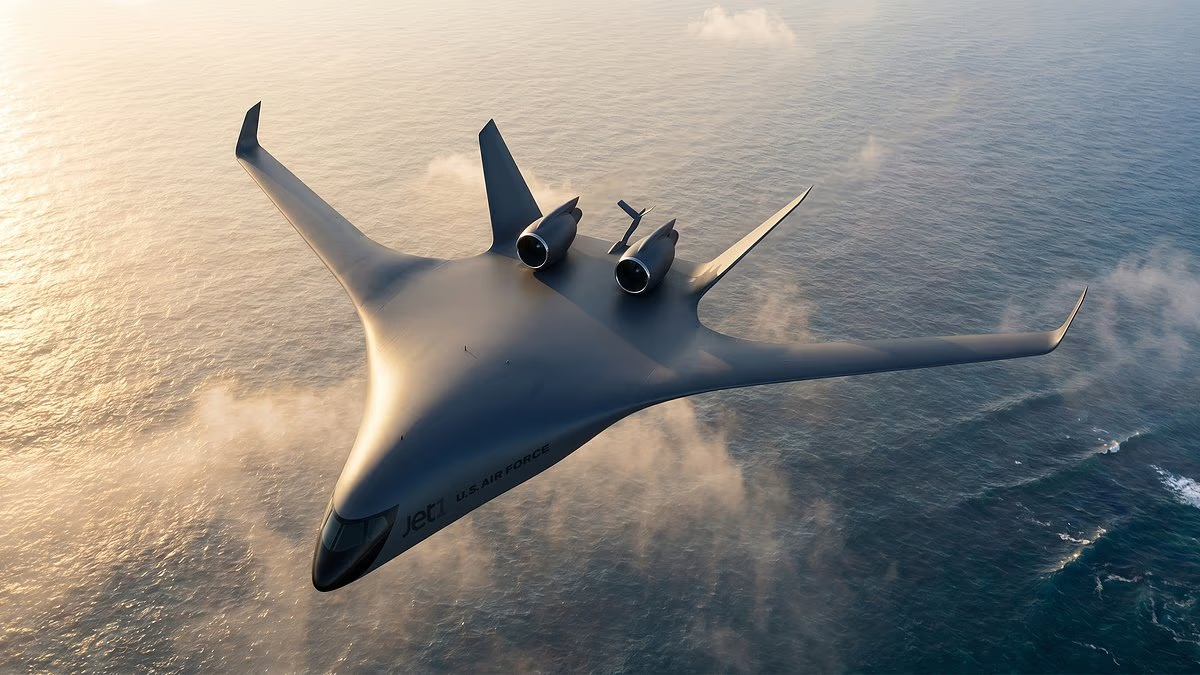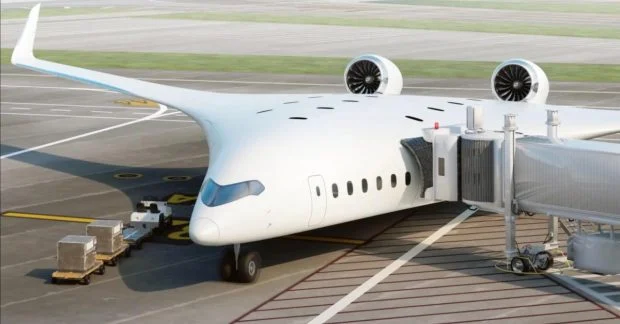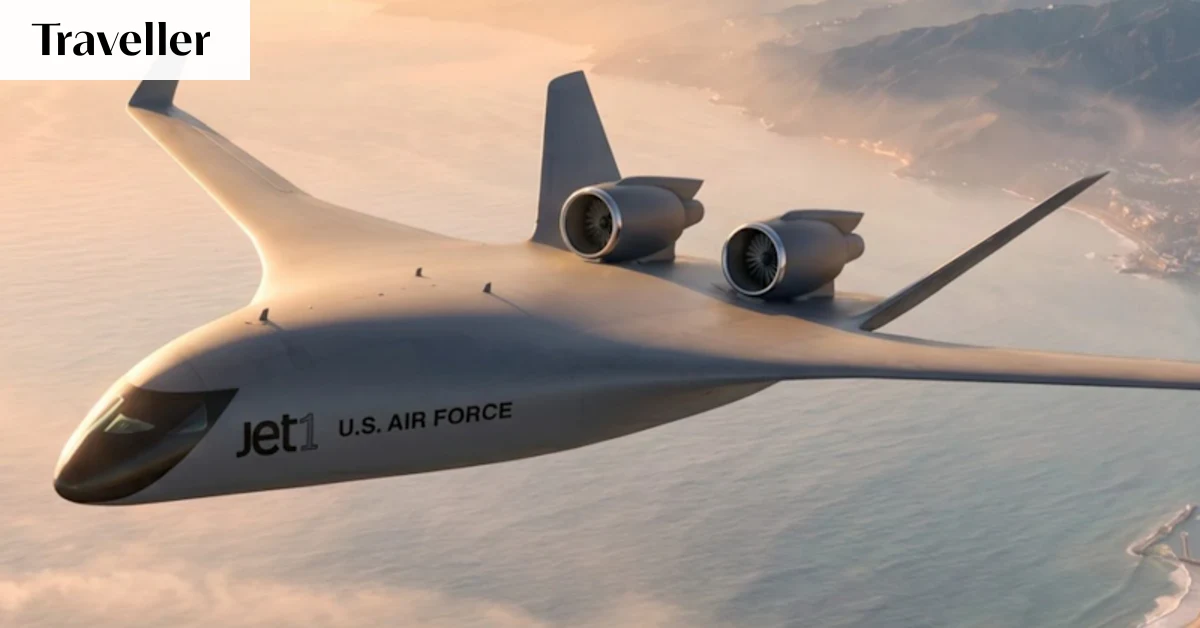
Chris MossAugust 27, 2026 — 5:00amJetZero’s windowless Z4 aircraft could be carrying passengers as early as 2030, according to The Wall Street Journal, as the company secured a loan of up to $US3 billion ($4.2 billion).A single wing on a plane sounds about as reassuring as a hop-on, hop-off emergency door or an automatic cutout engine. But the Long Beach, California-based start-up’s Z4 intends to make it the envy of all the olde-worlde two-wingers. Engineers, though, prefer the term “blended wing” and, if it is successful, the Z4 would be the world’s first commercial blended-wing-body (BWB) aircraft.A mock-up of JetZero’s “blended-wing” Z4 aircraft.JetZeroThe futuristic plane, currently at the development stage, aims to offer a capacity of 250 seats and a 5000-nautical-mile (9260-kilometre) range – equivalent to flying from Melbourne to Honolulu. A blended wing allows lift across the entire wingspan and reduces drag. The big advantage of this is a 30-50 per cent fuel-efficiency improvement compared with aeroplanes currently in service. In theory, less fuel could mean cheaper tickets – though, as we know from the Concorde days, novelty and innovation usually come at a premium.The design features an eye-catching stingray shape with a V-shaped tail. The interior is also a radical rethink, with four spacious aisles to ease congestion, windowless walls paired with high-resolution digital screens (supported by high-speed Starlink Wi-Fi) and ceiling skylights, dedicated bathroom waiting areas well away from the seating areas and aisles, and – perhaps the most important revolution for customers – the Z4 eschews the standard layout of rows of cramped seats, opting for individually separated seating, each with its own overhead storage.Designed to cruise about 10,000 feet (3000 metres) higher than most traditional commercial jets flying today, the Z4 would benefit from this reduced drag in the thinner air above 40,000 feet. It would, though, fly at a standard speed of about Mach 0.8 (988 km/h at altitude).Sign up for the Traveller newsletterThe latest travel news, tips and inspiration delivered to your inbox. Sign up now.The Z4 resembles a stingray, with a distinctive V-shaped tail.JetZero digital renderingThe interior offers a radical rethink of air travel, with screens in the place of windows.JetZero digital renderingJetZero’s factory development hub in Greensboro, North Carolina has already trialled a scale model and hopes to test a full-scale prototype – being built in partnership with Scaled Composites, a subsidiary of Northrop Grumman – in late 2027, with commercial service possibly starting in the early 2030s.Futuristic aircraft concepts and prototypes have come and gone since the early days of aviation, most stalling before getting anywhere near production stage. The reason the aviation industry is taking this project so seriously is largely due to the serious players already backing it. JetZero clinched an early deal with the US Export-Import Bank for up to $3 billion in loans to build its first factory. About 20 airlines are already on board, including Delta, United and Alaska. At the recent Farnborough Airshow, JetZero signed a letter of intent with Gulf Air and announced support from Japan Airlines.Sceptics note that the wing design could lead to stronger G-forces when the plane banks. Some observers are also raising questions about the ease with which a four-aisle cabin could be evacuated in the event of an emergency.And yet, new materials, better engines and refined monoplane designs led to biplanes becoming obsolete for most purposes by the 1940s. Orville Wright allegedly stated: “No flying machine will ever fly from New York to Paris.” Nevertheless, aviation evolution is typically slow; modern jets still look an awful lot like the earliest ones. Perhaps it’s time for a paradigm shift.Work is done on creating the Z4 at JetZero’s factory development hub.JetZeroWhile initially the Z4’s propulsion will rely on conventional jet fuels (including Sustainable Aviation Fuel blends), the aircraft is being engineered with a path towards hydrogen in mind. Major hurdles in the future – besides getting a full-size BWB plane to fly – include securing Federal Aviation Administration certification and proving the unusual design doesn’t cause motion sickness or cabin-pressurisation issues. JetZero says the Z4 will readily fit into today’s airport infrastructure, eliminating the need for specialised or costly modifications. So, unlike with the A380, parking at least shouldn’t be a problem.As to whether we’ll really be seeing the Z4 take to the skies within the next decade? We’ll simply have to watch and wait.The Telegraph, LondonFrom our partners
Revolutionary plane could take off by 2030, but don’t expect a window seat
JetZero’s Z4 aircraft could be carrying passengers in four years’ time, as the company secured a loan of $4.2 billion.
729 words~3 min read