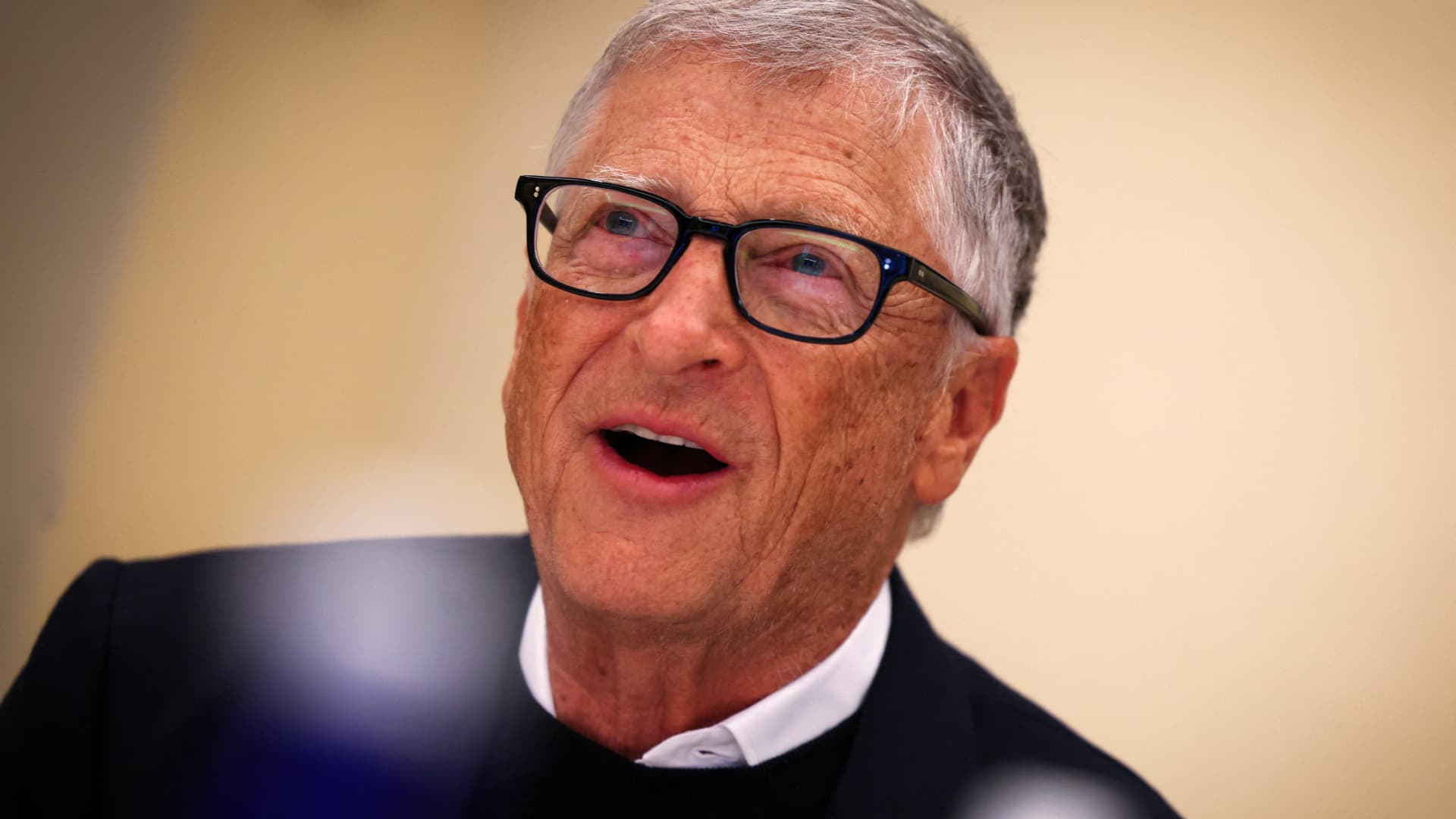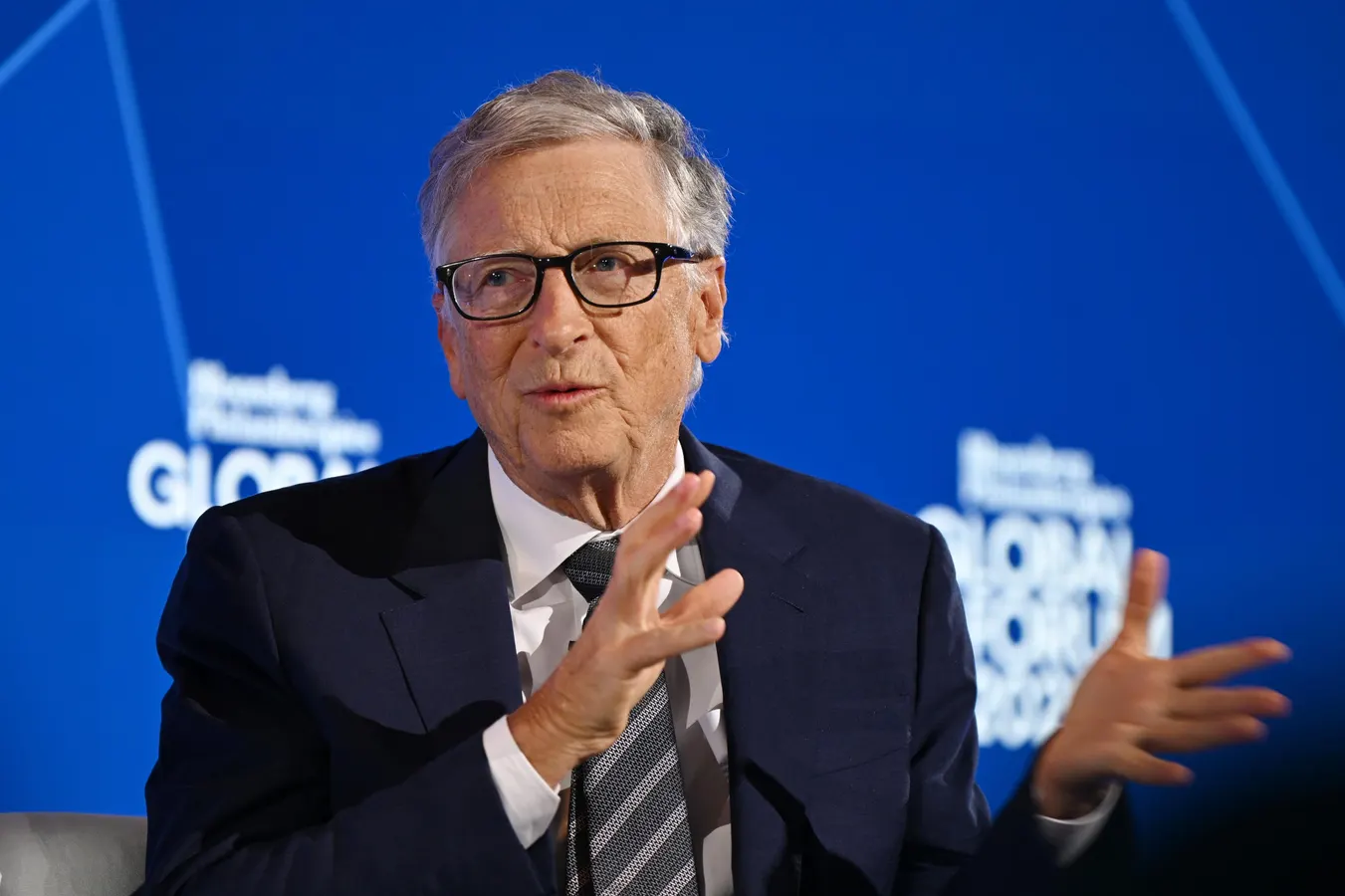
NEW YORK, NEW YORK - SEPTEMBER 24: Bill Gates speaks onstage at the Bloomberg Philanthropies Global Forum 2025 at The Plaza Hotel on September 24, 2025 in New York City. (Photo by Bryan Bedder/Getty Images for Bloomberg Philanthropies)Getty Images for Bloomberg PhilanthropiesBill Gates has spent two careers betting on technology. His new essay, published Wednesday, is the first time he asked the world to slow down and think before the next bet lands.The essay runs close to 6,000 words, and its thesis fits in one line: The AI era will be among the most turbulent periods in human history, nobody is preparing for it, and the outcome depends on choices made in the next few years rather than the next few decades. Gates frames it as a binary. AI becomes either the greatest equalizer ever built or the deepest source of injustice, and which one we get is a matter of policy, not physics.That framing matters to anyone building a company right now, because Gates is not writing to technologists. He is writing to the people who will regulate them.Why Bill Gates Thinks This Time Is DifferentGates spends a good part of the essay dismantling the comfort of historical analogy. The move from farm to office took generations and created work that required human judgment. The PC took two decades to reshape work because software had to be written. Prices had to fall, and people had to learn new tools.His argument is that AI skips every one of those steps. It runs on hardware already in every pocket, speaks the language its users already speak and can train on the same materials a company uses to onboard a human hire. The adaptation burden has flipped. The tool adapts to us.Gates also confronts the objection that models still make silly mistakes. His view is that reliability is being solved quickly, and that the real inflection point for employers arrives when AI work is nearly error-free, because at that moment the economic case for keeping a human in the loop collapses.The Labor Market Is The First Of 3 RisksGates names three categories of harm and is explicit that jobs come first.On employment, his claim is that the losses will be structural rather than cyclical. Gates points to early evidence that young workers in AI-exposed roles have already seen employment fall while their older colleagues have not, and he expects the pattern to spread from sales, support, software and paralegal work into loan assessment, data analysis and patient triage. Blue-collar work follows once dexterous robots, much of that development happening in China, become cheap enough. Gates puts that on a timeline of roughly the end of this decade.The mechanism he describes is one every operator will recognize. The first company in a category to automate and cut prices forces every competitor to follow. If incumbents refuse, startups do it for them. Market forces make adoption self-accelerating, and without intervention the gains pool with a small group.The second risk is misuse: AI-enabled fraud, deepfakes, cyberattacks on hospitals and power grids, and the uncomfortable reality that the same model that finds a software flaw for a defender finds it for an attacker. Gates also notes, briefly, that systems themselves may eventually act against human interests. He promises more on that later.The third is developmental. Drawing on his own awkward adolescence in Seattle, Gates argues that an AI companion designed never to upset you is a greenhouse, and that children raised in greenhouses struggle with wind. He cites early research suggesting heavy, emotionally intimate companion use correlates with feeling worse, and heavier AI use with weaker critical thinking, particularly among the young.The Upside Bill Gates Refuses To Give UpGates is careful not to write a doom essay. Healthcare, agriculture in low-income countries, government services, mental health access and education all get concrete cases. His sharper point is strategic: the benefits are not optional. If the first thing AI does in most people's lives is take their job, public trust collapses, and with it the political room to deliver anything good. Maximizing the upside is part of how you manage the downside.Three proposalsThe essay closes with ideas Gates says he will expand on in the coming months.New institutions. He wants a domestic body that can set AI priorities across every agency at once, on the logic that a labor department sees workforce disruption but not security risk, and a business regulator sees market concentration but not effects on teenagers. Alongside it, an international organization borrowing from nuclear inspections, aviation rules and the ozone treaties. He concedes this will take years and that some U.S.–China cooperation is unavoidable.Human Reserved. Certain jobs would be set aside for people even where machines could do them, the way a nature reserve is land we choose not to develop. The idea came from the caregivers who looked after his father through Alzheimer's. Some reservations would be permanent, some a slow phase-in to protect workers too deep into a career to retrain. In interviews around the launch, Gates told Axios that in an extreme version he could imagine roughly 40% of jobs reserved initially, and that he could not get the number higher. He is open that the hard questions, like who decides, by what criteria and how you stop companies from cheating, remain unanswered.Tax tokens and robots. Employers pay payroll tax when they hire a person and write off a robot as an expense. Gates argues the tax code is nudging companies toward machines and proposes taxing AI usage and robots to slow that nudge slightly and fund retraining and a stronger safety net. He floated a robot tax in 2017 and acknowledges it was received as strange. Gates told Axios it would be a larger change to the tax system than any in his lifetime.What Builders Should Take From ItStrip away the philanthropy, and this is a policy signal from one of the few people who has both shipped the technology and funded the consequences. Three things stand out for anyone running a company.First, the cost of AI labor may not stay this cheap. A token tax is a proposal, not a law, but it is now on the table from a credible voice, and unit economics built on the assumption that inference stays untaxed are worth stress-testing.Second, the entry-level pipeline is the canary. Gates's employment data points at junior workers first. Companies that stop hiring at the bottom will find in five years that they have no one to promote.Third, trust is a business input. Gates's argument that public backlash will throttle AI's benefits applies at company scale too. The firms that keep customers and employees on side through the transition will be the ones still allowed to use the tools.Gates ends by widening the circle he wants in the room: workers, students, parents, faith leaders, community organizers. He also lists what he will do himself, including, as he told GeekWire, working through the Human Reserved math with a chatbot, from raising it in every Washington meeting to writing about AI on a regular basis. It reads less like a manifesto than like the opening chapter of a campaign.
Bill Gates Says AI Needs A Transition Plan. Business Doesn't Have One Either.
Bill Gates's new essay urges urgent global deliberation on AI, predicting a turbulent era where policy choices now will determine if it becomes an equalizer or a source of injustice.
1,189 words~5 min read