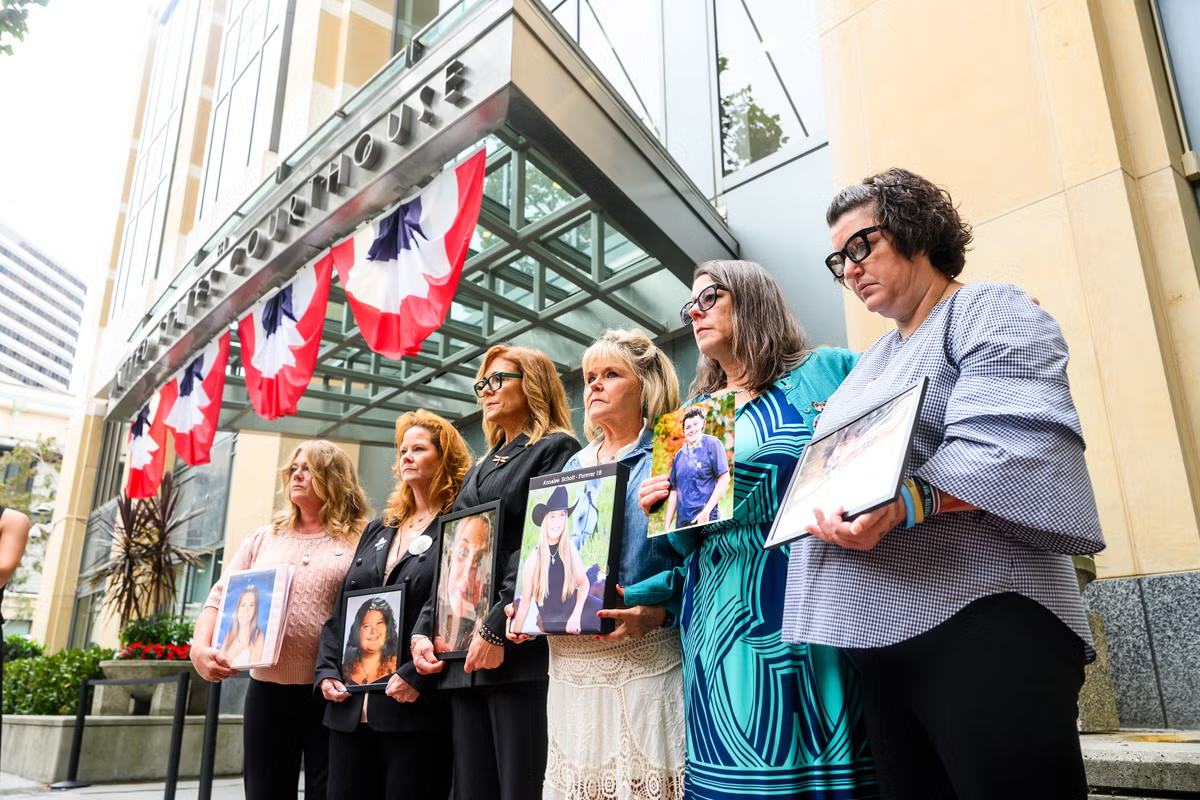
Meta will pay up to $18 billion to resolve claims by U.S. states that Facebook and Instagram are designed to keep young users hooked, ending one of the highest-profile tests of allegations that social media companies harm children.The agreement, reached during a California federal trial, includes monetary payments and nationwide changes to Meta's services for teenage users.WHAT WERE THE ALLEGATIONS?States alleged Meta used its social media platforms to entice and retain young users, misled the public about risks posed to children and violated state consumer-protection laws.The lawsuit also alleged Meta violated the Children's Online Privacy Protection Act by collecting, retaining and using personal data from children under 13 without proper parental consent.Also Read | Meta reaches $16.68 bn settlement over social media harms to childrenWHO BROUGHT THE CASE?The federal trial included consumer-protection claims by California, Colorado, Kentucky and New Jersey. It also included COPPA claims brought by 29 states.The settlement extends beyond the federal trial and includes attorneys general from dozens of states, the District of Columbia and U.S. territories.WHAT DID META AGREE TO?Meta has agreed to implement teen safeguards, including a default two-hour daily limit across Facebook and Instagram, overnight blocks from midnight to 6 a.m., age-checking measures and disabling push notifications during school hours of 8 a.m. to 3 p.m. for teen users.It has guaranteed payment of 70% of the settlement, or roughly $12.7 billion, over a decade.Meta will pay the remaining amount, around $5 billion, only if rivals Snap, TikTok and Alphabet-owned YouTube adopt similar measures, including tighter one-hour-per-app daily limits and wider overnight blocks from 10 p.m. to 7 a.m, and the larger platforms agree to comparable payments to the states.Meta also agreed to hide likes and reactions from teens by default, including on their own posts and those of others.The changes will be phased in after the settlement takes effect, with a non-personalized feed due within four months, broader compliance measures within six months, and major age-assurance requirements due within one year.Meta has denied wrongdoing and said it has worked to protect children on its platforms.The states set to receive the most from Meta include:State PaymentCalifornia $2.2 billionNew York $1.13 billionTexas $1 billionIllinois $768 millionNew Jersey $752 millionTennessee $739 millionPennsylvania $705 millionNorth $646 millionCarolinaColorado $615 millionKentucky $513 millionVirginia $506 millionMassachusetts $498 millionOhio $457 millionIndiana $410 million
What Meta agreed to in US teen safety settlement
Meta will pay up to eighteen billion dollars to settle claims regarding child engagement. States alleged social media platforms enticed and retained young users, misleading the public about risks. The agreement includes monetary payments and nationwide changes to Meta's services for teenagers. Meta will implement teen safeguards, including daily time limits and overnight blocks. These changes will be phased in after the settlement takes effect.
381 words~2 min read