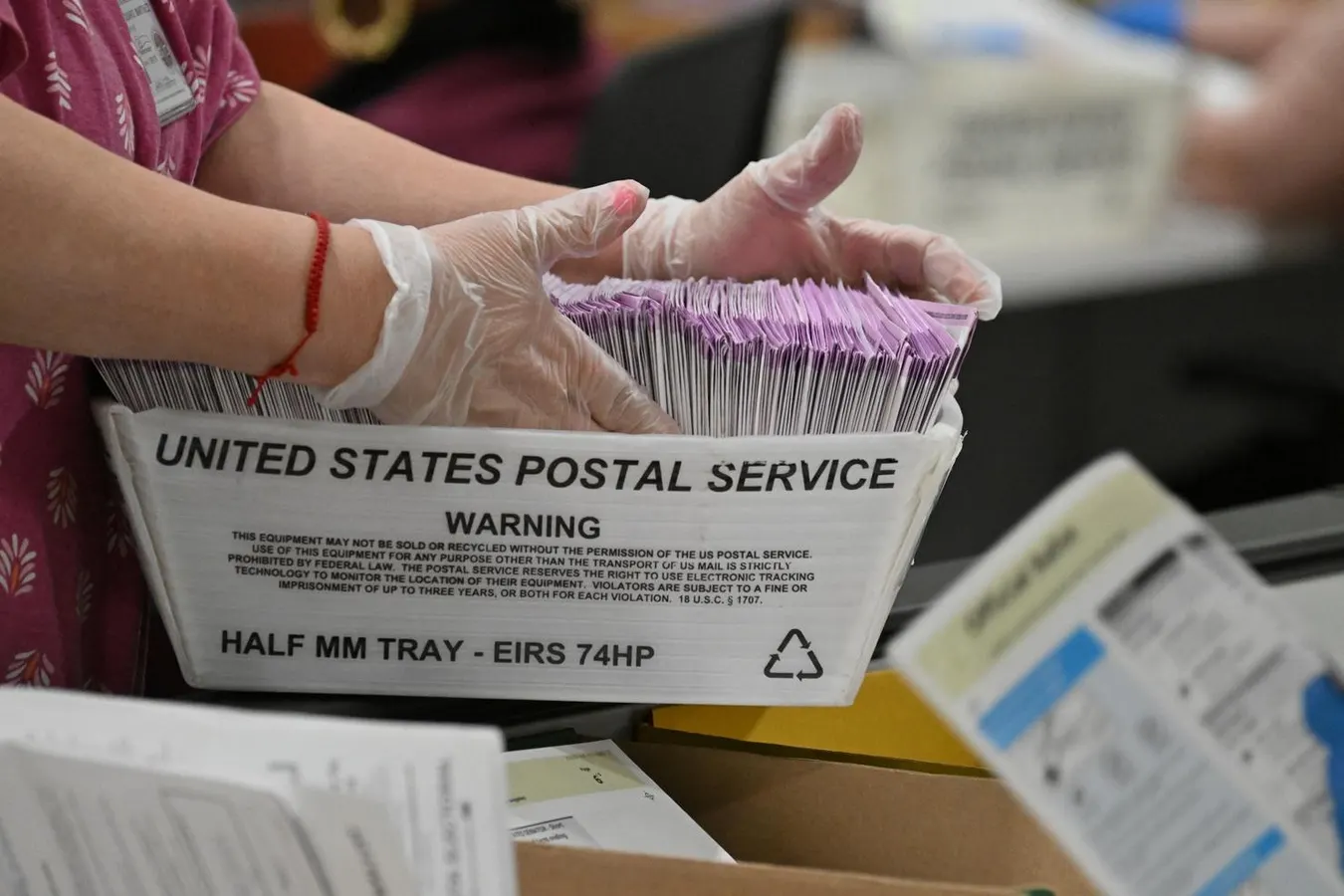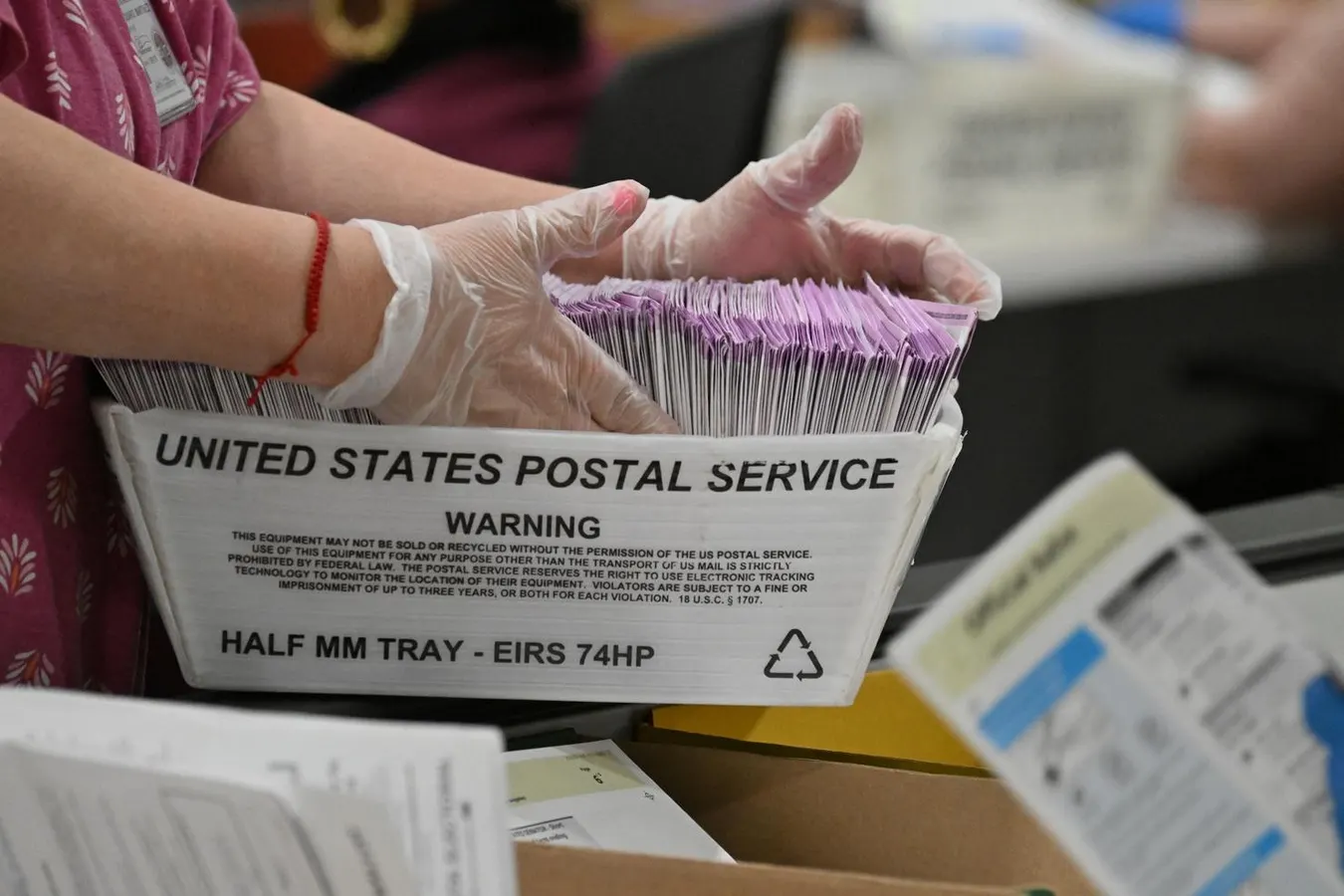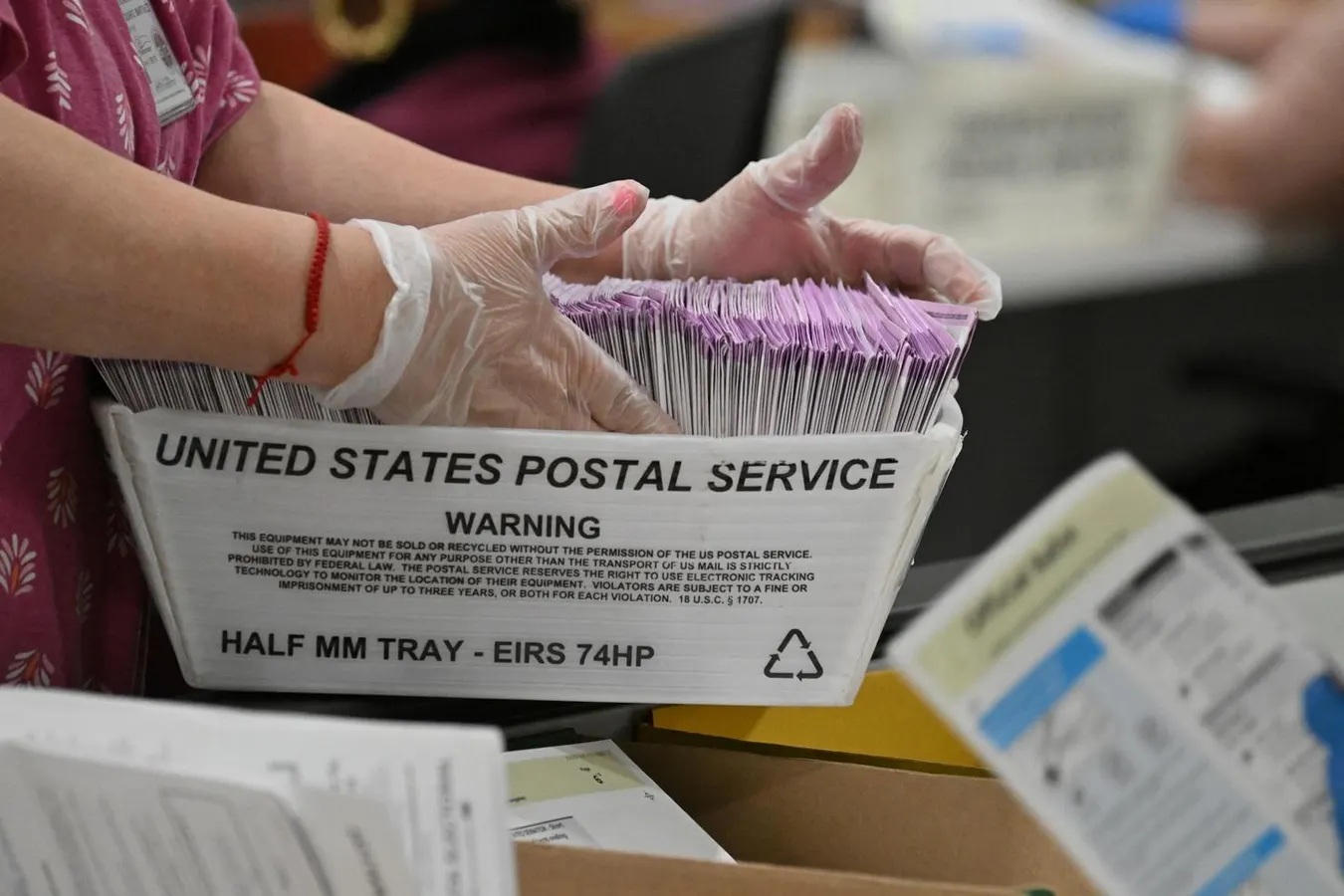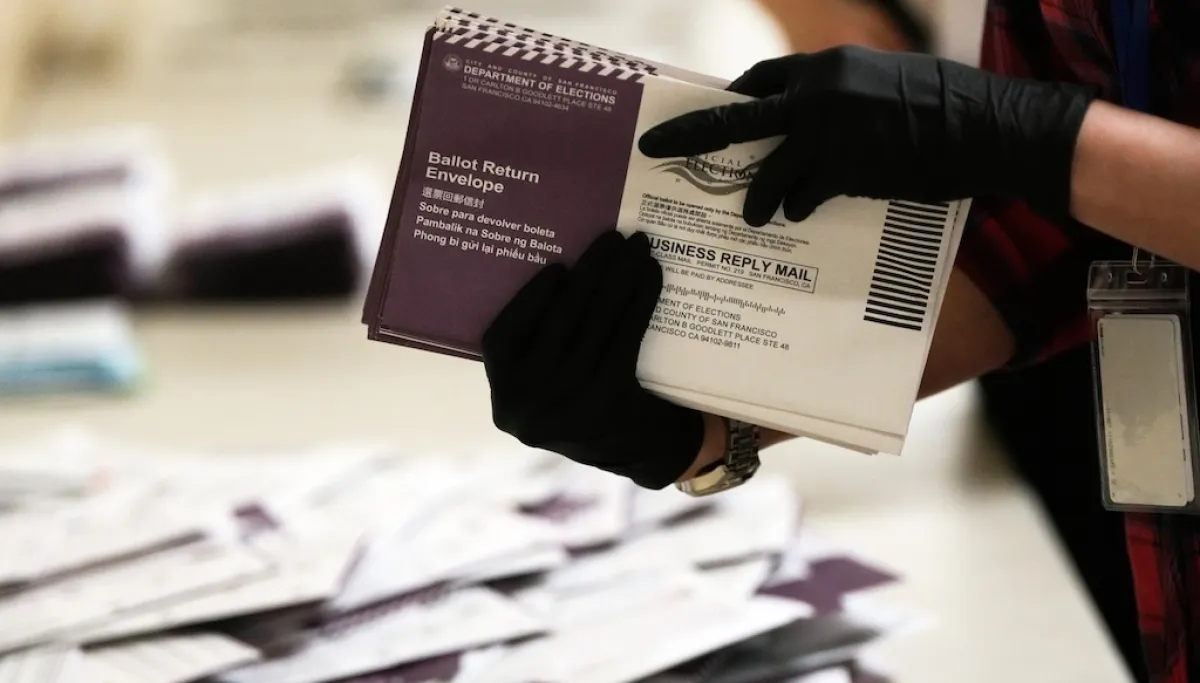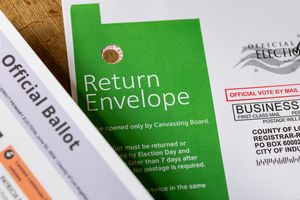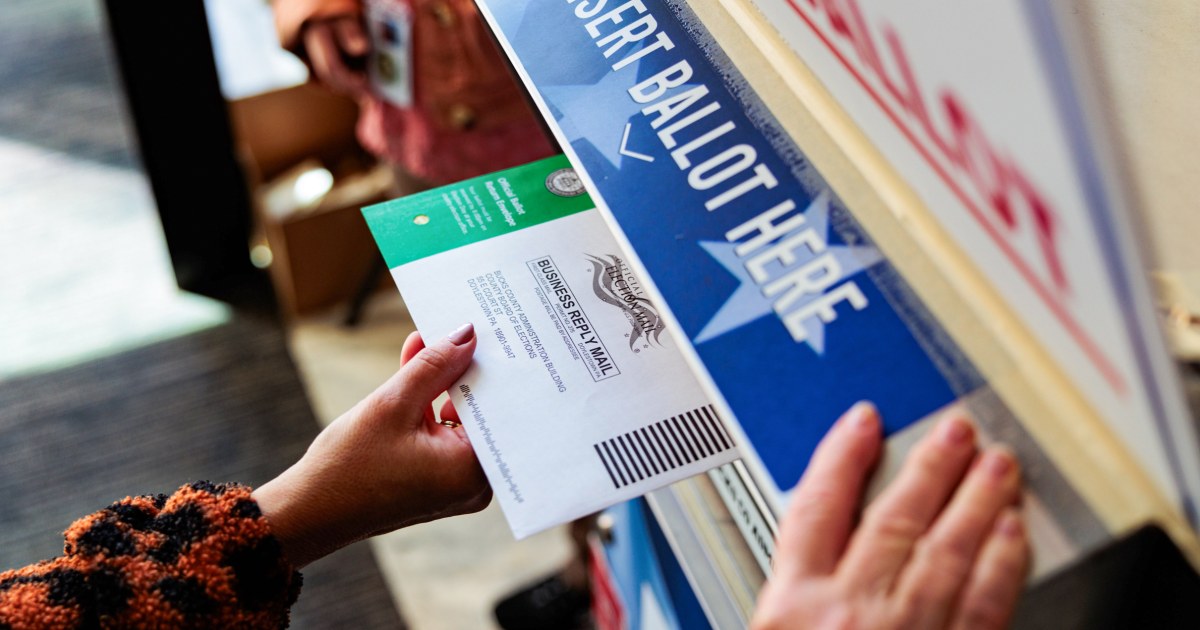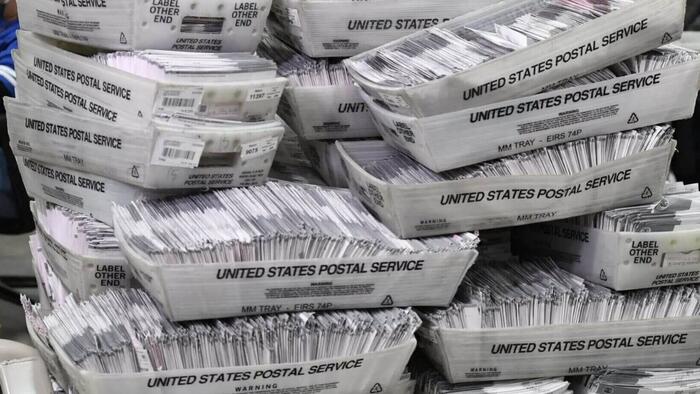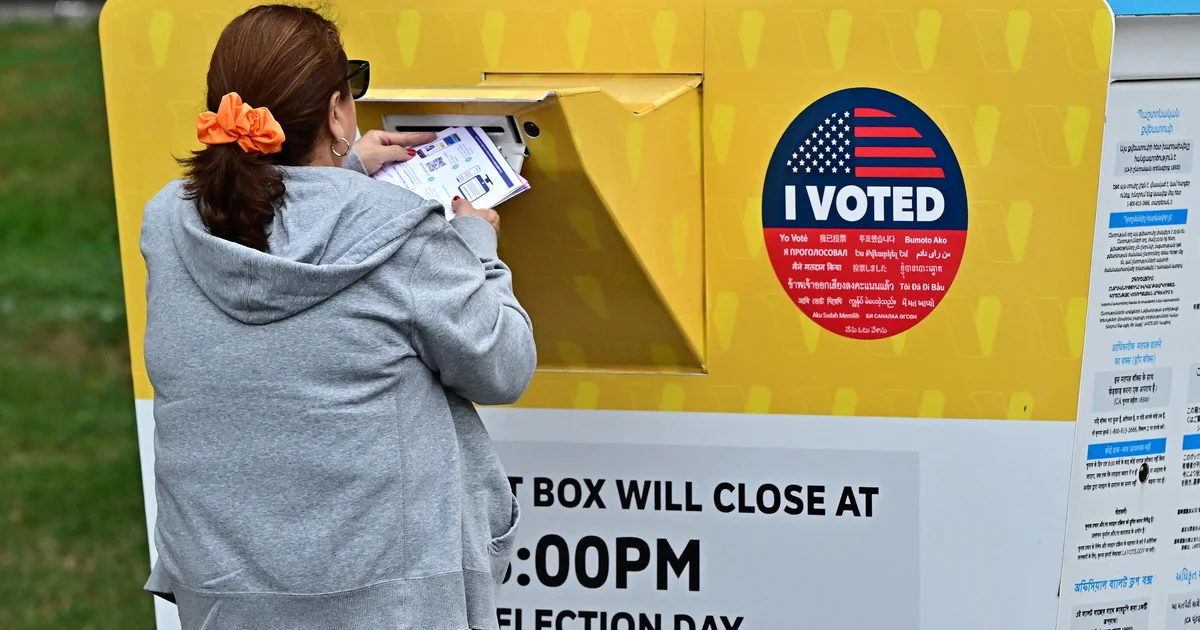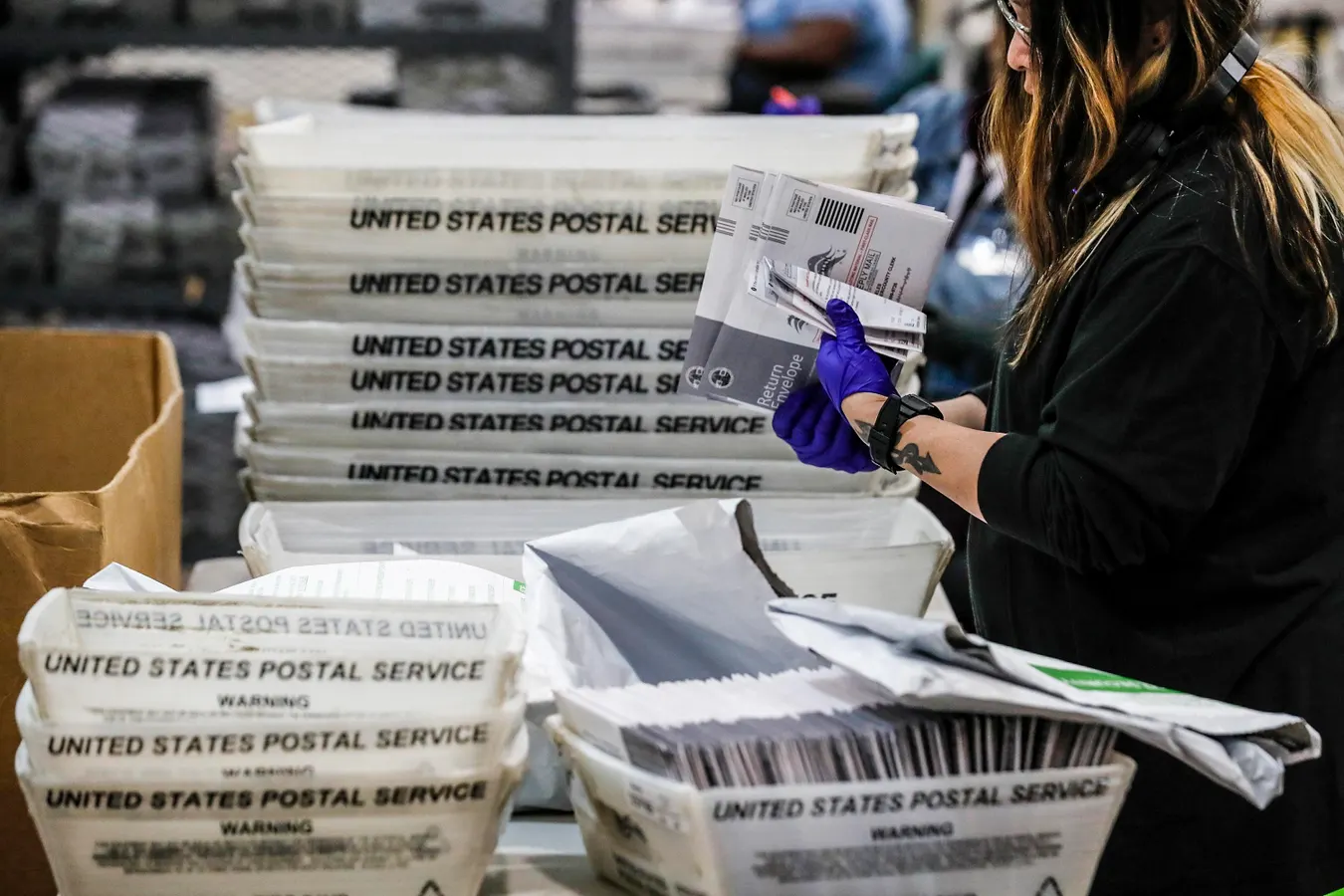
ToplineThe U.S. Postal Service’s new rule governing mail-in ballots can take effect after a federal judge Wednesday lifted a previous order blocking it—meaning voters’ information must be sent to the federal government in order to be mailed a ballot—but a new wave of court challenges over the now-finalized policy could result in it getting blocked again before the November midterms.Ballots are received, sorted and verified at the LA County ballot processing facility on Nov. 9, 2022.Los Angeles Times via Getty ImagesKey FactsJudge Indira Talwani ruled Wednesday to lift a previous order she issued blocking the new rule, which requires election officials to submit voters’ information to a new federal database in order for the U.S. Postal Service to deliver their mail-in ballots.Talwani issued her decision based on the Supreme Court throwing out an order in a separate case that also blocked the policy, with justices finding 6-3 the legal challenge against the rule was brought too early.Talwani’s decision means the USPS rule can now take effect for the November midterm elections.While the rule has been allowed to take effect because the legal challenges against it were brought too early—since when the lawsuits against it were filed, the Trump administration had proposed the policy but hadn’t finalized it yet—USPS published the final rule Friday, which means that legal argument now may be invalid.Talwani said the voting rights advocates who brought the lawsuit can bring a new challenge against the new rule that was just finalized, which could result in the court issuing a new order blocking the policy.Democratic attorneys general also filed a fresh lawsuit Wednesday against the newly finalized rule, meaning there could also be orders in other court cases that could block it.Crucial QuoteWhile the voting rights groups that brought the lawsuit “have substantial arguments that might persuade the Supreme Court to reach a different result if Plaintiff Organizations have an opportunity to present them,” Talwani wrote Wednesday, the judge said she was “compelled by the Supreme Court’s ruling” to throw out her earlier ruling blocking the USPS policy.What Does The New USPS Rule Say?The new USPS policy, based off President Donald Trump’s executive order on mail-in voting, says election officials have to submit the name and address of every voter requesting a mail-in ballot to a new federal database that will be created. Each voter’s ballot will also get unique barcodes, and ballot envelopes will have to be designed in line with the federal policy. If a voter’s information is not submitted to the federal database, the Postal Service will refuse to deliver a ballot to them through the mail. USPS has said it will not take any steps to verify whether the voters whose information it receives are eligible to vote, though the agency will hold on to the information and submit a full list of approved voters to state election officials when the mail-in voting period ends. Voters will not have to take any action in response to the new rule, as everything will be handled by election officials, but critics of the policy have warned it could cause “chaos” by adding extra administrative hurdles to mail-in voting that could result in unexpected delays or issues.What to Watch forMore rulings over the USPS rule could come out quickly, given the impending midterms and election officials’ need to have clarity over what procedures will be in place. Mail-in ballots can start being accepted as soon as early September in some states, meaning any court battles over the policy could impact voting if they stretch on for weeks.Key BackgroundTrump ordered USPS to start developing a rule around mail-in ballots in a March executive order, part of his broader attacks on mail-in voting. The president has long decried mail-in voting and claimed it’s more susceptible to fraud, though those claims are not supported by evidence—and Trump frequently uses mail-in voting himself. USPS came out with its proposed rule for mail-in ballots in June before finalizing the rule Friday, despite the multiple court rulings in place that barred it from moving forward. Talwani previously ruled Tuesday that the Trump administration had violated her previous order blocking the rule by coming out with the final rule, but did not impose any penalties on the government for violating it.Further ReadingWill New USPS Rule Impact Your Ballot In November? What To Know After Supreme Court’s Ruling (Forbes)
Judge Allows USPS Mail-In Ballot Rule To Take Effect—For Now
The court could still issue another ruling blocking it in the future, now that the rule has been finalized.
724 words~3 min read