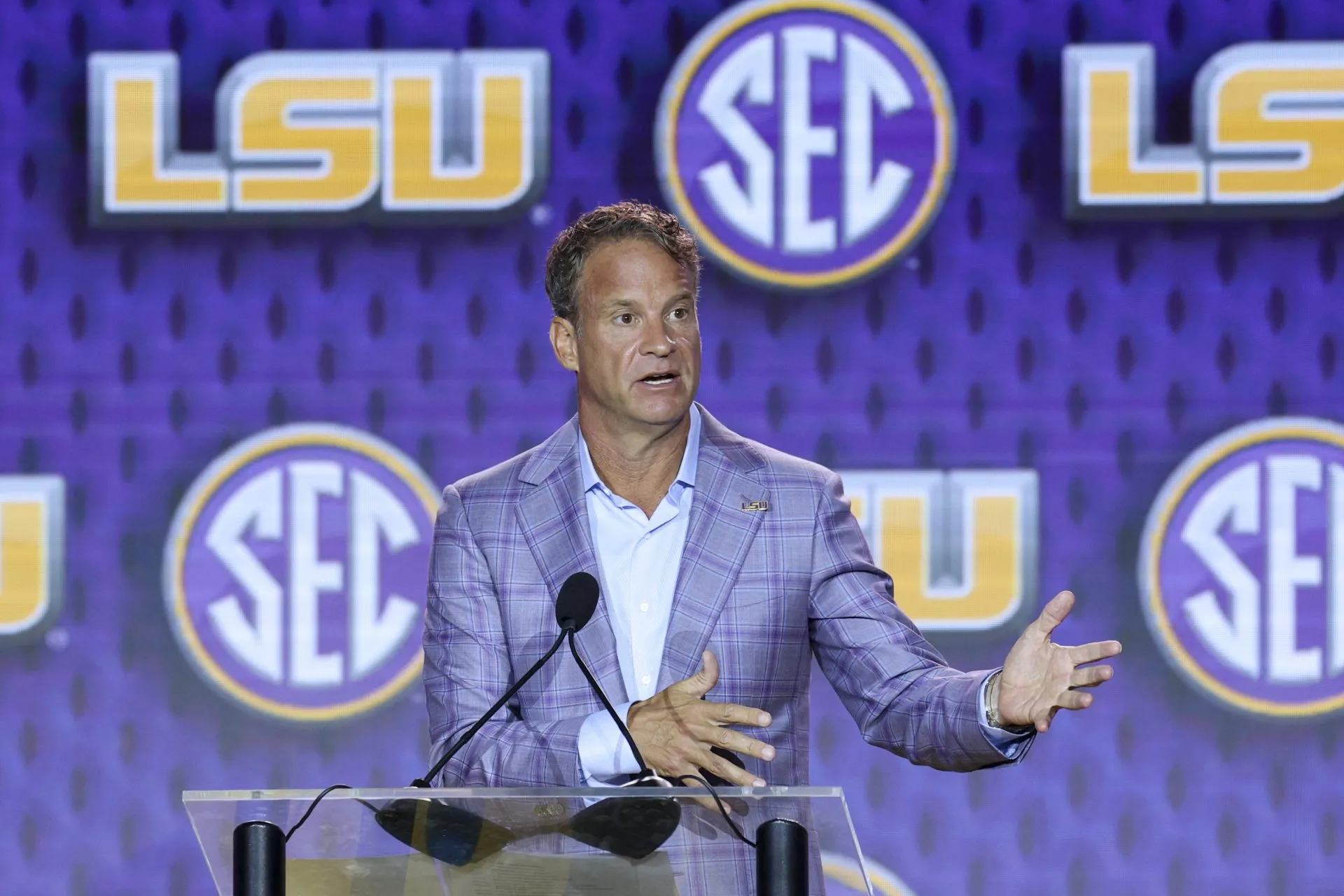
Last week, a Louisiana judge granted a temporary restraining order allowing players who had signed NFL contracts to go back to college programs. LSU has secured deals with two of them: Dae’Quan Wright and Zxavian Harris. But on Tuesday, SEC presidents tried to block these players from returning to college—the conference voted to sanction teams that roster former professional football or basketball players.
The events have put LSU, as well as its future players, on a collision course with the SEC. As of Tuesday night, LSU was still planning to sign Wright. Players’ lawyers are gearing up for a legal battle with the conference. LSU, which has repeatedly supported players on this issue, will likely do the same.
The ramifications go far beyond the SEC, however. The situation could test whether conferences have the legal authority to set and enforce rules the NCAA can’t. The entire college sports world is watching the powder keg in Baton Rouge with bated breath.
If conferences can’t enforce their own rules, one power conference school source said: “It would take us from light speed to ludicrous speed—‘spaceballs.’”
The Louisiana lawsuit wasn’t about getting former NFL players eligibility. Instead, it’s one of many cases arguing players who started college in 2022 and exhausted four years of eligibility should get a fifth year by being grandfathered into the NCAA’s new “age-based” eligibility policy. Plaintiffs included Wright, who played preseason games for the Browns, and Harris, who signed with the Saints but was waived on Aug. 8 before preseason began.