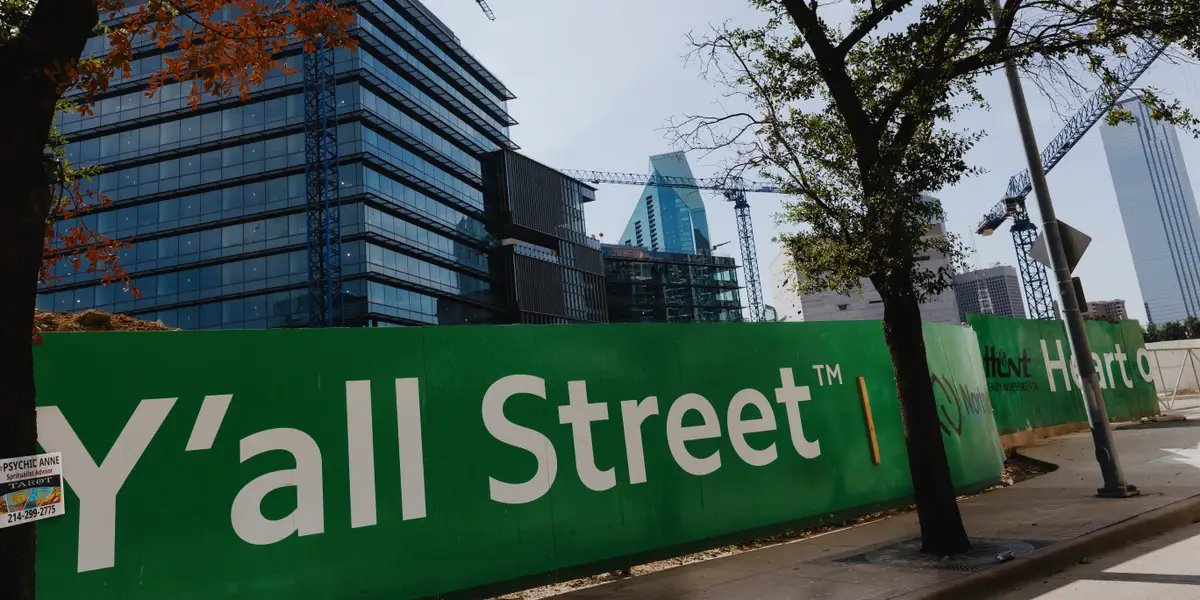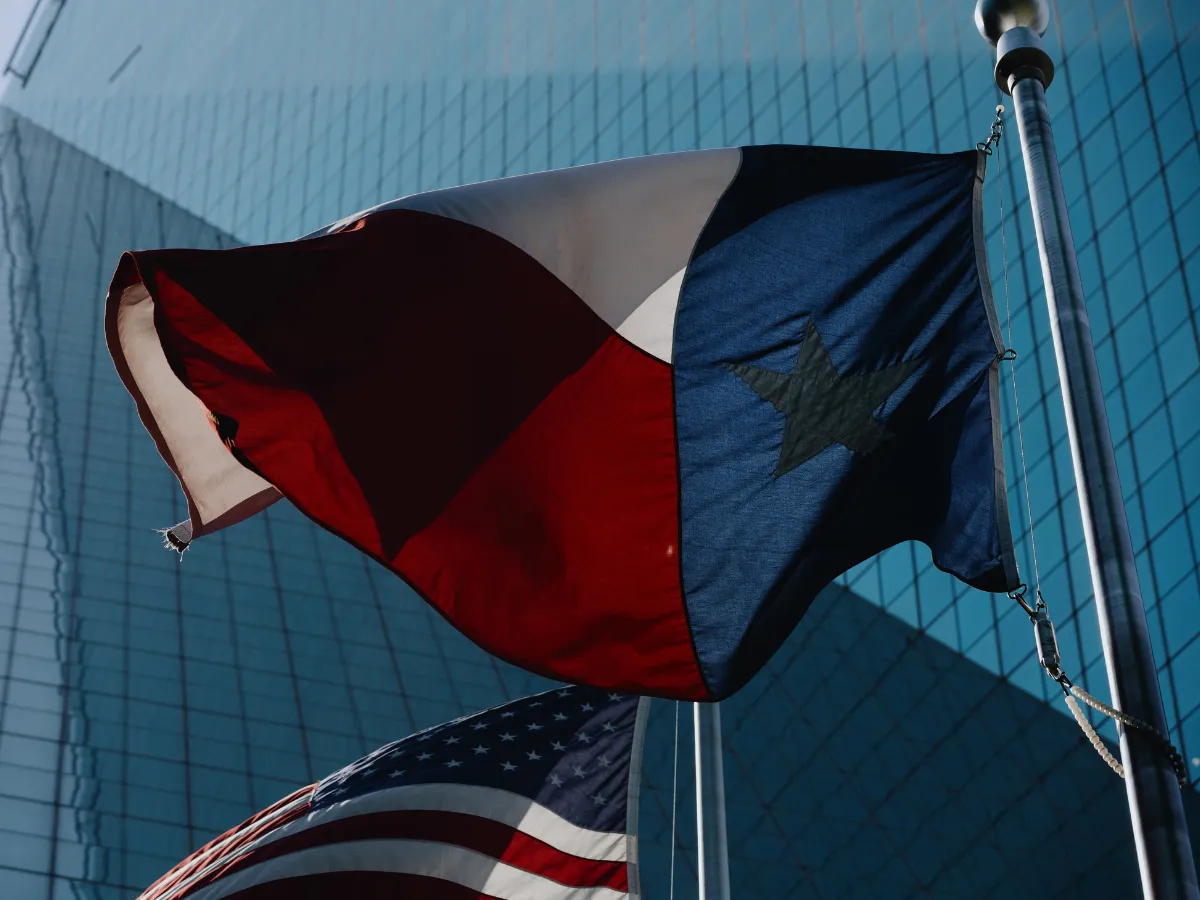
Skip to Content News Archives Economy Energy Oil & Gas Renewables Electric Vehicles Mining Commodities Agriculture Real Estate Mortgages Mortgage Rates Finance Banking Insurance Fintech Cryptocurrency Work Wealth Smart Money Wealth Management Investor Personal Finance Family Finance Retirement Taxes High Net Worth FP Comment Executive Women Puzzmo Newsletters Financial Times Business Essentials More Innovation Information Technology FP500 Podcasts Small Business Lives Told Tails Told Shopping Financial Post Store Obituaries Place a Notice Advertising Advertising With Us Advertising Solutions Postmedia Ad Manager Sponsorship Requests Classifieds Place a Classifieds ad Working Profile Settings My Subscriptions My Offers Newsletters Customer Service FAQ News Economy Energy Mining Real Estate Finance Work Wealth Investor FP Comment Executive Women Puzzmo Newsletters Financial Times Business Essentials HomeFinanceEconomyOpinion: With launch of stock exchange, Texas completes bid to become new corporate hub of AmericaThe exchange caps a multi-faceted effort to attract companies and capital to the Lone Star State. Canada should take noteLast updated 6 minutes ago Somebody in Texas asked what it would take to make a company want to be there and then acted on the answer. Canada needs to do the same. Photo by Shelby Tauber for The Washington Post via Getty ImagesOn the last Friday in July, the new Texas Stock Exchange (TXSE) in Dallas completed its rollout. It now carries every exchange-listed security in the United States, with the NYSE and Nasdaq squarely in its sights.Subscribe now to read the latest news in your city and across Canada.Exclusive articles from Barbara Shecter, Joe O'Connor, Gabriel Friedman, and others.Daily content from Financial Times, the world's leading global business publication.Unlimited online access to read articles from Financial Post, National Post and 15 news sites across Canada with one account.National Post ePaper, an electronic replica of the print edition to view on any device, share and comment on.Daily puzzles, including the New York Times Crossword.Subscribe now to read the latest news in your city and across Canada.Exclusive articles from Barbara Shecter, Joe O'Connor, Gabriel Friedman and others.Daily content from Financial Times, the world's leading global business publication.Unlimited online access to read articles from Financial Post, National Post and 15 news sites across Canada with one account.National Post ePaper, an electronic replica of the print edition to view on any device, share and comment on.Daily puzzles, including the New York Times Crossword.Create an account or sign in to continue with your reading experience.Access articles from across Canada with one account.Share your thoughts and join the conversation in the comments.Enjoy additional articles per month.Get email updates from your favourite authors.Create an account or sign in to continue with your reading experience.Access articles from across Canada with one accountShare your thoughts and join the conversation in the commentsEnjoy additional articles per monthGet email updates from your favourite authorsSign In or Create an AccountorA big and bold bet, in true Texas fashion.But the exchange is not the biggest thing that was built. Its launch caps a years-long, multi-faceted effort to attract companies and capital to the Lone Star State. That is what should interest us here in Canada.Texas has spent the past several years rewriting the rules that govern how corporations are formed, run and sued, making itself a serious rival to Delaware, where most large American companies have been legally domiciled for more than a century.SUBSCRIBER EXCLUSIVE: FP West: Energy Insider brings you behind the oilpatch’s closed doors with exclusive insights from insiders every Wednesday morning.By signing up you consent to receive the above newsletter from Postmedia Network Inc.A welcome email is on its way. If you don't see it, please check your junk folder.The next issue of FP West: Energy Insider will soon be in your inbox.We encountered an issue signing you up. Please try againThese changes are not merely marketing with a Texas twang. They address what managers actually care about: predictability, efficiency and control. The state adopted a statutory presumption of good faith for directors and officers, let companies raise the thresholds for derivative suits and shareholder proposals and created a business court based on the Delaware model, with judges who specialize in corporate law.The exchange was the last piece, and the legislature wrote it into the law itself. A Texas-incorporated company qualifies for the new shareholder-proposal thresholds either by keeping its head office in Texas or by listing on a Texas exchange. The pitch is not simply a place to trade shares. It is a package: incorporate here, litigate here, headquarter here, and finally, list here.The business community has been receptive. The governor’s office counts roughly 200 major companies that have moved their head offices to Texas since 2020, including Chevron, Charles Schwab and Hewlett Packard Enterprise. Texas now hosts more Fortune 500 headquarters than any other state. Some companies have gone further and moved their corporate charters to Texas, including Tesla, Exxon Mobil, SpaceX and Dell.The money behind the exchange is also worth noting. The TXSE raised roughly $275 million before it traded a single share, which it says makes it the best-capitalized equities exchange ever approved by the SEC. Backers include Goldman Sachs, JPMorgan Chase, Bank of America, BlackRock and Citadel Securities. What it is selling is procedural rather than ideological, from confidential eligibility reviews at no cost to lower recurring fees aimed at midsize and emerging growth firms.All of which is to say that Texas is competing for companies. So is everyone else, and it is a contest we have been quietly losing. The count of operating companies on the Toronto Stock Exchange has fallen by close to half since 2008. New listings have thinned to a trickle. The ladder that once carried small Venture issuers up into senior listings barely functions. Our largest companies leave for index weights we cannot match, and the smaller ones drift before anyone notices.Our national conversation has not caught up to this. We debate corporate tax rates in one file, interprovincial trade barriers in another, regulatory burden in a third, productivity in a fourth and capital markets policy somewhere further down the list. A company weighing where to grow does not see five files. It sees one environment, and prices the whole thing as one.Texas understood that well enough to change several things at once and then build an exchange to sit on top. Whatever one thinks of the specific choices, that is a coherent strategy, something we don’t yet have.None of this means the Texas exchange will work. The Investors Exchange, better known as IEX, launched in 2016 with more attention than any challenger in a generation and now handles more than three per cent of American trading. Yet it listed exactly one company before abandoning that business in 2019. Winning trading share is not the same as winning listings. Corporate listings on TXSE are only beginning later this year and the first new share issues are not expected until 2027.But the outcome in Dallas is not what should concern us. What should concern us is that a group of the most sophisticated financial institutions in the world looked at where companies choose to be, decided the answer was contestable and invested a quarter of a billion dollars to change it.Behind that bet, somebody in Texas asked what it would take to make a company want to be there and then acted on the answer. We need to do the same.J. Ari Pandes is an associate professor of finance and an associate dean at the University of Calgary’s Haskayne School of Business. L. Daniel Wilson is an associate professor of law and an associate dean at the University of Calgary’s Faculty of Law. Both are research fellows at the C.D. Howe Institute. Join the Conversation This website uses cookies to personalize your content (including ads), and allows us to analyze our traffic. Read more about cookies here. By continuing to use our site, you agree to our Terms of Use and Privacy Policy.
Opinion: With launch of stock exchange, Texas completes bid to become new corporate hub of America
The TXSE launch caps a multi-faceted effort to attract capital to the Lone Star State. That should interest us here in Canada. Read here now
1,307 words~6 min read