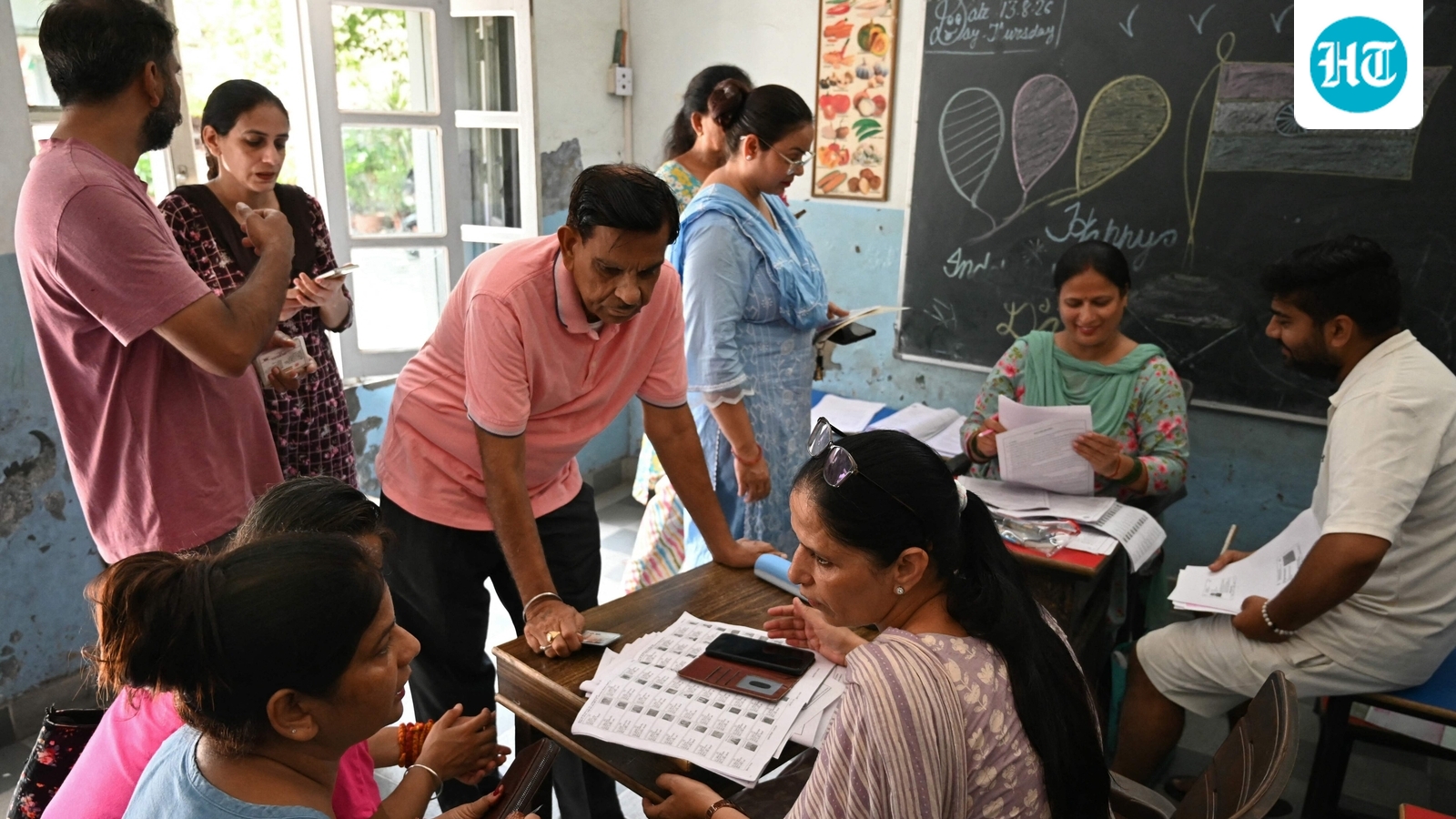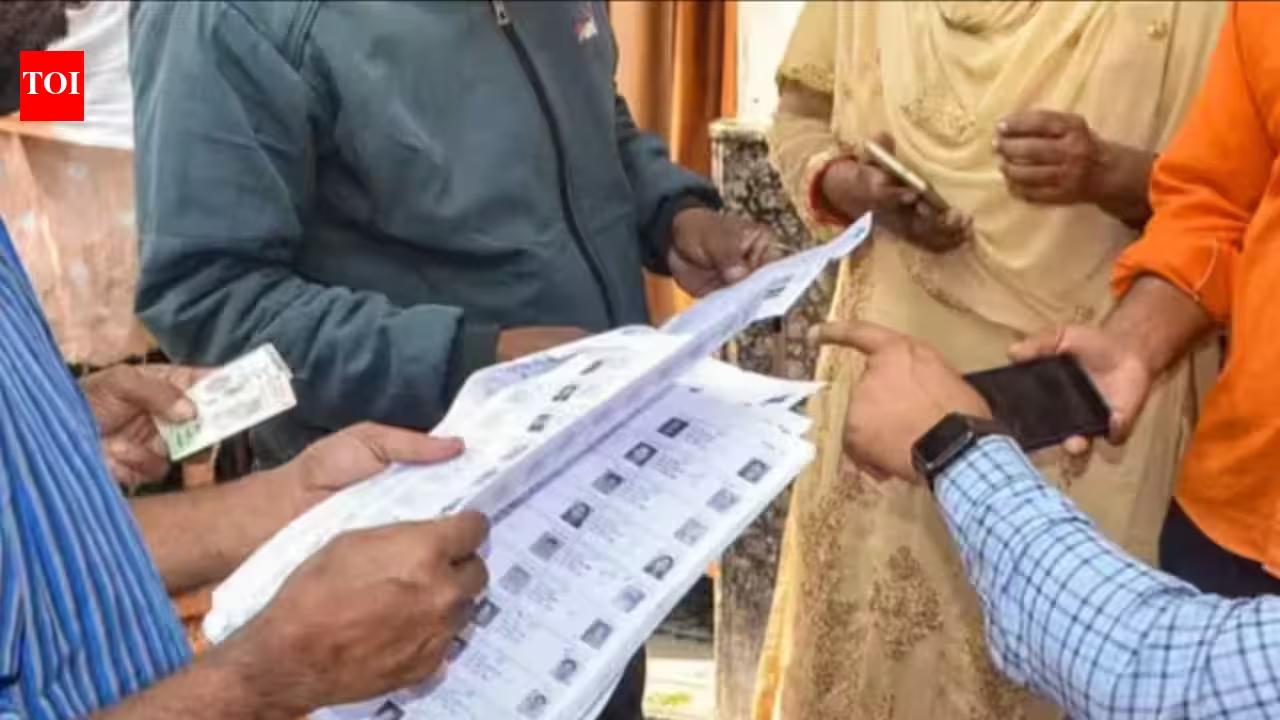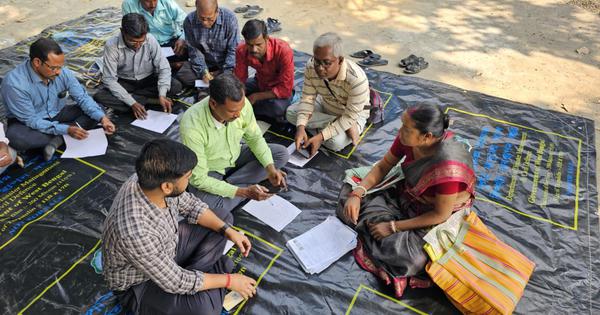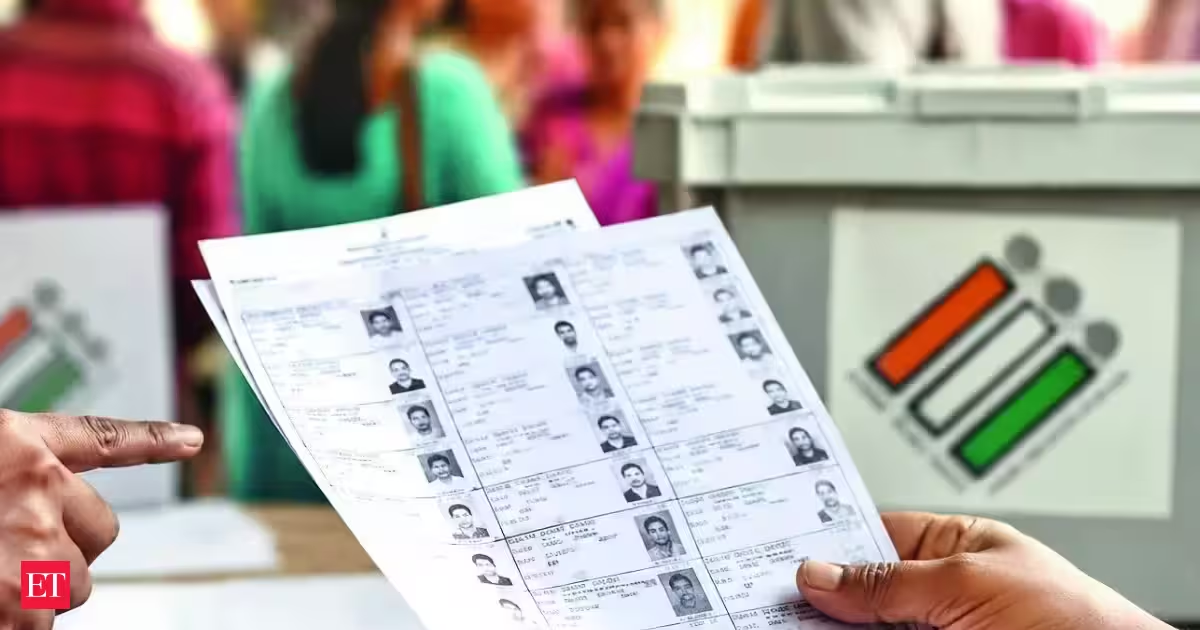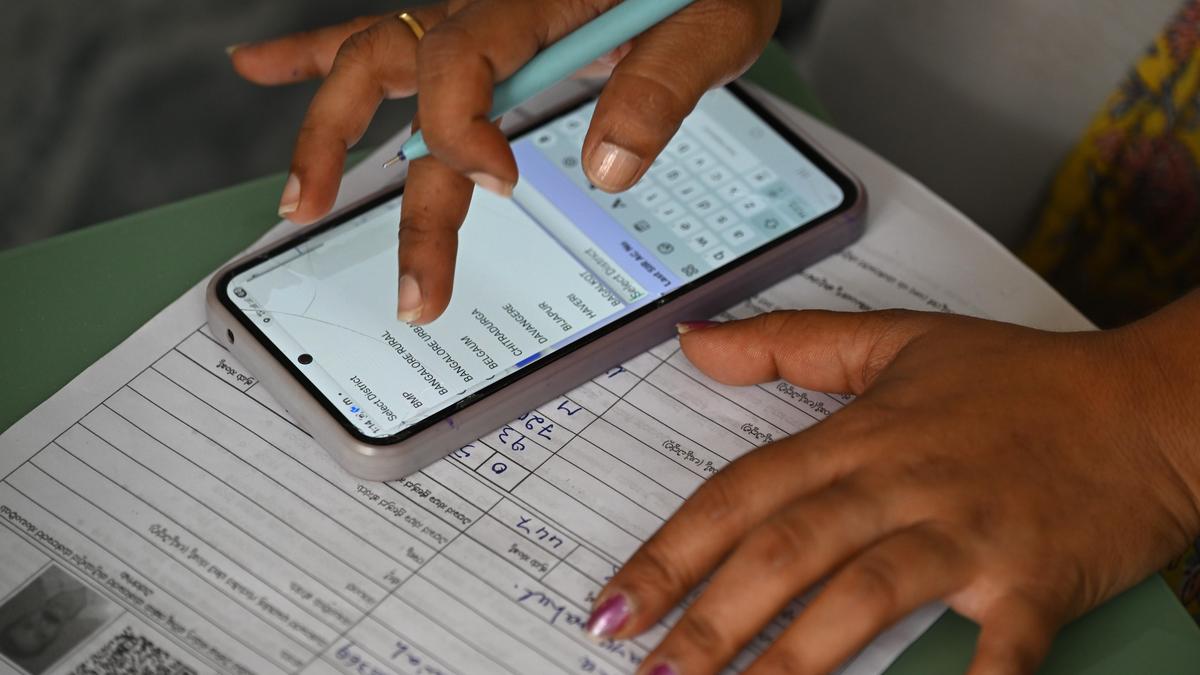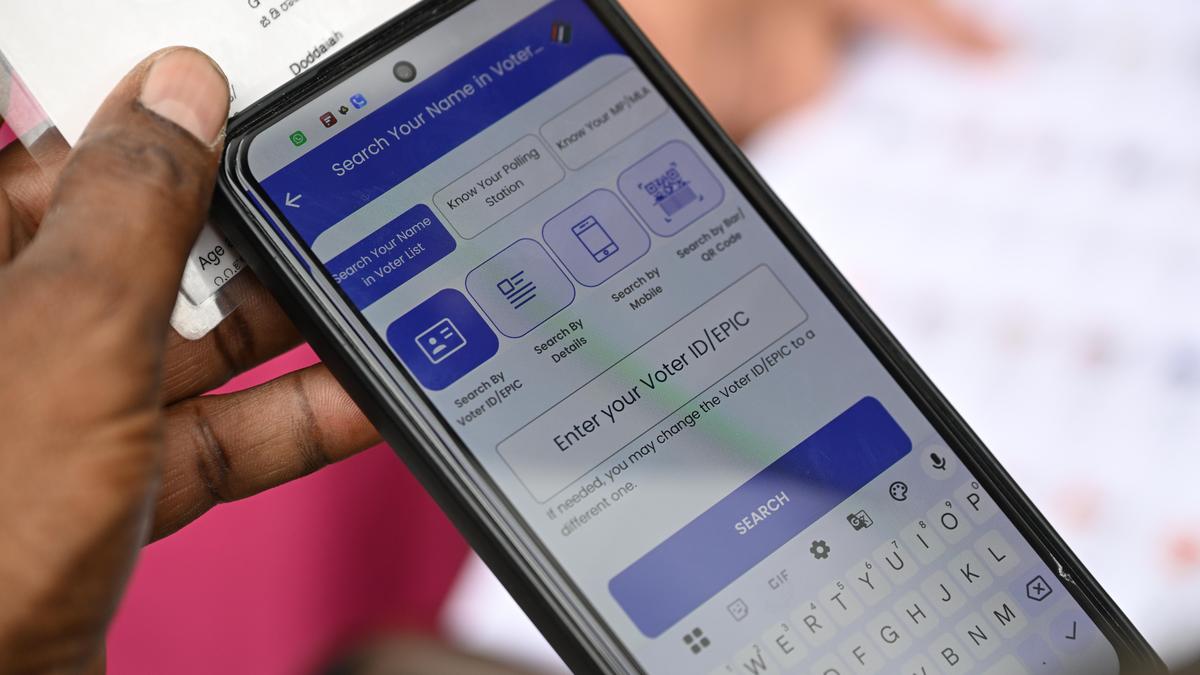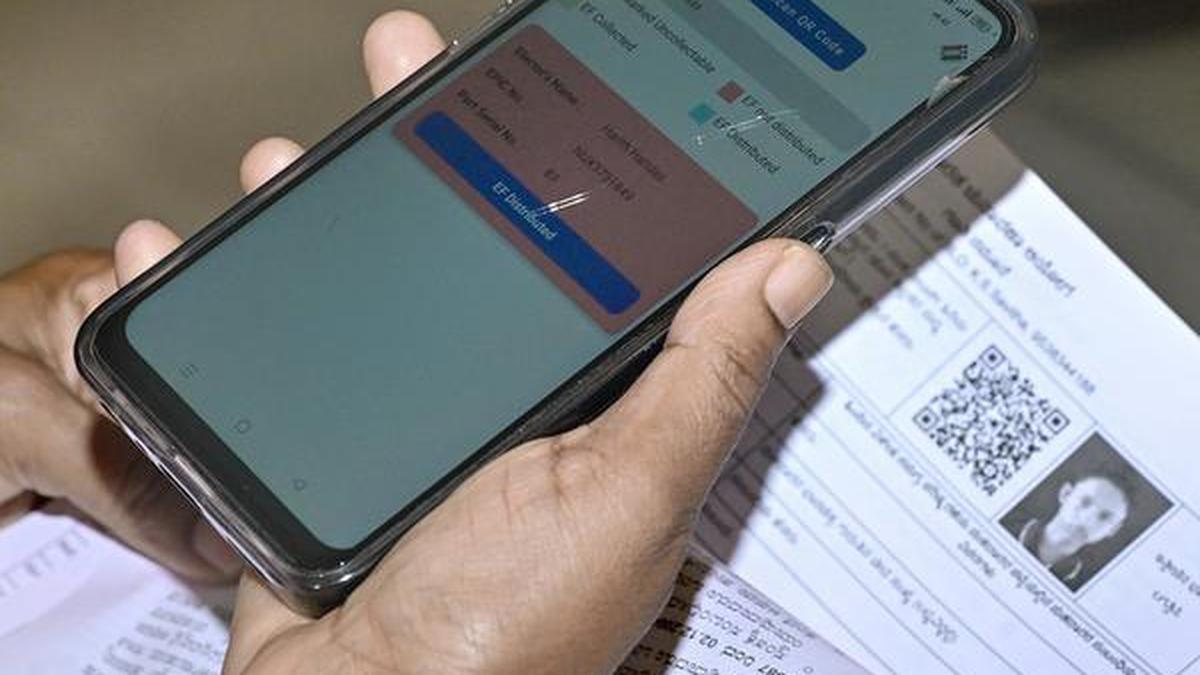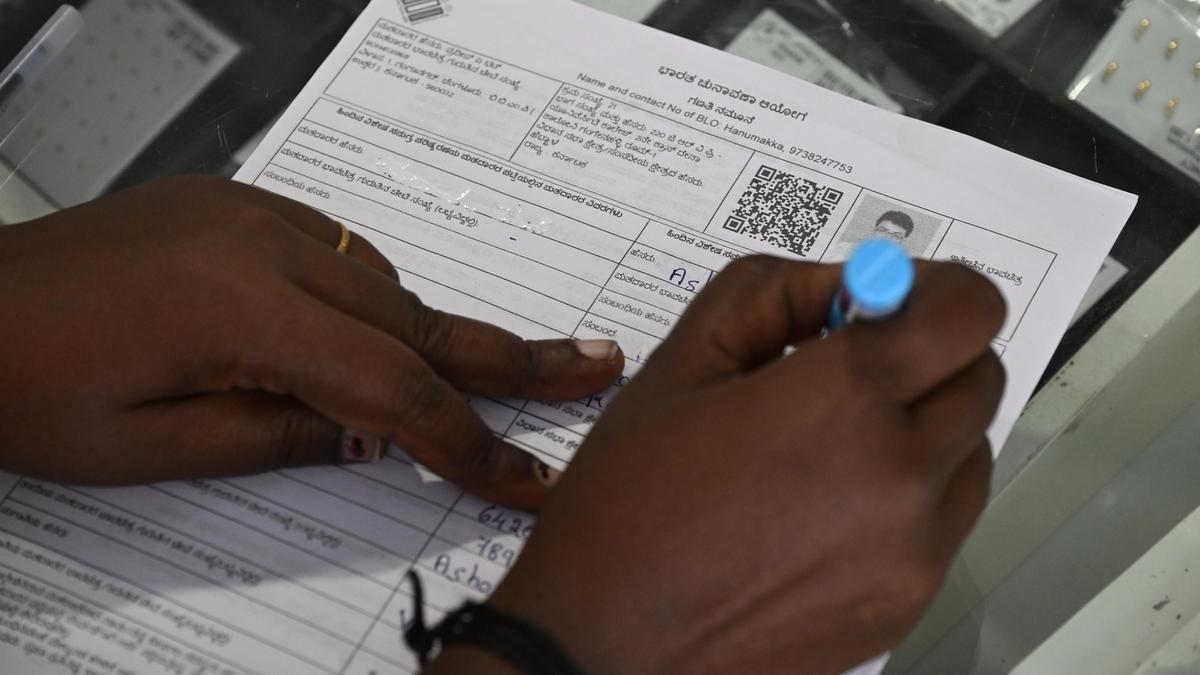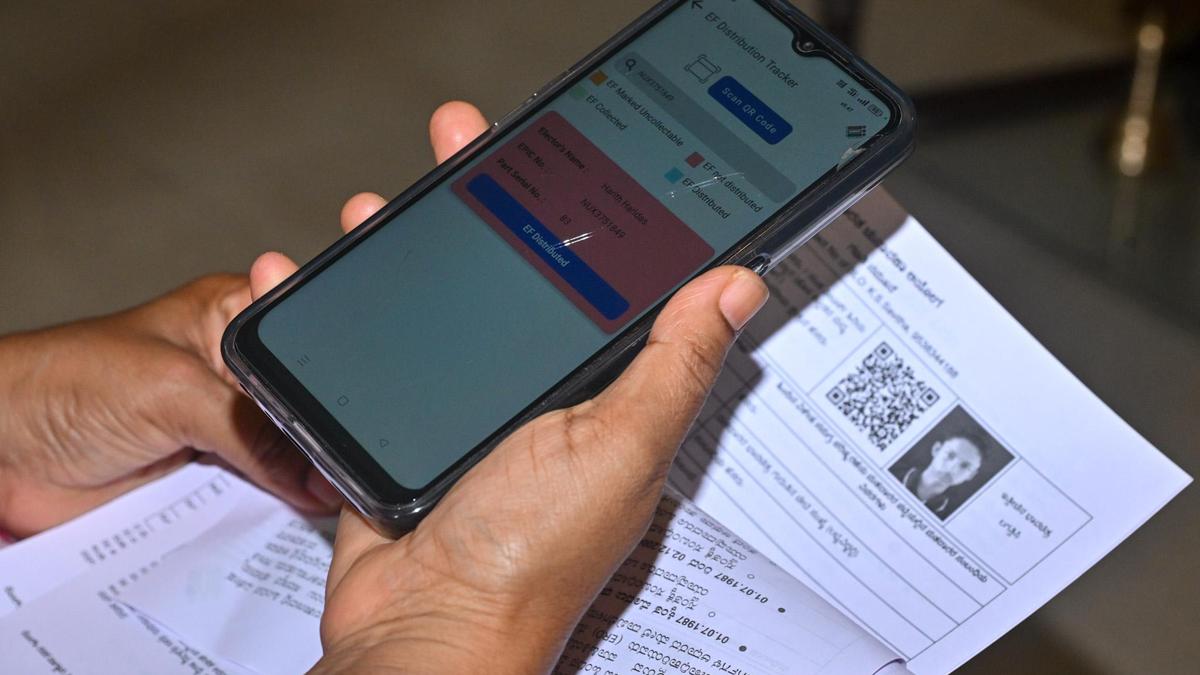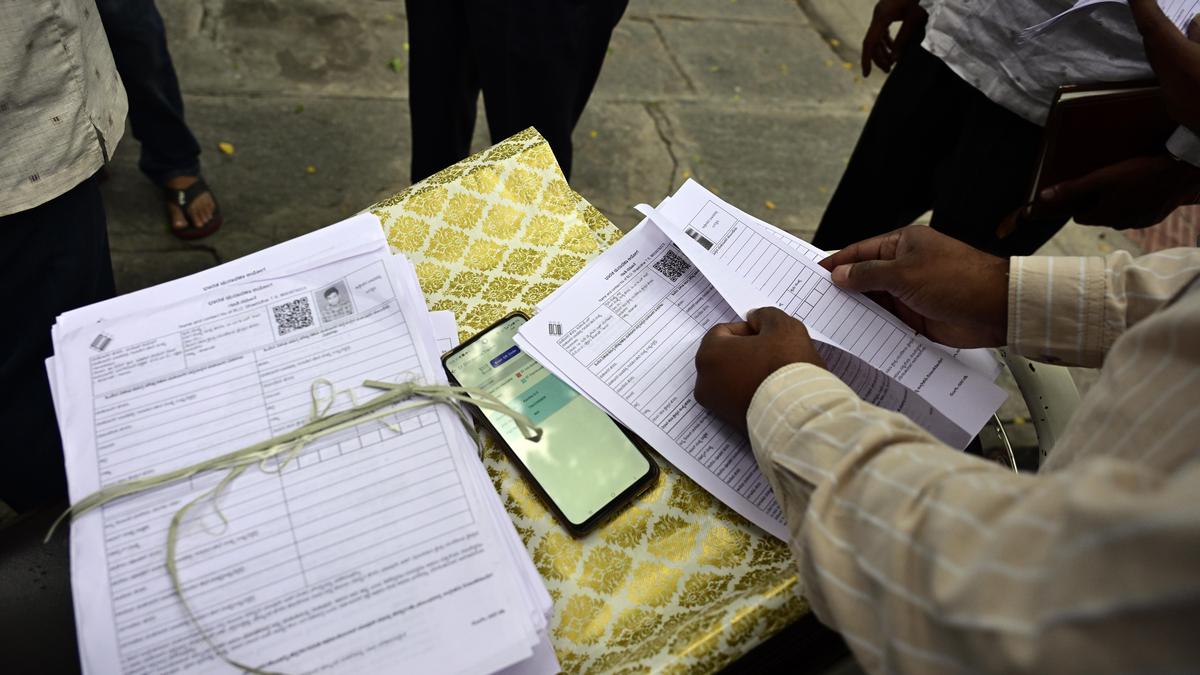
While the number of people receiving notices in Karnataka is lower than in some other States, nearly one-fifth of the names in the State’s electorate have already been wiped out of the draft rolls because of the staggering numbers in the ASDDO list.
| Photo Credit: SUDHAKARA JAIN
While Bengaluru’s electorate has been reduced to 56.99 lakh following the publication of the draft rolls after the enumeration phase, even among these names, at least 42% or 24.06 lakh are set to receive notices over logical discrepancies and their inability to map their 2002 electoral roll details. These people will now have to establish their eligibility to remain on the rolls. C.V. Raman Nagar and Bommanahalli constituencies first had massive deletions (ASDDO) and now have the highest number of notices. C.V. Raman Nagar had an electorate of 2.74 lakh as of June 16, when the rolls were frozen before the enumeration phase began. The number was subsequently reduced by 51.13%, with names marked as absent, shifted, duplicate, dead and other. Of the 1.40 lakhs names that were deleted, as many as 99,228 names were marked as permanently shifted.Following the draft roll, C.V. Raman Nagar now has just 1.33 lakh electors. Yet, even within this reduced electorate, more than 80,800 people will receive notices — accounting for 60.34% of the draft electorate. This leaves only slightly over 53,000 without a notice so far. Meanwhile, Bommanahalli had reported the highest deletions following publication of the draft rolls, with more than 54% of names deleted. This constituency had 4.84 lakh names when the exercise began. Following publication of the draft rolls, its electorate fell to just 2.19 lakh. Now, within this drastically reduced electorate, another 1.02 lakh are set to receive notices. While the number of people receiving notices in Karnataka is lower than in some other States, nearly one-fifth of the names in the State’s electorate have already been wiped out of the draft rolls because of the staggering numbers in the ASDDO list. For instance, Telangana reported a higher percentage of deletions — 73.39 lakh names deleted under the ASDDO categories, compared with 1.07 crore in Karnataka. In Bengaluru alone, several constituencies reported more than 50% deletions through ASDDO. The same trend is now extending to the notice stage. The timeline is likely to pose formidable challenges for voters marked for notices. Only seven days are provided between the time an Electoral Registration Officer (ERO) generates a notice and the person receives it. While an ERO may generate a notice on a particular day, recipients may receive them on different days, leaving a gap of a day or even up to three days. In cases where a person receives a notice only a day or two before the hearing, attending it could become a significant burden, particularly for those who travel or move for work and other reasons. A section of voters The Hindu spoke to said they had filled out enumeration forms for their family members, mostly children, because they were studying abroad. If such voters receive a notice, they are required to appear personally for the hearing; no one else can appear on their behalf. Moreover, the hearing will be scheduled only once. The challenge becomes even more evident when Bengaluru’s age profile is considered. The city has more than 40,300 electors aged 85 and above, while 829 voters are over 100 years old, including 451 women. Within the GBA limits, 21,466 voters have disabilities. Moreover, the city has a large population living in precarious conditions, including those in slums and working as labourers, alongside a vast working-class electorate. Both sections are often away from home for long hours. In such circumstances, voters told The Hindu that even learning about a notice in time could be a challenge, let alone appearing for a hearing within the stipulated period. Published - August 26, 2026 09:39 pm IST